New Wave of Boutique Hotels Enhances Outer Banks Lodging Landscape

Read More

MANTEO, N.C., Dec. 11, 2024 /PRNewswire/ — The Outer Banks of North Carolina continues to diversify its accommodation offerings with the opening of several distinctive boutique hotels throughout the past year, riding a significant wave of rebranding, renovations and new construction in the hotel industry on the Outer Banks. “It’s an exciting time to book,” says Lee Nettles, Executive Director of the Outer Banks Visitors Bureau. “Travelers can enjoy a host of choices for their overnight experience in 2025, from historic hotels to new independent properties, in addition to vacation rental homes, inns, cottage courts and campgrounds that have become calling cards for the destination. Couple this trend with our new direct booking partnership with Ripe and we’re anticipating an exciting year ahead at outerbanks.org.” Beginning early 2025, visitors will be able to book their hotel stays directly from the official tourism website with other lodging types to follow.

Early 2025, visitors can book their hotel stays directly from the Outer Banks official tourism website outerbanks.org.
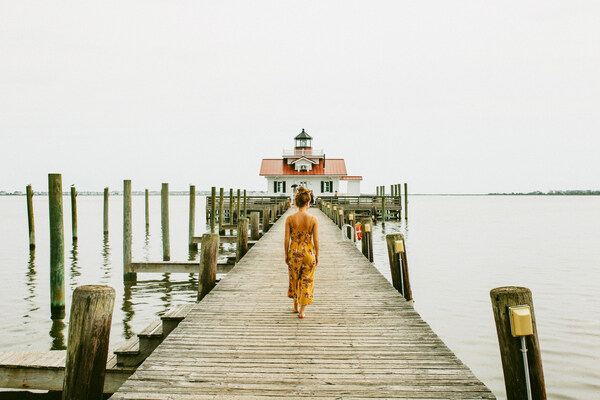
The town of Manteo has enjoyed a wave of new hotel construction and redevelopment along with beach communities on the Outer Banks of North Carolina in the past year and more. The Roanoke Marshes Lighthouse welcomes visitors from all over to stroll the charming waterfront and immerse in the southern coastal culture of the Outer Banks. outerbanks.org
The town of Manteo has enjoyed a wave of new hotel construction and redevelopment along with beach communities on the Outer Banks of North Carolina in the past year and more.

Manteo’s charming town waterfront has emerged as a hub for boutique lodging, welcoming three unique properties. The Pearl Hotel, opened in 2024, features 16 individually designed rooms and two luxury family suites, crowned by an exclusive rooftop greenspace overlooking Roanoke Sound. Each room showcases curated global design elements, from Italian touches to themed experiences including bridal, garden, and nautical motifs. Hotel Manteo, a 2023 transformation of the historic Elizabethan Inn, blends coastal Carolina inspiration with contemporary amenities. The property expanded its offerings in 2024 with the addition of Firetender Grill, enhancing Manteo’sdining scene. Completing the town’s boutique hotel triangle, The Manteo House opened in 2023, offering corporate retreat space and luxury accommodations in a preserved historic setting along Shallowbag Bay. Manteoand surrounding Roanoke Island is highly regarded as cultural and artistic community, being home to several attractions and museums, satisfying waterfront shopping and restaurants serving a range of palettes.

In Nags Head, the iconic Owen’s Hotel has been reimagined as Mia’s Boutique Hotel, featuring three distinct buildings with oceanfront luxury suites equipped with full kitchens. Further south, the Jonathan Adler-designed Pamlico Station Edgecamp opened in 2024, bringing national recognition through features in Condé Nast Traveler and Travel + Leisure. The property offers a fully equipped residential-style experience in Cape Hatteras. Looking ahead to summer 2025, Kill Devil Hills will welcome at least one new flag hotel rebrand, adding to the beach’s expanding hotel options. Lighthouses, national and state parks and several fishing piers and bathhouses for accessing the best beaches on the East Coast, along with restaurants only found on the Outer Banks serving locally caught seafood can complete your perfect OBX getaway when paired with the right accommodation for you.

Visitors are invited to check out the Outer Banks Visitors Bureau event calendar to build out their preferred travel weeks with vacation ideas for 2025 https://www.outerbanks.org/events/. For more information about visiting the Outer Banks, visit www.outerbanks.org.

About the Outer Banks Visitors Bureau

The Outer Banks Visitors Bureau is the official tourism authority for Dare County, North Carolina, encompassing the towns of Duck, Southern Shores, Kitty Hawk, Kill Devil Hills, Nags Head, Manteo and the islands of Roanoke and Hatteras. The bureau promotes sustainable tourism while preserving the natural beauty and cultural heritage of North Carolina’s barrier islands. outerbanks.org

Stay connected and subscribe to Charleston Daily.

Chef Mark Bolchoz scheduled to open Cane Pazzo, an Italian Osteria in Hanahan, SC in the Spring, 2025

Read More

Chef Mark Bolchoz is scheduled to bring his Italian concept to the Lowcountry with the opening of Cane Pazzo in Hanahan, South Carolina. The new restaurant is scheduled to open in the spring of 2025.

About Chef Mark Bolchoz

Mark Bolchoz is the Culinary Director of Italian Concepts at The Indigo Road Hospitality Group. A native Charlestonian, Bolchoz grew up surrounded by the cuisine and culture of the Lowcountry. After a semester abroad in Italy and ventures across the East Coast, including several years under renowned New York Chef Gianni Scappin of Market Street and Gusto Restaurants, Bolchoz used his diverse experiences to shape his understanding and interpretation of traditional Italian and American-Italian cuisine. Bolchoz returned to Charleston in 2016 with his wife, a fellow Culinary Institute of America graduate, and immersed himself in the flourishing hospitality scene, gaining additional experience at some of the city’s top restaurants, including The Grocery and Peninsula Grill. 

As Sous Chef of Peninsula Grill, Bolchoz spent a year under one of Charleston’s most revered chefs, Graham Dailey, learning and honing his craft. Though he was thriving in a burgeoning culinary career, Bolchoz ultimately responded to a lifelong calling and took a hiatus from the kitchen to join the United States Marine Corps, where he continues serving as a Corporal in the Reserves.  

In 2020, Bolchoz’s love of rustic and rural Italian cuisine led him back to the field to join The Indigo Road Hospitality Group as the Executive Chef of Indaco Charleston, and then as Culinary Director of Italian Concepts. Today, he leads all locations of Indaco, Colletta, and the newly opened independent Italian concepts, Luminosa at The Flat Iron Hotel, and Osteria Olio at Rivet House. Bolchoz develops and oversees each concept’s culinary programming, in collaboration with the onsite teams, to ensure the best ingredient-driven menus that are sourced from local and regional purveyors. With his leadership, Bolchoz has created a cohesive thread that connects all the Italian concepts within the hospitality group. 

When Bolchoz is not in the kitchen, you can find him teeing off at one of Charleston’s many golf courses, breaking a sweat on a run, or spending time with his wife, Ariana, young children, and pup, Stanley. 

Chef Mark Bolchoz

Cities/Towns with the fastest-growing home prices in the Charleston, South Carolina Lowcountry region

Read More

By Mark A. Leon

The real estate frenzy spurred by the coronavirus pandemic continues, though at a slower pace. Buyers are still competing for a limited supply of housing, driving up prices for affordable properties.

The typical home value in the United States was $360,385 in October, 2.4% higher than the year before.

Increasing mortgage rates have slowed growth, with prices even declining in some places. But some areas are still seeing price jumps compared to the year before.

Stacker compiled a list of cities with the most expensive homes in the Charleston-North Charleston, SC metro area using data from Zillow. Charts show the monthly typical home value since January 2018. There is a link below this list with all the metrics factored into compiling this list.

#30 – Folly Beach, SC (5-Year Change: +$585,328 / 100.4%)

#29 – Ladson, SC (5-Year Change: +$109,195 / +54.5%)

#28 – Lincolnville, SC (5-Year Change: +$117,569 / +60.6%)

#27 – Jamestown, SC (5-Year Change: +$78,691 / +41.7%)

#26 – Goose Creek, SC (5-Year Change: +$113,215 / +56.1%)

#25 – Moncks Corner, SC (5-Year Change: +$121,807 / +50.8%)

#24 – North Charleston, SC (5-Year Change: +$124,108 / +68.5%)

#23 – Bonneau, SC (5-Year Change: +$118,953 / +54.8%)

#22 – Reevesville, SC (5-Year Change: +$69,050 / +45.6%)

#21 – Adams Run, SC (5-Year Change: +$104,375 / +56.6%)

#20 – Ridgeville, SC (5-Year Change: +$125,399 / +48.3%)

#19 – Hanahan, SC (5-Year Change: +$153,714 / +60.2%)

#18 – Hollywood, SC (5-Year Change: +$193,580 / +64.7%)

#17 – Saint George, SC (5-Year Change: +$81,539 / +48.8%)

#16 – Ravenel, SC (5-Year Change: +$212,514 / +71.8%)

#15 – McClellanville, SC (5-Year Change: +$178,000 / +82.0%)

#14 – Huger, SC (5-Year Change: +$179,636 / +53.0%)

#13 – Dorchester, SC (5-Year Change: +$97,275 / +47.3%)

#12 – Pinopolis, SC (5-Year Change: +$168,584 / +49.7%)

#11 – Harleyville, SC (5-Year Change: +$90,870 / +53.5%)

#10 – Charleston, SC (5-Year Change: +$231,884 / +70.3%)

#9 – Awendaw, SC (5-Year Change: +$297,993 / +71.2%)

#8 – Meggett, SC (5-Year Change: +$336,399 / +78.3%)

#7 – Mount Pleasant, SC (5-Year Change: +$376,210 / +81.6%)

#6 – Seabrook Island, SC (5-Year Change: +$517,272 / +114.9%)

#5 – Wadmalaw Island, SC (5-Year Change: +$316,803 / +86.5%)

#4 – Edisto Beach, SC (5-Year Change: +$352,735 / +93.1%)

#3 – Isle of Palms, SC (5-Year Change: +$832,074 / +108.4%)

#2 – Kiawah Island, SC (5-Year Change: +$1,027,934 / +111.2%)

#1 – Sullivan’s Island, SC (5-Year Change: +$2,294,145 / +129.3%)

Click HERE for full study results and measurements for each city/town.

Source link: Slacker.com

Stay connected and subscribe to Charleston Daily.

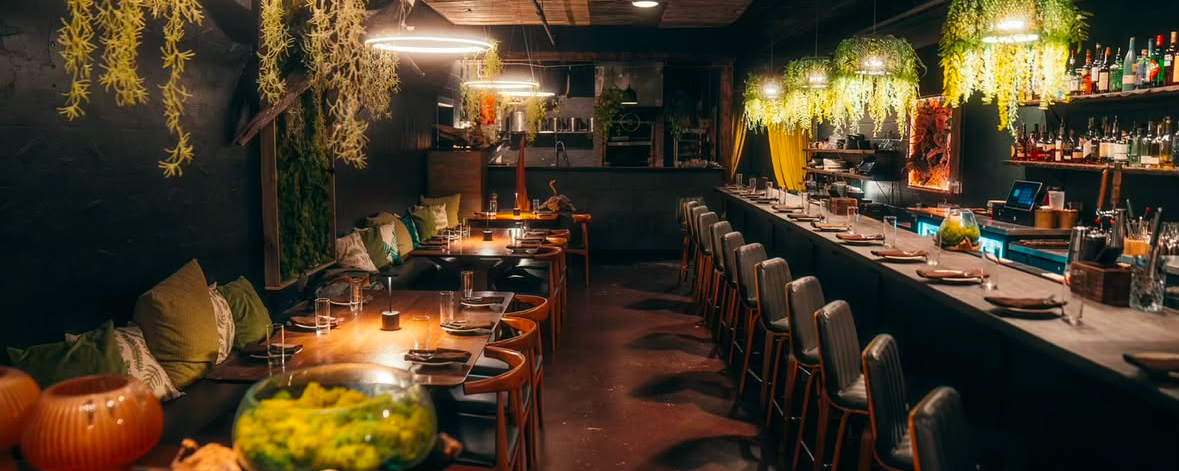
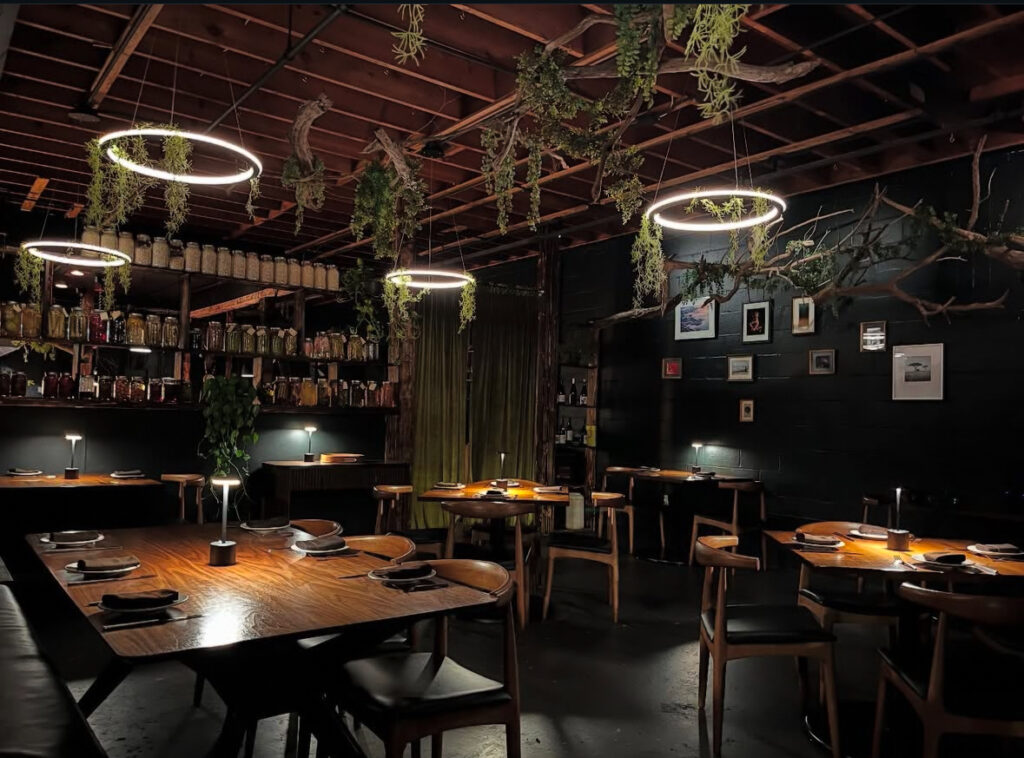
Bearcat Restaurant in Charleston, South Carolina has announced its closing after just over 1 year in the Avondale Neighborhood

Read More

We unfortunately have to announce that the talented team at Bearcat Restaurant in Avondale announced on Instagram that they have closed their restaurant in Charleston. In a passionate statement filled with love, the owner stated:

Bearcat was born out of a pandemic and started in a downtown Charleston apartment on Halloween weekend in 2020. It began as just a single pop up in a friend’s apartment and against all odds, progressed its way into a brick and mortar over the course of three years. The restaurant opened on Halloween weekend in 2023 with a menu that pushed the boundaries of what a restaurant could be in west Ashley at the time. Unfortunately, 13 months after being open, Bearcat’s last service for the foreseeable future was this past Saturday. We want to thank everyone that have supported the restaurant over the past year. A huge thank you is due to the staff, Past and present, and everyone who has had a hand in making bearcat the special place it was. 

Thank you Charleston for one hell of a ride.

Thank you for letting us come along for the ride!

Stay connected and subscribe to Charleston Daily.

Clemson students build community pavilion and school garden in Charleston, South Carolina

Read More

By Be a Bates

The School of Architecture’s Architecture + communityBUILD (A+cB) studio recently designed, built and held a ribbon cutting for a new community pavilion and school garden in Charleston.

In partnership with the Green Heart Project, the Charleston Parks Conservancy and the City of Charleston, the community pavilion and garden were built at Eric Cornelius Singleton II Park.

The project will provide Meeting Street Academy students with access to an outdoor pavilion with built-in picnic tables, countertops, a garden storage shed and a garden where students will be able to learn more about the food they eat and give them experiential opportunities.

“I cannot tell you enough how important it is to give students opportunities with experiential learning, and the magic happens when experiential learning collides with strong, rigorous academics,” shared Molly Grant, the director of special projects at Meeting Street  Academy. “And that is what Meeting Street Academy is all about. So I am thrilled that we were part of this project.”

“This project probably touched the hands of around 40 students,” explained David Pastre, the director of the Clemson Design Center in Charleston. “But out of those 40 students, 15 A+cB certificate students led the design work.”

According to Pastre, those students designed the building, created construction documents and fabricated and installed all parts and pieces, including pouring all the concrete.

“Clemson is a land grant institution, and this project fell right in line with that,” Pastre said. “This project lets us give back to the community and make a difference in Charleston. It’s also a service-learning opportunity, so not only are we giving back to the community, but this is also an opportunity for our students to learn and work alongside professionals and community members in creating needed places in our community.”

Pastre explained that the A+cB program brought the project to fruition with the help of Seamon WhitesideEM Structural, and other corporate and non-profit partners.

“They’re a huge support to us,” said Pastre. “We couldn’t have made this happen without them.”

The Green Heart Project fundraised to pay for the majority of the project, and the City of Charleston works with the Clemson Design Center on projects annually.

Five Clemson alumni who were part of the original design team were in attendance at the ribbon cutting on November 19, 2024. They expressed that seeing their hard work finally finished means a lot.

“The last two weeks of the semester, we came out, and we started putting it up; we got kind of a skeleton going, and people started coming up and asking us what was going on, and that’s when it really started to feel really special, and now with all the students coming in, it’s incredible,” explained Architecture alumnus Payton Davy.

Another alumnus, Kevin Arnold, explained that seeing something they worked on in college turn into a real project that the Charleston community will use and enjoy was extremely rewarding.

Source link: Clemson University

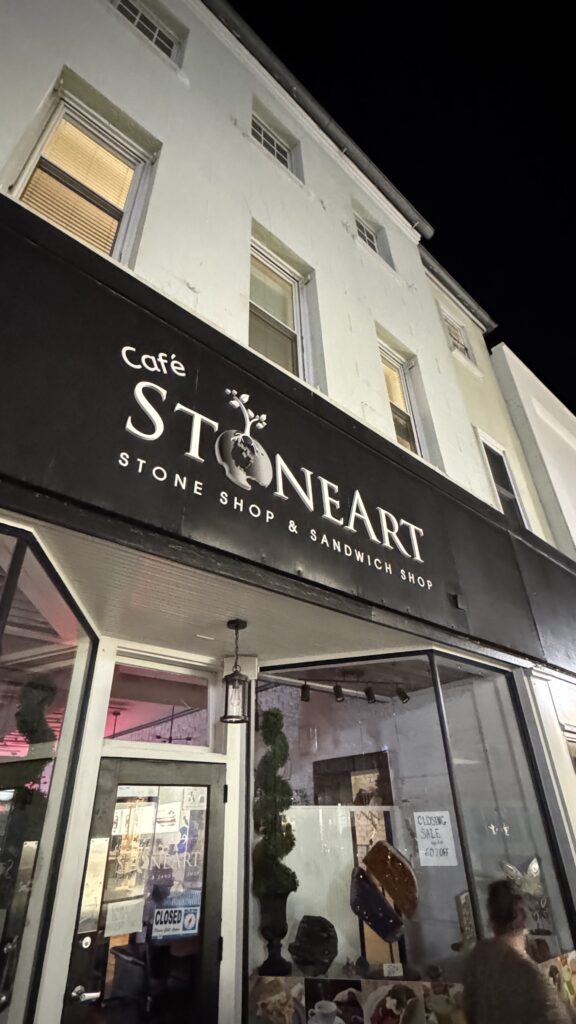
After 45 Years, the City Club Raleigh is closing its doors at the end of 2024

Read More

After 45 years, the City Club Raleigh, North Carolina has announced its closing. On December 31, 2024, the club will open its doors one final time.

In a message on Instagram, the club stated:

After considering numerous options for a viable path forward, we’ve made the very difficult decision to close City Club Raleigh. Our last day of operations will be Tuesday, December 31, 2024. The City Club has been a proud member of the Raleigh community for 45 years, which made this decision very difficult. We want to extend our deepest thanks to our dedicated members, staff, and the local community for their unwavering support and commitment over the years. It has been an honor to be a part of so many memorable experiences, and we are grateful for the relationships we’ve built along the way. We remain proud of what we’ve accomplished together, and we wish everyone the best in their future endeavors.

Wishing the staff, owners and families all the best in their next endeavors.

Stay connected and subscribe to Charleston Daily.

South Carolina Ranks #1 in the Nation in Production of Collards, Turnip Greens and Southern Peas (Yet, we produce so much more)

Read More

Digging into the Census of Agriculture from the South Carolina Department of Agriculture

By Eva Moore

South Carolina now leads the nation in collard green, turnip green, and Southern pea acreage, according to the latest Census of Agriculture.

The Census of Agriculture is performed every five years by the US Department of Agriculture’s National Agricultural Statistics Service. While USDA collects a variety of data throughout each year, the Ag Census is a good source for detailed information about what farmers are growing beyond major commodities like corn and cotton.

In the previous Census, in 2017, South Carolina topped the charts in just one crop: turnip greens.

Ashley Rawl, vice president of Sales, Marketing, and Product Development at Lexington County-based WP Rawl, is thrilled to see South Carolina in the top collard spot. WP Rawl is one of the nation’s leading growers of collards and other leafy greens, and he says his company has been on a mission to make consumers love collards. In addition to fresh bagged and bulk greens, they sell collard sauté kits — and they emphasize that collards can be cooked in just 15 minutes.

“For the last several years, we’ve been trying to get collards the recognition they’re due,” Rawl says. “Kale went through a boom several years back – and we love kale; we grow a lot of kale. But we are committed to collards having their day.”

Over at McCall Farms in the Pee Dee region of the state, collards are also an important line of business. McCall Farms sells canned collards under the Glory Foods and Margaret Holmes brands.

McCall Farms sells collards nationwide, satisfying what co-president Thomas Hunter says is broad demand for the product.

“Collards are a classic Southern staple at the dinner table,” Hunter says. “We strive to ensure consumers have the ability to purchase high-quality collards from their local grocery store to feed their family year-round.”

Hunter credits South Carolina farmers for their commitment to growing an exceptional product and Clemson Cooperative Extension researchers with pushing the collard industry forward by developing varieties with good disease resistance and high yields.

So, what does it take to be No. 1? In 2022, South Carolina grew 2,568 acres of collards, 1,980 acres of turnip greens, and 3,617 acres of Southern peas. (The USDA category “Southern peas” is also called cowpeas, and includes blackeyed peas, crowder peas, and various field peas.) However, it’s important to understand that while South Carolina grows more of these vegetables than any other state, they are not our top crops. By acreage and production value, crops like corn, soybeans, and cotton top the list. For comparison, in 2022, South Carolina farmers harvested 390,000 acres of soybeans — and the state doesn’t rank in the top 20 of soybean-producing states. 

The USDA State Statistician for South Carolina, Jacqueline Moore, says the state’s surge in collard and Southern pea acreage is part of a larger trend.

“If you look at South Carolina’s vegetable acreage overall, we’re up 25 percent from five years earlier,” she explains.

Some of our competitor states are not seeing the same growth: “Florida is up 12 percent, California is only up 2 percent, and if you look at our neighbors, North Carolina is down and Georgia is down.”

Moore says she thinks South Carolina farmers have capitalized on the popularity of local food, as well as the fact that big vegetable-growing states like California are struggling with water and other resources.

“Our farmers are finding advantages where there are opportunities,” Moore says.

South Carolina also holds the No. 2 slot for peaches and kale – behind California. 

Now that it’s November, South Carolina’s collard green growers are gearing up for a busy season. Rawl estimates that one-quarter of leafy green sales take place during the six-week span from Thanksgiving to Christmas.

Collard greens were declared South Carolina’s state vegetable in 2011. Now, Rawl notes, “We have the acres to back it up.”

Where We Stand

Here are some of South Carolina’s other top fruit and vegetable rankings:
South Carolina’s Rank + Commodity

1  Collard Greens
1  Southern Peas              
1  Turnip Greens               
2  Kale                                  
2  Peaches                          
5  Asparagus                      
5  Honeydew Melon       
5  Okra                                 
6  Plums                              
7  Non-Bell Peppers        
7  Sweet Potatoes            
8  Cantaloupe                   
8  Watermelon                  
8  Nectarines   
9  Cabbage Mustard 
9  Cucumbers 
10 Broccoli   
10 Tomatoes
10 Figs           
10 Strawberries 

Source link: South Carolina Department of Agriculture

The Southeast has 11 of the top 20 cities to retire based on a new study by U.S. News – 1 SC City in the top 20

Read More

By Mark A. Leon

Warm climate, coastal regions, hiking, outdoor recreational, lower cost of living, more flight patterns, yoga, or easy living. These are only a few of the reasons, many are flocking to the Southeast to retire.

In a latest study by U.S. News, 11 of the top 20 places to retire are located in the Southeast region of the United States.

South Carolina is a hot spot destination for retires as well. 4 Notable cities made the list from South Carolina: #13 – Charleston, SC, #30 – Greenville, SC, #67 – Spartanburg, SC, #78 – Columbia, SC.

Top Southeast cities to retire:

  • #1 – Naples, Florida
  • #4 – Sarasota, Florida
  • #6 – Raleigh, North Carolina
  • #7 – Jacksonville, Florida
  • #8 – Huntsville, Alabama
  • #9 – Charlotte, North Carolina
  • #13 – Charleston, South Carolina
  • #17 – Pensacola, Florida
  • #18 – Tampa, Florida
  • #19 – Port St. Lucie, Florida
  • #20 – Melbourne, Florida

Complete list and rankings

Source: U.S. News

Stay connected and subscribe to Charleston Daily.