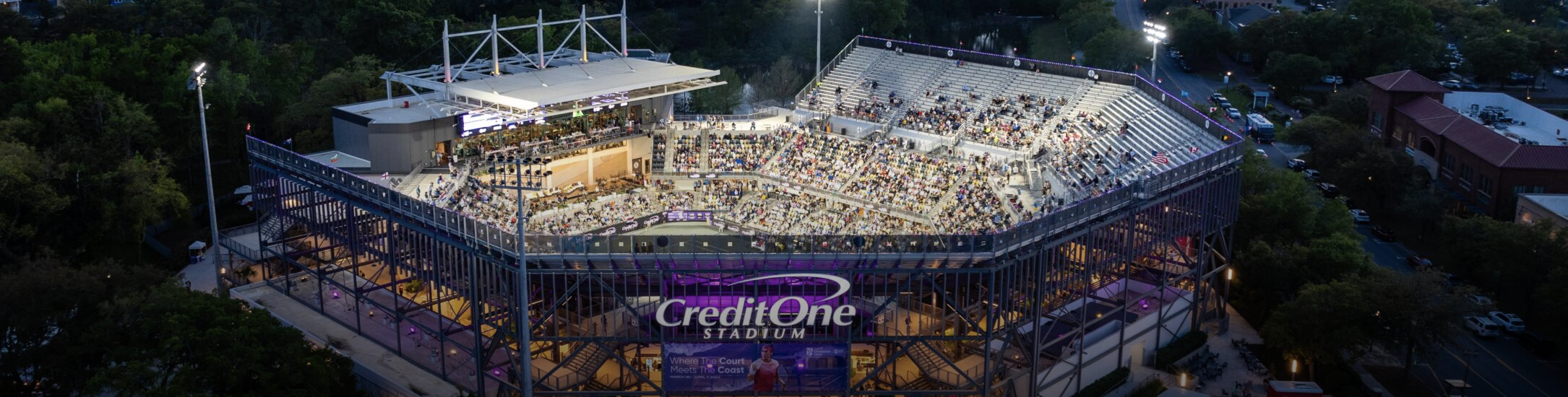
The Credit One Charleston Open, North America’s largest women’s-only professional tennis event, was announced today as the WTA 500 Tournament of the Year for the fourth consecutive year. This prestigious recognition, awarded by the Women’s Tennis Association (WTA), is voted on by the players and honors a tournament for the excellence of its staff and organization, its passionate fans and its broader commitment to tennis and its athletes. The Credit One Charleston Open was selected from among 18 WTA 500 tournaments worldwide, competing against events in North America, Australia, Europe, China and the Middle East, among other international locations.
“Earning this honor again in 2025 is a proud moment for everyone who brings the Credit One Charleston Open to life each year,” said Bob Moran, President of Beemok Sports & Entertainment. “This recognition belongs to our incredible team, whose passion and attention to detail set the standard for excellence, and to the Navarro family, whose unwavering support and vision continue to elevate this event and our sport. We remain deeply committed to growing women’s tennis, celebrating its athletes and delivering a world-class tournament in Charleston.”
The ‘Tournament of the Year’ awards are divided into three categories, reflecting the different levels of WTA tournaments. The winners for 2025 are:
“I always look forward to coming back to Charleston each year. The site, city, fans and energy makes the experience so positive for me and all the players,” said Jessica Pegula, 2025 Credit One Charleston Open champion. “Overall the facilities are simply world-class.”
The Credit One Charleston Open will return March 28 – April 5, 2026. Current player commitments include World No. 6 Pegula, World No. 7 Madison Keys and World No. 15 Emma Navarro.
“I am delighted to share that once again the Credit One Charleston Open has been selected as the recipient of the WTA 500 Tournament of the Year, marking an extraordinary fourth consecutive year of receiving this honor,” said Portia Archer, WTA CEO. “I would like to extend my sincere thanks to the Charleston team for creating an environment where athletes feel supported, comfortable and able to compete at their highest level. Their dedication and tireless efforts have established a well-deserved reputation and set an inspiring benchmark for others.”
In April, Credit One Bank extended its title partnership of the Credit One Charleston Open through 2031 and announced the tournament will offer equal prize money beginning in 2026, a historic milestone for the event. This move reflects the bank’s belief that women athletes deserve equal investment and opportunity, and further cements Charleston’s role as a leader on the Hologic WTA Tour. With this announcement, the Credit One Charleston Open becomes the first standalone WTA 500 tournament tovoluntarily increase prize money to match comparable ATP 500 events.
The nine-day Credit One Charleston Open showcases a singles draw of 48 players, a qualifying draw of 24 players, and a doubles draw of 16 players. The event traditionally hosts more than 90,000 attendees on Daniel Island.
The Credit One Charleston Open has been a pioneer in women’s professional sports since 1973, paving the way for female tennis players to receive equal recognition, respect and compensation in the sport. The tournament has a long history of breaking new ground in tennis, having been the first women’s tennis event to offer $100,000 in prize money in 1973 and the first to be broadcast live on network television. The inaugural champion, Rosie Casals, received a check for $30,000, which was the largest prize money payout awarded to a woman that year. Originally held on Hilton Head Island, the event relocated to Charleston in 2001 and is now played at the LTP Daniel Island tennis center, home to Credit One Stadium.
Tickets are currently on sale at creditonecharlestonopen.com or by calling (843) 856-7900. For additional information, please email info@creditonestadium.com or visit creditonecharlestonopen.com. When purchasing tickets for the 2026 Credit One Charleston Open, patrons have the option to choose from single session tickets and a limited number of ticket packages, including the Intro Package and MUSC Family Weekend Package. Packages provide exclusive and premier views of the court, as well as the best value on tickets. Special discounts are available for juniors, seniors, USTA members and military members. Juniors aged 16 and under receive complimentary general admission with the purchase of an adult ticket, courtesy of Credit One Bank.
Join us on Folly Beach for the Save the Light Half Marathon and 5K to support the preservation of the Morris Island Lighthouse by Save The Light, a grassroots non-profit organization that formed in 2000 to save the Morris Island Lighthouse from being lost to the sea. Both races are USATF-certified and start and finish near the Folly Beach Pier. Half Marathon is a run only event. The 5K is open to runners and walkers. Awards and post-race food provided. Registration is required and ends by February 4; on-site registration not available. The race is open to runners of all levels, including beginners. For more information, visit https://ccprc.com/3258/Save-the-Light-Half-Marathon-5K.
Fee: $45 5K, $65 Half Marathon
Ages: 10 and up for half marathon, ages 8 and up for 5K (chaperones required for 15 and under)
Lincoln Regional Center in McClellanville – High School Basketball Gymnasium
Sat., Feb. 21, 4 – 6 p.m.
Join us for the second annual Senior Sneaker Dance at Lincoln Community Center in McClellanville for a fun evening of dancing and refreshments wearing your favorite sneakers and formal attire.
Fee: FREE
Ages: 50 and up
https://ccprc.com/3765/Senior-Sneaker-Dance
Schroder Community Center Senior Sneaker Dance
Schroder Community Center – Basketball Gymnasium
Sat., Feb. 28, 4 – 6 p.m.
Join us for the inaugural Senior Sneaker Dance at Schroder Community Center in Hollywood for a fun evening of dancing and refreshments wearing your favorite sneakers and formal attire.
Fee: FREE
Ages: 50 and up
https://ccprc.com/3765/Senior-Sneaker-Dance
February 2026 Programs
Early Morning Bird Walk at Caw Caw
Wednesdays and Saturdays, Feb. 4, 7, 11, 14, 18, 21, 25 and 28, 8:30 – 10:30 a.m.
Caw Caw Interpretive Center Registration is required. Join us on one or more of our regular bird walks. Our trek through many distinct habitats will allow us to view and discuss a variety of birds, butterflies, and other organisms. What to expect: Accessible parking, accessible restrooms, accessible water fountains, and accessible picnic tables are available at this location. The program route is a flat, loop and benches are available along the trail route. The trails are unpaved. The program speed is moderately slow and will require periods of standing and gazing upwards.
Fee: FREE for Gold Pass members or Non-member: $12 (registration required) Ages: any Register Online
Belay Basics
Sun., Feb. 1, 10 – 11:30 a.m.
James Island County Park – Climbing Wall at Outdoor Zone New to belaying? This class will teach you the essential skills to belay safely and confidently on top rope. We’ll cover proper setup, communication, catching falls, and gear handling—all broken down step by step. No experience required, just a willingness to learn. By the end, you’ll be ready to belay a climbing partner outdoors or indoors. Gear is provided, but feel free to bring your own.
Kids on the Go: Little Longboarders – 4-5 year-olds
Tuesdays, Feb. 3 and Feb. 10, 11 a.m.
Palmetto Islands County Park
Let the kids go! Foundations for board sports start with balance. Have your little one join in to learn the basics on a longboard. All activity equipment provided.
Ready to flutter into a world of wonder? Join us to discover the secret lives of bats! We will learn how these tiny night flyers “see” with sound, where they live, what they eat, and more. This program nurtures curiosity, early science skills, and love for these amazing nighttime creatures. Join us for lots of hands-on exploration and fun as we celebrate one of nature’s coolest creatures – bats!
Ages 18 months – 6 years. Chaperone must accompany child.
Throughout time, nature has inspired people’s artistic expressions. Accompany us as we connect with nature and explore various creative art concepts. Bring your creativity and we will supply the rest!
Bring your curiosity and engage all of your senses while exploring natural habitats at your county parks! Led by Charleston County Park’s Education staff, the multi-seasonal Junior Naturalist program series offers a wide variety of fun and educational nature-based activities focused around a central theme. Children who attend 8 classes earn the title of a Certified Junior Naturalist.
Ready to take your climbing to the next level? This class covers the basics of lead climbing in the gym—how to clip safely, manage rope drag, belay a lead climber, and fall safely with confidence. We’ll walk you through key techniques and safety protocols, with plenty of hands-on practice. No prior lead experience needed, but participants should be comfortable top rope belaying and able to climb at a 5.9 level or higher. All gear provided; bring your own if you prefer.
Experience the beauty of a bottomland hardwood forest with a trained naturalist. Beneath the towering cypress trees, we’ll uncover some secrets of the plants and animals that inhabit this uniquely southern ecosystem.
Ages 12 & up. A registered and paid chaperone is required for participants ages 15 and under.
Join a Master Naturalist instructor to see the natural wonders of our parks in a new light. Discover plants and animals while learning about their connections to the world around them and how that connectivity may circle back to you!
Ages 12 & up. A registered and paid chaperone is required for participants ages 15 and under.
This walk focuses on the incredibly diverse northeast end of Folly Island. Once the home of a Coast Guard station, this Heritage Preserve protects maritime forest, beach, dune, and marsh habitats for wildlife. This site is a leader in number of bird species seen in South Carolina. At this time of year, we hope to see a variety of seabirds, sea ducks, and shorebirds such as Northern Gannet, Black Scoter, Piping Plover, and much more.
Come out and learn the art of flying discs! We’ll start with the basics, including: types of discs, throwing techniques and etiquette on the course. We’ll have the opportunity to play a few holes at our course.
Winter is a great time to explore the beach. Join an experienced naturalist to familiarize yourself with many species that may be found there. We’ll search for artifacts and living creatures along the beach such as molluscs, sponges, corals, and more. Share in the discovery by learning intriguing stories about adaptations that allow for life near the ocean.
Ages 9 & up. A registered and paid chaperone is required for participants ages 15 and under.
Identifying trees without their distinctive leaves demands scrutiny, dedication, and practice. Through the use of dichotomous keys, helpful instruction, and your powers of observation, learn more about twigs, buds, and bark!
Join us for a delightful morning of Southern storytelling and culinary tradition at the Folktales Fish Fry. This immersive experience brings together the rich folklore of the South, featuring tales of High John the Conqueror, a legendary figure who embodies resilience, wit, and triumph. The program will be a celebration of the deep connection between food and community, where stories are passed down from generation to generation, and every meal is an opportunity to connect with the past while creating new memories, celebrating the joy of food, friendship, and shared traditions. This program will take place at the McLeod Plantation Historic Site Pavilion where seating is available for all participants. The program location is outside in a shaded area. A small, tasting portion of food will be provided to each participant.
Winter is a great time to explore the beach. Join an experienced naturalist to familiarize yourself with many species that may be found there. We’ll search for artifacts and living creatures along the beach such as molluscs, sponges, corals, and more. Share in the discovery by learning intriguing stories about adaptations that allow for life near the ocean.
Ages 9 & up. A registered and paid chaperone is required for participants ages 15 and under.
Discover the secret social lives of plants, animals, and everything in between! Who are partners and who are rivals in different ecosystems? We will explore the surprising and sometimes sneaky ways living things work together – or against each other – in the wild. From best-bud partnerships like flowers and bees, to one-sided freeloaders, like dreaded ticks! This program will help us see that in nature, everything (and everyone) is linked – sometimes in the most unexpected ways!
Clemson University has the fourth-best honors college in the country and the best in South Carolina, according to a list of the 50 Best Honors Colleges in 2026.
The report, published by College Transitions as a resource for high school students and college counselors, evaluates and ranks hundreds of honors colleges and programs throughout the U.S. using three criteria: selectivity, benefits offered and program rigor.
“We are incredibly proud to be ranked among the top honors colleges in the nation—an achievement that reflects the excellence and dedication of our students, staff and faculty,” said Sarah Winslow, dean of the Honors College. “Through interdisciplinary learning, research and intentional mentorship, our Honors College cultivates a vibrant community of learners and leaders who grow through connection and purpose.”
A key goal of the Honors College is to recruit the highest-achieving and highest-potential undergraduates to Clemson. The median student in the college’s Fall 2025 incoming class was ranked in the top 2% of their high school graduating class. These students were also deeply engaged outside the classroom in service, volunteer and extracurricular activities, often holding leadership positions.
At Clemson, Honors students join and create a community designed to foster both academic excellence and personal growth. The nationally recognized Honors Residential College offers a state-of-the-art environment for collaboration and learning. Students also have access to high-impact academic and research opportunities, including professional and academic development grants, specialized cohort-based programs, peer mentorship and leadership-focused experiences.
As a result, Honors students go on to earn major college and University-level awards as well as national and international recognition, including Rhodes, Churchill, Truman and Fulbright scholarships.
When they graduate, almost 96% of Honors students report immediate post-graduation plans. Some join leading employers, such as Amazon Web Services, NVIDIA and the Bank of America. Others pursue graduate studies at prestigious institutions like Yale University, Stanford University, Cornell University, and the Massachusetts Institute of Technology (MIT).
The Honors College’s national prominence mirrors Clemson’s continued rise as a leader in undergraduate education and the student experience. The value of a Clemson degree has never been higher. The University was recently recognized as the best national and public university in South Carolina in the U.S. News & World Report 2026 rankings. Forbes also named Clemson as the best university in the state and No. 33 nationally among public colleges.
Robert Huffman’s Camino Caffeino is more than a mobile coffee stand; it is a personal manifesto—an attempt to stitch together the loose threads of a life shaped by movement, loss, and a persistent yearning for belonging. The influence of his grandfather, a deep commitment to community, an ethic of self-care, and the responsibilities of family converge in a project that is at once nostalgic and forward-looking.
The grandfather’s shadow is central to Robert’s narrative. He learned in his twenties that his maternal grandfather had taken his life at 37, a revelation that prompted existential questions about purpose and wellbeing. Robert recalls asking himself a question that would recur throughout his life: “What am I doing with my life? Am I pursuing what I want, or am I letting life pursue me?” That moment launched a search for meaning that moved him away from a conventional finance career and ultimately toward projects that prioritized human connection.
There is another grandfather in Robert’s memory—the one whose small farm in Kentucky embodied hospitality. Summers at that farm, where oversized tomatoes were sold more for company than profit, gave Robert an early lesson in the social value of simple acts. He describes how his grandfather “just does it so people will come over,” a philosophy that would crystallize into a business model built around presence and conversation rather than purely transactional goals. That ethos is visual and literal in Camino Caffeino: an old El Camino parked by the shore, coffee served out of its back, an invitation to slow down and trade stories.
Community is the oxygen of Camino Caffeino. For Robert, community emerged both as a corrective to loneliness and as an aspiration. After years living in different states and working remote jobs—experiences that, he says, often left him “behind a computer all day, just crunching numbers”—he moved to Charleston seeking roots. The El Camino became a vehicle for relationship-building: “The point is to meet people,” he said, reflecting that the business was initially about making coffee and making connections. Those connections are not incidental; they are the product. Robert has translated that goal into concrete efforts like monthly Build and Brew meetups and partnerships with local artisans, choosing community resilience over scale-at-all-costs.
Self-care informs both the personal and operational logics of Camino Caffeino. Robert’s work with Movember—an organization focused on men’s mental health—has continued to shape his attentiveness to mental wellbeing. The cafe is an embodiment of a philosophy he phrases succinctly: “drive fast, drink slow.” Chase your dreams with urgency, he argues, but enjoy the moments along the way. That tension—pursue boldly, savor slowly—underpins his cautious approach to growth. He recognizes the grind that often turns passion into drudgery: “While you are fulfilling a dream, you are doing a lot of things that you hate,” he observes. Still, he chooses practices meant to preserve the original joy: keeping operations simple, favoring local sourcing over mass outsourcing, and resisting the pressure to monetize every aspect of the brand.
Family is both a motivator and a boundary for Robert. Becoming a father intensified his desire to live intentionally. He worried about letting resentment build from deferred dreams, asking himself whether he could model bravery for his son if he never pursued his own passions. That calculus tipped him toward action: “If it doesn’t succeed, at least I tried it,” he said, showing how the desire to live an examined life outweighed the fear of failure. Yet parenthood also introduced new limits—on social media exposure, for instance. Robert and his wife are protective, refusing to make their child a public mascot and limiting screen time to preserve childhood. That protective stance extends to the business, which prioritizes face-to-face interactions over digital amplification.
Robert’s decision to center local artisans and slow production practices is another family- and community-minded choice. He accepts lower margins in favor of relationships: “The point is going to build local partnerships,” he explains, even if that means higher costs. Those partnerships amplify the communal purpose of Camino Caffeino and root the brand in the place that gave Robert the confidence to pursue it.
The core reasons behind creating Camino Caffeino are simple and consistent: to heal a personal void, to create a place—literal and figurative—where people can slow down and talk, and to model a life that balances ambition with presence. Robert’s project asks that customers do two things at once: pursue the things that matter and savor the ordinary moments that make life worth living. His vehicle, his design choices, and his daily conversations are all instruments in that work.
In a culture that often equates success with scale and speed, Camino Caffeino stands as a small, deliberate rebellion. It is a business shaped by the memory of a man who loved company, by a son’s resolve to choose presence over inertia, and by a father’s commitment to protect and teach. As Robert puts it, the venture is about more than coffee: it is “to meet people,” and through those meetings, to weave a life that honors family, community, and the care that sustains both.
McNeal by Pulitzer Prize winning playwright Ayad Akhtar makes its national regional premiere in Charleston, South Carolina.
To properly examine the latest production ofMcNeal we must ask the audience to remove their perceptions, prejudices and subjective thoughts on the current and future state of A.I. in our current social landscape and walk into the theater with an open slate.
I will give you all a moment to close your eyes, clear your mind and begin to explore a journey of discovery without any pre-determined expectations.
Are we ready? Good.
What is McNeal?
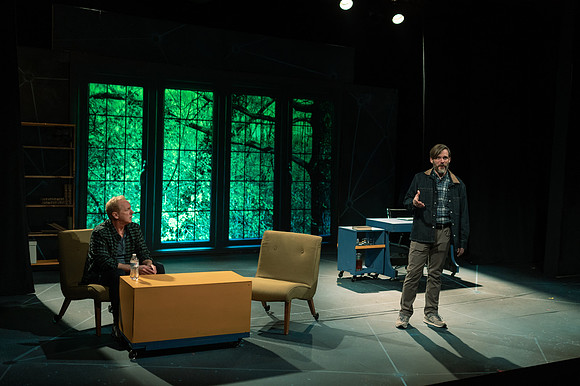
McNeal is a new contemporary play by Pulitzer Prize Winner playwright Ayad Akhtar making its national regional debut at the Pure Theatre in Charleston, South Carolina. This production is directed with thoughtful precision by Sharon Graci (Co-Founder and Artistic & Executive Director of Pure) and stars David Whalen at Jacob McNeal and co-starring Sam Smith, Joy Vandervort-Cobb, Andrew Puckett, Journey Townsend, Sylvia Jeferies and Ryka Khanna.
At the heart of this play is the evolution of humanity and a deeper dive into the human condition as it evaluates the place artificial intelligence (A.I.) in the future of our planet and perhaps our own sanity.
Is A.I. to be feared? Yes
Is A.I. to be embraced? Yes
Does A.I. make our lives easier? Yes
Does A.I. complicate our lives introducing elements that question fact form distortion? Yes
Do we have a way, as human, to co-exist with A.I.? Hopefully
Will A.I. have us questioning our intellect and creative capabilities?
There it is! That last question sums up the heart of this play.
That is the journey McNeal will take you on for 90 minutes and certainly much longer as the conversation is sure to continue long after the play has concluded.
In the opening scene we learn acclaimed novelist Jacob McNeal he has just been awarded the Nobel Prize in Literature. Yet sometimes the view from the top isn’t always as glamorous as we hope. At this point, I could add spoilers to paint a much more visual picture of the spiraling downfall of this writer, but I won’t.
As the audience watches each scene progress, we witness a man nosediving into a blackhole of intellectualism, narcissism, metaphysical digital obsession, self-doubt and redemption and he grapples with his past, present and future.
David Whalen’s portrayal of Jacob McNeal was nothing short of exquisite. His use of verbal and non-verbal range captures the essence of a man so driven by passion and relevancy that his loses touch of the core elements of rational thought.
Still I felt a sympathetic sensitivity to this novelist.
To walk away with empathy and likability from a character who has been manipulated by his demons throughout his adult life is truly the work of a stage artist. Mr. Whalen found an inner strength in this role allowed him to express regret, anger and obsession and in the end, even find forgiveness within himself with poignant thoughtfulness and transparency.
I even found a bit of self-reflection through this character whose exposure of hidden truths and repressed memories becomes the fire the alters his future and all relationships with family, colleagues and loved ones.
Mr. Whalen’s performance could not be complete without a supporting cast who collectively played a powerful role as antagonists and influencers providing guidance and direction to McNeal.
What are the core themes of McNeal
A good play follows a clear narrative with a structured story built around strong characters. A great play leaves the audience with an assortment of interpretations, meanings and emotional connection. It explores a story but connects with its audience in varied ways.
McNeal is a great play.
With elements of gender equality, generational social behavioral norms, human creativity vs A.I., plagiarism vs originality, love vs lust, and obsession vs passion, McNeal takes you on an absolute emotional rollercoaster that continues to evolve with each scene leading to an explosive conclusion.
Director Sharon Graci and her technical team cleverly use sound, light and digital visuals to blur the line of actual life versus artificial. It is a beautiful chaos created by the production team.
This play is certainly a ride worth being on. By the end, you may even think differently about your thoughts on A.I.
How can I see this production?
McNeal will be playing at Pure Theatre through February 7, 2026. Click HERE to purchase tickets.
P.S. – No A.I. agents assisted in the writing of this review…..
South Carolina industry recruitment reaches $9.12 billion in 2025
COLUMBIA, S.C. – Governor Henry McMaster and the South Carolina Department of Commerce (S.C. Commerce) today released its 2025 industry recruitment results, marking a milestone for rural economic development. From January to December 2025, South Carolina announced total capital investment of $9.12 billion, representing the third-highest year for industry recruitment on record and more than 8,100 new jobs. Rural recruitment of both capital investment as well as new jobs accounted for more than 40% of the overall totals – the highest percentages since 2010.
“South Carolina continues to bring in record years in economic development, and this third-highest year for industry recruitment is further proof that our strategy is working,” said Governor Henry McMaster. “Our success in rural communities shows that opportunity exists in every corner of our state. By investing in our workforce and supporting pro-business laws and policies, we continue to bring in thousands of jobs that benefit South Carolina families and strengthen our entire state.”
Rural recruitment accounted for $4.25 billion, or 46%, of total announced capital investment and more than 3,500, or 44%, of total announced new jobs. Rural projects span agribusiness, automotive, energy, and wood and paper products – reflecting South Carolina’s increasingly diverse economy and the competitive strengths of the state’s rural workforce, infrastructure and quality of life.
Of the 82 total announced projects, 34 chose rural communities – described as county development Tiers III and IV, as calculated annually by the S.C. Department of Revenue – ensuring long-term opportunities across every region of the state.
“Rural success is deliberate – driven by strong collaboration among state leadership, local economic developers and committed partners – and fuels economic growth in every corner of the state,” said Secretary of Commerce Harry M. Lightsey III. “South Carolina’s milestone in rural recruitment in 2025 underscores our commitment to bolstering the potential of these communities and supporting the diverse growth that strengthens every part of the economy and every region of the state.”
For more details on the state’s announced economic activity in 2025,click here or visit S.C. Commerce’snewsroom. A complete list of announced projects since 2011 can be found via the“Inform SC” data hub.
COLUMBIA, S.C. – In a preview of his soon to be released 2026 executive budget, Governor Henry McMaster today announced he will recommend the General Assembly appropriate an additional $1.1 billion in new money from the state budget to keep road projects moving and on schedule despite inflation.
In the last four years, Governor McMaster and the General Assembly have approved state budgets that have contained $1.4 billion in funding for new construction and improvements to state-owned roads, bridges, highways, and interstates. There are currently almost $7 billion in construction projects underway across the state, up from $2.7 billion in 2017.
Nationally and here in South Carolina, inflationary construction and labor cost increases have the potential to create crippling delays and busted budgets for major construction projects currently underway and soon to break ground.
“Over the last several years, South Carolina has made tremendous progress improving our roadways, with major projects underway in every corner of the state,” said Governor Henry McMaster. “Our population is skyrocketing, and inflation is driving up construction costs, creating potential delays. We can’t make more time, but we can use this new surplus money to keep road projects moving and on schedule.”
The governor’s proposal follows a request made to him from South Carolina Department of Transportation (SCDOT) Secretary Justin Powell seeking additional funds to keep the department’s current construction projects moving and on schedule in the face of inflationary challenges.
According to Secretary Powell, three prime examples of current construction costs that have increased from 2022 to today are:
The widening of I-26 between Charleston and Columbia: $2.02 billion to $3.03 billion, or a 50% increase
The widening of I-95 from the Georgia border to Point South: $977 million to $2.27 billion, or a 132% increase
Carolina Crossroads (Columbia’s Malfunction Junction): $2.062 billion to $2.751 billion, or a 33% increase
Additional funds will also help SCDOT move forward with getting additional interstate widening projects shovel ready in the next few years, including I-85 in Anderson and Oconee counties and I-77 in York and Chester counties.
Another example of how inflationary cost increases have impacted SCDOT is the number of miles of two-lane highway which can be paved using one penny of the state’s gas tax: In 2017, SCDOT could pave 114 miles; In 2025, SCDOT could only pave 87 miles.
Since 2017, SCDOT has placed more than 10,000 miles of roadways (nearly a quarter of the state’s 41,000 mile highway system) under paving contract, replaced or rehabilitated over 450 bridges, and completed major interstate improvements, including projects on I-85, I-20, and I-26.
Governor McMaster will release his executive budget for the 2026-27 fiscal year in the coming days.
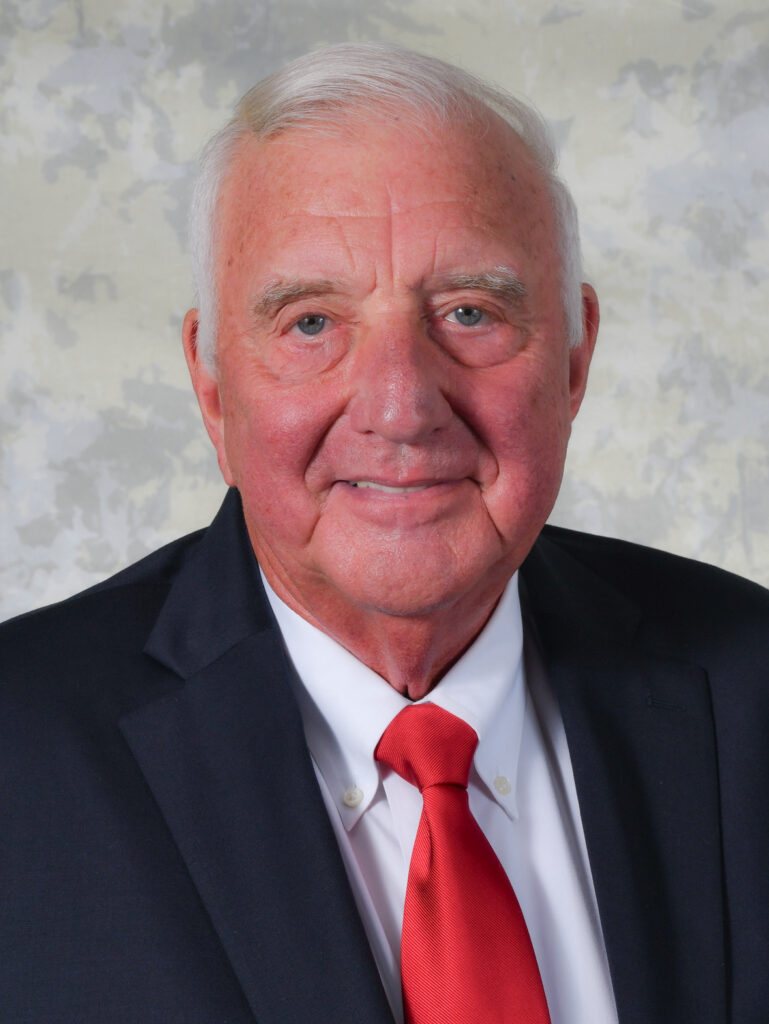
Columbia, S.C. (January 15, 2026) – William B. Dukes, of Lexington County, was named Vice-Chairman of the South Carolina Department of Transportation Commission at the Commission’s January 15, 2026 meeting in Columbia.
“I’m truly honored to continue in this leadership role with the SCDOT Commission,” said Dukes. “We’ve made great progress, and I look forward to working with my fellow commissioners, our partners, and SCDOT’s dedicated team on delivering results that benefit every South Carolinian.”
Dukes is owner of Blue Marlin Restaurant.
A graduate from the University of South Carolina with a Bachelor of Science Degree in Business Administration, Dukes received an ROTC commission in the US Air Force. A Vietnam veteran, Dukes served in the US Air Force for four years and attained the rank of Captain.
In 1981, Dukes co-founded and developed the Longhorn Steakhouse chain.
Dukes was founder and Chairman of Honor Flight of SC, with more than 2,000 World War II and Korean War veterans honored. He was appointed by the Secretary of the Army to be the Civilian Aide to the Secretary of the Army representing South Carolina and served in this capacity from 2014-2018.
Dukes was a member of the Lexington-Richland Airport Commission, where he first began serving in 2002; served as member of the Newberry College Board of Trustees; is a former Director of the Columbia and Charlotte Chambers of Commerce; a former advisor to the SC Lieutenant Governor’s Office on Aging; past member of the USC Educational Foundation; and past chairman of the Columbia Convention Center Authority.
Dukes received The Order of the Palmetto, the state’s highest civilian honor, from the Governor of South Carolina.
About SCDOT
The South Carolina Department of Transportation (SCDOT) is the state agency with oversight of South Carolina’s network of highways and bridges, including responsibilities such as planning, design, construction, financing, and roadway safety. To ensure the nation’s fourth-largest highway system is prepared to serve the needs of South Carolina’s growing economy and population, SCDOT has developed a Strategic 10-Year Plan that addresses improvements to the state’s highway and bridge systems. Learn more at scdot.org.
Beaufort, South Carolina Area Annual Events & Festivals – 2026
Annual festivals and events happen year-round in Beaufort, South Carolina, so there is never a dull moment for locals and visitors. You can plan to attend these special events and take advantage of the fun times while you are here. Our festivals can make the most of any stay in the area memorable. Explore foodie favorites, craft fairs, air shows, and events celebrating our rich history and the arts. If you’re traveling with the whole family, we can also help you find kid-friendly activities that the youngest tourists in your crew won’t want to miss!
CHARLESTON, SC — January 14, 2026 — Spoleto Festival USA today announced its 2026 season, running May 22–June 7, 2026, featuring more than 110 performances across opera, dance, theater, music, jazz, and community programs. The season arrives at a pivotal national moment—the 250th anniversary of the United States—and is shaped by a unifying theme of freedom of expression, reflecting the role of the arts as a catalyst for connection.
“Freedom of expression is at the heart of why this Festival exists,” said Mena Mark Hanna, General Director and CEO of Spoleto Festival USA. “In this moment—marking 250 years of American history—our 2026 season invites audiences to experience bold new work, revisit enduring masterpieces, and encounter artists who compel us to listen, reflect, and imagine together.”
The 2026 season brings the America 250 theme into focus through a wide-ranging group of programs that reflect the nation’s history, artistic voices, and enduring spirit of expression. Highlights include Renée Fleming & Béla Fleck: The Fiddle and the Drum (May 23), celebrating Appalachian folk traditions; An Evening with Ken Burns, presented by Bank of America (May 27), featuring music and discussion drawn from his latest documentary,The American Revolution; George + George (May 29, 30, 31), a world-premiere comedy set at Valley Forge exploring liberty and censorship;Martha Graham Dance Company’s Graham 100 (May 22, 23, 24, 25), celebrating the enduring legacy of visionary choreographer Martha Graham; an all-American orchestral program featuring Aaron Copland’sAppalachian Spring (May 31); Storytelling Through American Composers (June 5,6)by the Festival Chorus; and a robust slate of jazz performances that honor jazz as a defining American art form rooted in freedom, innovation, and cultural exchange.
Dynamic storytelling takes center stage in this season’s dance lineup, sponsored by Blue Cross Blue Shield of South Carolina, which spans contemporary and classical traditions. MacArthur Fellow Ayodele Casel presents The Remix (June 4-7), a high-energy tap performance blending live music, storytelling, and virtuosic choreography that celebrates the legacy of American tap. Scottish Ballet returns with the U.S. premiere of Mary, Queen of Scots (May 28-30), a sweeping narrative ballet featuring live music by the Festival Orchestra, dramatic storytelling, and striking visual spectacle.
Extending beyond the stage, Spoleto continues its tradition of free community programming that celebrates Charleston’s cultural heritage while expanding access to world-class art. The Untold Story Behind Porgy & Bess (June 2) examines the complex history of one of America’s most iconic operas, tracing its roots in Charleston’s Gullah-Geechee culture and its lasting impact through live music, excerpts from Lauren Waring Douglas’ forthcoming documentary, and a discussion moderated by WCBD News 2 anchor Carolyn Murray. The Duchy (May 31), a new play by Tony-Award winner Denis O’Hare, will be presented as a table reading, offering audiences an exclusive first look at the work and insight into the creative process before its full production in a future Spoleto season.
The season’s opera offerings showcase Spoleto’s commitment to honoring historical repertoire while presenting bold, inventive approaches that engage audiences of all ages and experience levels. The Old Maid and the Thief (May 22, 25,27, 29), a Spoleto production of Gian Carlo Menotti’s 1939 radio opera, is reimagined as a live radio-drama with hand-crafted sound effects, period microphones, and on-stage musicians, creating a witty, immersive, and accessible entry point for opera newcomers. Dido and Aeneas (May 23, 26, 28, 30), Circa’s U.S. premiere, fuses Purcell’s iconic 1689 opera with acrobatics and modern orchestration under conductor Patrick Dupré Quigley, crafting a visually stunning and emotionally intense reinterpretation.
Marking her inaugural season as Music Director of the Festival Chorus, Amanda Quist brings the Festival Chorus and Orchestra together for a landmark performance of Mozart’s Mass in C Minor (May 29),one of Mozart’s most breathtaking achievements with soaring arias and radiant choral passages. The Festival Chorus also turns its focus to American voices in Storytelling Through American Composers (June 5, 6), a program that explores identity, memory, and community through choral works by American composers at the historic St. Matthew’s Lutheran Church.
Offering audiences sweeping orchestral grandeur, intimate artistry, and the thrill of world premieres, the Festival Orchestra’s symphonic programming unfolds under the direction of Music Director Timothy Myers. The Orchestra performs Tchaikovsky’s Symphony No. 5 (May 24) alongside the world premiere of Michael Abels’ new work for cello and orchestra, featuring Grammy-winning cellist Zuill Bailey, as well as Mahler’s Symphony No. 1(June 4) paired with Paul Wiancko’s new violin concerto written for Livia Sohn. American masterworks are further highlighted in Appalachian Spring and American Classics (May 31) at St. Matthew’s Lutheran Church, featuring music by Aaron Copland, Samuel Barber, and Jessie Montgomery.
At the heart of the Festival’s intimate musical offerings, the Bank of America Chamber Music series—led by Charles E. and Andrea L. Volpe Director of Chamber Music Paul Wiancko—invites audiences into a close exploration of artistry and collaboration. The 2026 series features Allison Loggins-Hull as the Suzan D. Boyd Composer-in-Residence, contributing new works and fresh perspectives. Presented in the historic Dock Street Theatre, these concerts highlight the precision, nuance, and expressive power of chamber music while offering a uniquely immersive Festival experience.
Theater programming in 2026 ranges from inventive solo performance to visually arresting physical theater and family-friendly works. Broadway star Patrick Page appears in All the Devils Are Here: How Shakespeare Invented the Villain (June 3, 5, 6, 7), a solo show tracing the evolution of iconic Shakespearean villains through humor, analysis, and theatrical storytelling. Australia’s Circa presents Humans 2.0 (May 24-25), a visually stunning physical theater piece exploring trust, strength, and human connection through acrobatics and ensemble movement. Family audiences are invited to experience imaginative performances such as Dead as a Dodo (May 29-31)and Alvin Sputnik: Deep Sea Explorer (May 23-25), blending puppetry, music, and storytelling to entertain and inspire younger festivalgoers.
A cornerstone of American culture, the Wells Fargo Jazz series showcases artists who embody freedom, resilience, and continual reinvention. Performances include Terence Blanchard (May 26), honoring Miles Davis and John Coltrane while connecting their revolutionary spirit to his own genre-defying work; Jason Moran (June 1), reimagining Duke Ellington’s legacy through improvisation and visual storytelling; rhythm-driven celebrations byPedrito Martinez Group (June 3) and Charleston native Quentin E. Baxter (May 30), linking Afro-Cuban, Gullah-Geechee, and Lowcountry traditions; and Jazz Artists-in-Residence Sullivan Fortner (June 5–6) and Mali Obomsawin (May 23-24), who illuminate the genre’s evolving narrative, rooted in Black and Indigenous histories.
Set beneath the open sky in Charleston’s historic and iconic Cistern Yard, Live at the Cistern features some of Spoleto’s most sought-after performances: Punch Brothers (May 24), progressive string band; The Mountain Goats with William Tyler and Yasmin Williams (May 31), acclaimed indie-folk ensemble; Indigo Girls (June 2), folk-rock duo;Molly Tuttle (June 4), Grammy-winning bluegrass guitarist; Emmylou Harris (June 5), country and Americana legend; Colin Meloy(June 6), frontman of The Decemberists; and Brandi Carlile (June 7), Grammy-winning singer-songwriter, closing the Festival in a final performance sponsored by Wells Fargo.
Tickets for the 2026 season go on sale January 30, 2026, with Festival donors enjoying early access through a pre-sale. For more information and to purchase tickets, visit spoletousa.org.
SPOLETO FESTIVAL USA Spoleto Festival USA was founded in 1977 by Pulitzer Prize-winning composer Gian Carlo Menotti, who sought to create an American counterpart to the annual Festival of Two Worlds in Spoleto, Italy, which he had founded in 1958. Spoleto Festival USA is internationally recognized as America’s premier performing arts festival. For 17 days and nights each spring, Spoleto Festival USA fills Charleston’s historic theaters, churches, and outdoor spaces with performances in opera; theater; dance; and chamber, symphonic, choral, and jazz music. With General Director & CEO Mena Mark Hanna at its helm, the 2026 season takes place from May 22 to June 7 in various locations throughout Charleston. Spoleto Festival USA is a 501 (c)(3) charitable organization.
 by
by