Charleston Daily is a concept in community. Its mission is to promote, assist, and celebrate in everything Charleston, South Carolina. By partnering with businesses, community leaders, volunteers and events, we are spreading the love that is Charleston.
As this city continues to grow and prosper, we want to help spread the message to all about how wonderful this community is.
Charleston is about the people, community, water, land, history, heritage and the true southern warmth it brings with each and every day.
We would like to spotlight a very special group of people in the Lowcountry that make every ocean excursion an adventure to remember: All In One Charters.
Come Navigate and Fish Charleston’s Beautiful Coastal Waters With Our Fun Experienced Fishing Guides, Specializing in Inshore and Offshore Fishing Charters
All In One Charters is your one stop shop for what’s sure to be an exciting saltwater adventure! Known as Charleston’s top inshore fishing charter, plus one of the best nearshore and deep sea fishing tours in the Charleston area, our team at All In One Charters will bring you to where the fish are and ensure you have fun while we do it.
All In One Charters is locally owned and operated and consistently one of the top rated inshore, nearshore and deep sea fishing charter companies in the Lowcountry.
Transformative Mixed-Use Develop Project Leaders Unveil Plans to Infuse an Area South of I-20 with Expanded Affordable Housing, Economic Growth, and Community Revitalization
ATLANTA, Dec. 23, 2024 /PRNewswire/ — The Develop Fulton Board of Directors unanimously approved a $538,304,353 bond inducement for Project Nexus, a transformative mixed-use economic development initiative that would revitalize an area South of I-20. This landmark project would be a pivotal investment in an area in the southern part of Fulton County that has historically been underserved, ushering in a new era of economic opportunity and community sustainability.
Project Nexus would represent a groundbreaking, half-billion-dollar investment aimed at transforming a distressed property into a vibrant hub of economic and community development. Situated in Atlanta and East Point, the project would bring together affordable housing, essential services, and a suite of amenities to create a thriving mixed-use environment.
The mixed-use project, combining residential and retail elements, would be poised to boost the local tax base substantially. Development leaders estimate that, once completed, the site would generate more than $60.5 million in revenue over 10 years—30 times its current contribution. “Project Nexus isn’t just a development—it’s a declaration. A bold statement that the southern part of the County is ready to lead, inspire, and redefine what’s possible,” said Develop Fulton Chairman Kwanza Hall. “This is more than a project; it’s a promise to our community. With Project Nexus, we’re collaboratively creating an epicenter for growth, innovation, and opportunity.”
Develop Fulton Chairman Kwanza Hall
Project Nexus is deeply committed to addressing the region’s critical need for affordable housing. The development plan will create 1,126 residences, offering a mix of quality, affordable and market-rate housing options to accommodate a range of income levels. This commitment to affordability extends beyond legal requirements. In addition to aligning with the City of Atlanta’s Inclusionary Zoning requirements, the project plan incorporates essential community amenities and retail.
“Project Nexus underscores the profound importance of catalytic investments in historically underserved areas across Fulton County,” said Develop Fulton Executive Director Sarah-Elizabeth Langford. “This initiative is more than a development as it uniquely checks several boxes for Develop Fulton by expanding affordable housing, fostering equity, and driving sustainable economic growth. Project Nexus exemplifies the power of collaborative development to create meaningful and lasting change.”
With an anticipated $4 billion overall economic impact, Project Nexus would create approximately 1,300 new permanent jobs and 2,800 temporary construction jobs while retaining 50 existing positions. By adhering to Develop Fulton’s Minority—and Female-Owned Business Enterprise (MFBE) guidelines, the project prioritizes equity in workforce opportunities, further strengthening the local economy. Tax revenue is projected to soar from $200,884 annually to $4,227,000 in the first year after project completion, contributing a total of $60.5 million over the incentive period.
Connectivity for residents and the community is also at the core of Project Nexus, which integrates seamlessly with MARTA’s proposed bus rapid transit system, enhancing mobility and accessibility across the region. With upgraded streetscapes, structured parking, and expansive public green spaces, the development fosters a walkable, connected community designed to meet the needs of residents and visitors alike.
Still, Project Nexus requires significant stakeholder support and other negotiations to move forward. In an effort to avoid hindering those negotiations and secure this opportunity for Fulton County, the applicant’s name and site location will be announced when they are able to move forward.
About Develop Fulton
Develop Fulton delivers diverse, targeted economic development financing services, connecting qualified development projects with taxable and tax-exempt bond financing to diversify the tax base, encourage thoughtful and balanced investment, retain existing businesses, promote job creation, and ultimately improve the quality of life for residents throughout Fulton County. Together, we are partnering for progress, powering development.
The trend in increasing number of excess bedrooms is driven by both declining household sizes and by an increase in the number of bedrooms per home
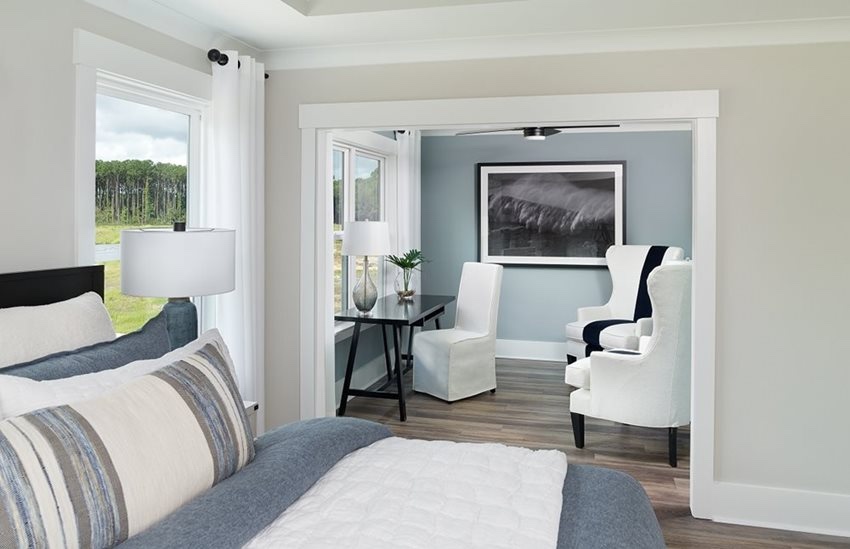
SANTA CLARA, Calif., Dec. 18, 2024 /PRNewswire/ — Although your home might feel tight this holiday season, nationally, the number of extra bedrooms, defined as a bedroom that is in excess of the number of persons in the home, plus one to account for an office, has reached the highest levels in Census record history, according to a new report from Realtor.com® released today.
In 2023, the number of extra bedrooms in the U.S. reached 31.9 million, up from 31.3 million the year prior and over four times the 7 million extra bedrooms the country had back in 1980. Additionally, taking into account that the U.S. housing stock is as large as it has ever been, the analysis found the share of all bedrooms that could be considered an “extra” bedroom has also reached a record high of 8.8%. This is up from the 8.7% in the year prior and over twice the 3.5% rate in 1980. The record–high number and share of excess bedrooms in the U.S. is driven by both an increase in the number of bedrooms per home and a decline in the number of persons per household.
“During the holidays we often feel the need for more room, especially for guests; however, we are in a golden age of extra bedrooms,” said Danielle Hale, chief economist, Realtor.com®. “Since the 1980s we have seen the average number of bedrooms per home increase, and maybe more importantly, the number of persons per household has declined, creating an environment where we see both the largest number of extra bedrooms and the largest share of extra bedrooms, even with Americans using spare rooms as offices.”
Are houses getting bigger? Not exactly. While there has been an increase in the average number of bedrooms per home over the past 50 years, growing from an average of 2.5 rooms in 1970 to 2.8 rooms in 2023, there has been no change over the past 10 years when the average was also 2.8 rooms per home in 2013. The more significant factor is a declining number of persons per household, falling from a high of 3.1 persons per household in 1970 to a record low of 2.5 persons per household in 2023.
Extra bedrooms are more common in the Mountain West and South. The trend of excess bedrooms is most pronounced in the Mountain West and South, where land is plentiful and homes are often built with more square footage and larger floor plans. Homes in densely populated urban areas where land is scarcer and more costly tend to have fewer extra bedrooms, reflecting the higher demand for space-efficient living and affordability.
The 10 markets with the highest share of total bedrooms that could be considered excess are:
Ogden, Utah (12.2%)
Colorado Springs, Colo. (12.1%)
Salt Lake City, Utah (12%)
Memphis, Tenn. (11.8%)
Atlanta, G.A. (11.6%)
Cleveland, Ohio (11.3%)
Wichita, Kansas (11.3%)
Columbia, S.C. (10.8%)
Charleston, S.C. (10.7%)
Jackson, Miss. (10.7%)
The 10 markets with the lowest share of total bedrooms that could be considered excess are:
Methodology For this analysis, we gathered data on household inhabitants and bedrooms from the US American Community Survey (ACS) nationally and for the 100 largest metro areas between 1970 and 2023. From there, we calculated the number of available bedrooms as the (total number of bedrooms) – (the number of household members) – 1. We subtract 1 additional bedroom to account for various uses, such as an office or storage space. We compared the resulting count of homes with spare bedrooms to the total number of owner-occupied households within the metro to come up with our metric for the share of homes with unoccupied bedrooms. We estimated home values using the self-reported value of owner-occupiers in the ACS.
About Realtor.com® Realtor.com® is an open real estate marketplace built for everyone. Realtor.com® pioneered the world of digital real estate more than 25 years ago. Today, through its website and mobile apps, Realtor.com® is a trusted guide for consumers, empowering more people to find their way home by breaking down barriers, helping them make the right connections, and creating confidence through expert insights and guidance. For professionals, Realtor.com® is a trusted partner for business growth, offering consumer connections and branding solutions that help them succeed in today’s on-demand world. Realtor.com® is operated by News Corp [Nasdaq: NWS, NWSA] [ASX: NWS, NWSLV] subsidiary Move, Inc. For more information, visit Realtor.com®.
With millions of stops to make in one night, Santa can use data to deliver joy without delays – some fun facts from Geotab
TORONTO, Dec. 20, 2024 /CNW/ – With Christmas just around the corner, Santa Claus is gearing up for his annual 100-million-mile global journey, visiting over 800 million children around the world. And it’s a good thing he doesn’t rely on diesel! If Santa relied on traditional fuel, he would need over 16 million gallons of diesel, enough to fill 2,500 tanker trucks or 25 Olympic-sized swimming pools! And the cost? Let’s just say even Santa’s toy budget couldn’t cover it.
Discover how Santa uses telematics to optimize his 100 million-mile Christmas journey. From route planning to reindeer maintenance, see how data keeps the holidays running efficiently – just like it does for fleets every day! (CNW Group/Geotab Inc.)
Santa’s sleigh will always be powered by magic, but now he can get extra help. Unlike his reindeer, who rely on vegetation, Santa’s sleigh can be supported by telematics technology.
Fueling Efficiency
Fortunately, for Santa, telematics helps him optimize routes, monitor reindeer energy levels, and ensure the sleigh is in top condition, all while keeping his environmental impact low.
Santa’s sleigh is equipped with a suite of advanced features, including:
Data Points Galore: Santa’s sleigh collects over 100 petabytes of data in a single night – that’s enough to fill 10,000 standard hard drives! This data includes everything from reindeer biometrics and weather patterns to gift delivery schedules and global naughty-or-nice lists.
Route optimization: Santa’s sleigh makes over 1 billion route adjustments throughout Christmas Eve, thanks to real-time analysis of 50+ data sources, including weather conditions, air traffic patterns, and even last-minute changes to children’s wish lists. Santa mapped the most efficient delivery path, starting in the South Pacific, then heading to New Zealand, Australia, Asia, Africa, Europe, and finally the Americas. This ensures he covers the globe without backtracking.
Last Mile Delivery: Santa’s sleigh analyzes over 200 data points per child, including age, interests, past gift preferences, to ensure each child receives the perfect gift.
Speed calculations: To stay on schedule, Santa must travel at an average speed of 3,125,000 miles per hour or 868 miles per second – no time for delays!
Reindeer energy monitoring: Santa tracks daily intake of 9–18 pounds of vegetation per reindeer, ensuring they stay fueled and ready for action. He also keeps an eye on their “tail”-pipe emissions (methane output), a natural byproduct of their daily vegetation diet. With a goal of less than 40 grams of methane per reindeer, Santa’s sleigh is gliding towards a greener Christmas future!”
Maintenance alerts: From feedback on a reindeer’s rooftop landing to prevent a sprained ankle to warnings of a loose sleigh runner before it becomes an issue, Santa ensures his reindeers are in good shape and in top condition.
Temperature monitoring: Santa ensures the cookies left by children stay fresh and delicious, even in the coldest weather. Temperature monitoring ensures the cookies left by kids for Santa stay chewy and soft, preventing them from going stale overnight in the cold weather so that he can bring any leftovers back to the elves at the North Pole. That’s over 800M cookies to keep fresh!
Beyond the North Pole: Telematics for Everyone
While Santa’s sleigh is one-of-a-kind, telematics technology benefits businesses worldwide. Fleet operators use it to:
Reduce fuel costs: By optimizing routes and monitoring idling.
Prioritize safety: By monitoring driver behavior and ensuring vehicle maintenance.
Keep customers happy: By delivering on time with reliable performance.
Just like Santa, businesses rely on efficiency and reliability to succeed, and telematics provides the data and insights they need to make informed decisions.
Geotab, the global leader in connected vehicle and asset solutions, leverages advanced data analytics and AI to enhance fleet performance, safety and sustainability while optimizing costs. Backed by a team of industry leading data scientists, engineers and AI experts, we serve over 50,000 customers across 160 countries, processing billions of data points hourly from more than 4 million vehicles. Data security and privacy are at the forefront of all we do—trusted by Fortune 500 organizations and some of the largest public sector fleets in the world, we meet top cybersecurity standards. Geotab’s open platform and diverse Geotab Marketplace offers hundreds of fleet-ready third-party solutions. Learn more at www.geotab.comand follow us on LinkedIn or visit Geotab News and Views.
COLUMBIA, S.C. – Boeing(NYSE:BA) today announced it plans to expand its operations in Charleston County. The company plans to invest $1 billion in infrastructure upgrades at its existing site and create 500 new jobs over the next five years.
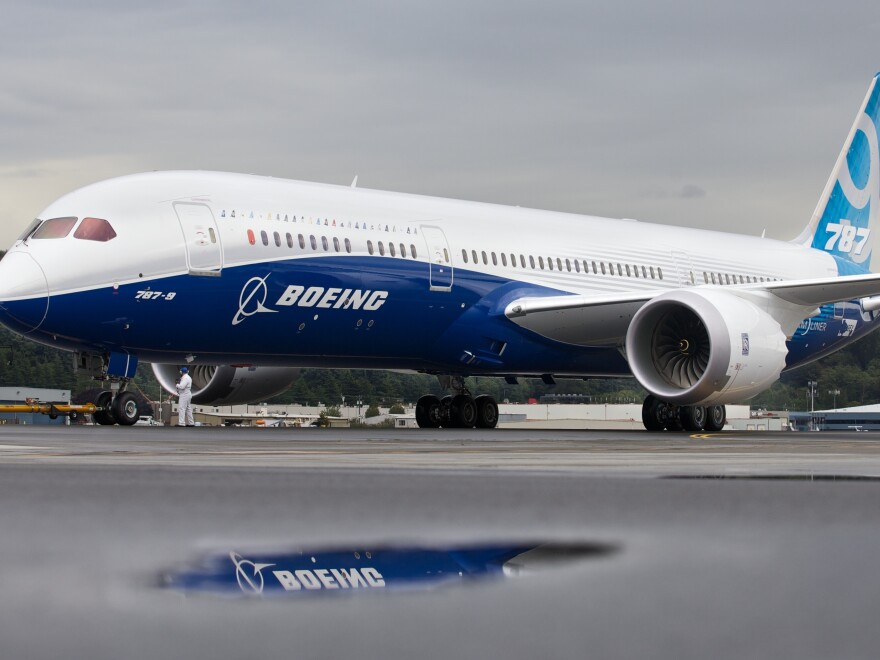
For more than a decade, Boeing South Carolina (BSC) has been the home of the full 787 Dreamliner production cycle and fabricates, assembles, and delivers, the 787-8, 787-9 and 787-10 to customers globally. The company established operations in South Carolina in 2009 and currently employs more than 7,800 people across its Airport and North Campuses in North Charleston, and its West Campus in Orangeburg. Boeing acquired the operations in Orangeburg, located at 174 Millennium Drive, earlier this year, though those facilities will not be affected by the expansion plans.
Boeing will expand both of its North Charleston campuses, located at 5400 International Blvd. and 9775 Patriot Blvd., to support increased 787 Dreamliner production targets and potential future rate increases driven by market demand. The 787 Dreamliner program plans to increase to a rate of 10 airplanes per month by 2026.
Operations are expected to be online in early 2027. Individuals interested in joining the Boeing team should visit the company’s careers page.
QUOTES
“Since the creation of Boeing South Carolina in 2009, we’ve marked many important milestones – including consolidating 787 Dreamliner production to South Carolina. I’m thrilled for this next phase of growth, which is made possible by our incredible teammates and the confidence our customers have in our airplanes. This decision reflects Boeing’s commitment to the workforce, the 787 program and the community. We are building a legacy at BSC, for ourselves and for future generations in the Palmetto State.” -Vice President and General Manager of the 787 Program and BSC Site Leader Scott Stocker
“Boeing’s decision to expand in Charleston County further solidifies South Carolina’s position as a leader in the aerospace industry. This significant investment and the 500 new jobs it will bring to the Lowcountry reflect Boeing’s confidence in our workforce and highlights the strength of our pro-business environment. We look forward to continuing to build our partnership and the opportunities this expansion will bring to our state.” -Gov. Henry McMaster
“The legacy Boeing has built in South Carolina is truly something worth celebrating, and we are thrilled the company is continuing to invest in our state. Congratulations to Boeing and Charleston County on this substantial investment of $1 billion and the new opportunities it will create in the Lowcountry.” -Secretary of Commerce Harry M. Lightsey III
“Boeing has been a cornerstone of economic growth and innovation in Charleston County for over a decade, and this latest investment underscores their deep commitment to our community. Creating 500 new jobs and a $1 billion expansion solidify Charleston County’s position as a leader in the global aerospace industry. We proudly support Boeing’s continued success and the opportunities it brings to our residents and businesses.” -Charleston County Council Chairman Herbert Ravenel Sass III
FIVE FAST FACTS
Boeing is expanding its operations in Charleston County.
The company’s $1 billion investment will create 500 new jobs.
Boeing South Carolina is thehome of the full 787 Dreamliner production cycle.
The company is located at 5400 International Blvd. and 9775 Patriot Blvd. in North Charleston, S.C., and 174 Millennium Drive in Orangeburg, S.C.
Individuals interested in joining the Boeing team should visit the company’s careers page.
Columbia, SC (December 2024) The South Carolina Home Care & Hospice Association (SCHCHA), a leading voice for home health, hospice, palliative care, and personal care services in the state since 1979, is excited to announce that it will now advocate for Adult Day Health Services.
Adult Day Health Services play a crucial role in providing social, health, and therapeutic activities for adults with chronic illnesses or disabilities, enabling them to maintain their independence while receiving necessary care. By incorporating these services into its representation, SCHCHA continues its commitment to enhancing the quality of care and support available to South Carolinians.
“We are excited to broaden our association’s reach and impact through the addition of Adult Day Health Services,” said Kiersten Colovin, SCHCHA Board Chair and VP of Experience, Insights, and Innovation at Interim HealthCare of the Upstate. “This addition allows us to better serve our community and strengthens our advocacy for policies and resources that meet the needs of adults requiring specialized care during the day. With our ongoing commitment to home health, hospice, and personal care, this initiative aligns perfectly with the populations we serve.”
Carla White, RN, Director of Day Center Operations for Elite Home Care, Day Centers and Transportation, has been appointed as an inaugural Board member for a one-year term. Carla has served as the RN Director of Day Center Operations at Elite for over five years. She oversees fifteen locations in South Carolina and is a Certified Dementia Practitioner. Before joining the Elite team, she spent 15 years as a nurse in various bedside positions, with a particular passion for working with seniors, especially those affected by Alzheimer’s and dementia. “My time at Elite has opened my eyes to the significant need for adult day health care centers, which serve as a vital support for adult children caring for aging parents or families with young adults who have special needs. Having personal experience with family members who had special needs and Alzheimer’s, I understand the challenges that families encounter, and I am eager to raise awareness about how adult day centers can enhance the quality of life for both caregivers and their loved ones”.
Tim Rogers, President & CEO of the South Carolina Home Care & Hospice Association stated that “Elite has been a longtime member of our association, and worked closely with us this past year in understanding the need for advocacy and representation of Adult Day Health Services at the SC General Assembly. Our association has a strong and respected advocacy team in Columbia, and our issues are similar across the continuum of care. There is a great deal of synergy with what we all would like to achieve, and it is time for Adult Day Health Services to have a seat at the table.”
About South Carolina Home Care & Hospice Association
Founded in 1979, the South Carolina Home Care & Hospice Association represents over 250 providers and business affiliates, and is dedicated to promoting quality home health, hospice, palliative care, and personal care services throughout the state. Through resources, education, advocacy and leadership, SCHCHA aims to enhance the delivery of care for individuals and families in need.
CHARLESTON, S.C. – Dec. 10, 2024 – South Carolina Ports awarded $260,000 to 94 South Carolina nonprofits and organizations through its Community Giving program for fiscal year 2025. This year’s award was the highest amount donated in the program’s 11-year history, supporting organizations that work to provide food security, familial support, environmental awareness and education. “SC Ports invests in South Carolina, because South Carolinians invest in us, working to support 1 in 9 jobs tied to the Port,” SC Ports President & CEO Barbara Melvin said. “These 94 organizations do impactful work in their communities, and we are proud to assist in supporting their operations.” Through the Community Giving Program, SC Ports dedicates a portion of its revenues each year to support charitable organizations across the state. More than $1.3 million has been awarded since the program began in 2013. Applications are awarded to organizations whose work focuses on maritime commerce, economic development, environmental awareness or community outreach. The Fiscal Year 2026 application process will open early next year. Details will be posted here: https://scspa.com/about-the-port/our-impact/community/community-giving-program/.
Award recipients African American Settlement Community Historic Commission Association for the Blind and Visually Impaired SC Audubon South Carolina Avian Conservation Center Berkeley Chamber of Commerce Beyond Our Walls Big Brothers Big Sisters of the Lowcountry Bluffton Self Help Boys & Girls Clubs of the Lowcountry – Bluffton Unit Boys & Girls Clubs of the Pee Dee Area Boys To Men and Girls With Purpose Bridges of Hope Camp Happy Days Camp Rise Above Carolina Wildlife Center Catawba Riverkeeper Foundation Inc. Charleston Area Senior Citizens Services, Inc. Charleston Jazz Charleston Habitat for Humanity Children’s Museum of the Lowcountry Coastal Carolina Council, Boy Scouts of America Columbia World Affairs Council Communities In Schools of South Carolina Cross My Heart Free Mobile Clinic Dillon County Boys & Girls Youth Center Dillon County Chamber Dillon County First Steps Dillon County Theatre Association Dorchester Habitat for Humanity Early Learning Partnership of York County East Cooper Habitat for Humanity Edisto Island Youth Recreation Every 1 Voice Matters, Inc. Feed & Seed Co Feeding of the Multitudes First Tee – Aiken Florence Crittenton Programs of SC Foster Care Clothing Closet Friends of Charleston National Parks Friends of Fisher House Charleston Future Entrepreneurs Foundation Golden Achievers Community Development Center Good Neighbor Medical Clinic Greenville Drive Greenville Tech Foundation Greer Relief & Resources Agency, Inc. Habitat for Humanity of Berkeley County Help 4 Kids Florence Humanities Foundation Increasing H.O.P.E Financial Training Center Junior Achievement of Greater South Carolina Levi Pearson Scholarship Foundation Lions Vision Services Lowcountry Autism Foundation Lowcountry Maritime School Lowcountry Orphan relief Lumber River United Way Meals on Wheels of Summerville (MOWS) Mobile Meal Service of Spartanburg County Inc My Sister’s House One80 Place Orangeburg County Community of Character Original Six Foundation Project Cool Breeze Public Education Partners Reading Partners South Carolina Rural Area Leadership Initiative – Dillon County Saint James Learning Center SC Council on Economic Education SC Future Makers SC Operation Lifesaver SC School for the Deaf and the Blind Foundation Second Helpings South Carolina Aquarium South Carolina Governor’s School for Science and Mathematics Foundation Spectrum Sailing Teachers’ Supply Closet The Charleston Pipe Band The Children’s Museum of the Upstate The Green Heart Project The Hospice & Palliative Care Foundation The Naomi Project The Village Group Town of Mount Pleasant/Wayne Magwood Fisherman’s Memorial Trent Hill Center for Children & Families Turn90 United Fund of Dillon County Vision To Learn War Vets Charleston WarriorWOD Foundation Waymaker Off-road Wheelchairs Wings for Kids Winyah Rivers Foundation, Inc. YouthBASE
About South Carolina Ports South Carolina Ports owns and operates marine terminals at the Port of Charleston and two rail-served inland ports in Greer and Dillon. As the 8th largest U.S. container port, SC Ports connects port-dependent businesses throughout the Southeast and beyond to global markets. SC Ports proactively invests in infrastructure ahead of demand to provide reliable service, efficient operations, cargo capacity, an expansive rail network and the deepest harbor on the East Coast at 52 feet. SC Ports is a vital economic engine for South Carolina, with port operations supporting 1 in 9 jobs statewide.
Barsa, located at 630 King St, Charleston, SC 29403, will be shutting its doors after 14 years on the peninsula and handing the reigns to new ownership in 2025. Barsa has been a meaningful part of our lives for a decade plus and they will be sorely missed. A true Charleston restaurant landmark where you always felt at home and welcome. We appreciate all of you.
Unfortunately, we will be closed this evening and regrouping with our team members for service hours this weekend!
Thank you for all the love and beautiful comments! Stay tuned!!
Announcement: As the New Year quickly approaches, we are announcing that Barsa will be closing and changing ownership in 2025!
Our last night of service will be this Saturday, December 21st, 4pm-10pm.
We want to thank everyone that has supported the restaurant over the last 14 years! We appreciate all of our staff, past and present, and all they have done to make Barsa such a successful and special place! To everyone who has walked through these doors as our guests, vendors, family and friends, we are very grateful for you and the relationships we have formed.
Thank you to our owner, Drazen. We are so happy that this holiday season you get the best gift ever, retirement!
It’s been a great ride Charleston, come out and see us this week and celebrate the end of our beautiful chapter on the corner of Line and King!
With much love and gratitude from all of us at Barsa Tapas and Lounge!
You have been our rock on the peninsula offering warmth, delicious paella, cold cocktails and a local feel. Thanks you for the last 14 years. Much Love!
Oscar Mayer is looking for Weinermobile drivers . You’ve got until Jan. 31 to apply and the job pays $35,600 per year.
Looking to beef up your resume? Need something that will make every potential employer stop and say “Wait. What?!?” Your moment is here.
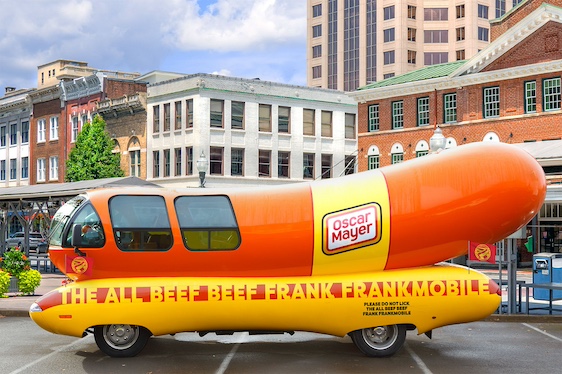
Oscar Mayer has opened up applications for new drivers for its iconic Weinermobile. If you’ve dreamed of driving a 27-foot-long hot dog up and down the roads of America, you’ve got until Jan. 31 to apply for the job.
It’s a paid gig, too! Hotdoggers, as the drivers are called, earn a base salary of $35,600 as well as a weekly allowance of $150 for meals and personal travel. They also get 18 days of paid time off, full health benefits and (naturally) 100% of all of their hotel expenses covered.
Think you can cut the mustard and stand above the competition? Here’s what you’ll need to be considered for the job. ( You can apply here .)
You’ll need a Bachelor’s degree, preferably in public relations, journalism, communications, advertising, or marketing. It helps to be bilingual. And introverts need not apply.
You’ll also need a driver’s license (duh) and be able to work major holidays. And you’ll need to clear a background check.
Not only will you drive the iconic vehicle all over the country, you’ll represent Oscar Meyer at more than 200 events throughout the year. That will involve handing out more than 250,000 Wiener Whistles to fans.
Just be warned: A a lot of people relish this job. Less than 1% of applicants are selected for the 12 openings. Oscar Mayer says that makes it harder to become a Hotdogger than it is to get into an Ivy League university.
This will be the 38 th round of Hotdoggers. The Wienermobile has been traveling the U.S. since 1936.
COLUMBIA, S.C. – Mesa Land Services, a provider of easement acquisition and title search solutions, today announced it is establishing its first operation in Charleston County. The company’s $1.3 million investment will create 24 new jobs.
Mesa Land Services specializes in software to streamline the utility easement acquisition process. The company’s advanced technology and tools make title management faster and more accurate for customers.
Located at 1459 Stuart Englas Blvd. in Mount Pleasant, Mesa Land Services’ new facility serves as the company’s headquarters and main office.
Operations are already online. Individuals interested in joining the Mesa Land Services team should visit the company’s careers page.
QUOTES
“As a woman-owned business specializing in title research and easement acquisition, I’m thrilled to bring our company to South Carolina. I’m excited to contribute to its growth by providing reliable, thoughtful solutions for landowners, developers and the broader community.” -Mesa Land Services President Julie Mote
“Mesa Land Services’ decision to establish its first operation in Charleston County is a strong addition to our thriving business landscape. This $1.3 million investment and creation of 24 new jobs highlight South Carolina’s continued success in attracting innovative companies, and we are proud to welcome Mesa Land Services to our state.” -Gov. Henry McMaster
“We are delighted to see another new company joining our state’s growing business community. Mesa Land Services’ investment, new jobs and new operation represent a win for Charleston County, and we look forward to the company’s success in the years ahead.” -Secretary of Commerce Harry M. Lightsey III
“We’re thrilled to welcome Mesa Land Services to Charleston County. Their decision to establish their headquarters in Mount Pleasant and create 24 new jobs is a significant win for our community.” -Charleston County Council Chairman Herbert Ravenel Sass III
FIVE FAST FACTS
Mesa Land Services is establishing its first operation in Charleston County.
The company’s $1.3 million investment will create 24 new jobs.
Mesa Land Services is a provider of easement acquisition and title search services.
The company is located at 1459 Stuart Englas Blvd. in Mount Pleasant, S.C.
Individuals interested in joining the Mesa Land Services team should visit the company’s careers page.

 by
by