Charleston Daily is a concept in community. Its mission is to promote, assist, and celebrate in everything Charleston, South Carolina. By partnering with businesses, community leaders, volunteers and events, we are spreading the love that is Charleston.
As this city continues to grow and prosper, we want to help spread the message to all about how wonderful this community is.
Charleston is about the people, community, water, land, history, heritage and the true southern warmth it brings with each and every day.
🎤🎶 ONE DAY ONLY: Relive the Music That Defined Generations!
If you love the unforgettable sounds of the 1950s, 1960s, and 1970s, this is a show you simply can’t miss.
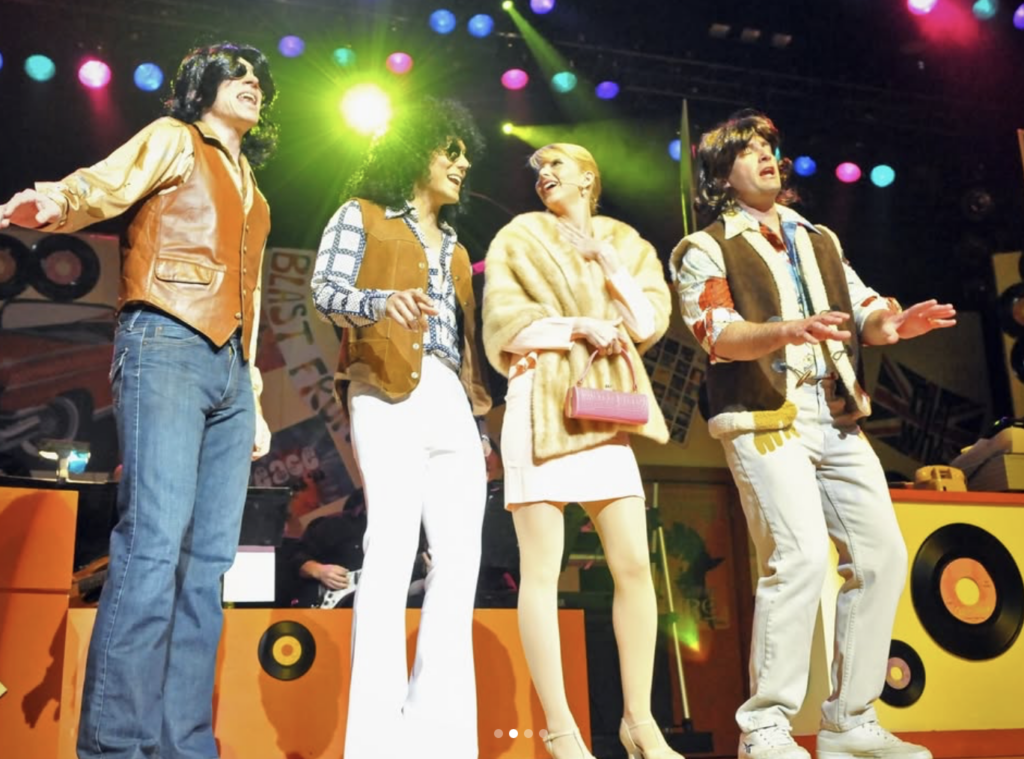
Blast from the Past returns to the Charleston Music Hall for ONE DAY ONLY on Saturday, July 18, bringing audiences an afternoon and evening filled with timeless hits, laughter, nostalgia, and incredible live performances.
Created by Charleston favorites Brad and Jennifer Moranz, this high-energy musical production celebrates the artists and songs that changed music forever. Sing along to classics made famous by legends like Elvis Presley, Tom Jones, Frankie Valli, The Beatles, The Beach Boys, The Temptations, The Village People, and many more. Packed with live music, comedy, audience interaction, and plenty of surprises, Blast from the Past is a fun-filled experience for music lovers of all ages.
Whether you grew up with these iconic songs or are discovering them for the first time, you’ll leave smiling, singing, and wanting more.
🗓 Saturday, July 18 – ONE DAY ONLY ⏰ Performances at 2:00 PM and 7:00 PM 📍 Charleston Music Hall
🎟️ Don’t wait—this special event is only happening for one day, and tickets are expected to sell quickly. Gather your family and friends and experience an unforgettable journey through the greatest decades in music. Get your tickets today before they’re gone!
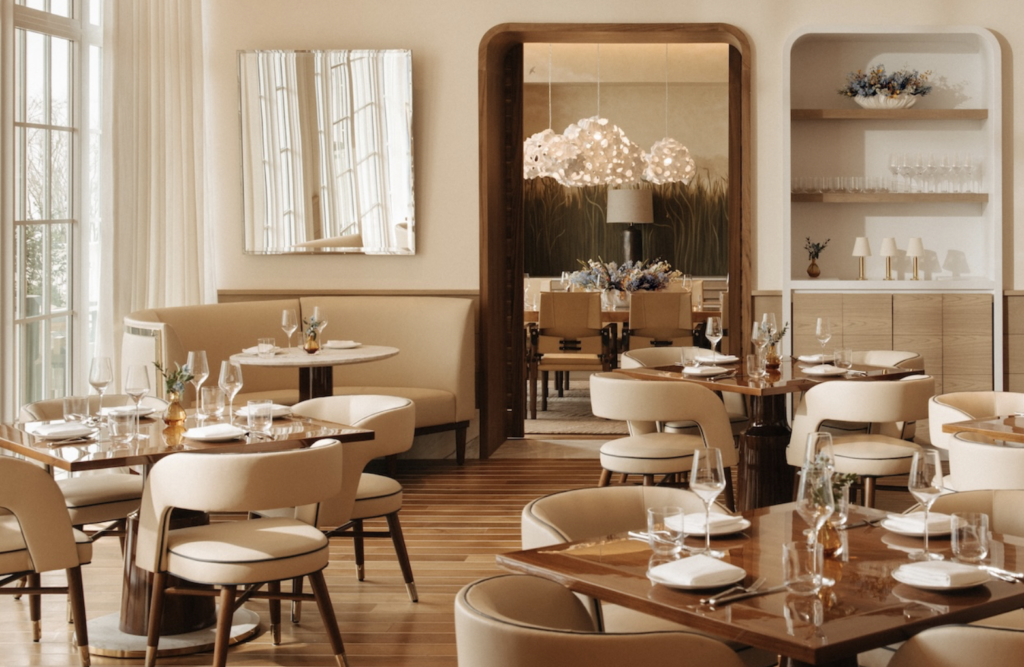
Charleston’s dining scene continues to evolve in 2026 with an impressive collection of chef-driven concepts, international flavors, and neighborhood restaurants that are already attracting loyal followings. From intimate omakase counters to Mediterranean coastal cuisine and inventive Italian, these are 10 of the standout new restaurants worth adding to your dining list.
Located inside The Cooper Hotel overlooking the Charleston Harbor, The Crossing blends Mediterranean influences with Lowcountry seafood and seasonal ingredients.
Chef: Executive Culinary Director Nick Dugan, whose menu combines classic French technique with Mediterranean flavors.
One of the year’s most original openings, Bareo combines Filipino comfort food with Japanese culinary techniques in a stylish, casual setting created by the team behind Kultura and Baguette Magic.
Chef: Created by Chef Nikko Cagalanan and the Kultura culinary team.
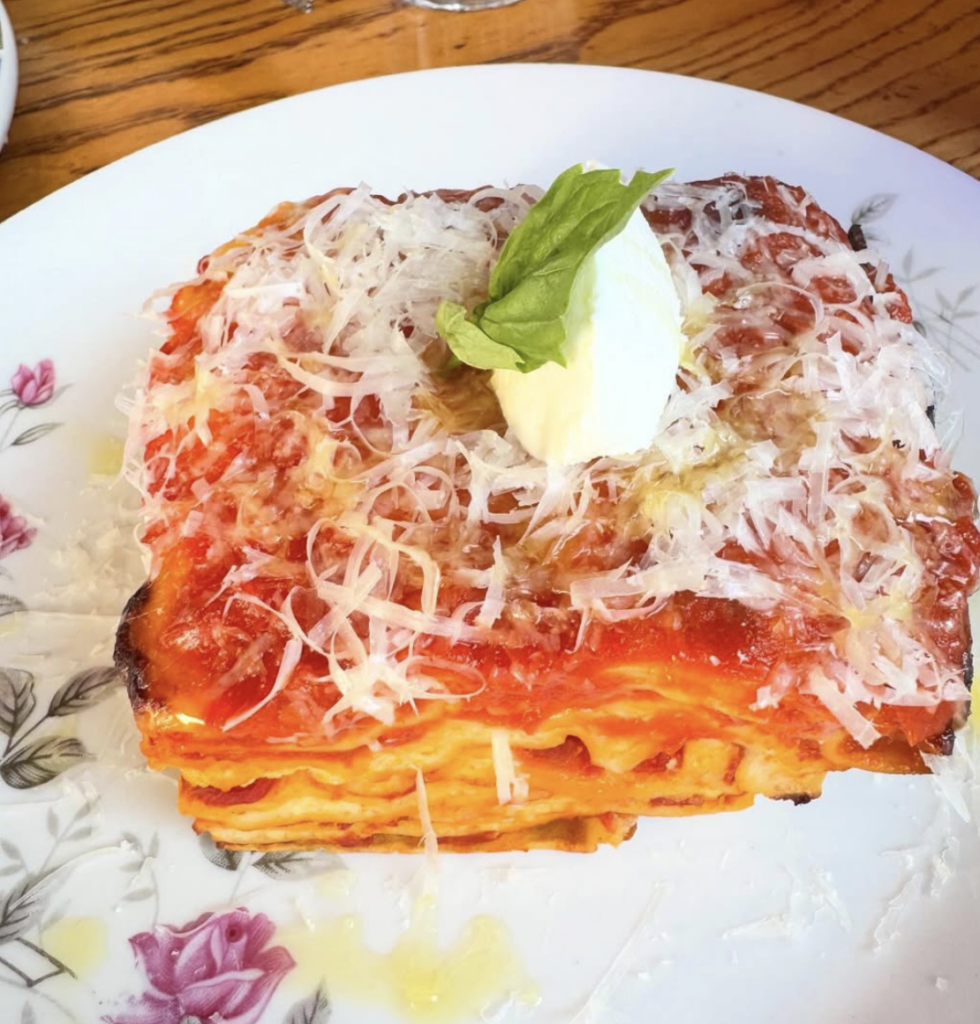
Equal parts cocktail lounge and Italian neighborhood restaurant, OK Donna has quickly become one of Charleston’s hottest reservations thanks to playful dishes and an energetic atmosphere.
Must-Try Menu Items
Italian meatballs inspired by Swedish classics
Fresh handmade pasta with rotating seasonal sauces
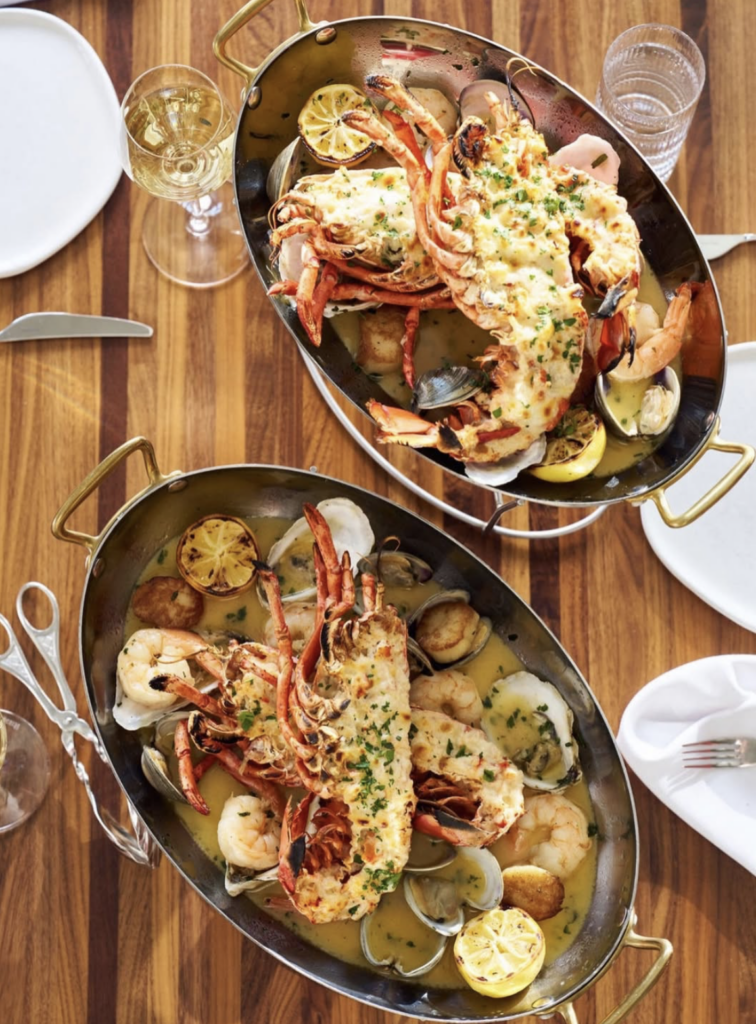
Marbled & Fin Charleston has quickly established itself as one of Charleston’s premier upscale dining destinations, blending the timeless appeal of a classic steakhouse with a fresh, contemporary atmosphere. Operated by The Neighborhood Dining Group, the restaurant pairs impeccable hospitality with an extensive wine program, premium cuts of beef, and an equally impressive selection of fresh seafood. Executive Chef Kenny West leads the culinary team, focusing on exceptional ingredients, refined technique, and memorable presentations that elevate every course. Whether celebrating a special occasion or enjoying an indulgent evening downtown, Marbled & Fin delivers a polished dining experience that rivals the country’s top steakhouses.
Three Recommended Menu Items
Broiled Oysters & Bone Marrow – One of the restaurant’s signature starters, combining roasted bone marrow, fresh oysters, and chimichurri for a rich, savory bite.
Dry-Aged Ribeye – Expertly aged and cooked over high heat to highlight the beef’s exceptional flavor and tenderness.
Seafood Tower – A luxurious assortment of chilled oysters, shrimp, lobster, crab, and seasonal seafood that’s perfect for sharing.
Part neighborhood market and part noodle destination, Luther’s offers comforting handmade dishes with Asian influences and locally sourced ingredients.
Founded by mother-and-son team Kiki and Hudson Luthringshausen, the restaurant draws inspiration from Italian family traditions, California’s farm-to-table culture, and the abundance of seasonal Lowcountry ingredients to create food that feels both comforting and creative. More than just a place to eat, Luther’s celebrates the joy of home cooking and community, offering guests an inviting space where exceptional ingredients, warm hospitality, and culinary craftsmanship come together.
Located at Quarter French at 40 Broad Street, the restaurant is owned by Charleston hospitality veterans Steve Palmer and Nick Dugan, who created the concept as a modern neighborhood French bistro inspired by the cafés and brasseries of Paris. The menu blends classic French techniques with Lowcountry ingredients, featuring refined yet approachable dishes alongside an extensive wine list and craft cocktails that encourage lingering over a meal. Quarter French embraces a warm, convivial culture where exceptional hospitality, elegant surroundings, and seasonal cuisine come together to create a dining experience that feels both timeless and distinctly Charleston.
Shokudô, located at Shokudô on Upper King Street, brings a refined take on the traditional Japanese izakaya experience to Charleston under the direction of Chef Masatomo “Masa” Hamaya, blending authentic Japanese techniques with fresh Lowcountry seafood. At the heart of the restaurant is a traditional robata charcoal grill, where skewers of meats, seafood, and vegetables are cooked over open fire, complemented by ramen, handcrafted dumplings, hand rolls, and creative small plates. The warm wood interiors, lively beer garden, and philosophy of mono no aware—the Japanese appreciation for the beauty of fleeting moments—create an atmosphere that is both sophisticated and welcoming. Signature dishes include the OG Ramen, Duck Meatball Kushiyaki (Kamo Tsukune), and Crab Fried Rice, making Shokudô one of Charleston’s most distinctive new dining experiences.
Must-Try Menu Items
Robata grilled skewers
Tonkotsu ramen
9. Kaia
Address: 186 St. Philip Street, Charleston, SC 29403
Kaia is an exciting new addition to Charleston’s dining scene, bringing together the bold, vibrant flavors of the Caribbean with refined Asian influences under the leadership of Chef and Partner Raheem Sealy, a St. Croix native whose culinary career has earned recognition from the James Beard Foundation and World’s 50 Best Restaurants. Located at 186 Coming Street, the restaurant celebrates Sealy’s island heritage while incorporating techniques and ingredients inspired by his global culinary journey, creating a menu designed for sharing alongside a creative cocktail program. Guests can expect dishes that showcase fresh seafood, tropical flavors, aromatic spices, and wood-fired cooking in a warm, welcoming atmosphere that reflects the spirit of Caribbean hospitality. With its innovative approach and deeply personal story, Kaia is poised to become one of Charleston’s most anticipated new dining destinations of 2026.
Must-Try Menu Items
Jerk-spiced seafood entrée
Coconut curry with fresh local fish
Final Bite
Charleston’s 2026 restaurant class demonstrates why the city remains one of America’s premier culinary destinations. While seafood and Southern cooking continue to define the region, this year’s openings showcase a broader international influence—from Filipino-Japanese fusion and refined Indian cuisine to Mediterranean coastal dining, intimate omakase experiences, and contemporary Italian fare. Whether you’re a longtime local or planning your next visit, these restaurants represent some of the most exciting new places to dine in the Lowcountry.
Ranking the Palmetto State’s Public & Private School Systems Using the Latest Academic Data
For families choosing where to live, schools are often at the top of the list. While no single metric tells the whole story, standardized test scores, student-to-teacher ratios, graduation rates, and college readiness provide a strong picture of educational quality.
Using the latest available 2025 South Carolina Department of Education SC READY and SC PASS assessment data, district report cards, graduation outcomes, and teacher-to-student ratios, we’ve ranked South Carolina’s strongest educational counties. Because South Carolina reports academic performance by school district rather than county, these rankings synthesize the performance of the districts within each county.
Top 10 Counties for Public Education
1. York County
York County continues to set the standard for public education in South Carolina. Led by Fort Mill, Clover, and Rock Hill schools, the county consistently posts some of the state’s highest standardized test scores while maintaining excellent teacher-to-student ratios.
2025 Academic Snapshot
Approximately 70–80%+ of students met or exceeded expectations in English Language Arts.
Approximately 65–75%+ met or exceeded expectations in Mathematics.
Student-to-teacher ratio: 15:1
2. Lexington County
Home to Lexington One, Lexington-Richland Five, and Lexington Four, the county continues to produce outstanding academic results with strong graduation and college readiness rates.
2025 Academic Snapshot
68–78% proficiency in English Language Arts
63–73% proficiency in Mathematics
Student-to-teacher ratio: 15:1
3. Beaufort County
Beaufort County has become one of South Carolina’s premier school systems thanks to exceptional academic achievement and strong Advanced Placement participation.
2025 Academic Snapshot
65–75% proficiency in English Language Arts
60–70% proficiency in Mathematics
Student-to-teacher ratio: 15:1
4. Greenville County
As South Carolina’s largest school district, Greenville offers one of the broadest selections of magnet, STEM, IB, arts, and career programs while maintaining strong academic performance.
2025 Academic Snapshot
60–70% proficiency in English Language Arts
55–65% proficiency in Mathematics
Student-to-teacher ratio: 16:1
5. Charleston County
Charleston combines nationally recognized magnet schools with strong neighborhood schools and one of the state’s most diverse educational offerings.
2025 Academic Snapshot
58–68% proficiency in English Language Arts
53–63% proficiency in Mathematics
Student-to-teacher ratio: 15–16:1
6. Richland County
Richland Two continues to rank among South Carolina’s strongest districts in college preparation, STEM education, and academic growth, while Richland One continues to improve.
2025 Academic Snapshot
60–70% proficiency across most grade levels
Student-to-teacher ratio: 16:1
7. Anderson County
Anderson County districts consistently outperform statewide averages with strong elementary and middle school achievement.
2025 Academic Snapshot
58–67% proficiency in English Language Arts
53–62% proficiency in Mathematics
Student-to-teacher ratio: 16:1
8. Spartanburg County
Spartanburg continues to show impressive academic gains with improving report card ratings and strong graduation outcomes.
2025 Academic Snapshot
55–65% proficiency in English Language Arts
50–60% proficiency in Mathematics
Student-to-teacher ratio: 16–17:1
9. Pickens County
Pickens County remains one of the Upstate’s highest-performing educational systems with excellent graduation rates and strong elementary school achievement.
2025 Academic Snapshot
60–68% proficiency in English Language Arts
55–63% proficiency in Mathematics
Student-to-teacher ratio: 16:1
10. Aiken County
Aiken rounds out the Top 10 thanks to continued academic improvement and solid district-wide performance.
2025 Academic Snapshot
55–63% proficiency in English Language Arts
50–58% proficiency in Mathematics
Student-to-teacher ratio: 16:1
Top Counties for Private Education
Unlike public schools, South Carolina private schools do not participate in a uniform statewide testing program. These rankings reflect academic reputation, accreditation, college placement, faculty quality, and breadth of educational opportunities.
1. Richland County
Home to Hammond School, Heathwood Hall Episcopal School, and Cardinal Newman School.
2. Charleston County
Home to Porter-Gaud School, Ashley Hall, Mason Preparatory School, and Charleston Collegiate School.
3. Greenville County
Home to Christ Church Episcopal School, St. Joseph’s Catholic School, and Southside Christian School.
4. Beaufort County
5. York County
6. Lexington County
7. Horry County
8. Spartanburg County
9. Anderson County
10. Florence County
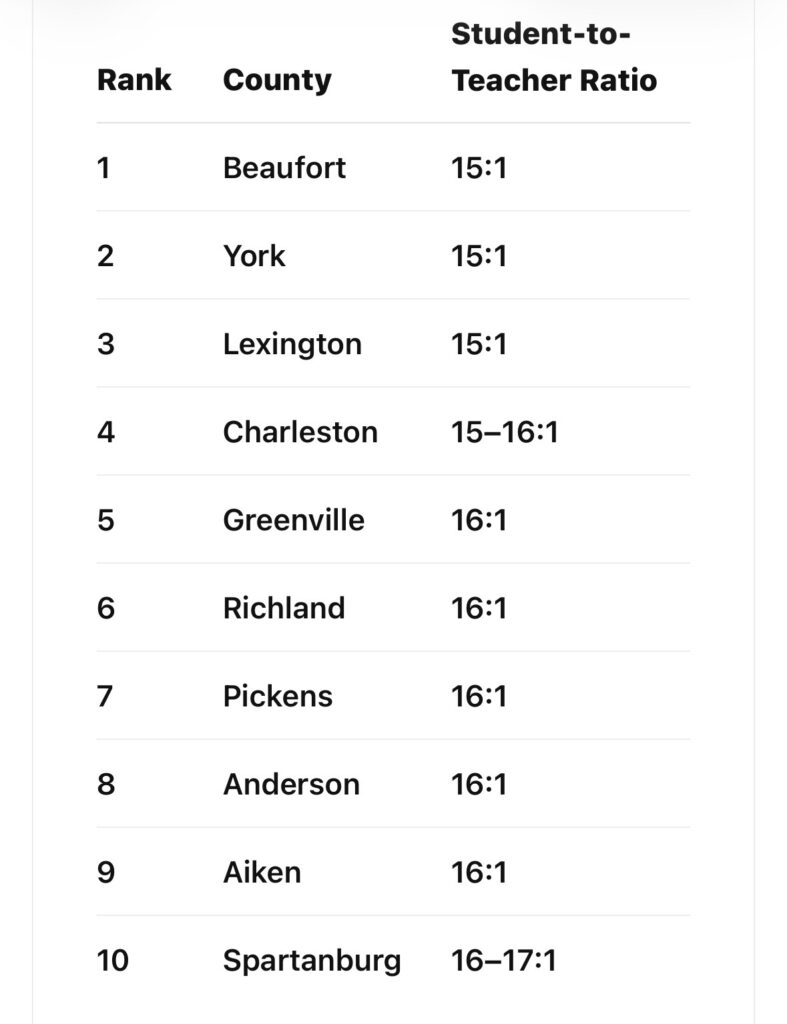
Counties with the Lowest Student-to-Teacher Ratios
Smaller class sizes often translate into more individualized instruction and greater student engagement.
How Do These Counties Compare to the State?
The 2025 SC READY assessment shows that statewide academic performance continues to improve, but the highest-ranked counties consistently outperform the state average.
South Carolina Statewide Results (2025)
Grade 3 English Language Arts: 61.7% met or exceeded expectations
Grade 4 English Language Arts: 63.5%
Grade 5 English Language Arts: 62.5%
Grade 8 English Language Arts: 55.7%
Across both English Language Arts and Mathematics, the counties ranked in the Top 10 generally exceed statewide averages by 5 to 15 percentage points, demonstrating stronger academic achievement and student growth.
Final Rankings
Public Education
York County
Lexington County
Beaufort County
Greenville County
Charleston County
Richland County
Anderson County
Spartanburg County
Pickens County
Aiken County
Private Education
Richland County
Charleston County
Greenville County
Beaufort County
York County
Lexington County
Horry County
Spartanburg County
Anderson County
Florence County
Methodology
This ranking is based on the latest available 2025 South Carolina Department of Education data, including SC READY and SC PASS assessment results, district report cards, graduation rates, teacher-to-student ratios, and college readiness indicators. Because South Carolina reports standardized testing by school district rather than county, county rankings were developed by evaluating the collective performance of the districts within each county. Private school rankings are based on institutional reputation, accreditation, college placement, academic offerings, and educational outcomes, as no statewide accountability testing system exists for South Carolina’s private schools
Your day includes: 🏆 Hole-in-One Prizes 🎯 Closest to the Pin Competition 💥 Longest Drive (Men & Women) ⭐ Two Golf Pro Challenges ⛳ Putting Challenge 🚁 Drone Golf Ball Drop 🚘 Chance to win a Toyota Tundra Truck
After the tournament, enjoy a 3:00 PM Reception & Awards Ceremony featuring: 🍽️ Dinner with vegetarian and meat selections 🍸 Bar 🎟️ Raffle 🤝 Silent Auction
Every swing helps support the Tamil Chair Fund, making a meaningful impact through education and community initiatives.
Don’t miss this incredible opportunity to play one of the Lowcountry’s premier golf courses while supporting an outstanding cause. Invite your friends, build your team, and make a difference—one round at a time.
The Lowcountry is a place where stories are as much a part of the landscape as the marshes, live oaks, and tidal creeks. For generations, the Gullah Geechee people have preserved their history, traditions, and values through the spoken word. These stories—rich with wisdom, humor, spirituality, and history—remain one of the most important ways to experience the authentic culture of coastal South Carolina and Georgia.
If you’re looking to deepen your understanding of Gullah Geechee heritage, these five storytellers and cultural interpreters are among the very best to follow.
Known to generations simply as “Aunt Pearlie Sue,” she has spent decades bringing Gullah traditions to life through storytelling, music, and interactive performances. Whether entertaining schoolchildren or speaking at cultural festivals, she blends history with laughter while teaching audiences about Gullah language, customs, foodways, and family life.
Her performances often include traditional songs, audience participation, and folktales passed down through generations.
Performances at Charleston-area festivals, schools, libraries, and museums
Ron Daise
Ron Daise
One of the nation’s most recognizable Gullah cultural ambassadors, Ron Daise helped introduce millions of Americans to Gullah traditions as the co-host of Gullah Gullah Island. Beyond television, he has dedicated his career to preserving Gullah language, oral history, and community traditions.
His presentations weave personal memories with historical insight, making centuries of Gullah culture feel immediate and deeply personal.
Public lectures throughout South Carolina, Cultural festivals, and Educational programs and museum events
Natalie Daise
Natalie Daise
Natalie Daise combines storytelling, theater, music, and literature into performances that celebrate the richness of Gullah Geechee life. Her work often emphasizes family, resilience, creativity, and the importance of preserving ancestral traditions for future generations.
She continues to speak and perform throughout the Southeast while inspiring younger generations through books and educational programming.
Author appearances, Literary festivals, and Educational and cultural events
Queen Quet
Queen Quet Marquetta L. Goodwine
Internationally recognized as the Chieftess of the Gullah/Geechee Nation, Queen Quet is one of today’s leading advocates for preserving Gullah language, history, environmental stewardship, and cultural identity.
Her storytelling often explores the connections between the land, waterways, ancestors, and community, offering audiences a powerful perspective on the living culture of the Sea Islands.
Public speaking engagements, Gullah/Geechee Nation cultural events, and Social media and online educational programs
Why Storytelling Matters
For centuries, storytelling served as the library of the Gullah Geechee people. Before many traditions were written down, history, genealogy, spiritual beliefs, agricultural knowledge, recipes, and life lessons were preserved through spoken narratives shared on front porches, around dinner tables, and beneath the shade of live oaks.
Today, these storytellers continue that legacy, ensuring that the voices of their ancestors remain vibrant in an ever-changing world.
Whether you’re a lifelong South Carolinian or visiting the Lowcountry for the first time, listening to a Gullah Geechee storyteller offers one of the most meaningful ways to experience the heart and soul of the region. Their stories don’t simply recount history—they invite you into a culture that has shaped the identity of the Carolina and Georgia coasts for more than three centuries.
South Carolina has experienced encouraging declines in crime over the past several years. According to the South Carolina Law Enforcement Division (SLED), 2024 marked the fourth consecutive year of declining crime, with murders, robberies, burglaries and aggravated assaults all falling to their lowest levels in decades.
Despite those improvements, crime remains concentrated in a relatively small number of municipalities. While many communities continue to see historically low crime rates, others still struggle with violent offenses, property crime, gang activity, poverty, drug trafficking and repeat offenders.
Municipalities With the Highest Violent Crime Rates
Based on the latest SLED municipal reporting and FBI crime statistics, these cities consistently report the highest rates of violent crime per capita.
1. Orangeburg
Orangeburg continues to rank among South Carolina’s highest violent crime communities.
Violent crimes include:
Murder
Aggravated assault
Robbery
Sexual assault
Contributing factors include concentrated poverty, gang activity and recurring firearm violence.
2. Dillon
Although small in population, Dillon experiences one of the state’s highest violent crime rates.
Common offenses include:
Aggravated assault
Armed robbery
Firearm offenses
Dillon County also posts one of South Carolina’s highest countywide violent crime rates.
3. Hartsville
Hartsville continues to report violent crime rates well above the state average despite recent improvements.
Major concerns include:
Assaults
Robberies
Domestic violence incidents
4. Columbia
As South Carolina’s second-largest city, Columbia naturally records one of the state’s highest total numbers of violent crimes.
Major categories include:
Homicide
Aggravated assault
Armed robbery
Carjackings
Several neighborhoods account for a disproportionate share of incidents.
5. North Charleston
North Charleston has reduced violent crime significantly over the past decade but still records one of the highest totals statewide because of its population.
Recent police initiatives have focused on:
Illegal firearms
Gang violence
Repeat violent offenders
Honorable Mentions
Other municipalities with above-average violent crime rates include:
Spartanburg
Florence
Marion
Sumter
Bennettsville
Municipalities With the Highest Property Crime Rates
Property crime remains considerably more common than violent crime across South Carolina.
Property crimes include:
Burglary
Motor vehicle theft
Shoplifting
Larceny
Vandalism
The highest rates are generally found in tourist, commercial or retail centers.
1. Myrtle Beach
Myrtle Beach consistently records one of South Carolina’s highest property crime rates.
The city’s millions of annual visitors create increased opportunities for:
Vehicle break-ins
Bicycle theft
Retail theft
Hotel-related property crimes
The crime rate is heavily influenced by tourism and is not necessarily reflective of residential neighborhoods.
2. North Charleston
North Charleston remains one of the state’s leaders in:
Auto theft
Retail theft
Commercial burglary
Its extensive retail and industrial districts generate large numbers of reported property crimes.
3. Columbia
Property crimes remain concentrated around:
Downtown
Commercial corridors
University districts
The most common offenses are:
Vehicle break-ins
Larceny
Shoplifting
4. Spartanburg
Spartanburg reports elevated levels of:
Vehicle theft
Residential burglary
Retail theft
Downtown redevelopment has coincided with reductions in several categories.
5. Florence
Florence’s location along Interstates 95 and 20 contributes to higher-than-average property crime.
Frequent offenses include:
Auto theft
Burglary
Commercial theft
Statewide Crime Trends
South Carolina’s overall crime picture continues to improve.
According to SLED’s most recent statewide report:
Murder declined nearly 16%.
Violent crime fell to its lowest rate since 1995.
Aggravated assault reached its lowest level since 2018.
Robbery dropped to a 30-year low.
Burglary reached a 30-year low.
Property crime continued its fourth straight annual decline.
Violent crime directly threatens people, while property crime involves the theft or damage of possessions.
Looking Ahead to 2026
Early reports from several South Carolina police departments indicate that crime reductions have continued into 2026, mirroring national trends. Preliminary local data suggest continued declines in violent crime, while property crimes—especially vehicle theft and retail theft—remain persistent challenges in larger cities. However, SLED has not yet released statewide municipal crime rankings for 2025 or preliminary 2026, so any city-by-city rankings beyond the latest official report would be incomplete.
Bottom line: South Carolina is safer today than it was just a few years ago, with statewide violent and property crime continuing a downward trend. Even so, cities such as Orangeburg, Dillon, Columbia, North Charleston, and Myrtle Beach continue to experience crime rates above the state average in one or more categories, underscoring the importance of targeted law enforcement, community investment, and crime-prevention efforts.
Few wildlife experiences are as magical as watching a pod of Atlantic bottlenose dolphins glide effortlessly through the waters of the South Carolina Lowcountry. Fortunately, Charleston is one of the best places on the East Coast to see these intelligent marine mammals in their natural habitat. Thanks to the city’s extensive network of salt marshes, tidal creeks, rivers, and Charleston Harbor, dolphins are year-round residents and are often surprisingly easy to spot.
Whether you’re visiting for the weekend or have lived here your entire life, these are some of the best places—and the best charter companies—to experience Charleston’s famous dolphins.
Charleston Harbor
Charleston Harbor is arguably the most accessible place to see dolphins. Pods regularly patrol the waters around Fort Sumter, the Arthur Ravenel Jr. Bridge, Patriots Point, and Waterfront Park while feeding on mullet and menhaden. Early morning and late afternoon typically provide the calmest water and best viewing conditions.
Charleston Water Taxi
One of Charleston’s best-kept secrets is the Charleston Water Taxi. While it’s known for ferrying passengers between downtown Charleston and Mount Pleasant, it’s also one of the city’s most affordable dolphin-watching experiences.
The hour-long harbor loop frequently encounters dolphins, and captains often slow down when pods appear so passengers can enjoy the moment. Along the way you’ll also enjoy spectacular views of the Ravenel Bridge, USS Yorktown, Fort Sumter, Waterfront Park, and the Charleston skyline. It’s an exceptional value for families, photographers, and anyone wanting a scenic harbor cruise without booking an expensive private charter. Travelers consistently rate it among Charleston’s top wildlife experiences.
Shem Creek
Shem Creek in Mount Pleasant has become legendary for dolphin sightings. Here, shrimp boats return with their catch while dolphins often follow behind looking for an easy meal. The boardwalk itself offers excellent free viewing, but getting out on the water dramatically improves your chances.
One of the area’s premier operators is Coastal Expeditions on Shem Creek. Their naturalists combine wildlife education with unforgettable eco-tours through Charleston’s beautiful marshes, where dolphins, pelicans, egrets, osprey, and even sea turtles are common sights.
Folly Beach and Morris Island
The waters surrounding Folly Beach and Morris Island are among the most productive dolphin habitats in South Carolina. During summer months, visitors may even witness the remarkable behavior known as strand feeding, where dolphins briefly beach themselves while chasing schools of fish—a rare hunting technique found in only a handful of places worldwide.
These excursions often combine dolphin watching with shell collecting, Morris Island Lighthouse visits, and exploration of Charleston’s pristine barrier islands.
Bowens Island and the Salt Marshes
The tidal creeks surrounding Bowens Island offer one of the most peaceful dolphin experiences in the Lowcountry. The calm waters attract abundant wildlife and provide excellent opportunities for photographers.
Charleston Outdoor Adventures offers highly regarded eco-tours through these marshes, where guests frequently encounter dolphins alongside wading birds, rays, and other coastal wildlife.
Charleston Harbor Cruises
For visitors wanting history and wildlife together, Charleston Harbor Tours and SpiritLine Cruises regularly travel through dolphin-rich waters while sharing stories of Charleston’s maritime history.
Best Times to See Dolphins
Although dolphins live here year-round, your odds improve by following a few simple tips:
Go early in the morning or within two hours before sunset.
Calm, sunny days make dorsal fins easier to spot.
Spring through early fall typically brings the most active feeding behavior.
Watch for diving pelicans or schools of baitfish, as dolphins are often nearby.
A Charleston Experience You’ll Never Forget
There is something timeless about seeing a dolphin surface against the backdrop of church steeples, shrimp boats, marsh grass, and the Ravenel Bridge. It’s a reminder that even in one of America’s oldest cities, nature still plays the leading role.
Whether you choose an eco-tour through the marshes, a sunset cruise, or simply hop aboard the Charleston Water Taxi, you’re likely to leave with more than photographs—you’ll leave with one of Charleston’s most unforgettable memories.
There are few places where the end of the day feels as magical as Charleston County. As the Lowcountry sky transforms into brilliant shades of gold, orange, pink, and lavender, marshes shimmer, dolphins surface, sailboats drift home, and the Atlantic reflects one final burst of light before dusk settles in.
Whether you’re looking for a romantic evening, a peaceful escape, or the perfect photograph, these are ten of the best places to catch a memorable sunset.
1. Pitt Street Bridge – Mount Pleasant
A longtime local favorite, the Pitt Street Bridge offers unobstructed views across Charleston Harbor toward Sullivan’s Island. The calm waters, marsh grass, and occasional dolphin sightings make this one of the county’s most peaceful places to end the day.
Best for: Couples, photographers, and quiet reflection.
2. Folly Beach Pier
As the sun drops toward the western horizon, the Folly River and marshes surrounding the pier become a canvas of fiery color. Walk to the end of the pier or simply enjoy the view from the beach as surfers catch their final waves.
Best for: Beach lovers and families.
3. The Battery & White Point Garden
Historic homes, towering live oaks, and Charleston Harbor create one of the city’s most iconic sunset settings. Watch sailboats glide past Fort Sumter while the fading sunlight bathes the seawall in warm golden tones.
Best for: History lovers and evening strolls.
4. Shem Creek Park – Mount Pleasant
With shrimp boats returning to the docks, pelicans diving for dinner, and waterfront restaurants coming alive, Shem Creek offers a sunset that’s uniquely Charleston. The boardwalk provides spectacular views across the marsh toward the harbor.
Best for: Dinner with a sunset view.
5. Waterfront Park – Downtown Charleston
The famous Pineapple Fountain may steal the spotlight during the day, but sunset is when Waterfront Park truly shines. Benches along the harbor offer front-row seats as the sky reflects off Charleston Harbor.
Best for: Visitors experiencing Charleston for the first time.
6. Kiawah Beachwalker Park
Wide beaches and fewer crowds make Beachwalker Park one of the most serene sunset destinations in the county. The expansive shoreline allows spectacular views as the colors stretch across both the Atlantic and tidal inlets.
Best for: Nature lovers and photographers.
7. Breach Inlet – Between Sullivan’s Island and Isle of Palms
Known for dramatic tides and panoramic views, Breach Inlet provides a front-row seat to boats navigating the channel while the setting sun paints the marshes and waterways in brilliant colors.
Best for: Coastal scenery and wildlife watching.
8. Brittlebank Park
Situated along the Ashley River, Brittlebank Park offers wide open green space perfect for spreading out a blanket and enjoying an evening picnic. The river often mirrors the vibrant sunset colors beautifully.
Best for: Families and picnics.
9. Folly Beach County Park – West End
The west end of Folly offers one of the few places where visitors can enjoy sunsets over the marshes while still being steps from the Atlantic Ocean. It’s a quieter alternative to the main beach and ideal for an evening walk.
Best for: Peaceful beach sunsets.
Screenshot
10. Charles Towne Landing
The historic grounds overlooking the Ashley River provide one of Charleston’s most underrated sunset experiences. Moss-draped oaks frame the water while the golden light brings centuries of history to life.
Best for: History, nature, and photography.
Every Sunset Is Different
One of the joys of living in or visiting Charleston County is that no two sunsets are ever the same. Summer evenings often deliver vibrant tropical colors, autumn skies glow with deep oranges, and winter sunsets can produce crisp, crystal-clear views stretching for miles.
Sometimes the best sunset isn’t about where you are—it’s about slowing down long enough to appreciate it.
Wherever you choose to watch the day come to a close, Charleston has a way of reminding us that nature still puts on the finest show in town.
Where is your favorite place to watch the sunset in Charleston County?
Clemson University’s Board of Trustees on Thursday unanimously selected Benjamin C. Ayers, Ph.D. as the University’s next president. Ayers will assume the presidency on Aug. 1.
A nationally respected academic leader, accomplished administrator and award-winning educator, Ayers comes to Clemson from the University of Georgia, where he serves as senior vice president for academic affairs and provost. As UGA’s chief academic officer, he oversees the University’s academic enterprise, including its 20 schools and colleges, as well as instruction, research, public service and outreach, information technology and the offices supporting faculty, graduate education, global engagement and libraries.
“It is a tremendous honor to be selected to serve as the next president of Clemson University,” Ayers said. “I am grateful to the Board of Trustees and the search committee for its confidence and humbled by the opportunity to join the Clemson Family. Clemson’s tradition of excellence, its commitment to students and its impact through teaching, research and service make it one of the nation’s most respected public universities. I look forward to working alongside our students, faculty, staff, alumni and supporters to build upon the strong foundation and shape an even brighter future together.”
“Dr. Ayers brings a wealth of experience in all levels of academia and vast relationships with the private sector,” said Trustee Cheri Phyfer ’93, M ’99, chair of the presidential search committee. “Throughout the process, he impressed the committee with his candor, integrity and genuine enthusiasm for Clemson University. His experience spans every stage of academic leadership — from assistant professor to department chair, dean and provost — and he has distinguished himself in each role.”
As University of Georgia provost, Ayers has led the university’s academic enterprise during a period of continued momentum and growth. Under his leadership as provost, UGA launched a new School of Medicine, established the Victoria Kay Ivester School of Nursing and expanded study abroad opportunities to rank among the nation’s top five public universities for participation. He also has overseen UGA’s research and innovation enterprise as it reached new milestones, including earning the No. 1 ranking among U.S. universities for bringing new products to market.
“Ben Ayers is an accomplished scholar and collaborative leader whose record reflects a deep commitment to academic excellence, student success and institutional advancement,” said Board Chair Kim Wilkerson ’80. “He understands the opportunities ahead for higher education and has demonstrated the ability to bring people together around a shared vision. We are confident he is the right leader to build on Clemson’s remarkable momentum and guide the University into its next chapter.”
Wilkerson also thanked the presidential search committee for its work throughout the process.
“I want to express my sincere appreciation to Trustee Phyfer and every member of the search committee for their dedicated service throughout the process and especially through the past few days,” Wilkerson said. “Their thoughtful leadership, careful deliberation and commitment to Clemson helped identify an exceptional leader for our University.”
Before becoming UGA’s provost, Ayers served for 11 years as dean of the Terry College of Business, one of the nation’s leading public business schools. During his tenure, the college strengthened its national reputation, expanded academic offerings, increased undergraduate and graduate enrollment, significantly grew scholarships and study abroad opportunities, and endowed academic departments, institutes, chairs and professorships. The college also completed a successful fundraising campaign resulting in more than $300 million in private support for students, faculty, academic programs and new facilities.
Prior to serving as dean, Ayers led UGA’s J.M. Tull School of Accounting for nine years. He joined the University of Georgia faculty in 1996 as an assistant professor.
An accomplished teacher and researcher, Ayers has received numerous honors for excellence in teaching and scholarship throughout his career. His research has earned national recognition from the American Taxation Association and the American Accounting Association, and he served as president of the American Taxation Association in 2017.
Ayers earned a bachelor’s degree in accounting and a master’s degree in taxation from the University of Alabama before completing a doctorate in accounting at the University of Texas at Austin. Before entering academia, Ayers worked in the private sector with KPMG and Complete Health Inc.
Additional information regarding Ayers’ transition to Clemson University and opportunities for the Clemson community to welcome him to campus will be shared in the coming weeks.
Columbia, S.C. (July 9, 2026) – Following an announcement from the US Department of Transportation, the South Carolina Department of Transportation announced today that it has received a competitive $23.5 million Better Utilizing Investments to Leverage Development (BUILD) grant to replace several aging bridges across the state. In total,18 bridges across nine counties—Berkeley, Colleton, Darlington, Dorchester, Florence, Georgetown, Horry, Marion, and Williamsburg, will be replaced to improve safety for drivers.
The total cost to replace the selected bridges across the state is $116,644,428. Many of the bridges being replaced by the grant award are between 50 and 100 years old and are classified as being in poor condition. Several also have load restrictions or are currently closed, underscoring the need for replacement.
Closed and load restricted bridges limit access for drivers and reduce connectivity for the communities that depend on these routes. These conditions can also disrupt emergency response, school transportation, and commercial traffic.
“Our bridges remain a top priority in keeping our transportation system safe and reliable,” said South CarolinaGovernor Henry McMaster. “Working together with our federal partners, we are continuing to make important investments that benefit South Carolinians. This grant will help us build on the progress we’ve made to improve critical infrastructure and keep South Carolina moving forward.”
“I am so pleased that South Carolina was selected to receive a $23.5 million BUILD grant to replace up to 18 bridges in need of repair across nine counties. Early on, I met with state officials who made the case for South Carolina to receive this grant. Improving several bridges across our state is a worthy use of taxpayer dollars. I was glad to advocate strongly to the Trump Administration for South Carolina to receive this grant and vote for the underlying funding on the Senate floor,” said Senator Lindsay Graham. “Ensuring our state has structurally sound, modern bridges to ensure the safe passage of residents, visitors and commerce is vital to South Carolina’s wellbeing. I’m grateful to the Trump Administration for approving this much-needed federal funding.”
“South Carolina’s rural communities deserve infrastructure that’s safe and built to last,”said Senator Tim Scott. “Replacing structurally deficient bridges across nine counties will strengthen local economies, improve safety, and ensure our roads keep pace with South Carolina’s growth. I’m grateful to see federal resources delivering real results for the communities that need them most.”
“This is a major win for South Carolina,” said Congresswoman Nancy Mace. “Our state is growing fast, and our infrastructure has to keep up. This investment will replace aging bridges, improve public safety, support local businesses, and strengthen the connections our communities rely on every day. These new bridges are built to last more than 70 years, giving South Carolinians safer, stronger, and more reliable infrastructure for generations to come.”
Congressman Russell Fry said, “Safe, reliable bridges keep South Carolina’s families safe and our economy moving. I’m proud to help secure $23.5 million to replace 18 structurally deficient bridges across the state, including 12 in the Grand Strand and Pee Dee, strengthening critical infrastructure that serves South Carolinians and the millions of visitors who travel our state each year.”
Secretary of Transportation Justin Powell said, “SCDOT will move quickly to put these funds to use and get construction underway. We appreciate the continued investment in South Carolina from the Trump Administration and Secretary Duffy. Today’s announcement is another example of SCDOT keeping its promise to provide a safer, more reliable transportation network that connects communities and supports economic growth across South Carolina for generations to come.”
The BUILD grant allows SCDOT to bring the carefully selected bridges up to more modern standards, remove local restriction postings, and build bridges that can withstand extreme weather and natural disasters.
SCDOT will move forward with the bid process this fall with design and construction following in 2027. With plans for accelerated schedules, we currently anticipate these projects to be completed by the end of 2029.
SCDOT will provide updates to community members as projects get underway and will work to sequence construction and optimize traffic control coordination to minimize travel impacts. SCDOT encourages community members to stay tuned to our website for updates as these projects progress.
About SCDOT
The South Carolina Department of Transportation (SCDOT) is the state agency with oversight of South Carolina’s network of highways and bridges, including responsibilities such as planning, design, construction, financing, and roadway safety. To ensure the nation’s fourth-largest highway system is prepared to serve the needs of South Carolina’s growing economy and population, SCDOT has developed a Strategic 10-Year Plan that addresses improvements to the state’s highway and bridge systems. Learn more at scdot.org.

 by