Charleston Daily is a concept in community. Its mission is to promote, assist, and celebrate in everything Charleston, South Carolina. By partnering with businesses, community leaders, volunteers and events, we are spreading the love that is Charleston.
As this city continues to grow and prosper, we want to help spread the message to all about how wonderful this community is.
Charleston is about the people, community, water, land, history, heritage and the true southern warmth it brings with each and every day.
So, when was the last time you had a true staycation? Let us add a little more juice to the question. What if you had to spend a weekday in Charleston with a budget of under $20.00, what would you do. We tested the waters and found a nice way to step back in time and learn about our heritage.
The day started with a visit to Tapio and Wild Flour on Spring Street. If you don’t have bubble tea from Tapio and a turnover or mini key lime pie from the best bakery in all of the Charleston, you won’t get the full experience. This is a must.
Right across the street, in an old Methodist Church, is the Karpeles Transcript Museum, one of fourteen in the United States. Doctor David Kapeles has one of if not the largest historical documentation collections in the world. He donates on a quarterly basis, a new collection to feature. On this day, we saw documentation outlining Russian history from the 1700’s to the early stages of Russian Space travel. A true journey through history in the words of those that lived it. Now, many documents were in Russian so we had to read the translation to fully understand.
Next we headed to Broad Street, sat on the steps of the old Post Office and ate our turnover. Then we proceeded into the Post Office where there is a free postal history museum room. How much fun was that! We saw postcards from the early 1900’s, old typewriters and stamping machines and thoroughly enjoyed reading the guest book.
Finally, we journeyed to the visitors center area, between John and Ann after battling a quick Charleston rainstorm and spent some time with The Best Friend. If you are a locomotive train fan or a fan of industrial growth, this is a site to see and a wonderful story to be learned. This train was pivotal in raising our local economy and putting our port business on the map.
Just to recap our journey (Total Cost: $11.00)
We saw one of only fourteen transcript museums in the United States
One of the oldest Postal Museums in the United States
The second oldest locomotive train and the victim of the first US train boiler explosion (added fact)
Had great food and drink
The kicker is, most locals, may know of these places, but have never spent some time.
I did mention weekday early on. The Kapeles is only open on weekdays. That is a key point of reference.
I hope you enjoy our little journey and guide to some of the free hidden treasures Charleston has to offer.
By Paul Brustowicz – Retired Mensch – Photo by Abby and Jack Brustowicz
The grandchildren needed an escape from a grumpy grandpa Mensch, so grandma Mensch decided that an outing to see the Birds of Prey in Awendaw, SC was the right thing to do. Where the heck is Awendaw, SC you ask? I had the same thought. Thank goodness for Google Maps. I just had to type in “The Center for Birds of Prey” and up pops a map with a stick pin showing Awendaw, SC, located a few miles north of the Isle of Palms connector on Highway 17. That is Mount Pleasant for the uninitiated. Okay, Siri, lead the way.
The Center sits on 150 acres of prime forest and swamp with a narrow dirt road as the entrance way. The Francis Marion Forest is on one side and the Cape Romain National Wildlife Refuge is on the other. I followed the road for less than a mile to the free parking in a field shaded by the trees. This was a Thursday. It had to be a Thursday since the Center has limited hours: Thursday, Friday and Saturday only, thank you. There is nothing fancy or upscale about the Center. Everything is outdoors and some of the paths are shaded. The restrooms are those green portable things.
We checked in at the open air reception area which also served as gift shop and refreshment station. We were early for the 2 o’clock tour and headed for the path to view the resident raptors. The vulture cafeteria sign caught my eye. We followed the path to a deer carcass that the vultures were enjoying. Yuck, back to the aviaries.
Megan, our tour guide, had the group engaged with a query-oriented presentation on bird biology that had us eating out of her hand to learn more about our feathered-friends. The bald eagles were most impressive close-up. Megan’s tidbit here was that the screeching of eagles is so unimpressive that in movies their voices are dubbed over to make them appear more formidable.
Photo by Abby and Jack Brustowicz
Hawks, falcons, kites, vultures and other birds of prey were among those on display. Megan pointed out the numerous bird feathers on the ground outside the cages and warned us not to take any with us. Apparently there is a federal law prohibiting the possession of feathers of migratory birds without a permit. The grandchildren and several other young visitors were disappointed to hear that warning.
Our admission included two demonstrations of raptor flight. In the avian amphitheater, a large cleared field, we sat on timbers in a semi-circle to watch a hawk and a kite come swooping in to their handlers’ gloved-hand to retrieve some juicy meat. A non-resident bird was very territorial and made a big ruckus when the raptor approached some trees where it probably had a nest. The raptor handlers brought each of the birds to the audience for a close-up view.
We followed our leader Steve across the field to the second demonstration at the Owl Wood. We sat on benches in a circle and the owls swooped in from behind to retrieve their treat from the handler in the center of the ring. We never heard them flying, they just appeared without a sound and scared us as they flew over our heads. Owls are the stealth bombers among the birds of prey. The owl highlight was the baby Asian Brown Wood Owl that was hatched in captivity and was still learning to fly. It jumped off the handler’s arm, flapped a few times and hit the ground. The grandchildren had close encounters with this owl that will definitely be in the “what I did last summer” report for the first week of school.
The rain clouds appeared just as the owl demonstration concluded and we made a hasty retreat to the car. Wildlife fans should plan on more than the two hours (tour and demonstration) when they visit the Center. There are fifty birds of prey to view along the aviary paths, the vulture cafeteria and the Owl Wood. The Center’s website is http://www.thecenterforbirdsofprey.org.
To quote my granddaughter: “I liked how the woman put the meat on her finger and the bird swooped by and ate it. I like how the woman gave detailed facts about the birds. I liked learning about the vulture restaurant. I like the brown Asian owl. It was pretty!
One thing about being a resident of Charleston is that you never stop discovering new and wonderful places if you let your curiosity take you off the beaten path. We are a complex set of waterways, inlets, peninsulas and park systems that allow us to lose ourselves in wonder.
Just a half a mile off of Folly Road and just 3 1/2 miles from downtown Charleston, there is a small piece of land that will take you away and let you be you.
On an evening just this week, we went to the end of the dock, where there is a picnic bench, enjoyed a bottle of Italian red wine and took photographs of the sunset over the marsh. In the distance, a teen in a white tee-shirt played guitar, two women shared the dock with us and later as the sun set to the west a couple sat on the rocking bench as their dogs wandered the park.
This small hideaway offers so much in so little space:
You can fish off the pier into the marsh
View of the sunrise and sunset
View of Harbor View Road, James Island Connector and the Cooper River Bridge
Romantic rocking bench
Swing sets
Picnic tables and a small grill
Secluded and safe
Stunning views
Let us go on a photographic journey together and you too will fall in love.
Welcome to Dock Street ParkLook at the reflection of the clouds in the waterThe tree stump adds something specialWho is up for a swing?The tree stump adds something specialBirdhouse in the marshTime for a walk on the pierEven the clouds are rejoicingSunrise moment
If you are looking for a quiet escape, a romantic swing, great photo opportunity, a picnic or some personal serenity time, find your way to Dock Street Park. It will leave a lasting impression.
Sunrise Bistro Xpress is located at 116 A Spring Street. Located in the heart of the re-birth of Spring Street, this is the offspring of one of John’s Island’s favorite dining spots (As well as one in Summerville, SC). Serving breakfast and lunch Tuesday through Sunday, Sunrise Bistro Xpress offers a uniquely intimate dining experience. This small and cozy restaurant is donned with fresh vegetable and spice plants in the windows, post modern art on the walls and a fresh aroma of dark roast coffee in the air. With a beautiful outdoor area on the side of the building, a cozy bar and six indoor tables, you will feel as though you are a family dinner.
Before we delve into some specific menu items, it is important to mention that no breakfast is complete with the fresh herb homemade bread. These squares of heavenly delight give Sunrise a unique edge. Prepared with a rich blend of spices including rosemary and complimented with olive oil, the bread alone is enough to make you want to return.
Though it is a side addition to a number of the breakfast items, it can be used to make an exceptional breakfast sandwich. Though the tomato melt is traditionally served with a bagel, we chose to have it served on the herb bread and it was exceptional. It was the type of breakfast sandwich you eat in small bites and savor.
Shrimp and grits. This is a tricky topic as it is a fan favorite in Charleston. Sunrise, will not disappoint. I would even be so bold as to place it in the top ten. Their three meat shrimp and grits is a hearty combination of sausage, ham, bacon, shrimp, onions and peppers in a bed of grits made in a secret house sauce. Without flaw a breakfast masterpiece. We shared this memorable dish. It isn’t an overwhelmingly large portion, but the portion of proteins make it a filling experience. As you can see from the picture, the shrimp are jumbo and ready to please.
The open face omelets are a special offering from Sunrise. Why do all omelets have to be folded or wrapped like a blanket? Sunrise does not feel that way. All their omelets are served open faced (If you feel passionate, you can get it prepared rolled). It is like a breakfast pizza and who doesn’t love pizza. There are seven options or a customized omelet, but we recommend the Jessica Ann and the Smoked Salmon with capers and onions. With fresh basil, onions, tomato and feta cheese, the Jessica Ann omelet is a mild and delicious way to enjoy breakfast/brunch. If you love smoked salmon, this omelet will leave you so satisfied. By going light on the egg and providing a healthy topping of smoked salmon, onions, capers and cheddar cheese, each bite is to be savored.
We want to give a personal acknowledgement to the staff. Their careful spirit, considerate customer attention and service with a smile was a comforting bonus to our visit. With such small quarters, that can be tricky to please guests, maintain wait list and keep providing attention with a smile.
If breakfast isn’t in the cards, enjoy one of the fresh sandwiches that are prepared with fresh local ingredients. From the Basil Grilled Cheese to the Cajun Shrimp Wrap, Sunrise Bistro offers winning options for lunch as well.
You have many choices when you think about breakfast and lunch in the Charleston area. If you travel just a bit out of the way, go to Spring Street and take in one of the best small breakfast and lunch spots on the peninsula.
People talk about the edge of the world or a country all of the time. It’s a way to make it sound amazing, this place where something stops existing and becomes something else, something unknown. Well, I’d like to throw a place into the running for the “Edge of America.”
Folly Beach, Charleston has long been known as the party beach in the area, the lower country’s Myrtle: lots of frat boys, screaming families, a higher concentration of drunk people, etc. It’s one of the reasons people go to Folly. It feels like a vacation there. But if you travel, past the washout, you’ll find a secluded stretch of beach, some woods, and few spectators to block your view of the edge of the world, guarded only by the ghost of a lighthouse.
To access this beautiful beach, you have to drive all the way down to the east end of Folly, park, and walk the remaining quarter of a mile along a paved road. Along your walk, you’ll mostly see foliage indigenous to the area, and a graffiti worn cement platform that tells you that you are almost there. Turn the bend, and you finally see the beach access, which consists of a few dozen yards of incredibly hot sand up and over a dune.
Once you’ve reached the beach though, you couldn’t care less about your scalded toes. This is a different place, a quiet one, where there are only a handful of people, some fishing, some relaxing in the sand; maybe even a photographer or two, taking snapshots of the quiet air. No one swims there because of the incredibly strong rip currents and high likelihood of sharks, but it’s safe enough to sit in the surf, to observe the scuttling blue crabs as schools of fish interrogate your legs and toes with small nips.
A pod of pelicans flying overhead draws your eye out of the water to the horizon, towards the Morris Island Lighthouse, standing several hundred feet offshore. The antebellum monolith was decommissioned in the early ‘60s due to a rising shoreline caused by the construction of jetties earlier in the century. It’s an aging monument, one that has a lot of protection around it, mostly locals who sought to insure its place as a permanent fixture of Folly.
One of the aforementioned jetties partitions the beach, adding to its isolated feel. If you don’t mind getting a little scuffed up from the rocks, then they are a wonderful, if slightly hazardous, vantage point from which to observe the shore and ocean, to reflect, or to take a stunning panoramic photograph with your iPhone. I prefer to watch the ocean wash over the boulders in a baptismal wave, hypnotic in their rhythm, soothing in their sound, and cleansing in their purpose. Despite the beauty of this particular section of beach, it is not a crowded place, for many reasons already stated: it’s quite a hike for the casual beach goer, there is no swimming, dogs aren’t allowed as it is also a nature preserve, etc. Some come to kayak, others go on tours of the lighthouse, and there are almost always a few fishermen. But all in all, this strip of the otherwise heavily populated Folly Beach is empty.
This is part of the beach’s appeal; its loveliness is not imbued with human activity, and it shows. If you went to any other beach that is normally very busy during off season, you can still tell it’s a popular beach. There are signs everywhere: beach houses hugging the shore, bits of paper, cigarette butts, a uniform shore line.
And of course, humanity has left its mark here as well: the lighthouse, the jetty, even giant sandbags in the surf to aid with erosion. But these things are different than cigarette butts and houses. Cigarettes–and all litter, for that matter–are a sign of constant habitation, replenished daily. Houses are lived in or rented, a flurry of feet, caked with stolen sand, march up the wooden steps into the HVAC and on into the shower, where the sand is rinsed down the drain and into the sewers.
But there is no trace of that here. The closest house is a quarter mile behind you. The lighthouse remains, for most of the year, empty, and the jetties have become a part of the shore, with lichen and clams living on the faces of the rocks. The sandbags, perhaps the least romantic addition, have reached a certain spectral elegance as the raggedy bits undulate in the tide. These are abandoned constructions, and nature has had no problem taking them under her wing.
People go to the beach for many reasons whether that is to hang out with friends, to tan, to swim, to picnic, to fish. And you can do most of those things here, but many don’t. Perhaps it is the haunted feeling that places obtain when humanity withdraws. There is a certain discomfort to it, to sit and stare at a ruin, to watch as humanity and nature coalesce into an oddly perfect pairing.
I just know that as I departed, I couldn’t help but snap a few shots on my iPhone. The initial discomfort gave way to something else, and I wanted a picture to remind me that solitude is the key the rejuvenation, and there is solitude a plenty at the Edge of America.
Between the Peninsula and Folly Beach are a rich traditional of restaurants, bars, an adventure course, great fresh seafood, county parks, a gym, thrift shops and more. Just to the left as you head to the beach, there is a restaurant that provides all the necessary elements of a man cave than would even make a woman smile.
The Break on Folly Road is the perfect escape to play, drink and eat.
A few reasons you need to spend some quality time here:
Monday Night is Live Trivia – Starts promptly at 7:00 PM
A series of large screen televisions including a ridiculously large one as you enter
Outdoor patio seating when it isn’t 110 degrees outside
Plenty of parking lot space to park or play cornhole
At the corner of the strip mall is Badd Kitty (Adult shop for couples and more)
Pool Tables
Dart Boards
Regulation Air Hockey
Beer Pong Video Game
Basketball Video Shoot
Competition Racing Game
NBA Jam ’94 (Yes Old School)
Pinball
Tater Tot Nachos (Oh Baby good)
A fun and friendly staff
Craft Beer, a few wines and full service bar
If sixteen reasons aren’t enough, I give up.
For $25.00 and a dream, you can play games, drink some good craft beer and catch a game on the big screen.
The bar is spacious offering table, bar and booth seating with separation points for the video games and pool area.
Sometimes you don’t always see what is right in front of you. The Break is no exception. From the street, it looks like a nice stop in bar, but once you walk in you will see it is so much more.
This is a treat for Charleston/James Island and one that will not bore you.
The Break is located at 778 Folly Road, James, Island, SC
I spent one weekend in Charleston and decided I wanted to move here. This was six years ago.
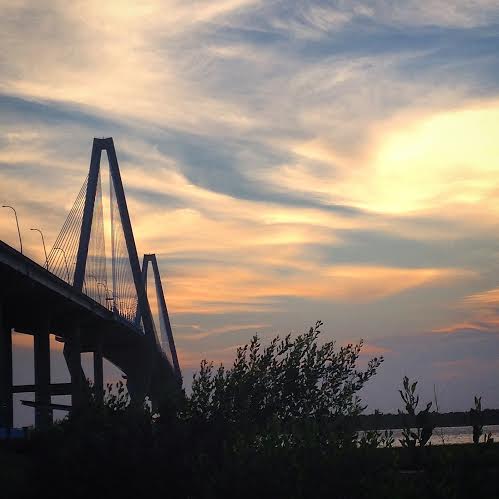
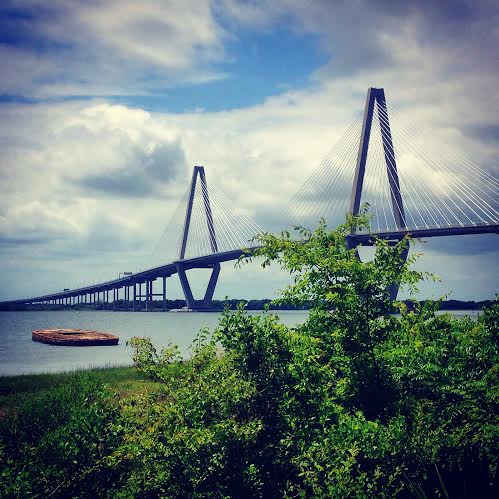
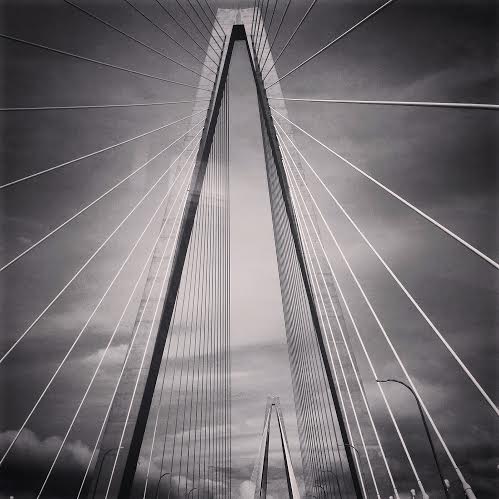
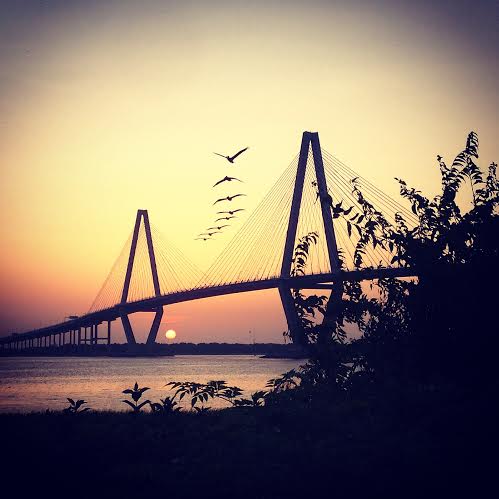
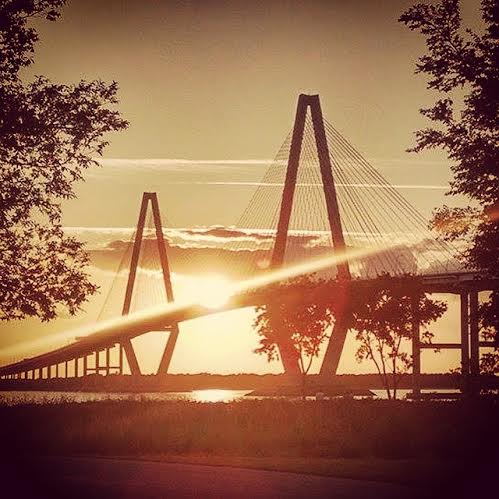
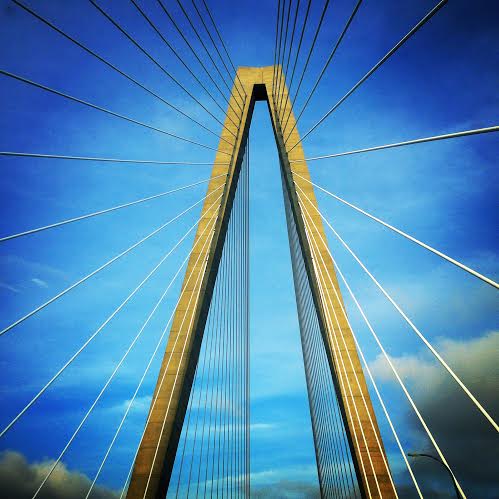
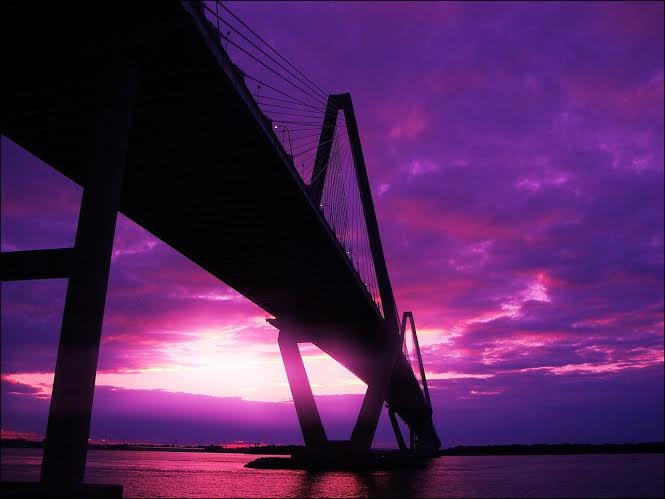
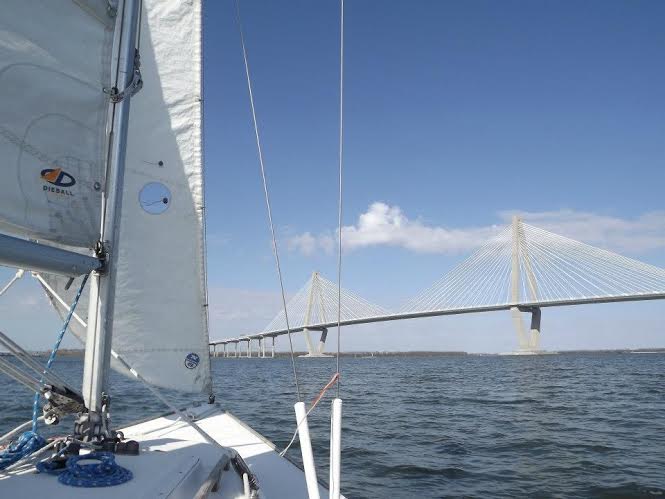
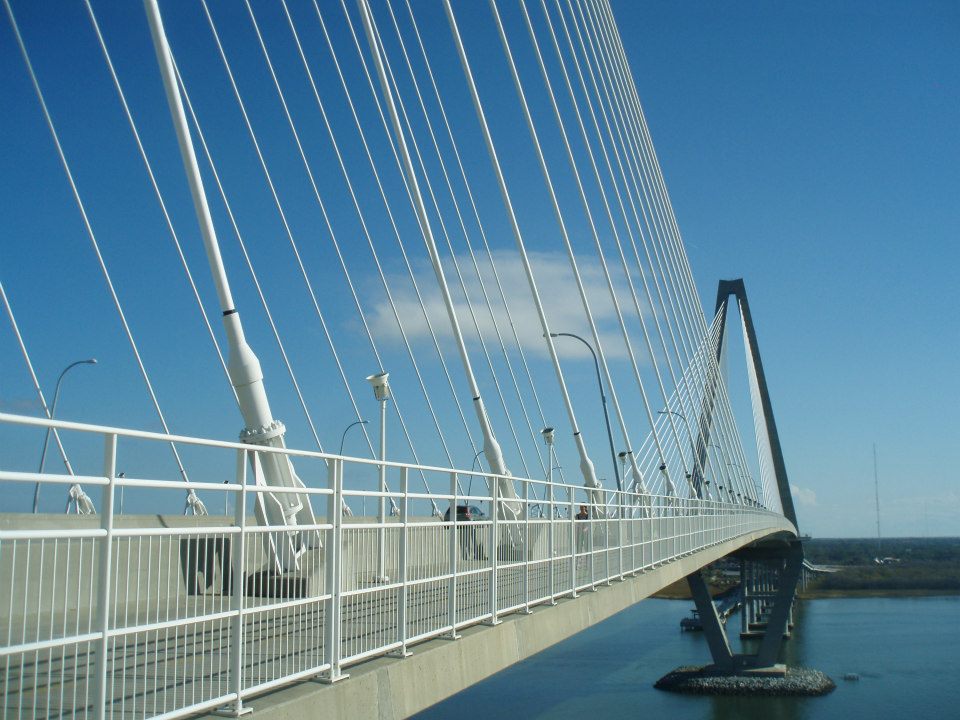
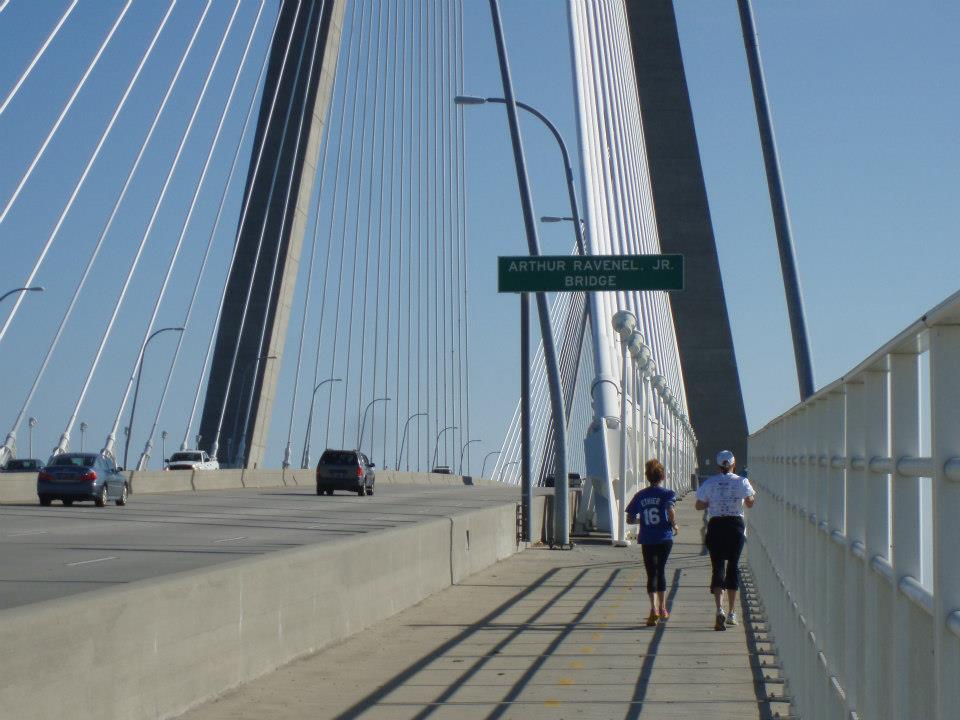
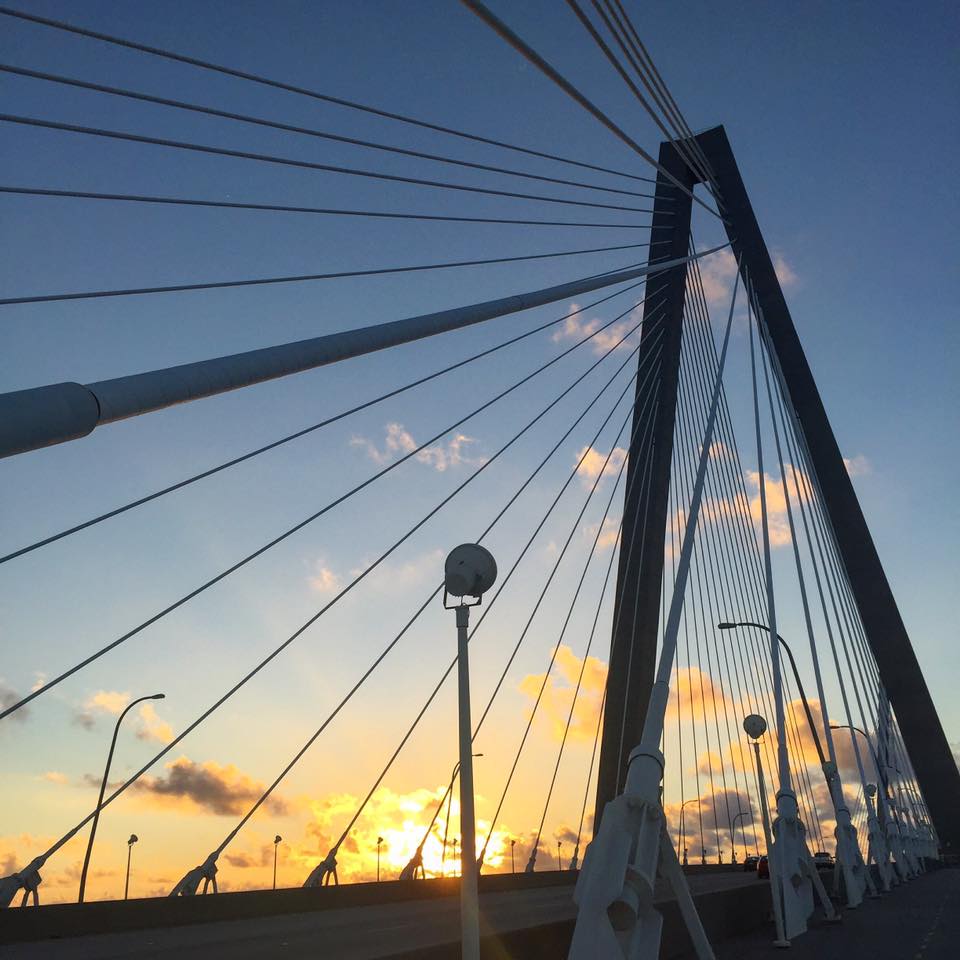
The reasons I decided to move here were countless including the historic quaint city feel, beaches, people, food and more, but what truly sat at the top of the list was the Cooper River Bridge. I even so much made the bold statement that I would marry the bridge if I could.
Today marks the 10th Anniversary of this iconic symbol of Charleston connecting Mount Pleasant with Charleston. As we all reflect on our personal memories of driving, jogging, biking, running and soaking in its beauty, we wanted to present some of our favorite images we have taken over the last few years.
Thank you for 10 beautiful years of representing Charleston.
There has been widespread emotion throughout the country and the world surrounding the tragic events that happened at 110 Calhoun Street on a fateful Wednesday evening. A rallying cry has been heard from coast to coast from religious leaders to academics to citizens who have been taken back by one unforgivable act.
We would like to share some of the personal thoughts and commentary shared in the last few weeks:
These are only a few of the opinion and thoughts coming in throughout the country. We wanted to share some of the media commentary in the aftermath of this tragic event.
As news of the Emanuel African Methodist Episcopal (AME) Church massacre rippled across the USA I was 38,000 feet above the Indian Ocean. Unaware of the tragedy, I had just departed Charleston where I have spent a majority of the last three years to return to my hometown of Perth, Australia.
Almost 24 hours later when I arrived in Perth and logged onto Facebook I did notice the CCT images of a dorky kid and black sedan circulating amongst friends back in South Carolina and neighboring areas. But my eyes had already gone to sleep and I was merely skimming through my profile out of habit before collapsing into bed. Without registering any detail I assumed it was some local story of theft or assault.
Confronted by the devastating news which continued to unfold after I woke the next morning left me emotionally bereft, as if my feelings were jet lagged much like the rest of me. Over the weekend I wondered if my numbness was a symptom of distance which seemed odd when real distance is almost a bygone concept now, relegated by the digital age as a theory out of date and old-fashioned. Maybe it wasn’t distance so much as it was a sense of dislocation.
I wasn’t able to share my sympathy and commiseration, to join the conciliatory show of solidarity with events such as the Bridge to Peace, where thousands of people joined hands across the Ravenel Bridge. After all, grief and loss is as delicate as it is strong, mercurial as it is inexorable, selfish as it is selfless – and while capable of vicious retribution, its fearless propensity to unite and restore is unfathomable.
Like the many tourists and imports who relocate to Charleston, I was immediately intoxicated by the supernal Lowcountry surrounds, the historic setting and bonhomie spirit when I first visited. And charmed by the eccentric and idiosyncratic lure of the South I fell in love in Charleston and with the city. With time the tourist veneer faded, revealing a more intimate view of the city that can’t be shown on a guided tour. Yet the contradictions, conservatism, defiant spirit and divides of ancestry and privilege intrigued me, and I grew more enamored with the city where I have made many lifelong friends.
In the aftermath of the Mother Emanuel terrorist attack the sincere outpouring of condolences, corralled by mainstream media conflagrated debates. Aggressively seeking appeasement and ‘a need to understand’ all attention quickly turned to a flag – a flag at the South Carolina State House that literally (both physically and legislatively) couldn’t be lowered in wake of the tragedy when both the US and SC State flags were at half-staff in mourning for the nine victims of the church shooting.
A week later and the campaign to remove the Confederate battle flag from the State House in South Carolina’s capital of Columbia had gained immense traction. With support from the president, politicians including South Carolina Governor Nikki Haley, Charleston Mayor Joseph Riley Jr. and former Republican presidential nominee Mitt Romney have called for the removal of the Confederate flag, because many people see it as a symbol of racial hatred. This has been supported by retailing giants such as Amazon, Target and eBay which followed Wall-Mart’s example and declared they too would stop selling Confederate-branded merchandise. More recently Apple announced it would recall all Civil War games from the App Store that displayed the Confederate flag.
Meanwhile, at the Battery in downtown Charleston the ‘Confederate Defenders’ statue in White Point Garden was defaced with a hashtag and slogan which read “Black lives matter”. Subsequently, the John C. Calhoun statue in Marion Square was graffitied with the label “racist”. President Barrack Obama then went on radio and said “nigger” and even though he wasn’t calling anyone a nigger a lot of people were offended. The momentum has since spilt across state lines with Confederate memorials across the South attracting attention and being drawn into the tide of people calling for these additional reminders of white supremacy to be taken down. As nuance and pedantry engulfed social media, white people admonishing vandalism are being called racists by other white people who applaud the graffiti as acts of rightful civil disobedience. A New America study was also released in the same week which showed more Americans died from right-wing extremism violence than deadly Jihadist attacks since 9/11. And now people are calling for Gone with the Wind to be banned.
Tearing stuff down, removing shit and busting up crap is a natural part of any cathartic process of vetting guilt, grief and contrition. That’s what shoe boxes and front verges on collection day are for at the end of a tumultuous breakup. As societies we banish symbols and demolish places under which heinous acts and atrocities are committed. But we also enshrine symbols and places that foster enormous sorrow so we don’t forget – to commemorate our collective loss, a beacon to embody forgiveness, renewal and togetherness.
To know what to do shouldn’t be that hard – when it’s a matter of communal respect right? After all any kind of social changes requires a degree of letting go – relinquishing certain traditions, rituals and symbols that were once part of our collective identity in order to heal past injustices and move forward sensibly, progressively and compassionately for the welfare and well-being of everyone.
It can hard sometimes, traversing above the feeding frenzied media to make an informed a decision of what to keep and what to let go of – especially when the real voices of those affected the most are often drowned out by people of clout lost in their own myth, caught up on camera posting their own opinions like they’re selfies of memes and martyrdom. And as a result, the very thing everyone’s trying to get rid of saturates broadsheets and touch screens. But who knows, the more practice everyone gets at letting go they might kind of like it and want to let go of other things – like branding sporting teams with derogatory and offensive American Indian names and logos, along with the tight grip around loose gun laws in the USA which enable such instances of mass shootings and gun-related violence.
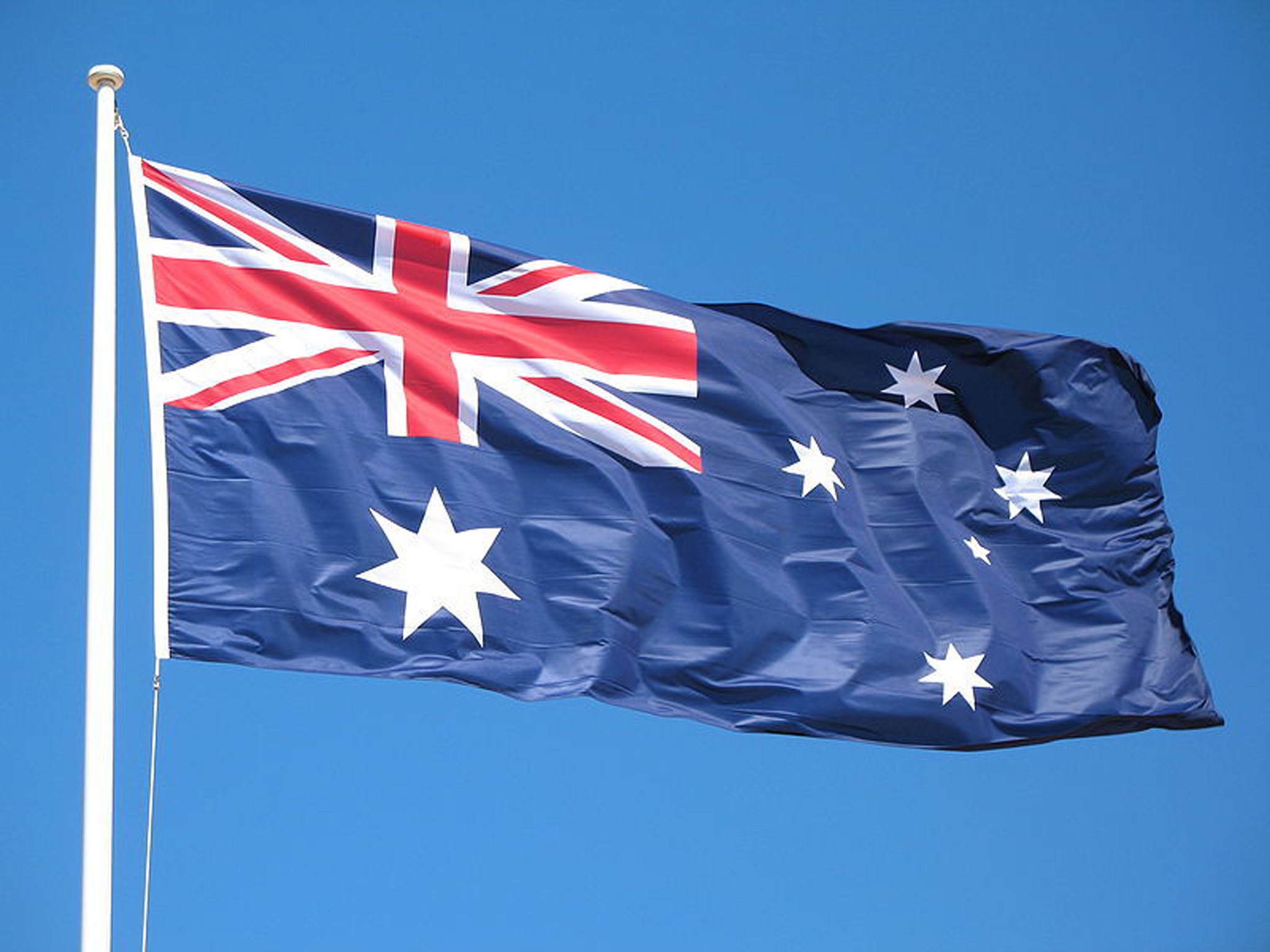
As a young nation struggling for an identity Australia found an enduring legacy with its own military. Known as Anzacs, they were a coalition of Australian and New Zealand armed forces who bravely fought in the First World War. To many Australians the red, white and blue cross of the Union Jack positioned above the Southern Cross on the blue-banned background of the national flag represents an inextricable history we share with the United Kingdom and as a member of the Commonwealth.
However, when republicanism gained prominence in the 1990s leading up to a referendum in 1999 our country’s flag and national anthem were again drawn into the debate. Generational arguments were bandied between loyalists leaning on tradition versus republicans claiming the flag was anachronistic and no longer held significance in our modern multicultural. This brought into focus the grievances felt by many Indigenous Australians who see the Australian flag with the canton of the Union Jack as a symbol of colonial oppression and dispossession by an invading, imperialistic force. In a completely different set of circumstances the same debate has arisen in Mississippi with calls to remove the Confederate symbol from their state flag.
Australia, along with New Zealand are amongst only a few countries in the world where changing the national flags is strongly supported. A common suggestion is to replace the Union Jack with the Aboriginal flag. In my view the Aboriginal flag is one of the most aesthetical perfect flags – for the exquisite simplicity and elegance it uses three colors to convey a people connected to a land. While incorporating some indigenous symbolism on a new flag design could represent a reconciliatory and unifying step, appropriating the Aboriginal flag in this manner could also have the opposite effect. This is because the canton of a flag can signify subjugation and division, which is why the flag’s designer Harold Thomas was also hesitant at such a suggestion. In an article published in the Sydney Morning Herald in 1994 Thomas explained,
“It stands on its own, not to be placed as an adjunct to any other thing. It shouldn′t be treated that way.”
Personally, the republican referendum in 1999 felt symbolic. It seemed a lot of Australians felt the same and with a majority of people happy to keep the status quo nothing changed. We retained the monarchy and our flag and anthem stayed the same.
The problem with symbols is they hold both personal and shared significance. And basically a flag’s job is to be a symbol. But it’s a hell of a job – to embody an entire nation and its people, representing the equality and diversity of their achievements and aspirations from the past through to the present and into the future. This is why flags wield immense power to unite, as well as offend, oppress, alienate and ensnare. It’s the reason I’ve never liked the idea of waving a flag (unless it’s a rainbow colored flag with the words ‘peace’ or ‘love’ or has an image of a unicorn) because of its divisive propensity towards segregation and nationalism.
From the time I’ve spent in Charleston I consider it a home or sorts, which is a rare and fragile gift to the wending scholars of the open road such as myself. But the Confederate flag is not my legacy. The only connection I have with it is a ballistic slow motion aerial of General Lee while watching Dukes of Hazard on television as a kid.
I’m sure Charleston will continue to do the right thing and act as a bright example just like the last time international attention turned to the city with the killing of an unarmed black man by a white police officer. While the continuing spate of unarmed suspects being shot and killed by police is treated with an appalling lack of accountability elsewhere in the country, in Charleston the police officer was summarily fired and charged with murder.
During the process of mourning and healing I guess it’s good to remind ourselves we are all creatures of the sun. History is not universal. It has no beginning or end – the only thing it has in common wherever you are is it bleeds (Stiles). And while it’s necessary to let some things go, it’s also good to create something new – an emblem to bind us in reconciliation and peace as we move forward together.
I dreamed I was I was flying
High above the steeples with the clouds tickling my feet
Through the suspension pillars to the sailboats below
Dolphins playing in the harbor
With the wind through my hair, I glided around the Battery saluting the dedicated soldiers that made the ultimate sacrifice for freedom.
Their spirit lives on in the walls of Sumter
Nine angels joined me in formation
Smiling; smiling so wide that a rainbow appeared over the horizon
As the bells chime from north to south, east to west thousands of strangers hugged
Blind of color; rich of heart
Neighbors and brothers
Mothers and daughters
Friends and lovers
A city lost some of its children today, but strengthened its foundation
I dreamed I was flying
High above the graffiti written on the walls of the shelters of doubt
In the darkness, they hide behind a blanket of ignorance
Under the presence of our father, the children of the holy city rise above the ashes, cleansing the graffiti with the white blanket of love
With the guidance of my new angels, we look below and protect our home with a pillar of hope
I dreamed I was flying
I woke and with the glimmer of the rising sun, I smiled looking forward to a new day; a new beginning

 by

 Finally, we journeyed to the visitors center area, between John and Ann after battling a quick Charleston rainstorm and spent some time with The Best Friend. If you are a locomotive train fan or a fan of industrial growth, this is a site to see and a wonderful story to be learned. This train was pivotal in raising our local economy and putting our port business on the map.