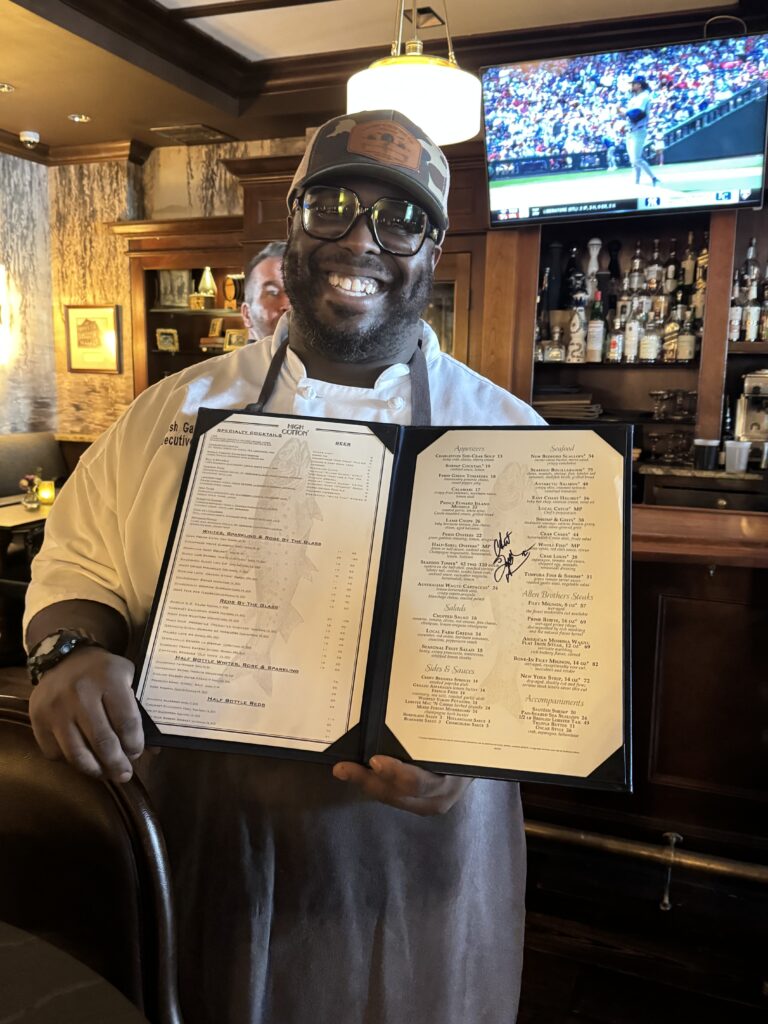
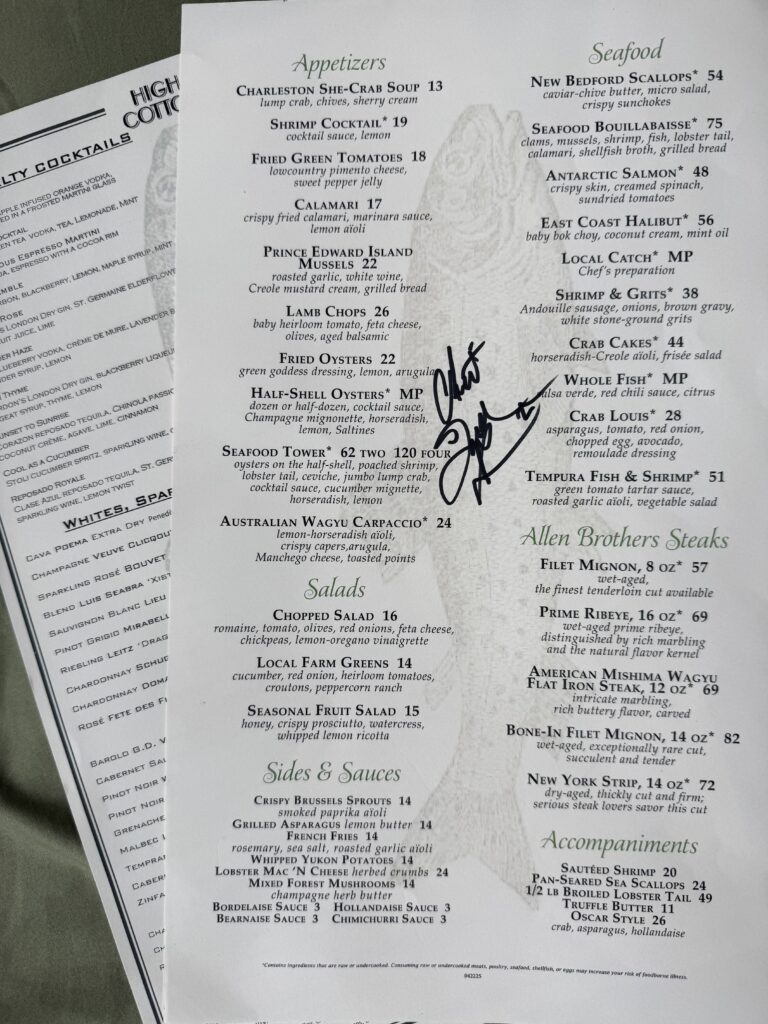
Bearcat Restaurant in Charleston, South Carolina has announced its closing after just over 1 year in the Avondale Neighborhood

Read More

We unfortunately have to announce that the talented team at Bearcat Restaurant in Avondale announced on Instagram that they have closed their restaurant in Charleston. In a passionate statement filled with love, the owner stated:

Bearcat was born out of a pandemic and started in a downtown Charleston apartment on Halloween weekend in 2020. It began as just a single pop up in a friend’s apartment and against all odds, progressed its way into a brick and mortar over the course of three years. The restaurant opened on Halloween weekend in 2023 with a menu that pushed the boundaries of what a restaurant could be in west Ashley at the time. Unfortunately, 13 months after being open, Bearcat’s last service for the foreseeable future was this past Saturday. We want to thank everyone that have supported the restaurant over the past year. A huge thank you is due to the staff, Past and present, and everyone who has had a hand in making bearcat the special place it was. 

Thank you Charleston for one hell of a ride.

Thank you for letting us come along for the ride!

Stay connected and subscribe to Charleston Daily.

Clemson students build community pavilion and school garden in Charleston, South Carolina

Read More

By Be a Bates

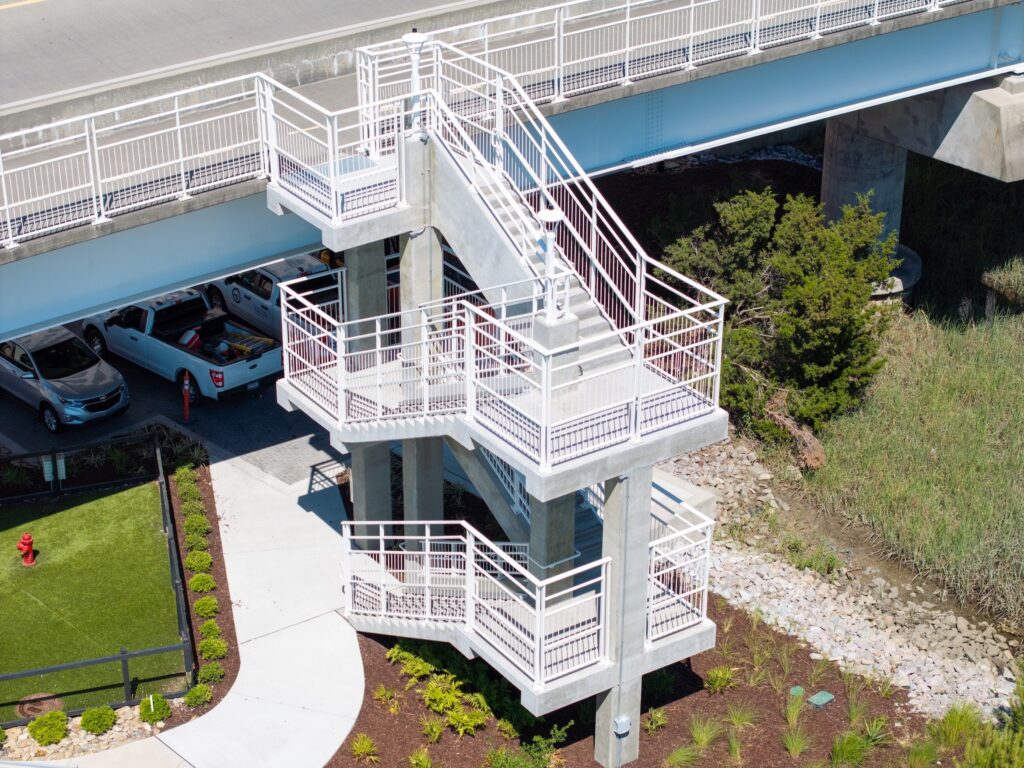
The School of Architecture’s Architecture + communityBUILD (A+cB) studio recently designed, built and held a ribbon cutting for a new community pavilion and school garden in Charleston.

In partnership with the Green Heart Project, the Charleston Parks Conservancy and the City of Charleston, the community pavilion and garden were built at Eric Cornelius Singleton II Park.

The project will provide Meeting Street Academy students with access to an outdoor pavilion with built-in picnic tables, countertops, a garden storage shed and a garden where students will be able to learn more about the food they eat and give them experiential opportunities.

“I cannot tell you enough how important it is to give students opportunities with experiential learning, and the magic happens when experiential learning collides with strong, rigorous academics,” shared Molly Grant, the director of special projects at Meeting Street  Academy. “And that is what Meeting Street Academy is all about. So I am thrilled that we were part of this project.”

“This project probably touched the hands of around 40 students,” explained David Pastre, the director of the Clemson Design Center in Charleston. “But out of those 40 students, 15 A+cB certificate students led the design work.”

According to Pastre, those students designed the building, created construction documents and fabricated and installed all parts and pieces, including pouring all the concrete.

“Clemson is a land grant institution, and this project fell right in line with that,” Pastre said. “This project lets us give back to the community and make a difference in Charleston. It’s also a service-learning opportunity, so not only are we giving back to the community, but this is also an opportunity for our students to learn and work alongside professionals and community members in creating needed places in our community.”

Pastre explained that the A+cB program brought the project to fruition with the help of Seamon WhitesideEM Structural, and other corporate and non-profit partners.

“They’re a huge support to us,” said Pastre. “We couldn’t have made this happen without them.”

The Green Heart Project fundraised to pay for the majority of the project, and the City of Charleston works with the Clemson Design Center on projects annually.

Five Clemson alumni who were part of the original design team were in attendance at the ribbon cutting on November 19, 2024. They expressed that seeing their hard work finally finished means a lot.

“The last two weeks of the semester, we came out, and we started putting it up; we got kind of a skeleton going, and people started coming up and asking us what was going on, and that’s when it really started to feel really special, and now with all the students coming in, it’s incredible,” explained Architecture alumnus Payton Davy.

Another alumnus, Kevin Arnold, explained that seeing something they worked on in college turn into a real project that the Charleston community will use and enjoy was extremely rewarding.

Source link: Clemson University

After 45 Years, the City Club Raleigh is closing its doors at the end of 2024

Read More

After 45 years, the City Club Raleigh, North Carolina has announced its closing. On December 31, 2024, the club will open its doors one final time.

In a message on Instagram, the club stated:

After considering numerous options for a viable path forward, we’ve made the very difficult decision to close City Club Raleigh. Our last day of operations will be Tuesday, December 31, 2024. The City Club has been a proud member of the Raleigh community for 45 years, which made this decision very difficult. We want to extend our deepest thanks to our dedicated members, staff, and the local community for their unwavering support and commitment over the years. It has been an honor to be a part of so many memorable experiences, and we are grateful for the relationships we’ve built along the way. We remain proud of what we’ve accomplished together, and we wish everyone the best in their future endeavors.

Wishing the staff, owners and families all the best in their next endeavors.

Stay connected and subscribe to Charleston Daily.

South Carolina Ranks #1 in the Nation in Production of Collards, Turnip Greens and Southern Peas (Yet, we produce so much more)

Read More

Digging into the Census of Agriculture from the South Carolina Department of Agriculture

By Eva Moore

South Carolina now leads the nation in collard green, turnip green, and Southern pea acreage, according to the latest Census of Agriculture.

The Census of Agriculture is performed every five years by the US Department of Agriculture’s National Agricultural Statistics Service. While USDA collects a variety of data throughout each year, the Ag Census is a good source for detailed information about what farmers are growing beyond major commodities like corn and cotton.

In the previous Census, in 2017, South Carolina topped the charts in just one crop: turnip greens.

Ashley Rawl, vice president of Sales, Marketing, and Product Development at Lexington County-based WP Rawl, is thrilled to see South Carolina in the top collard spot. WP Rawl is one of the nation’s leading growers of collards and other leafy greens, and he says his company has been on a mission to make consumers love collards. In addition to fresh bagged and bulk greens, they sell collard sauté kits — and they emphasize that collards can be cooked in just 15 minutes.

“For the last several years, we’ve been trying to get collards the recognition they’re due,” Rawl says. “Kale went through a boom several years back – and we love kale; we grow a lot of kale. But we are committed to collards having their day.”

Over at McCall Farms in the Pee Dee region of the state, collards are also an important line of business. McCall Farms sells canned collards under the Glory Foods and Margaret Holmes brands.

McCall Farms sells collards nationwide, satisfying what co-president Thomas Hunter says is broad demand for the product.

“Collards are a classic Southern staple at the dinner table,” Hunter says. “We strive to ensure consumers have the ability to purchase high-quality collards from their local grocery store to feed their family year-round.”

Hunter credits South Carolina farmers for their commitment to growing an exceptional product and Clemson Cooperative Extension researchers with pushing the collard industry forward by developing varieties with good disease resistance and high yields.

So, what does it take to be No. 1? In 2022, South Carolina grew 2,568 acres of collards, 1,980 acres of turnip greens, and 3,617 acres of Southern peas. (The USDA category “Southern peas” is also called cowpeas, and includes blackeyed peas, crowder peas, and various field peas.) However, it’s important to understand that while South Carolina grows more of these vegetables than any other state, they are not our top crops. By acreage and production value, crops like corn, soybeans, and cotton top the list. For comparison, in 2022, South Carolina farmers harvested 390,000 acres of soybeans — and the state doesn’t rank in the top 20 of soybean-producing states. 

The USDA State Statistician for South Carolina, Jacqueline Moore, says the state’s surge in collard and Southern pea acreage is part of a larger trend.

“If you look at South Carolina’s vegetable acreage overall, we’re up 25 percent from five years earlier,” she explains.

Some of our competitor states are not seeing the same growth: “Florida is up 12 percent, California is only up 2 percent, and if you look at our neighbors, North Carolina is down and Georgia is down.”

Moore says she thinks South Carolina farmers have capitalized on the popularity of local food, as well as the fact that big vegetable-growing states like California are struggling with water and other resources.

“Our farmers are finding advantages where there are opportunities,” Moore says.

South Carolina also holds the No. 2 slot for peaches and kale – behind California. 

Now that it’s November, South Carolina’s collard green growers are gearing up for a busy season. Rawl estimates that one-quarter of leafy green sales take place during the six-week span from Thanksgiving to Christmas.

Collard greens were declared South Carolina’s state vegetable in 2011. Now, Rawl notes, “We have the acres to back it up.”

Where We Stand

Here are some of South Carolina’s other top fruit and vegetable rankings:
South Carolina’s Rank + Commodity

1  Collard Greens
1  Southern Peas              
1  Turnip Greens               
2  Kale                                  
2  Peaches                          
5  Asparagus                      
5  Honeydew Melon       
5  Okra                                 
6  Plums                              
7  Non-Bell Peppers        
7  Sweet Potatoes            
8  Cantaloupe                   
8  Watermelon                  
8  Nectarines   
9  Cabbage Mustard 
9  Cucumbers 
10 Broccoli   
10 Tomatoes
10 Figs           
10 Strawberries 

Source link: South Carolina Department of Agriculture

The Southeast has 11 of the top 20 cities to retire based on a new study by U.S. News – 1 SC City in the top 20

Read More

By Mark A. Leon

Warm climate, coastal regions, hiking, outdoor recreational, lower cost of living, more flight patterns, yoga, or easy living. These are only a few of the reasons, many are flocking to the Southeast to retire.

In a latest study by U.S. News, 11 of the top 20 places to retire are located in the Southeast region of the United States.

South Carolina is a hot spot destination for retires as well. 4 Notable cities made the list from South Carolina: #13 – Charleston, SC, #30 – Greenville, SC, #67 – Spartanburg, SC, #78 – Columbia, SC.

Top Southeast cities to retire:

  • #1 – Naples, Florida
  • #4 – Sarasota, Florida
  • #6 – Raleigh, North Carolina
  • #7 – Jacksonville, Florida
  • #8 – Huntsville, Alabama
  • #9 – Charlotte, North Carolina
  • #13 – Charleston, South Carolina
  • #17 – Pensacola, Florida
  • #18 – Tampa, Florida
  • #19 – Port St. Lucie, Florida
  • #20 – Melbourne, Florida

Complete list and rankings

Source: U.S. News

Stay connected and subscribe to Charleston Daily.

10 Wealthiest Counties in South Carolina and Where are People Moving from to Settle in South Carolina – New eye opening study

Read More

By Mark A. Leon

It is no secret South Carolina is one of the most sought after states for new residency, but do you know where people are moving from? Do you know which counties and regions have the most wealth. We are here to address those questions with the latest study and data from SmartAsset.

Let’s start by saying 3 of the top 10 wealthiest counties in the state are centered on the Tri-County (Charleston, Berkeley and Dorchester) coming in a #1, #4 and #7. Our largest migration is coming from New York, North Carolina, New Jersey, Pennsylvania and California. Read on for more great insights:

SmartAsset top 10 wealthiest cities in South Carolina

∎ No. 1: Charleston County

∎ No. 2: Beaufort County

∎ No. 3: York County

∎ No. 4: Berkeley County

∎ No. 5: Lancaster County

∎ No. 6: Greenville County

∎ No. 7: Dorchester County

∎ No. 8: Georgetown County

∎ No. 9: Lexington County

∎ No. 10: Jasper County

What South Carolina county has the highest median income?

Charleston County ranked No. 1 for wealthiest S.C. county, with a median income of $81,260 and investment income at $107,231. Homes in the county also cost a pretty penny, with a median home value of $592,068.

Which South Carolina county had the lowest overall wealth?

Marlboro County ranks last at 46th, according to the SmartAsset formula, with a median income of $34,275, investment income of $28,568 and a median home value of $82,934.

Key Findings

  • The New York tri-state area is flocking to South Carolina. New Yorkers added the highest net number of households to South Carolina at 5,476. New Jersey added a net of 2,978 households to South Carolina – third-most studywide – and Pennsylvania added the fourth-highest net households at 2,657. Of the three, New Jersey sent the wealthiest households with an average incoming adjusted gross income (AGI) of $124,621.
  • North and South Carolina exchange the largest number of households. North Carolina is the most popular destination for South Carolinians moving out, with 14,681 crossing the state’s northern border. Meanwhile, 17,933 households made the opposite move, for a net movement of 3,252 from North to South Carolina – the second-highest studywide.
  • Only one state is siphoning households away from South Carolina. Tennessee captured a net of 51 households from South Carolina. More specifically, 2,415 South Carolina households moved out to Tennessee, while 2,364 households moved in from there. Those households moving out of South Carolina took more money with them ($86,330) than those coming in ($80,604).
  • Households from Arkansas are bringing the most money with them. While the exchange of households between South Carolina and Arkansas was relatively similar, with a net movement of 52 households into the Palmetto State, these households had an average AGI of $202,256. The second- and third- wealthiest households coming into South Carolina were from Illinois ($147,012) and Massachusetts ($144,052).

Where People Are Moving to South Carolina From

States are ranked based on the net number of households that moved into South Carolina in the 2022 tax year.

Top 10 States With the Highest Net Movement to South Carolina

  1. New York
  • Net households moved into South Carolina: 5,476
  • Net individuals moved into South Carolina: 10,896
  • Households moved into South Carolina: 8,087
  • Individuals moved into South Carolina: 14,971
  • AGI, households moved into South Carolina from this state: $97,960
  • Households that left South Carolina for this state: 2,611
  • Individuals that left South Carolina for this state: 4,075
  • AGI, households that left South Carolina for this state: $71,954
  1. North Carolina
  • Net households moved into South Carolina: 3,252
  • Net individuals moved into South Carolina: 7,806
  • Households moved into South Carolina: 17,933
  • Individuals moved into South Carolina: 32,901
  • AGI, households moved into South Carolina from this state: $82,325
  • Households that left South Carolina for this state: 14,681
  • Individuals that left South Carolina for this state: 25,095
  • AGI, households that left South Carolina for this state: $70,940
  1. New Jersey
  • Net households moved into South Carolina: 2,978
  • Net individuals moved into South Carolina: 5,982
  • Households moved into South Carolina: 4,005
  • Individuals moved into South Carolina: 7,582
  • AGI, households moved into South Carolina from this state: $124,621
  • Households that left South Carolina for this state: 1,027
  • Individuals that left South Carolina for this state: 1,600
  • AGI, households that left South Carolina for this state: $67,149
  1. Pennsylvania
  • Net households moved into South Carolina: 2,657
  • Net individuals moved into South Carolina: 5,285
  • Households moved into South Carolina: 4,523
  • Individuals moved into South Carolina: 8,309
  • AGI, households moved into South Carolina from this state: $102,390
  • Households that left South Carolina for this state: 1,866
  • Individuals that left South Carolina for this state: 3,024
  • AGI, households that left South Carolina for this state: $63,327
  1. California
  • Net households moved into South Carolina: 2,563
  • Net individuals moved into South Carolina: 6,178
  • Households moved into South Carolina: 4,851
  • Individuals moved into South Carolina: 9,949
  • AGI, households moved into South Carolina from this state: $110,136
  • Households that left South Carolina for this state: 2,288
  • Individuals that left South Carolina for this state: 3,771
  • AGI, households that left South Carolina for this state: $70,578
  1. Maryland
  • Net households moved into South Carolina: 1,606
  • Net individuals moved into South Carolina: 2,955
  • Households moved into South Carolina: 2,832
  • Individuals moved into South Carolina: 5,057
  • AGI, households moved into South Carolina from this state: $108,427
  • Households that left South Carolina for this state: 1,226
  • Individuals that left South Carolina for this state: 2,102
  • AGI, households that left South Carolina for this state: $74,162
  1. Virginia
  • Net households moved into South Carolina: 1,295
  • Net individuals moved into South Carolina: 2,756
  • Households moved into South Carolina: 4,967
  • Individuals moved into South Carolina: 9,205
  • AGI, households moved into South Carolina from this state: $113,104
  • Households that left South Carolina for this state: 3,672
  • Individuals that left South Carolina for this state: 6,449
  • AGI, households that left South Carolina for this state: $72,727
  1. Ohio
  • Net households moved into South Carolina: 1,270
  • Net individuals moved into South Carolina: 2,415
  • Households moved into South Carolina: 3,166
  • Individuals moved into South Carolina: 5,689
  • AGI, households moved into South Carolina from this state: $97,365
  • Households that left South Carolina for this state: 1,896
  • Individuals that left South Carolina for this state: 3,274
  • AGI, households that left South Carolina for this state: $65,871
  1. Massachusetts
  • Net households moved into South Carolina: 1,238
  • Net individuals moved into South Carolina: 2,415
  • Households moved into South Carolina: 2,053
  • Individuals moved into South Carolina: 3,676
  • AGI, households moved into South Carolina from this state: $144,052
  • Households that left South Carolina for this state: 815
  • Individuals that left South Carolina for this state: 1,261
  • AGI, households that left South Carolina for this state: $81,447
  1. Connecticut
  • Net households moved into South Carolina: 1,180
  • Net individuals moved into South Carolina: 2,287
  • Households moved into South Carolina: 1,910
  • Individuals moved into South Carolina: 3,506
  • AGI, households moved into South Carolina from this state: $117,315
  • Households that left South Carolina for this state: 730
  • Individuals that left South Carolina for this state: 1,219
  • AGI, households that left South Carolina for this state: $72,479

Source link: SmartAsset

AFL continues growth of Spartanburg County manufacturing operations investing $155M and creating 150 new jobs

Read More

COLUMBIA, S.C. – AFL, a manufacturer of fiber optic products and equipment, today announced it is expanding its manufacturing operations across Spartanburg County. The company’s $155 million investment will create over 150 new jobs over the next two to five years. 

Founded in 1984 and headquartered in Spartanburg County, AFL is a subsidiary of Fujikura, Ltd. of Japan, and provides industry-leading, end-to-end solutions, products and services to the energy, service provider, enterprise, industrial, and hyperscale markets. The company’s products, which include fiber optic cable and hardware, transmission and substation accessories, and outside plant equipment, are used in over 130 countries.

AFL will expand all of its fiber optic cable manufacturing operations located across Duncan. The expansion will increase production capacity for the critical equipment needed to support domestic cable manufacturing, broadband deployment and power grid modernization.

Individuals interested in joining the AFL team should visit the company’s careers page.

The Coordinating Council for Economic Development awarded a $200,000 Set-Aside grant to Spartanburg County to assist with the costs of building improvements.

QUOTES

“For four decades, AFL has been an integral part of the Spartanburg County community. We are grateful for the support of our state and local leaders as we continue to grow. This expansion will increase our manufacturing capabilities, allowing us to better serve our customers around the globe, while strengthening the communities in which we work and live.” -AFL President and CEO Jaxon Lang


“AFL’s expansion and the more than 150 new jobs it will create in Spartanburg County represent a major victory for South Carolina’s world-class workforce. We are proud the company continues to invest in our state and look forward to the impact this expansion will have in the years ahead.” -Gov. Henry McMaster

“We are always proud to celebrate the success of a South Carolina-based company, and today’s announcement is no exception. AFL’s $155 million investment in Spartanburg County will strengthen the region’s thriving manufacturing industry, and we are proud to see the company furthering its commitment to the Upstate.” -Secretary of Commerce Harry M. Lightsey III

“AFL expanding their Spartanburg County operations shows the company’s success and how good it is to do business in Spartanburg County right now. AFL has been a long-term partner for our county, and on behalf of county council, we’re grateful the company continues to hire in our community, providing opportunities for our residents.”  -Spartanburg County Council Vice Chairman and Economic Development Committee Chairman David Britt

FIVE FAST FACTS

  • AFL is expanding its operations in Spartanburg County.
  • The company’s $155 million investment will create over 150 new jobs.
  • AFL is a manufacturer of fiber optic products and equipment.
  • The company is headquartered at 170 Ridgeview Center Drive in Duncan, S.C.
  • Individuals interested in joining the AFL team should visit the company’s careers page.

Visit Boone, North Carolina: Winter Wonderland in the Blue Ridge Mountains

Read More

By Mark A. Leon

Choose-and-Cut Season 

Celebrate the magic of the holidays in Boone, where seasonal traditions shine against a breathtaking mountain backdrop. Kick off the holiday season at C & J Christmas Tree Farm, where families, friends, and pets can choose and cut the perfect tree while enjoying festive activities like meeting Santa, face painting, and sipping hot cocoa or cider. For another festive experience, head to Clawson’s Tree Farms, offering hayrides, farm animals, and complimentary coffee and cocoa at its two Boone locations, with staff handling all tree prep. Finally, visit Miller’s Choose and Cut Christmas Trees, a family-run farm in the Appalachian Mountains, known for its Fraser firs of all sizes and handmade wooden wreaths. Boone’s choose-and-cut farms make holiday memories truly unforgettable. 

Easy Access to Adventure

Located in North Carolina’s scenic High Country, Boone is the ultimate launchpad for outdoor explorers. Here, every level of adventurer finds a thrill—from rock climbing high above the treetops to skiing and snow tubing in the Southeast’s ski capital. Surrounded by breathtaking mountain landscapes, Boone also offers some of the most scenic hiking on the East Coast, with trails suited for beginners and experts alike. Explore the serene Boone Greenway trail for an easy, family-friendly experience, conquer the iconic Rough Ridge Trail for sweeping vistas of the Blue Ridge Parkway, or challenge yourself on the rugged Grandfather Mountain Profile Trail. With iconic parks and endless trails just minutes away, every hiker’s bucket list starts here. 

Skiing in Boone, North Carolina

Unique Boutiques and Artisan Finds

Boone’s vibrant artisan community is a haven for those seeking one-of-a-kind shopping experiences. Stroll through a plethora of vintage and antique stores, and the ever popular King Street Farmers’ Market, where you’ll find everything from locally sourced meats and cheeses to handcrafted creations by local artists. Here, “buy local” isn’t just a trend—it’s woven into the culture of the Appalachian region. Whether you’re after outdoor gear, vintage treasures, or unique keepsakes, Boone’s shops offer a rich sampling of local flavor and craftsmanship. 

Related: Explore Boone, NC Official Website

Stay connected and subscribe to Charleston Daily.