The Signature Grilled Cheese: a timeless favorite featuring melt-in-your mouth American cheese and fresh and juicy sliced tomato on butter–toasted sourdough. Customize with your choice of crispy bacon or caramelized onions for an extra layer of flavor.
Jo’s Disco Fries: one of Bumpa’s legendary fry plates, piled high with crispy fries smothered in beef gravy, mozzarella cheese, caramelized onions and tender braised beef.
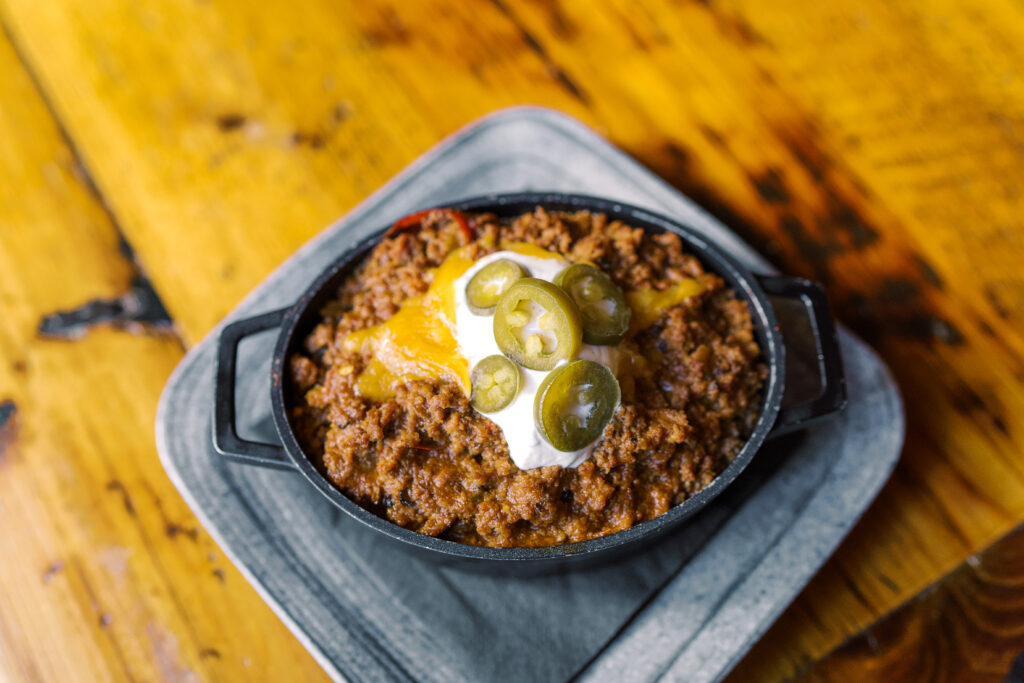
Cumberland Chili: hearty, housemade beef chili served over jasmine rice, topped with shredded cheddar, a dollop of creamy sour cream and pickled jalapenos.
Resy Hit List this week released the 10 restaurants that defined Charleston, South Carolina dining in 2024. We cannot agree more with this list. These restaurants showcase a level of quality, intimacy, engagement and food quality that have set a standard for the Lowcountry culinary scene.
The Top 10 Resy Best of the Hit List 2024 Include:
#5 – Makan CHS – 210 Rutledge Ave, Charleston, SC 29403 – We unfortunately must report that December 21, 2024 will be the final day of service for Makan Charleston.
#6 – Palmira Barbecue– 2366 Ashley River Rd Building 1, Charleston, SC 29414
#7 – The Archer – 601 Meeting St Ste. 140, Charleston, SC 29403
In a short but emotional message on Instagram, the team at Makan Charleston, the only Malaysian restaurant on the peninsula announced they will be closing. The last day of service will be December 21, 2024.
All are invited to enjoy one more meal and say goodbye. We were grateful to meet and spend time with the team and enjoy their wonderful cuisine. Thank you for being a part of the Charleston community and the best of wishes for the next adventure.
Message from Makan
We are sad to announce Makan’s final service will be December 21st. We are grateful for our amazing staff, who worked incredibly hard to introduce Malaysian cuisine to Charleston while having fun along the way. Please come out and support them one last time!
For those in the Charleston, SC area familiar with the work of the Lowcountry Marine Mammal Network (LMMN), you know what a gift they are to the Lowcountry. Working tirelessly in research, conservation and awareness of our marine mammal friends and neighbors is a testimony to the commitment to our planet and all living things.
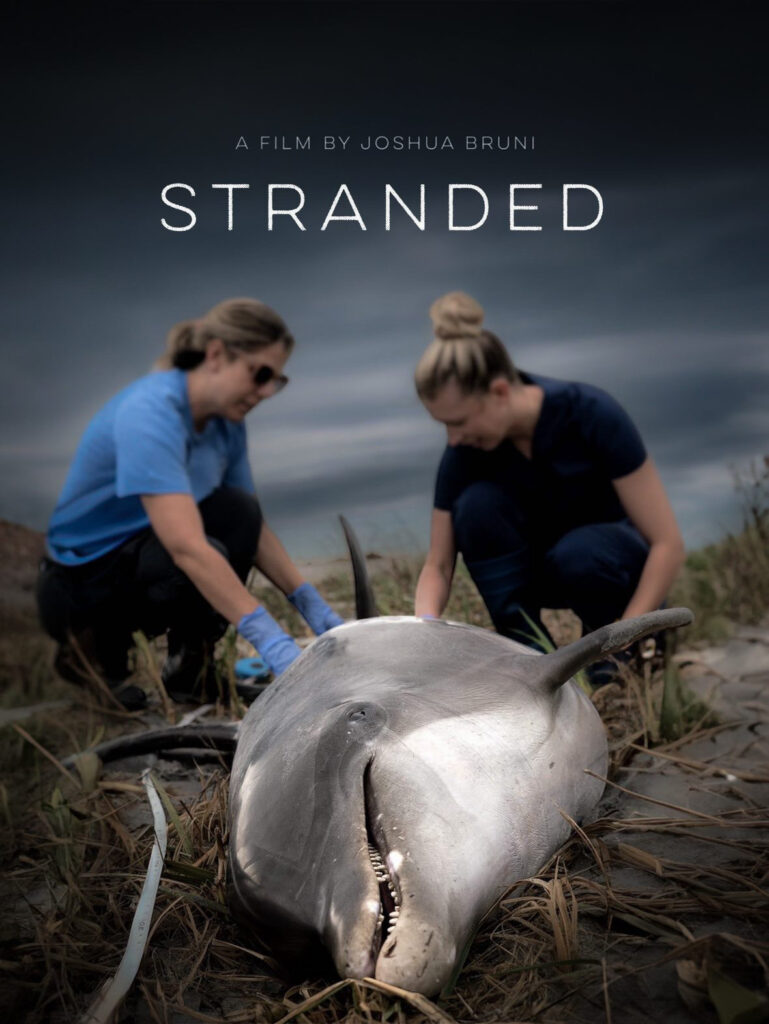
This has not gone unnoticed. This spring, director Joshua Bruni will be premiering his documentary, Stranded that will bring the work of the LMMN to a much broader national and international audience. We invite you to learn more and follow the journey.
Film Description – Logline:
The Lowcountry Marine Mammal Network fights daily to combat human impacts to the marine mammals of South Carolina through the use of research, education, and awareness.
Backstory and Documentary Narrative
Lauren Rust and Tracy Kowlacyzk, from the Lowcountry Marine Mammal Network, are the only two people responsible for responding to stranded marine mammals along the whole coast of South Carolina. They also fight daily to combat the human impacts to marine mammals such as boat strikes, hand feeding, harassment, and more through research, education, and awareness.
Joshua Bruni is currently in the MFA in Science/Natural History Filmmaking Program at Montana State University. This short ~15min documentary is his thesis film in order to graduate with his graduate degree in May 2025. Joshua Bruni is hoping to eventually become a professor at a University and continue to make wildlife based films.
Distribution Details:
The plan is to do a premiere screening of the film in Charleston, SC and Myrtle Beach, SC area in the spring of 2025. Following the screenings there will be distribution of the film to film festivals across the world to share this untold story.
Follow the Stranded development journey on Instagram.
Distinction recognizes quality of operation, management and service to the community
[ATLANTA] – The Charleston County Park and Recreation Commission (CCPRC) was recently recognized for its re-accreditation through the Commission for Accreditation of Park and Recreation Agencies (CAPRA) and the National Recreation and Park Association (NRPA). CCPRC received the distinction during the 2024 NRPA Annual Conference in Atlanta in October, ranking them among elite park and recreation agencies and departments across the country.
CCPRC received their initial CAPRA accreditation in 2014 and was last reaccredited in 2019. CAPRA provides quality assurance and quality improvement of accredited park and recreation agencies throughout the United States by providing agencies with a management system of best practices. CAPRA is the only national accreditation of park and recreation agencies and is a valuable measure of an agency’s overall quality of operation, management and service to the community. Out of thousands of agencies in the country, only 213 parks and recreation agencies have earned accreditation.
This mark of distinction indicates an agency met rigorous standards related to the management and administration of lands, facilities, resources, programs, safety and services. The process for accreditation involves training, self-assessments, a formal application, a site visit by a team of trained CAPRA volunteers and a hearing to grant accreditation. Once accredited, the agency must uphold the standards and is reviewed again in five years. As part of the accreditation process, CCPRC demonstrated compliance with 154 recognized standards and policy and procedure documentation. The ongoing process of achieving and maintaining accreditation itself helps identify and spotlight areas of efficiency and heighten areas of accountability, which translates into higher quality service and operation to benefit the community.
CCPRC earned a perfect score on its assessments, with CAPRA reviewers stating that “the agency’s strength shines through the dedication and long-standing commitment of its staff [who] truly embody the idea of parks and recreation for all.”
“The award is the culmination of a five-year journey supported by all members of our organization and led by the members of our Accreditation Team, fondly known as the A-Team,” said CCPRC Associate Executive Director Phil Macchia. “This achievement would not be possible without the hard work and commitment of each member of the CCPRC team. It recognizes our organizational efficiency, adherence to policies and procedures, and the significant investment of time and dedication.”
For more information about CAPRA accreditation, visit www.nrpa.org/CAPRA. NRPA is the leading non-profit organization dedicated to the advancement of public parks, recreation and conservation. For more information, visit www.nrpa.org.
The mission of CCPRC is to improve the quality of life in Charleston County by offering a diverse system of park facilities, programs and services. The large park system features over 11,000 acres of property and includes four land parks, a skate park, three beach parks, four seasonally-lifeguarded beach areas, three dog parks, two landmark fishing piers, three waterparks, 19 boat landings, a climbing wall, a challenge course, an interpretive center, a historic plantation site, an equestrian center, cottages, a campground, a marina, as well as wedding, meeting and event facilities.The park system also offers a wide variety of recreational services – festivals, camps, classes, programs, and more. For more information on CCPRC, call 843-795-4386, visit CharlestonCountyParks.com or download the Charleston County Parks mobile app.
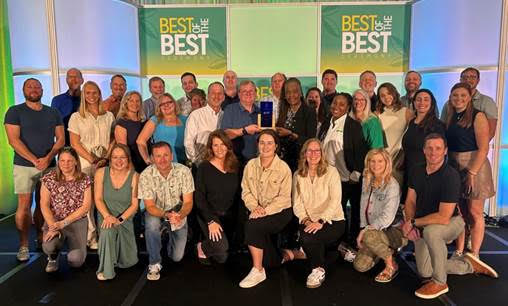
Members of CCPRC’s staff and Accreditation Team received the award on behalf of the agency.
A special and humble congratulations to the truly gifted and amazing team at Kultura for being named by Esquire Magazine at one of the Top New Restaurants in America.
Kultura, located at 73 Spring St Unit A, Charleston, SC 29403, has been acclaimed for its authentic Filipino cuisine and inviting hospitality. It continues to be a local and tourist favorite and well deserving of this latest honor.
Caring for others has always been Nikko Cagalanan’s ethos, but working long days and nights as a nurse began to take a toll on him. Finding comfort in the recipes of his lola, or grandmother, he took a leap of faith and left his career in nursing to start a series of pop-up Filipino dinners in Charleston. After gaining national attention, he opened Kultura, where the menu qualifies as a proud asseveration. In tribute both to Filipino cuisine and to the southern city that Cagalanan fell in love with, the chef weaves local ingredients into traditional dishes. My favorite? Arroz caldo, a comforting dish that I would eat every day if I could. Cagalanan cooks down rice in a flavorful broth, then tops it with trout roe, XO sauce, fried garlic, chile crisp, and a soft-boiled egg. Oh, and what’s that purple milkshake over there? It’s a cocktail inspired by halo halo, the Filipino dessert. Kultura mixes ube, pineapple juice, and sake before garnishing it with whipped cream and a sweet array of toppings. —AG
SUMMERTON, S.C., Dec. 12, 2024 /PRNewswire/ — Blue Water Development is proud to announce the acquisition of Santee Lakes KOA Journey, a premier family-friendly campground in Santee, South Carolina. With a strong commitment to enhancing guest experiences, Blue Water will invest $4 million in property upgrades to elevate comfort and convenience for its guests.
Santee Lakes KOA Journey.
Conveniently located off I95 exit 102 on the shores of Lake Marion, Santee Lakes KOA is the exact half-way point between Florida and New York and the rapidly expanding Columbia and Charleston, SC metro centers. The property offers a blend of relaxation and convenience. Featuring 167 sites, the property is known for its lakeside views, camping options, and family-focused amenities. The park offers a variety of recreational activities, including fishing, paddle boating, biking, and nature trails, making it a popular destination for a scenic getaway.
As part of Blue Water’s dedication to delivering exceptional guest value, the $4 million renovation will focus on elevating the guest experience with plans to enhance the RV sites, upgraded amenities, and modernize the campground to make it the premier KOA RV resort on the I95 corridor.
Guests can enjoy 20% off (30% for KOA Rewards Members) from now through 2025, for stays between 2 and 14 nights, with the promo code NEWBLUE.
“At Blue Water, we prioritize creating meaningful, memorable experiences for our guests,” said Rafael Correa, President of Blue Water Development. “By investing in significant property enhancements at Santee Lakes KOA Journey, we aim to provide even greater value for our guests and make this picturesque resort a standout destination.”
For more information and updates from Santee Lakes KOA Journey, please visit their website and follow them on Facebook. For more information on Blue Water, please visit their website.
About Blue Water:
Founded in 2002, Blue Water specializes in investing, developing, and managing RV resorts, campgrounds, hotels, and attractions. Blue Water’s integrated approach to marketing, revenue management, and operations has quickly established itself as a hospitality industry leader. With dozens of resort-area properties in East Coast states from Maine to Florida, and new additions out west in Texas, Montana, and Oregon, the Blue Water family is committed to creating elite assets, delivering exceptional guest experiences, and enhancing the communities we serve. To learn more, visit BWDC.com. LinkedIn: https://www.linkedin.com/company/blue-water-development-corp/| Facebook: https://www.facebook.com/BlueWaterDev/
December 14, 1782 at Charleston, South Carolina, The Evacuation of Charleston
On December 14, early in the morning, Major General Alexander Leslie, commanding the British forces in South Carolina, withdrew his forces from the advanced works on the Charleston peninsula. He marched them down to Gadsden’s Wharf.
Here, the British force embarked by sea. Along with the soldiers, the British command took with them some 3,380 Loyalists and 5,000 Negro slaves. This evacuation completed the British withdrawal of all troops from the Southern Colonies.
At 11:00 A.M., after the British evacuation, Major General Anthony Wayne and his Continental troops occupied the city.
The massive British evacuation of Charleston on Dec. 14, 1782 was effectively the conclusion of the American Revolution, and for many years was celebrated as a local holiday.
The Victory Day Parade celebrates the evacuation of the British from Charleston in 1782. Charleston was the last city to be evacuated and the last front of the American Revolution, and represented a symbol of American freedom.
This year, 2018, revives an annual celebration in Charleston that was celebrated here for the first fifty years of the Nation’s life. On December 14, 1782 British troops evacuated Charleston,the last city held captive by Britain. Within four months King George III agreed to grant the American Colonies their freedom.
The Victory Day event will take place in downtown Charleston on Sunday, December 16. Participating Groups will begin to form at the east quadrant of Marion Square on Sunday, December 16,2018 at 9:30am. Tables will be made available for groups whose history and purpose can be associated with Victory Day to distribute literature concerning their organizations and their connections to Charleston’s Revolutionary history. Please let us know as soon as possible of your needs. The celebration will continue through approximately 4:30PM.
The Winner Will Receive a Prize Package Valued at Over $2.2 Million
NEW YORK, Dec. 3, 2024 /PRNewswire/ — HGTV, a member of the Warner Bros. Discovery family of brands, opened the doors today to HGTV Dream Home® 2025, a newly built, fully furnished home located in Bluffton, South Carolina. The winner of the sweepstakes will receive this fully furnished home, a new 2025 Mercedes-Benz GLC, and $100,000 from Viva® along with a 5-year supply of Viva paper towels.
HGTV Dream Home 2025 Video TourHGTV Dream Home 2025 Backyard
Unlock the charm of Lowcountry living with this timeless custom-built home, embodying coastal elegance and thoughtful design. Spanning over 3,000 square feet, this three-bedroom, threeand-a-half-bathroom home is a harmonious blend of classic Southern luxury and modern sophistication. Immerse yourself in the seamless fusion of indoor and outdoor living, where earthy tones and costal textures create a serene environment. Inside the home, the great room captivates with high ceilings and an open-concept design that seamlessly connects the kitchen, dining, and living spaces. The primary bedroom is located on the first floor, bathed in natural light and serves as a tranquil escape. The two guest bedrooms are upstairs with a cozy loft lounge offering an additional retreat. Off the kitchen is a spacious laundry room and a dedicated pet washing station ensuring everyday functionality. Situated along the fairway of Berkeley Hall, a premiere private golf community, this home is a golfer’s dream. The home comes with a golf simulator and a private golf cart to elevate the leisure experience. The backyard serves as an entertainer’s haven, featuring a sparkling pool, fireplace, an outdoor kitchen, a pergola, and stunning views of the course.
The home was built by Shoreline Construction and was designed by Court Atkins Group. The home’s interior design is by Brian Patrick Flynn.
“This home is the perfect blend of Lowcountry elegance and modern comfort,” said Flynn. ” With this year’s HGTV Dream Home, I wanted every detail to reflect the beauty of Bluffton while creating a space that feels inviting and luxurious.”
“This year’s HGTV Dream Home highlights the charm of Bluffton, South Carolina—a picturesque town that offers the perfect escape,” said Betsy Ayala, Interim Head of Content, HGTV. “We’re thrilled to invite viewers to explore this stunning home and enter for a chance to make it their own.”
Bluffton, South Carolina, is a charming Lowcountry town known for its natural beauty, Southern hospitality, and vibrant community. Nestled along the May River, Bluffton is a golfer’s paradise, boasting world-class courses that attract enthusiasts year-round. Its prime location—just across the bridge from Hilton Head Island and 25 miles from Savannah—makes it a convenient base for exploring nearby beaches, historic sites, and cultural attractions. Bluffton offers the best of Southern charm with the historic Old Town, unique shops, art galleries, and exceptional dining options. Enjoy the area’s laid-back lifestyle, local festivals, and access to outdoor activities such as boating, kayaking, and fishing. Bluffton provides an ideal blend of small-town charm and coastal living, making it a coveted destination.
The official entry period of the HGTV Dream Home 2025 is 9 a.m. ET on Tuesday, December 17th, 2024 through 5 p.m. ET on Friday, February 14, 2025. Eligible fans can enter daily at HGTV.com and FoodNetwork.com, where they will also find full details and the official rules, as well as additional home features. Viewers can tune-in to the one-hour special HGTV Dream Home 2025 on Monday, January 1, 2025 at 8pm ET on HGTV, HGTV GO and Hogar de HGTV, also available on Max and discovery+ the same day.
Sponsors of the HGTV Dream Home 2025 include Belgard®, Delta Faucet, HGTV Home® by Sherwin-Williams, James Hardie Building Products Inc., Mercedes-Benz USA, SimpliSafe Home Security , Sleep Number®, Trex Company LLC, VELUX® Skylights , Wayfair® and Hilton Head Island-Bluffton Chamber of Commerce.
ABOUT HGTV
HGTV delivers families with relatable stories, superstar real estate and renovation experts and amazing home transformations that inspire a passionate audience. For anyone seeking entertaining and aspirational home and lifestyle content, HGTV is the place to be. HGTV offers: a top 10 cable network that is distributed to just over 68 million U.S. households; a website, HGTV.com, that attracts an average of 11 million people each month; a social footprint of more than 34 million; HGTV Magazine, a monthly publication that reaches more than one million readers; and exclusive collections of home-oriented products through the HGTV Home® consumer products line. Viewers can become fans of HGTV and interact with other home improvement enthusiasts through Facebook, X(formerly known as Twitter), Pinterest, Instagram, TikTok and Threads. HGTV is owned by Warner Bros. Discovery, a leading global media and entertainment company available in more than 220 countries and territories and 50 languages whose portfolio also includes Discovery Channel, Max, discovery+, CNN, DC, Eurosport, HBO, HBO Max, Food Network, OWN, Investigation Discovery, TLC, Magnolia
Network, TNT, TBS, truTV, Travel Channel, MotorTrend, Animal Planet, Science Channel, Warner Bros. Film Group, Warner Bros. Television Group, Warner Bros. Games, New Line Cinema, Cartoon Network, Adult Swim, Turner Classic Movies, Discovery en Español, Hogar de HGTV and others. For more information, please visit www.wbd.com.
Avelo adds 10 new routes, with 27 nonstop routes from NC Affordable one-way fares start at $44 Avelo will base five aircrafts in the North Carolina, creating up to 100 new jobs
HOUSTON, Dec. 4, 2024 /PRNewswire/ — Avelo Airlines announced today it is expanding the airline’s commitment to North Carolinawith the addition of two new bases of operation at Charlotte’s Concord-Padgett Regional Airport (USA) and Wilmington International Airport (ILM).
Avelo also announced it will start five new routes from ILM and USA, and its first two international routes at the Research Triangle’s Raleigh-Durham International Airport (RDU). With the addition of these seven new routes, Avelo will now serve 27 nonstop routes from North Carolina.
BURBANK, CALIFORNIA – APRIL 28: Avelo Airlines takes off with first flight between Burbank and Santa Rosa at Hollywood Burbank Airport on April 28, 2021 in Burbank, California. (Photo by Joe Scarnici/Getty Images for Avelo Air) (PRNewsfoto/Avelo Airlines)
Avelo also announced three new routes connecting Nashville, Tennessee to Rochester, New York and the Philadelphia / Delaware Valley; as well as connecting Boston / Manchester, N.H. to Myrtle Beach, South Carolina.
The 10 new routes will begin in 2025 and will operate on Boeing Next-Generation 737 aircraft. Affordable, one-way fares start at $44*. Travelers can make reservations at AveloAir.com.
The announcements were made this morning with festive celebrations in Charlotte, Raleigh / Durham and Wilmington attended by Avelo leaders, airport administrators, community leaders and media.
Avelo Airlines Founder and CEO Andrew Levy said, “Our North Carolina Customers tell us they’ve loved flying Avelo since we took flight in North Carolina two years ago. Our 27 nonstop destinations are just the beginning. Establishing bases in Charlotte and Wilmington, as well as our international expansion at our RDU base, enables us to bring even more affordable, convenient and industry-leading reliability to more destinations. This means even more choice for travelers from across North Carolina while making it even easier for more people to visit the state from elsewhere across the East Coast. We appreciate the warm reception Avelo has received and are grateful to our Customers who have entrusted Avelo with their air travel in North Carolina.”
New, Nonstop North Carolina Route Details:
From Raleigh-Durham International Airport (RDU):
Montego Bay, Jamaica (MBJ)
Begins February 12, 2025, with twice weekly service on Wednesdays and Saturdays
Punta Cana, Dominican Republic (PUJ)
Begins February 22, 2025, with twice weekly service on Wednesdays and Saturdays
From Wilmington International Airport (ILM):
Boston, Mass. / Manchester, N.H. (MHT)
Begins April 3, with twice weekly service on Thursdays and Sundays
Rochester, N.Y. (ROC)
Begins April 4, with twice weekly service on Fridays and Mondays
Nashville, Tenn. (BNA)
Begins April 3, with twice weekly service on Thursdays and Sundays
From Charlotte’s Concord-Padgett Regional Airport (USA):
Daytona Beach, Fla. (DAB)
Begins April 3, 2025, with twice weekly service on Thursdays and Sundays
Nashville, Tenn. (BNA)
Begins April 4, 2025, with twice weekly service on Mondays and Fridays
Additional Routes:
From Nashville International Airport (BNA)
Frederick Douglass Greater Rochester International Airport (ROC) begins April 3, 2025, with twice weekly service on Thursdays and Sundays
Philadelphia / Wilmington Airport (ILG) begins May 1, 2025, with twice weekly service on Thursdays and Sundays
From Manchester-Boston Regional Airport (MHT)
Myrtle Beach International Airport (MYR) begins April 4, 2025, with twice weekly service on Mondays and Fridays
Growing Avelo in North Carolina Avelo will open its base at USA on March 6, 2025. The airline will initially position one Boeing Next-Generation 737 and will add a second 737 in April 2025.
Avelo will open its base at ILM on April 3, 2025. The airline will initially position one Boeing Next-Generation 737 and will add a second 737 later in 2025.
Avelo established RDU as a Crewmember base and base of operations in February 2023. Avelo currently employs nearly 100 Crewmembers at RDU.
To support Avelo’s two new bases, the airline anticipates creating at up to 100 jobs. These positions will include a combination of Avelo Crewmembers and jobs with Avelo business partners operating at USA and ILM. Roles will include Airport Customer Service, Flight Attendants, Pilots, Aircraft Technical Operations and Maintenance, and Supervisors. Candidates can learn more about Avelo career opportunities by visiting AveloAir.com/Careers.
America’s Most Reliable and Convenient Airline
Since taking flight on April 28, 2021, Avelo has flown more than 6 million Customers on over 46,000 flights. Today Avelo serves 50 cities spanning 23 states and Puerto Rico, as well as three international destinations: Jamaica, Mexico and the Dominican Republic.
Avelo has unlocked a new era of convenience, choice, and competition by flying unserved routes to primarily underserved communities across the country. Most Avelo routes have at least one small, easy to use airport. This makes traveling with Avelo a smoother, easier and more enjoyable experience than contending with the crowds, congestion and long walks at larger airports.
Avelo is distinguished by its industry-leading reliability. Year-to-date, Avelo ranks #1 in on-time performance – with an 85% on-time arrival rate. Avelo also achieved the lowest flight cancellation rate in the industry – cancelling 0.5% of its flights between January and October. These results are provided by Anuvu, a leading aviation data services company also utilized by The Wall Street Journal for the publication’s annual airline ranking. Anuvu’s complete industry results and rankings are available at AveloAir.com.
Avelo offers an abundance of advanced seating options. One third of its aircraft seats (Avelo Premium and Premium Economy) offer extra leg room – ranging from 32 inches to more than 36 inches of pitch. These seats offer a more comfortable experience for Customers who value more space. Customers can also purchase window and aisle seats in advance of their flight. In addition to advance seat assignments, Avelo offers several unbundled travel-enhancing options that give Customers the flexibility to pay only for what they value, including priority boarding, checked bags, carry-on overhead bags, and bringing a pet in the cabin.
Avelo Customers can always change or cancel their itineraries with no extra fees. Additionally, families can travel with ease knowing every child 14 and under will be automatically seated with an accompanying adult at no additional cost.
About Avelo Airlines Avelo Airlines’ purpose is to Inspire Travel by saving travelers time and money. The airline offers travelers time and money-saving convenience, everyday low fares, and a refreshingly smooth, caring and reliable travel experience. Operating a fleet of 20 Boeing Next-Generation 737 aircraft, Avelo serves 50 popular destinations across the United States, Jamaica, Mexico and the Dominican Republic, including its six bases at Los Angeles’ Hollywood Burbank Airport (BUR), Southern Connecticut’s Tweed-New Haven Airport (HVN), the Philadelphia / Delaware Valley region’s Wilmington Airport (ILG), Raleigh-Durham International Airport (RDU), the Bay Area’s Sonoma County Airport (STS) and Central Florida’s Lakeland International Airport (LAL). Avelo will open its seventh and eighth bases at Charlotte’s Concord-Padgett Regional Airport (USA) and Coastal North Carolina’s Wilmington International Airport (ILM) in spring 2025. For more information visit AveloAir.com or the Avelo Newsroom at AveloAir.com/Newsroom.
 by
by