Charleston Daily is a concept in community. Its mission is to promote, assist, and celebrate in everything Charleston, South Carolina. By partnering with businesses, community leaders, volunteers and events, we are spreading the love that is Charleston.
As this city continues to grow and prosper, we want to help spread the message to all about how wonderful this community is.
Charleston is about the people, community, water, land, history, heritage and the true southern warmth it brings with each and every day.
Instagram has become a foundation for how we live our lives. It assists us in search, research and ultimately affects the decisions we make. It is a tool that is evolving, encompassing elements of pop culture, dining, entertainment, photography, travel, family, lifestyle and so much more.
We utilized social sentiment and social analysis software to learn more about the biggests challenges and concerns people are expressing about Charleston, South Carolina.
Here is what we uncovered:
Criticism of Charleston, SC on social media tends to focus on a recurring set of negative themes. Foremost are complaints about the city’s high cost of living and skyrocketing prices. Users frequently point out that everything from housing to basic services is more expensive in Charleston than in many comparable southern cities, making it increasingly unaffordable for residents and deterring some from moving there.
Traffic and infrastructure issues are also among the most cited grievances. Locals and visitors alike lament traffic congestion, poor road conditions, and a lack of viable public transportation options. The influx of tourists only worsens these challenges, with many residents describing the city as chronically overcrowded—especially in downtown and on popular beaches—leading to frustration and a sense that the charm of Charleston is being eroded by relentless tourism.
Social media often highlights problems related to tourism itself: some users complain about disrespectful visitors, noise, and the negative impact of short-term rentals on neighborhood character. This tension is particularly acute in historic areas, where long-time locals feel pushed out or ignored.
There is significant discourse online about issues of race and social justice in Charleston. Viral posts have criticized segregation—both historic and ongoing—and exposed instances of discrimination in local establishments. For example, social platforms recently saw backlash against bars accused of racially discriminatory dress codes and against the College of Charleston after videos of racist remarks circulated widely, sparking demands for accountability. Many comment that the city’s reputation is marred by its very public struggle with its troubled racial legacy and incidents of exclusion.
Another recurring topic is education and youth mental health. The Charleston County School District has publicly criticized the impact of social media platforms, blaming them for increasing behavioral problems, violence, and distress in schools, as well as adding strain to district resources and highlighting emotional and safety concerns for children.
People also mention weather-related risks, since Charleston faces regular threats from hurricanes and flooding.
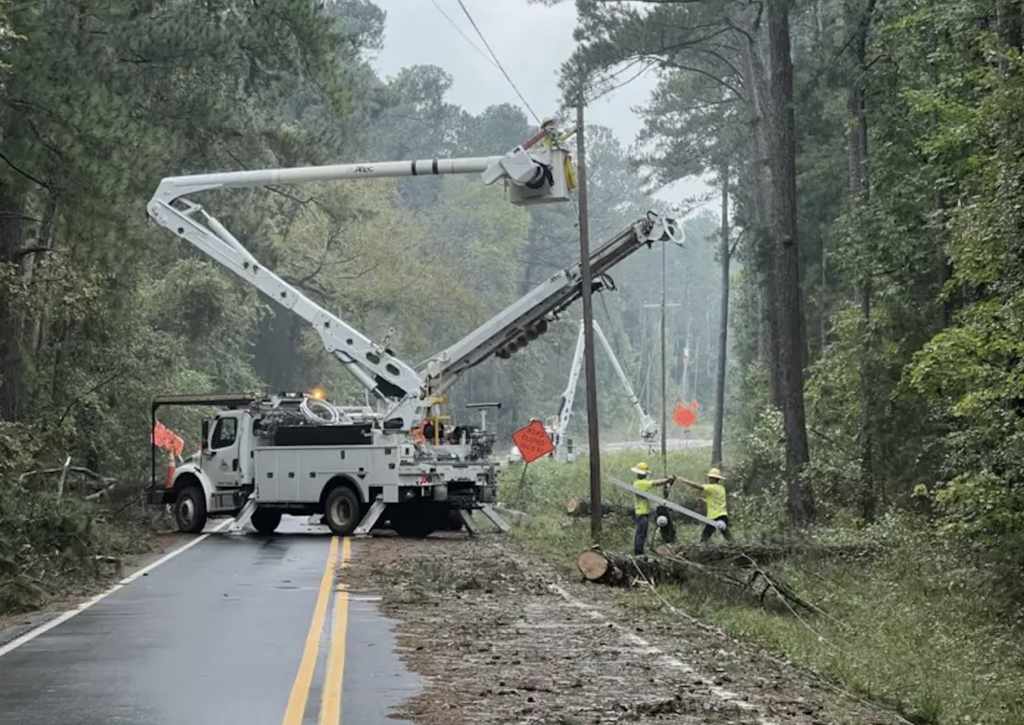
Memories of destruction from past storms like Hurricane Hugo continue to fuel anxiety about the city’s preparedness and its ability to recover from natural disasters, with power outages and massive property damage leaving a lingering sense of vulnerability.
Though Charleston has much to offer, the city’s digital reputation is shaped by persistent social media conversations about rising costs, racial tension, overcrowding, infrastructure strain, education concerns, and natural hazards. These criticisms reveal an undercurrent of frustration that tempers even the most glowing reviews.
Columbia, South Carolina – The U.S. Department of Housing and Urban Development (HUD) has approved the South Carolina Office of Resilience’s Action Plan for spending over $150 million in Community Development Block Grant – Disaster Recovery (CDBG-DR) funds allocated following Hurricane Helene.
“This approval is a key step in getting much needed disaster recovery assistance to South Carolinians,” said Chief Resilience Officer Ben Duncan, who leads the South Carolina Office of Resilience, the state agency responsible for managing this program for the State.
The Plan, which was posted for public review before being submitted to HUD, includes an assessment of unmet needs, and outlines how the funds will be used to address disaster-caused unmet needs. The plan identified $2.1B in unmet needs, and $1.7B in housing needs alone. Based on this assessment, eligible activities under the approved plan include single-family home rehabilitation, replacement and reconstruction, affordable rental housing rehabilitation, voluntary buyouts, and mitigation projects to lessen the impact of future disasters. A one pager about the program and eligible activities can be found here.
The following counties are included in the CDBG-DR housing program: Aiken, Anderson, Greenville, Greenwood, Laurens, Spartanburg, Abbeville, Cherokee, Edgefield, McCormick, Oconee, Orangeburg, Pickens, Saluda and Union. Eligible applicants include: (1) low to moderate income homeowners whose primary residence were impacted by Helene and (2) rental property owners whose homes were impacted. The program focuses on low to moderate income citizens, with those who earn 30% or lower of the Area Median Income for their county prioritized higher.
The plan also outlines how the $19.6M set aside for mitigation programs will be distributed across four eligible activities: infrastructure projects, voluntary buyouts, plans and studies, and matching funds. Mitigation activities are defined as those activities that increase resilience and reduce or eliminate the long-term risk of loss of life, injury, damage to and loss of property, and suffering and hardship, by lessening the impact of future disasters. Eligible applicants are state agencies, towns, cities, counties, and councils of governments in the following HUD defined counties: Aiken, Anderson, Greenville, Greenwood, Laurens, and Spartanburg. SCOR will be conducting meetings with local governments in those counties eligible for mitigation funding, in anticipation of applications opening for the mitigation program in the fall. A one pager about the mitigation program can be found here.
Following this approval, SCOR is finalizing procurement of an implementing contractor, and plans to open the housing recovery program to applications no later than the end of September. SCOR’s Disaster Case Management (DCM) team continues to provide services at mobile intake events across the Helene-impacted counties, connecting survivors to recovery resources, and referring those with eligible unmet housing needs to the CDBG-DR program.
About SCOR: The South Carolina Office of Resilience (SCOR) is committed to enhancing the state’s ability to anticipate, absorb, recover, and thrive when presented with environmental changes and natural hazards by planning and coordinating statewide resilience, long-term disaster recovery, and hazard mitigation. In addition to serving 3,459 homes in our previous Disaster Recovery Programs, SCOR has 81 active flood mitigation projects, including voluntary buyouts, stormwater infrastructure, and plans and studies, across the State. SCOR continues to implement and maintain the Strategic Statewide Resilience and Risk Reduction Plan, which provides a framework to guide investment in projects, programs, and policies to protect the people and property of South Carolina from the damage and destruction of extreme weather events.
Tucked just 15 miles north of Charleston, South Carolina, Barrier Island EcoTours is much more than a tour company—it’s a local, family-run business dedicated to connecting visitors with the wild beauty of Capers Island and the Lowcountry’s pristine barrier islands. From hands-on wildlife encounters to hearty southern cookouts, every experience offered bears the mark of deep local roots and a genuine passion for the region’s unique ecosystem.
Family Origins
Barrier Island EcoTours was founded in 1997 by Shane Ziegler and his high school friend, Jose Hernandez. The inspiration for the business came to them while roasting oysters on Capers Island, where they envisioned sharing their love of the outdoors with others.
Shane, a Clemson University graduate in resource management, then worked as an educator at Hunting Island State Park. Jose, a College of Charleston marine biology alum, was working with blue crabs in Mexico. Together, they pooled their expertise and bought a boat, paving the way for what would become a beloved ecotourism company.
Today, Shane manages the business with his wife, Morgan, and their children are often seen enjoying life on the water—a reflection of the family’s commitment to both sustainability and outdoor adventure. Their small but dedicated staff of naturalists and captains, some with over 20 years of tenure, further contributes to the welcoming, knowledgeable atmosphere that has become the company’s hallmark.
Tour Services and Experiences
Barrier Island EcoTours offers a diverse menu of excursions, designed for families, nature lovers, and adventure seekers of all ages. Every trip departs from the Isle of Palms Marina, transporting guests through winding salt marshes and tidal creeks before arriving at Capers Island Heritage Preserve—a rare, undeveloped destination on South Carolina’s coast.
Popular offerings include:
• Wildlife Exploration Tours: Led by expert naturalists, these boat excursions provide up-close encounters with bottlenose dolphins, loggerhead sea turtles, and a variety of shore and wading birds. Guides use crab traps and cast nets to bring marine life aboard, allowing guests to examine creatures in the onboard touch tank for a hands-on learning experience.
• Dolphin Discovery Sunset Cruises: These 2.5-hour journeys highlight the region’s spectacular sunsets and unique wildlife, with plenty of opportunities for shelling and birdwatching. Guests are welcome to bring their own refreshments to enjoy during the trip.
• Traditional Blue Crabbing Trips: Families can try their hand at classic Lowcountry crabbing using hand lines and nets, followed by a celebratory crab boil with the morning’s catch. It’s an immersive introduction to the region’s heritage and culinary traditions.
• Beachside Cookouts: Barrier Island EcoTours is famed for its authentic southern shrimp boils held on the beach, featuring fresh local shrimp, smoked sausage, corn, potatoes, and onions. These cookouts are offered for both group and private bookings, accompanied by sunset views and beach games.
• Private Charters and Fishing Excursions: For those seeking a customized adventure, private eco tours and fishing charters are available on boats accommodating different group sizes.
Educational Philosophy
A cornerstone of Barrier Island EcoTours is its commitment to environmental stewardship. The guides seamlessly blend education and entertainment, teaching guests of all ages about the complex barrier island ecosystems. Whether on a school field trip, family outing, or corporate team-building day, visitors leave with a deeper appreciation for the Lowcountry’s fragile environment.
Why Choose Barrier Island EcoTours?
With a 25-year legacy and a deep-rooted sense of place, Barrier Island EcoTours stands out for its family atmosphere, knowledgeable staff, and diverse, immersive experiences. Whether you’re searching for dolphins, crabbing the old-fashioned way, or savoring a shrimp boil on the shore, the company offers a perfect blend of adventure, discovery, and Southern hospitality—making it a must-do for anyone exploring the Charleston area.
The Charleston Grill, located at 224 King Street inside Charleston Place Hotel announced that they will be closing after 36 wonderful years in downtown Charleston, South Carolina. Their final seatings will be on Sunday, August 17, 2025
On an emotional Instagram post, the team at Charleston Grill paid their gratitude:
“After 36 remarkable years, Charleston Grill will serve its final dinner on Sunday, August 17.
What began as a fine dining destination became something far more meaningful—a place where moments were celebrated, traditions were built, and guests returned year after year. From the first note of nightly jazz to the final course of the evening, every detail was crafted with care, hospitality, and heart.
As we begin this new chapter, The Charleston Place will continue its transformation with a fresh dining concept planned for the future. In the interim, guests can look forward to a special pop-up culinary experience debuting soon.
Over the next two weeks, we invite you to join us in honoring the legacy of Charleston Grill. We’ll be sharing reflections, memories, and meaningful moments as we say goodbye to this beloved space.
With deep gratitude, we thank every guest who’s ever pulled up a chair, raised a glass, or shared a meal with us. We hope you’ll join us once more before we say farewell. Reservations are strongly encouraged at Resy.com.“
Click HERE to make reservations before the final seating.
Charleston, SC — Beemok Capital last week launched Catalyst, a new initiative designed to fuel early-stage companies across Charleston’s Tri-county area. At its core, Catalyst, is a business pitch competition, culminating in a live event on November 8, 2025, where up to $1 million in potential funding will be awarded. But Catalyst is much more than a competition; it is a dynamic, open-to-the-public gathering designed to provide entrepreneurs with exposure, opportunities to connect with investors, and pathways for growth. The event will feature live pitches from selected finalists, inspiring speakers, including successful entrepreneurs and experienced investors, and serve as a vibrant forum for networking among Charleston’s growing startup community. Whether or not attendees are competing, founders will have the chance to engage with peers, mentors, and potential backers, fostering collaboration and sparking new opportunities for growth.
Company founders can apply online at catalystbybeemok.com, and finalists will be selected to present their business opportunity in front of a panel of experienced investors, business leaders and a live audience on November 8 at the Terminal Building at Union Pier. The expert panel will make investment decisions based on the creativity and viability of the idea and the quality of leadership. Catalyst invites founders based in Berkeley, Charleston, and Dorchester Counties to submit an overview of their ventures by September 30, 2025. The competition will also include a category for current students who are fostering great ideas while finishing their education.
“So much of what we’re passionate about at Beemok is creating channels of opportunity in our community that don’t otherwise exist,” said Ben Navarro, co-founder of Beemok. “There is so much talent in our region, but even the best ideas and founders need support, and we want to keep the next generation of great ideas here. I want Catalyst to become a fun and engaging way to connect and support our existing entrepreneurial community while also inspiring the next era of builders and founders.”
Charleston’s start-up scene continues to grow with entrepreneurs launching ventures across technology, consumer goods, logistics and enterprise software. Catalyst by Beemok will help further position Charleston as a destination where high-potential businesses can start and scale. The November 8 event will be a showcase of the Tri-county’s brightest talent and boldest ideas, and a place for the entrepreneurial community to connect, collaborate and help build what’s next.
Catalyst Applicant Criteria:
Entrepreneurs who live and work in Berkeley, Charleston or Dorchester County
Startups that are in the early stages and require meaningful capital to unlock their next phase of growth
Applicants do not need to be revenue-generating, though early sales, customer validation, or evidence of traction is strongly preferred.
Key Dates:
Applications Open: July 25, 2025
Application Deadline: September 30, 2025
Live Pitch Event: November 8, 2025
Funding Finalization: Q1 2026
ABOUT BEEMOK CAPITAL
Beemok Capital is the family office of business leaders and philanthropists Ben and Kelly Navarro. Headquartered in Charleston, S.C., Beemok is dedicated to building stronger communities and creating opportunities for others through purposeful investment.
Beemok oversees a diverse portfolio spanning education, sports and entertainment, hospitality, real estate and health and wellness. The portfolio includes Meeting Street Schools and the Meeting Street Scholarship Fund, Credit One Stadium, the Credit One Charleston Open, the Cincinnati Open, The Charleston Place Hotel, and The Cooper Hotel. Beemok is also leading the development of Union Pier, a 65-acre waterfront property in historic downtown Charleston.
Tickets On Sale Wednesday, August 6 at 10am ET/7am PT
Presale Access Begins Today at 10am ET/7am PT
August 5, 2025 – WWE, part of TKO Group Holdings (NYSE: TKO), today announced three NXT live event dates taking place across South Carolina and Georgia from Friday, September 5, through Sunday, September 7.
This marks WWE’s first return to North Charleston, South Carolina and Spartanburg, South Carolina since 2019.
The events will feature the biggest Superstars from NXT, including NXT Champion Oba Femi, NXT Women’s Champion Jacy Jane, NXT North American Champion Ethan Page, NXT Women’s North American Champion Sol Ruca, TNA World Champion Trick Williams and more.
WWE® is the global leader in sports entertainment. The company creates and delivers original content 52 weeks a year to a global audience. WWE is committed to family-friendly entertainment on its television programming, premium live events, digital media, and publishing platforms. WWE’s TV-PG programming can be seen in more than 1 billion households worldwide in more than 20 languages through world-class distribution partners including NBCUniversal, The CW and Netflix. In the United States, NBCUniversal’s streaming service, Peacock, is the exclusive home to all premium live events, a variety of original programming and a massive video-on-demand library. Netflix is the exclusive home for WWE programming around the world, other than select international markets. WWE is part of TKO Group Holdings (NYSE: TKO). Additional information on WWE can be found at wwe.com and corporate.wwe.com.
The Dashshunds of Charleston meetup has become a favorite gathering for local dachshund owners and their beloved “long and low” pups. These regular events, like the breed meetups at The Broken Leash Dog Park & Bar and the monthly walks at White Point Garden downtown, give doxie lovers a chance to connect, share stories, and create lasting friendships—both human and canine.
At a recent meetup, dozens of dachshunds scampered around the secure play yard, enjoying the freedom to socialize in a safe and supervised space.
Owners mingled nearby, exchanging grooming tips, health advice, and plenty of laughter over their dogs’ antics. For new residents or first-time dachshund parents, the atmosphere is welcoming: dogs must be registered and up to date on vaccinations to ensure everyone’s safety.
The community host special events too, like themed meetups and “Weenie Walks,” that celebrate the breed’s unique charm. The group’s social channels keep members up to date and help newcomers feel included, fostering a supportive sense of belonging for both people and pets.
For anyone in Charleston owning a dachshund—or just a fan of their quirky personalities—these meetups offer more than playtime: they’re a chance to join a lively community built on a shared love for one of the world’s most charismatic dog breeds.
The group typically meets the first Saturday of the month at in downtown Charleston, South Carolina. The Facebook and Instagram stays up to date on times and location.
Community Champions Preservation of Historic Coakley Chapel Park in Hamlin Beach Grassroots efforts come together to safeguard cultural heritage, natural habitat, and public green space in Charleston County’s newest Historic District
Charleston, SC, August 5, 2025 – Lowcountry Land Trust, a nonprofit committed to preserving Lowcountry landscapes and waterways for current and future generations, is proud to announce the permanent protection of Coakley Chapel Park, a 6.5-acre property located in the heart of the Hamlin Beach settlement community and historic district in Charleston County. The property exemplifies the intersection of cultural preservation, environmental conservation, and access to a central gathering place that has long served the community’s residents.
At the park’s core is the historic Coakley Chapel, originally known as The Meeting House, established by Mr. Sam Coakley in the early 1900s. The chapel quickly became a vital part of Hamlin Beach’s community life, functioning as a prayer house, meeting space, and local resource hub. Moving forward, the chapel will continue to serve as a community gathering space while also providing educational and interpretive programming about the history and culture of the Hamlin Beach Community.
In addition to preserving a part of Hamlin Beach’s cultural heritage, the protection of Coakley Chapel Park secures vulnerable natural habitat, contributes to water quality preservation, and expands open space for public access. The park will serve as a hub for cultural interpretation and education, sharing the history and traditions of Hamlin Beach’s Gullah Geechee roots with residents and visitors alike.
“Coakley Chapel Park represents a rare opportunity to permanently establish community-owned community land in Hamlin Beach by protecting one of the community’s most treasured gathering spaces,” said Sam Seawell, Lowcountry Land Trust’s community lands director. “At the same time, we’re safeguarding important natural habitat and ecological resources for future generations.”
Coakley Chapel Park is the sixth community lands project led by Lowcountry Land Trust, and the fourth within a Charleston County Historic District. When the property’s owners decided to sell, they offered the Hamlin Beach community a chance to purchase the land before listing it on the open market. Understanding its cultural and historical importance, community leaders Cassandra Davis and Myra Richardson reached out to Lowcountry Land Trust for support. The Land Trust led the acquisition to ensure the land was permanently protected and preserved for community use.
The $1.9 million purchase was made possible through the generous support of the Charleston County Greenbelt Program ($1,614,500), the South Carolina Conservation Bank ($300,000), the Gary C. Butler Family Foundation ($60,000), and Atlantic Packaging ($40,000). Notably, members of the Hamlin Beach community—who currently own the land—are donating $85,000 in property value, helping bridge the gap between the purchase price and the appraised value. Lowcountry Land Trust will hold the property during the development phase of the park, after which ownership will transfer to the Hamlin Beach Community Association.
Stay connected by following @LowcountryLandTrust on social media and signing up for their email newsletter to receive the latest updates on conservation efforts and ways to get involved.
ABOUT LOWCOUNTRY LAND TRUST
Lowcountry Land Trust—a 501(c)(3) nonprofit organization—permanently protects land throughout coastal South Carolina that is foundational to the area’s coastal ecosystem and residents’ quality of life. Having protected over 163,000 acres of land since its founding in 1986, Lowcountry Land Trust is one of the most impactful local land trusts in the United States. More information about Lowcountry Land Trust is available at www.lowcountrylandtrust.org.
The 1955 Cannon Street YMCA All-Stars stand as a profound chapter in both baseball and civil rights history. This African American Little League team from Charleston, South Carolina, was composed of 14 talented boys—the only all-Black league recognized by Little League Baseball in the Deep South at the time. Their journey to the 1955 Little League World Series intersected with entrenched racial barriers, ultimately leading to a pivotal, if heartbreaking, moment that would leave a permanent mark on the sport and the struggle for racial equality in America.
In the summer of 1955, segregation was still deeply rooted in the American South, despite the previous year’s Supreme Court ruling in Brown v. Board of Education, which declared segregated schools unconstitutional.
The Cannon Street YMCA All-Stars, under the guidance of President Robert Morrison and Manager Ben Singleton, represented a courageous attempt at integration in youth sports.
When Cannon Street entered the Charleston Little League Championship—composed almost entirely of white teams—all 61 eligible white teams in South Carolina banded together in a massive boycott, refusing to play against the Black All-Stars.
Officials canceled the tournament rather than allow the team to compete, and similar boycotts followed at the state and regional tournament levels. As a result, the Cannon Street All-Stars were declared city, state, and regional champions by default, despite never being given a chance to actually play on the field against any white opponents.
Little League Baseball’s national leadership, facing what was clearly a public relations and moral crisis, refused requests from white South Carolinians to hold a whites-only tournament. Yet, per Little League’s policy, teams that progressed entirely by forfeit were not eligible to participate in the World Series for the championship title. This technicality prevented the Cannon Street team from officially taking the field at Williamsport, Pennsylvania.
Instead, the boys were invited to attend the series as honorary guests of Little League President Peter J. McGovern, who poignantly described them as “innocent victims of alien influences that have deprived them of beneficial associations and opportunity to meet and know other boys in Little League Baseball”.
The Charleston community, with support from civil rights activist Esau Jenkins, rallied to raise funds so the team and their chaperones could make the trip north. When the team arrived in Williamsport in August 1955, they were allowed a brief session to practice on the very field where they had hoped to compete. As the All-Stars ran drills before the biggest crowd of their young lives, the spectators—moved by the injustice—started chanting, “Let them play!” But despite the outpouring of support and pleas from coaches and community leaders, the boys were ultimately relegated to the role of spectators, watching others contest a championship that should have included them.
The fallout from the Cannon Street All-Stars’ exclusion was immediate and far-reaching. The following year, seven southern states seceded from Little League, creating an expressly segregated alternative known as “Little Boys’ Baseball, Incorporated,” which eventually became Dixie Youth Baseball. This “second secession”—a reactionary move by segregationists—underscored how youth baseball had become a battleground for America’s racial divide.
The children on that team—Allen Jackson, John Rivers, Carl Johnson, Arthur Peoples, and others—carried the burden of exclusion with them for decades. They were deprived of a fair chance to compete, yet their dignity and composure in the face of injustice became a symbol of the larger civil rights struggle. Major national outlets and historic institutions, from The Boston Globe to the National Baseball Hall of Fame, have since recognized their ordeal as not just one of baseball’s cruelest moments, but also a crucial catalyst in the movement toward integration within American sports.
In the decades that followed, recognition grew. The Cannon Street team was later inducted into Charleston’s Baseball Hall of Fame and, in 2005, was publicly honored for their courage, deferred dreams, and the role they played in the nation’s fight for equality. As the team members grew older, some finally found closure in seeing other Black athletes take the field at Williamsport—doing “the things we could not do in 1955,” as player John Bailey reflected.
The story of the 1955 Cannon Street YMCA All-Stars is not just about baseball, or even just about racism. It is about youth, hope, injustice, and the power of dignity in the face of systemic wrongs. Their journey is a testament both to the pain of deferred dreams and the enduring, inspiring possibility of triumph through nonviolent resistance and community support. Their legacy lives on as a reminder that, sometimes, the most significant victories are not recorded in scorebooks, but in the hearts and minds of those who stand up for justice.