Benefitfocus Announces New Additions to Executive Leadership Team

Read More

Strengthens executive leadership team with the addition of new Executive Vice President of Global Sales and Chief Financial Officer

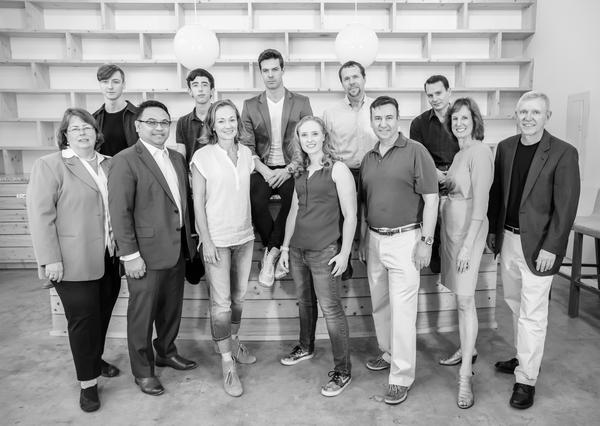
Charleston, S.C. – July 17, 2017 – Benefitfocus, Inc. (NASDAQ: BNFT), a leading provider of cloud-based benefits management software, today announced that Robert Dahdah has been appointed to the newly created role of Executive Vice President of Global Sales and that Jonathon E. Dussault will join the company as Chief Financial Officer on August 14, 2017. Both Mr. Dahdah and Mr. Dussault bring extensive leadership experience to Benefitfocus as the company continues to expand its client base, introduce new solutions and simplify benefits management for employers, insurance carriers, brokers and employees.

“We’re thrilled to welcome Robert and Jonathon to the executive team,” said Benefitfocus Co-Founder and Chief Executive Officer, Shawn Jenkins. “Our market opportunity is massive and we’re excited to add such talented leaders as Robert and Jonathon to our company as we leverage their deep experience to grow our vibrant customer community.”

Mr. Dahdah brings to Benefitfocus over 20 years of experience in the Software as a Service, human capital management technology, and payroll sectors. As Executive Vice President of Global Sales, he will be responsible for designing the company’s overall sales strategy and leading the company’s sales teams. Mr. Dahdah joins Benefitfocus from Verizon Telematics, Inc., one of the world’s largest SaaS IoT providers, where he served as Senior Vice President, Global Sales. Prior to that, Mr. Dahdah served in multiple roles at Automatic Data Processing, Inc. (NASDAQ: ADP), most recently as its Senior Vice President, Sales – Global Enterprise Solutions International, where he led sales and distribution for over 100 countries outside of the United States. During his tenure with the company he also led the global sales operations team. Mr. Dahdah holds a B.S. in marketing management from Syracuse University.

Mr. Dussault brings to Benefitfocus extensive strategic and financial leadership experience in the benefits technology sector. Most recently, he served as Senior Vice President and Senior Finance Officer of WEX Health, Inc. (formerly Evolution1, Inc.), a leading provider of cloud-based Health Savings Account technology and payment solutions for the healthcare industry and a subsidiary of global payments processing company, WEX Inc. (NYSE: WEX). Prior to that, Mr. Dussault served in multiple roles at Evolution1, most recently as Chief Financial Officer, until its acquisition by WEX. Earlier in his career, Mr. Dussault was Vice President of Corporate Development at Women’s Health USA and was responsible for financial planning and analysis at Open Solutions, Inc. Mr. Dussault began his career at Arthur Andersen LLP. He holds a B.S. in accounting from Babson College and earned his CPA certification in Massachusetts.

About Benefitfocus

Benefitfocus (NASDAQ: BNFT) provides a leading cloud-based benefits management platform that simplifies how organizations and individuals shop for, enroll in, manage and exchange benefits. Every day, leading employers, insurance companies and the consumers they serve rely on our platform to manage, scale and exchange benefits data seamlessly. In an increasingly complex benefits landscape, we bring order to chaos so our clients and their employees have access to better information, make better decisions and lead better lives. Learn more at www.benefitfocus.com, LinkedIn and Twitter.

Except for historical information, all of the statements, expectations, and assumptions contained in this press release are forward-looking statements. Actual results might differ materially from those explicit or implicit in the forward-looking statements. Important factors that could cause actual results to differ materially include: our ability to maintain our culture and recruit and retain qualified personnel; reliance on key personnel; management of growth; our ability to adequately and effectively expand our direct sales force; changes in government regulations; the immature and volatile nature of the market for our products and services and other factors that could impact our anticipated growth; fluctuations in our financial results; our ability to develop and maintain adequate financial controls; general economic risks; our ability to compete effectively; privacy, security and other risks associated with our business; and the other risk factors set forth from time to time in our SEC filings, copies of which are available free of charge within the Investor Relations section of the Benefitfocus website at http://investor.benefitfocus.com/sec.cfm or upon request from our investor relations department. Benefitfocus assumes no obligation and does not intend to update these forward-looking statements, except as required by law.

‘Sweet Belgium’ Brings the Taste of Old Europe Home to Charleston

Read More

By Mark A. Leon

Step inside this small unassuming shop, on Folly Road in James Island and be greeted by Sergio, Audrey and staff.  With authentic Belgian music playing gently all around, black and white photos of the European experience, and the savory smell of the sweet delights of Old Europe, Sweet Belgium is bringing an exciting and scrumptious experience to the people of the Lowcountry.

Sergio and Audrey Tosi arrived in Charleston in 2016 to bring the authentic taste of their homeland to Charleston and they have introduced us to an explosion of culinary delight.

As I sat quietly enjoying my large fresh Belgium Waffle with powdered sugar and coffee, I took in an ambiance of family and traditional European value.  A young couple from Russia and Belarus enjoyed a savory breakfast while they beautiful young blonde baby walked curiously over to me and gazed at me with those ambitious eyes.  After admiring the music, the couple spoke to Sergio and for a few brief moments, each felt a sense of family.  Sergio spoke of his journey with his family and dreams of expanding, while all the customers listened and shared their own experiences.

Soon, a couple came in from church, a local neighbor on his bike ordered a dozen for some house guests and a group of six stopped by before heading to the beach.  It was so satisfying to see a mix of patrons that desired this unique and fresh experience.

Sergio and Audrey have created a model that caters to the masses both small and large.  Offering a simple menu that allows for specialty or customized creations for one single appetite or a whole party, Sweet Belgium has a bright future.

Their small special varieties include:

  • James Island Coconut Style
  • Tasty Almond
  • Fun Orange
  • Lemon and Lime
  • Strawberry Love
  • Dark Belgian Chocolate Rainbow or Walnuts
  • Belgian Black and White Chocolate

I, being a bit of a traditionalist, enjoyed a steaming hot fresh plain Belgium Waffle with powdered sugar and it exceeded all my expectations.  I am already eyeing the dark chocolate with sprinkles for my next visit to help complete my frequent diner rewards card.

Charleston is the home for the Annual Spoleto festival, where the entertainment and talents of Europe are brought to our coastal home.  So, finding a family owned spot that offers a fresh look at the life and taste of Belgium is a refreshing delight and one that will be many smiles.

We hate to be the spoiler of your excitement if you are eagerly ready to hit this spot first thing in the morning, but they are closed on Mondays.  You can make you way Tuesday – Saturday, 8:30 AM – 3:30 PM and Sunday, 8:30 AM – 1:00 PM.

Though this location has only been open for six months, there is already some chatter of expansion to other Lowcountry locations.

Sometimes you find a place that offers exceptional service and fine culinary treats.  At Sweet Belgium, you get so much more.  You get an opportunity to feel like you are in the small Belgium town of Ghent, street performers are playing classical compositions and the smell of fresh Belgium Waffles are tickling your senses.

Come experience a little of Old Europe right here in Charleston.

Sweet Belgium Menu

Sweet Belgium Official Website

Are we missing the signs of depression on Facebook?

Read More

By Mark A. Leon

“That’s the thing about depression: A human being can survive almost anything, as long as she sees the end in sight. But depression is so insidious, and it compounds daily, that it’s impossible to ever see the end. The fog is like a cage without a key.” – Elizabeth Wurtzel

Depression is all around us. It does not discriminate by gender, age or lifestyle. In infects us and spreads like a cancer and takes over our lives. For some, the signs are very clear, while others hide it very well through their actions or lack of actions. With the world being brought at our finger tips, are we missing the clear signs of depression or choosing to turn a blind eye to them?

Facebook is populated by over one-third of the human population. It has bridged our worlds and put the idea of voyeurism and stalking into every day activities. There are so many common indicators of depression and so many of us need to be aware and take action to help.

After all, these are our “friends”.

What are these signs that a person may be suffering from some level of depression or loneliness?:

  • Aggressive use of language on the social networks (Facebook, Google+, Twitter)
  • Needing likes to reinforce value and ensure you are being noticed
  • Constant uploading of self portraits (selfies).  When someone is constantly putting up pictures of themselves or re-issuing their favorites looking for reinforcement of their “beauty”, that can be a clear indicator
  • Constant quotes about seeking a better place, a better life, a true utopia
  • Constantly checking in to reinforce to their circle how socially active they are
  • Posing a number of “what if” questions or commentary on society
  • Not having any pictures of yourself, but friends and family only.  Perhaps a sign of hiding behind unfriendly aging
  • Showing many pictures of drinking or many check ins to bars
  • Late night random thoughts out of character
  • Adding many new friends often.  Needing to be surrounded by strangers and constant attention can be an indicator as well.  Number of “virtual” friends is never a direct correlation of having a support circle.  Often, it can be an indicator of physical and/or emotional loneliness.

This is just the tip of the iceberg.   We can list off another ten or fifteen behavioral indicators on Facebook that could be a silent scream for help.

How many of these have you seen?

How often have you reached out to try and help or even ask if someone needed help?

I have witnessed these signs and later learned of depression, rehab, loneliness, sadness and rejection from these same people.

Maybe Facebook is the great savior for avoidance of responsibility since it is a virtual tool or maybe we have a higher responsibility to help.

Next time you witness behavior that is unorthodox, it doesn’t hurt to ask and just maybe you might be saving a life by unexpectedly being there for someone that truly needs someone.

Thinking about moving to Charleston, SC? Get to know the culture first

Read More

By Mark A. Leon

All decisions in life come with a level of risk.  Most often the biggest decisions take on the most risk.  The best way to minimize the risk is to gather as much information as you can.  Some of the biggest changes one can make is to move, get married, start a family or a new career.  All have a common variable and that is culture.  Culture is all around us and so difficult to define.  You can’t find culture in a job description or housing spec sheet.  It is something that takes time and experience to understand.

Culture can also be shared.  As some of you make that major life decision to move away from home and settle into a new life in the Charleston area, it is important to know as much as you can about our culture.

Here are a few cultural traits you should know before you make your final decision

  • If you are looking for a quiet historic city located on the harbor, you missed us by four years. If you move here, you will expect major construction and development for the next five plus years in most parts of historic Charleston, including the lot across from Joe Riley Stadium, Upper King Street, Lower King Street, Upper Meeting Street, Battery home renovations, Colonial Lake and MUSC: Though there are pockets of quiet beauty.  Colonial Lake went through a multi-million-dollar rejuvenation project and it is beautiful, but Sgt. Jasper right next door may be torn down for a new community which will involve massive construction.  Be prepared for cones, cranes, potholes, road closures and an evolving skyline that will resemble the Holy City less and less.
  • We are a drinking community. A few facts:  There is a brewery in the Lowcountry for approximately every 2700 citizens.  Yes, one brewery for every 2700 people.  Next, The Recovery Room is the #1 seller of PBR in the United States.  Finally, the state of South Carolina brought in 3.2 billion dollars in beer revenue in 2016.  I think those facts tell a convincing story.
  • Driving and insurance rates are real issues. We are ranked as the 47th worst driving state in the United States.  As a result, insurance rates across the board have increased 10% or more in the last year.
  • We are a festival / event driven community. If you come from a small town with five or ten major festivals each summer or year, you will feel overwhelmed.  On a given week, there are 40 – 80 festivals, events, concerts, fund-raisers, pop-up sales or farmers markets.  Events are not isolated to weekends.
  • We have lots of live music.   Now we are an easy going coastal community, so much of it is cover bands, flip flops and tee-shirts, but we do get quality national acts that come through the Charleston Music Hall, Charleston Music Farm, The Charleston Pour House and The Royal American to name a few.
  • We have one winery. If you are coming to the Southeast to experience a beautiful winery experience, you are four hours away from the western Carolina, Georgia area where most reside.  We have one (Deep Water Winery).  It is a nice place, but more rustic than Napa.
  • No Carnivals. In the north, there is a love for carnivals.  They are a community tradition.  Not here.  The Annual Ladson State Fair is the closest you will come.
  • Our unemployment is low, but the quality jobs are limited. If you go to Facebook jobs for Charleston, you will see that 85% are culinary, hospitality and maintenance positions.  We have had a surge in small start-up technology jobs and growth from Volvo, Boeing, Blackbaud and BenefitFocus, but overall, we suggest locking a career opportunity before you move here.  This area can burn you out if you are not prepared.
  • Beach life is amazing. There is no question.  Within 45 minutes in any direction you can get to Edisto, Kiawah, Folly, Sullivan’s Island or Isle of Palms.  We embrace our beach communities with restaurants, shopping and dining.  Let us not forget the events.  Lunar beach festivals, movies by the ocean, shag dancing, jazz festival and so much more.
  • Cookie cutter apartment and condos are being built daily throughout the Lowcountry. Do your research.  You may choose West Ashley, James Island, North Charleston, Hanahan, Summerville or Mount Pleasant, but each has its own economic standing, culture and personality.  Do your research.
  • Though the Charleston area has one of the best educational systems in the state, the Southeast is still falling far behind on quality education.  The student to teacher ratios are high, some schools are building shed extensions for additional classroom space and graduations rates are lower than the US standard.  If you have children, be very careful where you move.
  • If you have comfortable store and restaurants you are used to, make sure we have them too. There are some places you will not find here including:  Macy’s, Fuddruckers, Tiffany & Co, Sprouts, Lidl and The Cheesecake Factory to name some.  We do have one Trader Joe’s.
  • Great church life. Whatever your denomination, you will have options and our church communities are very welcoming.  There are also two large facets of Jewish membership in the area as well.
  • Ethnic food – If you plant yourself in Charleston County, you will need to go to North Charleston to find ethnic food. There are small pockets on James Island, Folly Beach, West Ashley and Mount Pleasant, but very small.
  • Diversity – Charleston County is not diverse. It is evolving, but currently our diversity breakdown is:  64% White / 27% African American / .002% Native American / .013% Asian / .00032% Pacific Islander / .017% Two or more races / .048 Hispanic (2015 Census Data)
  • Incredible Patriotic Pride. There are 48,000 plus veterans, a well-managed VA Hospital and a community that embraces pride in our soldiers and veterans.
  • We try, but as you would expect, Christmas is not celebrated in the traditional way. One year, it was 80 degrees for our holiday parade downtown.  To our credit, we do try hard, but, by Christmas, historic downtown Charleston is a desert as the College of out for the season and many downtown residents go back to their original homes for the holidays.
  • Travel – The Charleston International Airport is a 15 – 25-minute drive from almost anywhere. With the additional of JetBlue and Southwest Airlines and a massive renovation, the ability to travel is exceptional here with a beautiful airport and competitive fares.  There are some cities including Washington, D.C., New York, Newark, Atlanta and Miami where you can fly for just over $200 round trip with advanced purchase.
  • The cost of living in South Carolina is 80% of the national average. Charleston is 131% of the national average.  Though the cost of living in the Southeast is lower in most areas than most urban sectors in other parts of the United States, Charleston is becoming a very expensive city to not only visit, but to live in.
  • Small and individually owned businesses are a huge part of our culture. There are thousands of small business owners with 10 or less employees that rely on the locals, tourists, farmer’s markets and customer loyalty to stay in business.  We urge support of buying local, but competition is high and we do see many local businesses fall to the pressure.  Be prepared to be asked to help support your own.
  • We have a traditional art scene. We have a few very influential liberal and post-modern artists, but our art scene is built around traditional coastal, nature and scenic art.
  • History is all around. If you are a history buff, you can pick a new place every day for a decade and still discover something new about our history.
  • Average commute time to work is 24 minutes.  Do your research on traffic patterns.  There are areas (Bee’s Ferry, Ashley Phosphate, Savannah Highway, Maybank Highway, Folly Road, Highway 17, Highway 526) that have repetitive patterns of clustered traffic patterns.
  • A popular statistic that has been twisted is the ratio of females to males. I have heard 7:1, 6:1, even 8:1.  The truth is the area population is 52% female / 48% male
  • 14.7% of our population is under the poverty level
  • We love dogs. I cannot emphasize that enough.  We love dogs.  We have dog parks and even dog friendly bars and beach areas.  We love dogs.
  • Road Trips: We have our share of attainable day trips or weekend getaways.  Some great trips you can take with a short car ride include:   Savannah (1 HR 45 Minutes), Asheville (4 Hours), Myrtle Beach (2 Hours), Beaufort (1 Hour 25 Minutes – Including a Drive-In and only Lighthouse you can walk to the top in the state), Atlanta (5 Hours), Charlotte, NC (3 HR 25 Minutes), Augusta, GA (2 Hours 45 Minutes), Columbia, SC (1 HR 30 Minutes – Great Zoo) and Walterboro, SC (45 Minutes – Annual Rodeo).
  • Biking and Hiking – We have a thriving community of bikers and runners, but face challenges to widen roads and offer safe biking paths.  Also, we are called the Lowcountry for a reason.  If you want good mountainous hiking, you will be traveling 4 plus hours to the Appalachian or Blue Ridge Mountain Ranges.

This is a good start.  We hope this helps paint a clearer picture of the Lowcountry.  We expect to share more cultural insight with future articles.

Please leave any comments or questions below.


Charleston Based Blackbaud Empowers “The Connected School” at Annual K-12 User Conference

Read More

CHARLESTON, S.C., July 13, 2017 — Blackbaud (NASDAQ: BLKB), the world’s leading cloud software company powering social good, today welcomed hundreds of change-makers for its annual three day K-12 user conference. Private school professionals from across the sector convened in Boston to discuss industry best practices, collaborate with peers, participate in over 90 hands-on training sessions and hear from company executives.

“We designed this event to further educate, connect and support private school administrators and staff who make so much possible in the world,” said Travis Warren, president of Blackbaud’s K-12 Solutions. “We are working every day to deliver on what you need to ensure your school stays competitive, innovative and sustainable. Our priority is to revolutionize the way private schools operate by creating one solution for school data that enables schools to better achieve their goals.”

Blackbaud’s President and CEO, Mike Gianoni, kicked off the conference reflecting on the company’s rapid innovation highlighting stories of customer success and making commitments to continue delivering purpose-built, high-impact, integrated and open solutions for K-12 private schools.

Dr. Natalie W. Nixon, design strategist at Figure 8 Thinking and founding director of the Strategic Design MBA program at Philadelphia University, joined as opening keynote to share some of the disruptive thinking around inventiveness, play and the future of learning that has been transforming the field of education over the past decade.

Blackbaud highlights latest innovation in response K-12 community needs:

  • Unmatched efficiency to private schools through one solution
  • Rapid innovation and advancements powered by Blackbaud SKY™
  • High-velocity enhancements conceptualized by the community
  • A doubling of Blackbaud Partner Network™ providers to expand solution offerings for K-12 private schools

“We’ve completed a significant number of ideas from our K-12 community such as rubrics, schedule maker improvements, gradebook enhancements and contracts integration with Smart Tuition™ and onBoard™,” said Mike Gianoni, Blackbaud’s president and CEO. “We know that adopting intelligent solutions has moved from important to critical in the K-12 space, and our Intelligence for Good™ approach — combining big data, analytics, artificial intelligence and expertise — in the our solutions can help schools optimize that data to make strategic decisions.”

Blackbaud’s Chief Technology Officer, Mary Beth Westmoreland, shared more on the company’s open cloud innovation, including SKY API™ and SKY Reporting™. Westmoreland and her team discussed roadmap plans that resulted from customer feedback in the areas of: helping schools turn student data into actionable insights, communicating performance, problem-solving for the registrar’s office and more.

Blackbaud will wrap its third and final day of its K-12 user conference on Friday, July 14. To learn more about its annual K-12 User Conference, visit http://k12.blackbaud.com/bbk12uc/. For more information about Blackbaud’s K-12 solutions, visit k12.blackbaud.com.

About Blackbaud
Blackbaud (NASDAQ: BLKB) is the world’s leading cloud software company powering social good. Serving the entire social good community—nonprofits, foundations, corporations, education institutions, and individual change agents—Blackbaud connects and empowers organizations to increase their impact through software, services, expertise, and data intelligence. The Blackbaud portfolio is tailored to the unique needs of vertical markets, with solutions for fundraising and relationship management, digital marketing, advocacy, accounting, payments, analytics, school management, grant management, corporate social responsibility, and volunteerism. Serving the industry for more than three decades, Blackbaud is headquartered in Charleston, South Carolina and has operations in the United States, Australia, Canada, and the United Kingdom. For more information, visit www.blackbaud.com.

Media Contact
Nicole McGougan
Public Relations
843.654.3307
media@blackbaud.com

Forward-looking Statements
Except for historical information, all of the statements, expectations, and assumptions contained in this news release are forward-looking statements that involve a number of risks and uncertainties. Although Blackbaud attempts to be accurate in making these forward-looking statements, it is possible that future circumstances might differ from the assumptions on which such statements are based. In addition, other important factors that could cause results to differ materially include the following: general economic risks; uncertainty regarding increased business and renewals from existing customers; continued success in sales growth; management of integration of acquired companies and other risks associated with acquisitions; risks associated with successful implementation of multiple integrated software products; the ability to attract and retain key personnel; risks related to our dividend policy and share repurchase program, including potential limitations on our ability to grow and the possibility that we might discontinue payment of dividends; risks relating to restrictions imposed by the credit facility; risks associated with management of growth; lengthy sales and implementation cycles, particularly in larger organization; technological changes that make our products and services less competitive; and the other risk factors set forth from time to time in the SEC filings for Blackbaud, copies of which are available free of charge at the SEC’s website at www.sec.gov or upon request from Blackbaud’s investor relations department. All Blackbaud product names appearing herein are trademarks or registered trademarks of Blackbaud, Inc.

Charleston, SC, one of 5 new cities, to join National What Works Cities Initiative

Read More

Eighty-five Cities Now Partnering with National What Works Cities Initiative

Five new cities commit to using data and evidence to address challenges from homelessness to public safety

NEW YORK, July 12, 2017 – Today, Results for America announced that five new cities have been selected to join What Works Cities: Arlington, TX; Charleston, SC; Fort Collins, CO; Memphis, TN; and Sioux Falls, SD. Launched by Bloomberg Philanthropies in April 2015, What Works Cities is the largest philanthropic effort to improve the effectiveness of local governments by enhancing the use of data and evidence. With today’s new cities, the initiative is now partnering with 85 U.S. cities that are home to more than 27 million people in 37 states and have annual budgets exceeding $94 billion.

“Across the country, cities of all shapes and sizes are producing better results for their residents by identifying and investing in what works,” said What Works Cities Executive Director Simone Brody. “Cities are increasingly showing themselves as the country’s drivers of progress, and we’re thrilled to welcome these new cities to this growing movement.”

Through technical assistance from What Works Cities’ expert partners, participating cities are developing data-driven tools to best determine priorities, drive progress toward them, allocate resources, and tackle their toughest challenges – from homelessness to public safety and economic development. Cities are also fostering trust with their communities through greater transparency around city data in efforts to increase collaboration toward developing solutions.

Planned projects in the five new cities include:

  • Arlington, TX, will upgrade its ability to manage and open data as part of a larger city priority to become more efficient, grow the local economy, and increase transparency by embracing new technologies.
  • Charleston, SC, will use performance analytics to improve housing affordability and share progress with residents. The City will also utilize results-driven contracting to improve outcomes from its waste management agreements.
  • Fort Collins, CO, will focus on improving neighborhood livability and social healthby better managing, sharing, and analyzing related data.
  • Memphis, TN, will develop a more robust open data policy, drawing on community feedback, with the goal of making the City’s data more usable and accessible to the public.
  • Sioux Falls, SD, will strengthen its open data practices, with a focus on enabling the City and residents to develop collaborative approaches to improving neighborhood services.

Examples of how participating cities have been applying such strategies to improve their residents’ lives can be found in a new report What Works Cities released last month.

Participating cities are also leveraging What Works Cities’ extensive learning network of local leaders and global experts actively sharing best practices for outcomes-focused government. Cities are replicating each other’s successes and learning from each other’s challenges. What Works Cities is expanding that network with the launch of its new certification program earlier this year. The program, which is open to any city with a population over 30,000 people, sets the first-ever national standard for data-driven local government and serves as a roadmap to advance the practices of all cities.

The current participants in the What Works Cities initiative are: Albuquerque, NM; Anchorage, AK; Arlington, TX; Augusta, GA; Baltimore, MD; Birmingham, AL; Boise, ID; Boulder, CO; Buffalo, NY; Bellevue, WA; Boston, MA; Cambridge, MA; Cape Coral, FL; Charleston, SC; Charlotte, NC; Chattanooga, TN; Corona, CA; Denton, TX; Denver, CO; Des Moines, IA; Downey, CA; Durham, NC; Fargo, ND; Fort Collins, CO; Fort Lauderdale, FL; Fort Worth, TX; Gilbert, AZ; Glendale, AZ; Greensboro, NC; Gresham, OR; Hartford, CT; Independence, MO; Indianapolis, IN; Jackson, MS; Kansas City, KS; Kansas City, MO; Knoxville, TN; Laredo, TX; Las Vegas, NV; Lewisville, TX; Lexington, KY; Lincoln, NE; Little Rock, AR; Louisville, KY; Madison, WI; Memphis, TN; Mesa, AZ; Miami, FL; Milwaukee, WI; Minneapolis, MN; Modesto, CA; Naperville, IL; Nashville, TN; New Haven, CT; New Orleans, LA; Norfolk, VA; Oklahoma City, OK; Olathe, KS; Orlando, FL; Portland, OR; Providence, RI; Raleigh, NC; Rancho Cucamonga, CA; Riverside, CA; Salinas, CA; Salt Lake City, UT; San Francisco, CA; San Jose, CA; Seattle, WA; Scottsdale, AZ; Saint Paul, MN; Sioux Falls, SD; South Bend, IN; Syracuse, NY; Tacoma, WA; Tempe, AZ; Topeka, KS; Tulsa, OK; Tyler, TX; Victorville, CA; Virginia Beach, VA; Waco, TX; Washington, DC; West Palm Beach, FL; and Wichita, KS.

About What Works Cities:
What Work Cities, launched in April 2015, is the largest-ever philanthropic effort to enhance cities’ use of data and evidence. The initiative is providing technical assistance to 100 cities on a rolling basis through 2018. Cities around the country are receiving support, guidance and resources to succeed through a consortium of leading organizations assembled by Bloomberg Philanthropies: the Behavioral Insights Team, the Center for Government Excellence at Johns Hopkins University, the Government Performance Lab at the Harvard Kennedy School, Results for America and the Sunlight Foundation. In 2016, What Works Cities was named by Forbes as “one of the ten most promising philanthropic bets” of the year and by Engaging Local Government Leaders as the “most important company operating in the local government arena.” In March 2017, the initiative launched What Works Cities Certification, the first-ever national standard for data-driven governance. The report “What Works Cities: How Local Governments Are Changing Lives,” released in June 2017, summarizes cities’ accomplishments with the initiative. For more information, visit whatworkscities.org.

About Results for America:
Results for America is helping decision-makers at all levels of government harness evidence and data to make progress on great challenges. The organization’s mission is to make investing in what works the “new normal” so that when policymakers make decisions, they start by seeking the best evidence and data available, then use what they find to get better results. For more information, visit results4america.org.

Contact:
Results for America/What Works Cities, Sharman Stein, (914) 522-4102, sharman@results4america.org

Results for America/What Works Cities, Kristin Taylor, (646) 854-5572, kristin@results4america.org

Why we choose to bail out the litterbugs on our Charleston, SC beaches

Read More

By Mark A. Leon

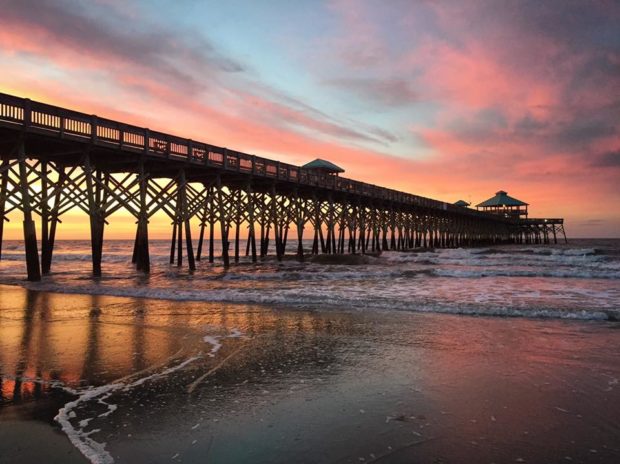
On the morning of July 5, 2017 at 5:50 AM, news crews were on-site at Folly Beach to talk about the clean-up event scheduled for 6:00 PM that evening. A group of conscientious patrons organized a post July 4th clean up volunteer effort to help pick up all the garbage left behind from the July 4th festivities.

The beach was a forthright mess. Beer bottles, water bottles, wrappers, clothes, towels, chairs and more draped the normally scenic backdrop of the ocean sand. There were even chairs on the edge of the sand in the water. Some debris even potentially disrupting the sand patterns of the sea turtles.

It was a saddening site to see as I took my sunrise walk.

As a woman spoke to local reporters and then walked the beach with a bucket and pick, I began to ponder the pros and cons of this event. I naturally admired the dedication of the residents that were going to bond together to bring the beauty and cleanliness back to our beach, but that wasn’t what dominated my thoughts.

Why are we not holding people accountable for their disrespectful and dangerous behavior?
This event sets a precedent that we tolerate this behavior and that if people litter the beaches, someone else will pick it up for them.

I started thinking about how we could let these actions happen?

  • Understaffed enforcement – We know the patterns of behavior of beachgoers including the typical time frame for arrival and departure. Why do we not patrol and if litter is left behind, we fine on the spot?
  • Promoting a clean-up event on Facebook enhances the perception that people can get away with this behavior.
  • We do not take any serious action to remind people of the privilege of being on our area beaches. We need to partner with law enforcement and local businesses to remind and reinforce the need to keep our beaches clean.

I continued to walk that morning, watching the miracle of the sun rise from the ocean into the sky, but this morning was a little different; a little sadder.

I know July 4th is an anomaly happening once a year like Memorial Day and other holidays, but I have witnessed waste remains during non-holiday weekends and weekdays.

We allow people to take advantages of a gift without holding them responsible for their actions and this behavior needs to be addressed soon.

Ridge Breaks Ground on 686,300 SF Speculative Project At Charleston Logistics Center

Read More

CHARLESTON, S.C., July 12, 2017 (GLOBE NEWSWIRE) — Ridge, the industrial development arm of Transwestern Development Co., today announces it has broken ground on a 63-acre site at Interstate 26 and Jedburg Road in Jedburg, South Carolina, approximately 30 miles northwest of Charleston. The site will house a total of 686,300 square feet of speculative industrial space in Charleston Logistics Center. The two state-of-the-art industrial buildings are slated for delivery beginning first quarter 2018.

“Charleston is ramping up for significant growth in the industrial market, driven by the Port of Charleston and corporate expansions that have added 8,000 jobs in the region,” said Steve Kros, Executive Vice President at Ridge. “The market is served by a single interstate, creating a scarcity of functional sites for industrial development. Charleston Logistics Center will stand out among competing parks due to its superior access to I-26 for truck transportation as well as employees.”

The two Class A buildings are designed for multitenant use. Each rear-load building will encompass 343,150 square feet, 32-foot clear height, 54-by-48-foot column spacing, 60-foot staging bay, ESFR, 64 dock doors, two drive-in doors, 202 car parking spaces and 76 truck parking spaces.

Collier’s Simons Johnson and Peter Fennelly are leasing the project.

ABOUT RIDGE
Ridge, the industrial arm of Transwestern Development Co., is a leading provider of corporate real estate development and investment in state-of-the-art warehouse, distribution and manufacturing facilities throughout North America. Ridge’s principals have been involved in the development, construction, ownership and management of more than 125 million square feet of institutional-quality real estate and have an average 25 years of experience in the real estate industry. Ridge is based in Chicago, with regional offices across the U.S. in Atlanta, Dallas, Los Angeles, Houston and Harrisburg, Pennsylvania.

What you should know about the Travel & Leisure Best of Announcements Today (Carolinas Have Room to Celebrate)

Read More

There was a lot of great information relevant to our area that came out today.  There is also room to celebrate for the Southeast

We want to share some additional information you may not know.


Three North and South Carolina Hotels Made the Top 100 in the World List

  • 91 – Inn & Club at Harbour Town, Hilton Head, South Carolina (Score:  95.45)
  • 66 – Old Edwards Inn & Spa, Highlands, North Carolina (Score: 95.89)
  • 45 – The Willcox, Aiken, South Carolina (Score:  96.38)

Charleston, South Carolina is the #2 City in the World (Top 15 Revealed)


Charleston, South Carolina is the #1 City  in the United States


Two Charleston, South Carolina Hotels Made the Top 15 City Hotels in the United States List

  • #12 – Zero George – Charleston, SC
  • #9 – The Vendue – Charleston, SC


Carnival Cruise #7 Mega Ship Ocean Cruise Line


Hilton Head, South Carolina Ranked #2 Best Island in the World

Congratulations to all

Erin Brockovich’s Response on Facebook to Mount Pleasant/Charleston Water Quality Concerns

Read More

Posted on Erin Brockovich Facebook 1 Hour Ago:

“There are more unanswered questions about Mount Pleasant and Charleston, South Carolina’s water quality than there are answers.

First, consumers in Mount Pleasant need to understand… most of the year your drinking water is supplied from the City of Charleston. At peak demands… as much as 50% “can be” produced locally… but  many of you get 100% Charleston water everyday of the year. The attached press conference is more than just misleading, its crap… and constantly bragging about pristine ancient water that requires reverse osmosis is just bizarre. Further, the City of Mount Pleasant buys so much water from Charleston… several months out of the year they actually inject the severely contaminated excess surface water into Aquifer Storage and Recapture (ASR) wells.

Charleston claims to do thousands of water quality tests but doesn’t really report very much to you the consumer… the USEPA “suggests” they customize the report for the local source water conditions… Charleston DOES NOT.

Your drinking water system uses chloramine as a disinfectant… a poor choice. In fact your drinking water has confirmed toxic chloramine byproducts in it called nitrosamines (NDMA) as a result of the use of ammonia.

Your source water has many pesticides (Dieldren), herbicides (Atrazine), pfoa/pfos (scotch-guard/Teflon), pharmaceuticals (estrogen/Viagra) and other “unregulated” contaminants in it TODAY. These should have been reported to you… some have health advisories, some have maximum contaminant levels (MCL), like atrazine.  The herbicide atrazine… if detected, even below the MCL must be reported… it is not.

The citizens of Mount Pleasant and greater Charleston are entitled to more respect and full disclosure… What have they got to hide? If there are contaminants in your drinking water you have the right to make a choice of what your family consumes and what it does not.”

ABC Article: Mount Pleasant Waterworks responds to concerns about water quality