Charleston Daily is a concept in community. Its mission is to promote, assist, and celebrate in everything Charleston, South Carolina. By partnering with businesses, community leaders, volunteers and events, we are spreading the love that is Charleston.
As this city continues to grow and prosper, we want to help spread the message to all about how wonderful this community is.
Charleston is about the people, community, water, land, history, heritage and the true southern warmth it brings with each and every day.
With Charleston appearing on many “Best Of” lists over the past few years, it’s no secret just how great of a city it is. Locals and visitors alike will be quick to tell you just how much they love the city and give you unsolicited recommendations of what to do while you visit. Charleston has a lot to offer, so how do you narrow it down if you only have a weekend here? We have put together a list of “Must Do’s” for you first time visitors. These things won’t take up very much of your time and you won’t find these in any brochure at the Visitor Center.
Must Do’s When Visiting Charleston for the First Time:
Buy a Palmetto rose. Scattered throughout downtown, local children will sell roses freshly made from palm leaves. You can also find them for sale at the market. They are even beautiful after they have dried out.
Pet a horse on the market. If not on a tour, you will find the carriages lined up along Anson Street on the market. They are super friendly and the tour guides are happy to have people stop by and say hi.
Taste honey at Savannah Bee Company. Located on King Street, this store is wall to wall honey and honey products.
Wander down a downtown alley. We have several throughout the peninsula. They are quaint, most are cobblestone, and all are full of beautiful history. (Stoll’s Alley)
Cheers to your vacation with a Bacon Bloody Mary at Eli’s Table. You won’t be disappointed!
Relax on the swings at Waterfront Park. You may have to wait for one to open up on the busy days, but the wait is well worth it.
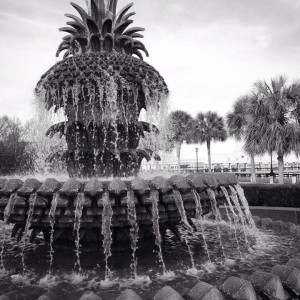
Take a selfie in front of the Pineapple Fountain. This iconic fountain is a great spot to dip your toes and the kids enjoy splashing in the base.
Catch a sunrise at The Battery. Aside from the sunsets you’ll see here, there are few lovelier sights.
There you have it. The “Must Do’s” during your first time visiting the Holy City. If you have been here and have missed something on the list, come back! If you haven’t been here yet, what are you waiting for?!
Sat barefoot in jeans and a loose shirt in the corner of Mt Pleasant’s Dog and Duck, local musician Thomas Champagne could easily trick you into thinking you were somewhere else. His unique acoustic style and unusual syncopation fuses a myriad of genres, from his country and Cajun roots to reggae and Caribbean influences.
At times there is a pendulous sense Champagne’s innovative renditions of familiar songs will trip and fall. But while you’re not sure where you’re being led, there’s bearing and assurance the journey is somewhere positive and fun.
“The number one thing I want to convey is a positive message, but it’s the ability to catch people off guard I think that is the biggest present I can give to any audience – because that’s how you amaze somebody.”
Champagne achieves this with ease so when he segues into an original song it’s often overlooked because his sets flow seamlessly together. However, this didn’t come naturally to Champagne when he first arrived in Charleston from Austin, Texas. It was a challenge he says he had to grow into and work hard at developing.
“The biggest difference coming to Charleston is it’s primarily a tourist capital. While the thriving tourist scene here is awesome for the economy it can take over a musician’s directive by having to play more cover songs than one would normally like, or have to do.”
Champagne says he embraced the twist to what he was used to because he found ways to present cover songs in his own style. Being patient with this change has seen him over the past summer receive a great deal of encouragement and positive feedback.
The result is a breezy and soulful marriage of sunburnt earth, salt and the sea which could have you convinced you were in some surf shack on the Californian coast. However, this is just one side to the constantly evolving and innovative artist, which began to emerge when Champagne relocated from Austin to Charleston.
“I’ve always been Champagne with Friends and I’ve had over 100 different friends on stage. But when I left Austin I stepped away from having a band back me up and I now play all these solo shows, which I wasn’t doing before. It definitely made me stronger as a musician and as a person by having to say, ‘Hey guys, I love you – I miss you, but I got to go and step into this by myself.’ And I think here in Charleston is the first time Thomas Champagne came out – with friends as my audience.”
Born and raised in Beaumont, Texas from strong Louisiana ancestry, Champagne is proud of his heritage. He also appreciates the truth and irony that comes with journeying into the unfamiliar, admitting with a chuckle that he became more of a Texan by leaving Texas. Champagnes sees the move to Charleston as another chapter, both as a solo artist and his recent full-time commitment to his profession.
Two weeks prior to the Dog and Duck I first saw Champagne with Friends by accident when I entered the Blind Tiger on Broad Street on a Friday night to catch up with my own friends. With two local musicians in support they belted out an infectious breed of classic rock tunes, and made the old floorboards at the Blind Tiger pay the price as everyone got caught in the rhythm and groove.
For me it evoked the great Aussie legacy of pub rock offered any weekend night in a beachside bar on the Indian Ocean in Perth, or a St Kilda pub in Melbourne. Continuing this prominent theme of evolution is the rotation of local musicians Champagne uses at every show.
“When you see Champagne with Friends it’s always different players so while you may have seen the show before it’ll be different every time.”
Champagne cites the generosity of Charleston’s music community as being invaluable in helping him gather new musicians to play with when he first arrived.
“The openness of the musical community here is awesome first of all. It’s nowhere near as competitive as it is in Austin, Texas which has advantages and disadvantages. Competition is a primary way to motivate an artist and make them grow, but it can also hurt you in the end.”
Not that Thomas Champagne is leaving Charleston anytime soon, but as someone not prone to taking time off he’s looking forward to opening up a new chapter in his artistic journey. After recording his last album with producer and former Hootie and the Blowfish guitarist, Mark Bryan, Champagne is due to head back to Austin to record another album at the end of the year. He then plans to tour the ski resorts in the Rockies before heading home to Charleston.
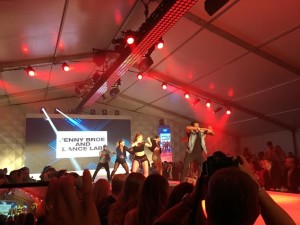
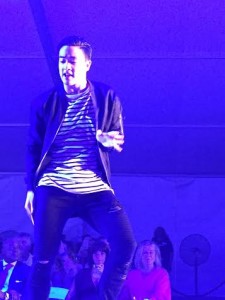
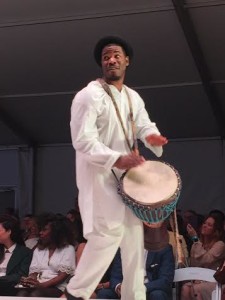
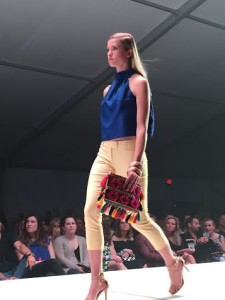
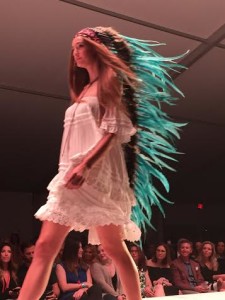
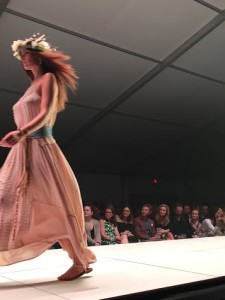
Last evening, amongst the tents and lights and models, Marion Square converted into a mini mecca of the fashion industry with the kick off of the 10th annual Charleston Fashion Week. With a week of events guaranteed to outshine previous years from March 15-19, fans, designers, models, make up artists, musicians, dancers and even a hedgehog are in for a week of incredible memories and a future of great fashion talents.
Day one introduced the audience to emerging designers Destani Hoffman, JD Noble, Storm Dorris and Elias Gurrola who each brought a unique flavor to the runway. Donning from Alabama, Georgia and New York, this years emerging designers have stretched the limits of the East Coast.
The evening festivities sparkled with local business showcases from Bits of Lace Fine Lingerie, Shoes on King, Taxidermy, tres Carmen Boutique and 7Gypsy. With show stopping musical choreography from ritual chant to the iconic Whitney Houston, the first evening was deemed a tremendous success.
We invite you to experience the memories of the first of many incredible nights of Charleston Fashion Week with some visual memories of last evening.
Kick-ass dance number to open the night on the runway
Spectacular lighting to compliment the dance number
Elegant attire was in full gear
Creative designs on display.
Sometimes you got to hit the beat.
Class and style
Professionalism to the tee
Passion and focus
Designs of Elias Gurrola
Representing the head gear
All eyes on the models
Full line up of beauty
Overall, the staff, models, volunteers, caterers, bar staff, vendors and city officials created an atmosphere of energy. The showcase of talent in the Charleston community came prepared and showed once again how passion, creativity, motivation and a little dreaming can make any fantasy a reality.
None of this would not be possible were it not for the visual of founder and MC Ayoka Lucas who has brought now a decade long tradition to Charleston.
If you would like to be part of Charleston Fashion Week, tickets are still available – Click Here
There is no shortage of art galleries in downtown Charleston. Even if you are not in the market for new art, it is always a treat to wander in the galleries and check out what they have. You will find very talented local -and not so local- works scattered along the walls, and a friendly face to greet you happy that you came in to share their passion. I recently had the pleasure of meeting one of these amazing artists.
Photos courtesy of Cindy Walton
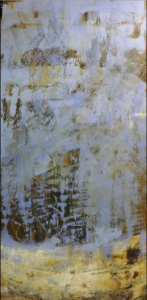
Cindy Walton recently celebrated her opening of “Letters to the Land and Sea” during the Charleston Gallery Association’s March ArtWalk at the Ellis-Nicholson Gallery on Broad Street. Cindy’s work is, not only beautiful, but unique as well given that she uses a medium that is not typically seen among the art in Charleston. She uses cold wax on wood panels to create her art. Heavily inspired by landscapes, Cindy’s abstract work each creates a sense of connection with the elements.
Asheville, North Carolina is where Cindy calls home. You can find her working on her craft at Wedge Studio. She also teaches throughout the year in various cities across the nation. Currently her works are in five formal galleries. Cindy’s exhibit at the Ellis-Nicholson Gallery runs through March 30th. Be sure to stop in and see “Letters to the Land and Sea”. For more of her work, please visit her website www.cindywalton.com and look for Cindy Walton Fine Art on Facebook.
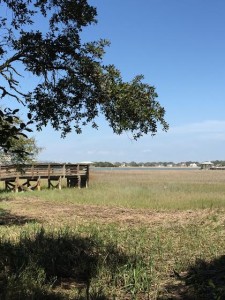
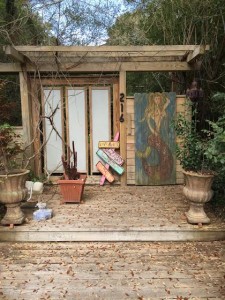
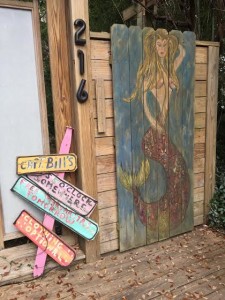
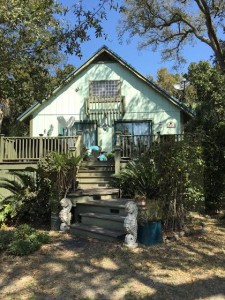
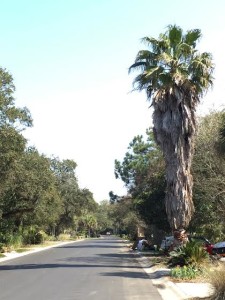
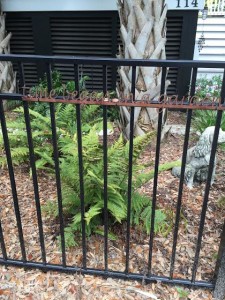
Nowhere else in this fine land of ours can you walk down any residential home and see a carnival of creativity flowing in all directions. Each home a unique entity, each entrance way a gateway to another world and each experience different from the last. Folly Beach is a safe haven; a place whose only rule is that there are no rules. The locals live by a single code: Be kind to one another and be there for each other. It is a simple rule, but one that governs this coastal culture with charm, loyalty and kindness.
We love our journeys through the secret corridors where life and fantasy become one.
Now, it is time to take you on a sequel journey to more obscure and silly landmarks of Folly Beach. Put on your favorite technicolor hat and 3D sunglasses and enjoy another ride through the wonder of Folly.
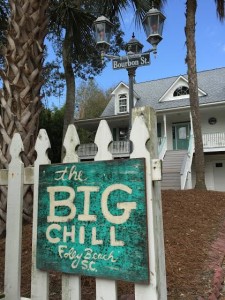
Step onto Bourbon Street and feel the warmth of a warm Louisiana Night while listening to jazz on the Bayou.
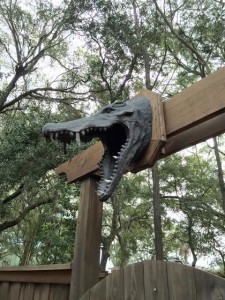
Something wicked this way comes. Beware the Alligator entrance.
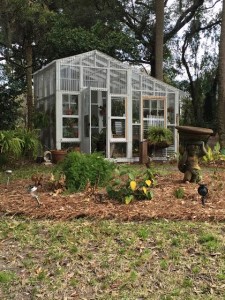
The greenhouse is flourishing with fresh produce for all the eye can see.
The mermaid clubhouse
Don’t look too closely; her beauty can kill.
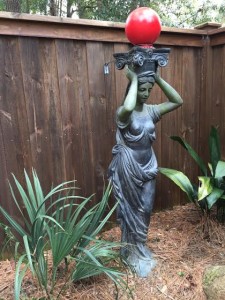
Beware what goes on through those gates. This home is guarded by the passionate bearer of the globe of prediction.
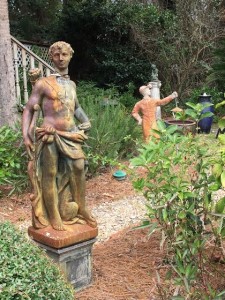
The sculpture garden awaits.
Welcome to the seahorse house.
For all your Sesame Street fans, here is the Snuffleupagus tree
Remember: Time Began in a Garden
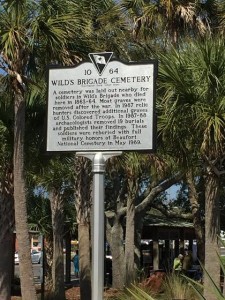
Here lies the Wild’s Brigade Cemetary
We hope you enjoyed the newest journey through the wild unknown fantasy land of Folly Beach. Come back soon for another storied adventure.
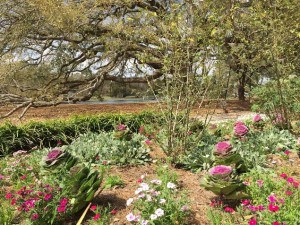
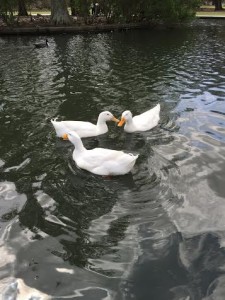
So many of us have bore witness to weddings, sat on a blanket enjoying life music, relaxed in the gazebo, fed the ducks, smelled the beautiful floral arrangements all around, biked the outer rim of the park or just held hands with someone you love walking over the bridge and listening to the sounds of the fountain. That is Hampton Park, one of our most beloved park gems. With The Citadel on one side and Charleston Strong with its doves of unity on the other, this park is a haven for baseball, basketball, weddings, concerts, jogs, bike rides and children playing. Hampton Park has brought so much joy to Charleston.
Here are a few facts that may open your eyes about Hampton Park and its rich history:
The full size of Hampton Park is 60 acres.
Hampton Park is named after Wade Hampton III, Governor of South Carolina from 1877 – 1879 during Reconstruction
From 1792 – 1900, Hampton Park was a horse racing track called Washington Race Track. It was started by the South Carolina Jockey Club. Though the track was historically closed in 1900, the last race was in 1877 due to the damage caused by the Civil War.
It was originally the front yard of a large plantation called “The Grove”. The plantation was destroyed during the Revolutionary War and put up for land sale because the couple that owned the plantation had no children.
During the Civil War, the land was used as a prisoner of war camp for Union Soldiers being moved from Andersonville, Georgia to Florence, South Carolina. Over 200 died due to illness and are buried in unmarked graves near the parking lot on the Wagoner Terrance side.
That in 1901, several businessmen decided to hold a regional trade exposition in Charleston and bought the land from the Charleston Library Society for part of the grounds. The Expo was considered a failure by many but in 1902 Teddy Roosevelt came to the event and one year, the actual Liberty Bell made an appearance. Officially called the South Carolina Inter-State and West Indian Exposition, this event brought new business to Charleston including the American Cigar Company and United Fruit Company.
The Boston Bean Eaters (today known as the Atlanta Braves) held two weeks of spring training in the park in 1905, and lost to the Detroit Tigers.
In 1917, the City of Charleston leased two acres to the 18th Infantry for an encampment to prepare for World War I service?
Mr. Archer Huntington donated $1000 and a collection of exotic animals from his personal collection at Brookgreen Gardens to get a zoo started in 1932. zoo included lions, bears, and native species in a series of big chain link cages located between the current bandstand and the Cleveland Street entrance. By 1972, the zoo was in such bad condition, it was deemed in violation of new federal codes of animal welfare treatment and was soon closed.
Today thousands flock to the closing concerts for Piccolo Spoleto and MOJA festivals with families and loved ones to listen to great music and celebrate community. Next time you are having a picnic in Hampton Park or going for a jog, think about the celebrated history of this land.
Take a journey with us, accompanied by some of the most beautiful videos of our home. Through the magic of cinematic creativity, these artists have given us the serenity of the harbor, the laughter of children, a community unified, the challenge of the surf and the value of family on America Street.
Through these acts of love, we and others can now step into the world of Southern living and see why so many find refuge and solace in our Charleston home.
As you smell harbor, let sand get between your toes on the beach, lay on the square falling asleep under the warm sun, smile at a stranger, listen to the sounds of street performers and enjoy a cocktail and great dinner, remember all that are blessed with and soak it in.
“There is no city on Earth quite like Charleston. From the time I first came there in 1961, it’s held me in its enchanter’s power, the wordless articulation of its singularity, its withheld and magical beauty. Wandering through its streets can be dreamlike and otherworldly, its alleyways and shortcuts both fragrant and mysterious, yet as haunted as time turned in on itself.” – Pat Conroy
By Mark A. Leon – Photography by Craig Bailey / Florida Today
On November 14, 2015, Evan Cruz, a sought after recruit for Charleston Southern University Football, was invited to attend the Charleston Southern Saturday afternoon game against Liberty and visit the campus. On the way to the game from Viera, Florida his father, cousin and Evan made a brief stop outside of Savannah, GA. On the way back to the highway, they were T-boned and sent spinning off the road.
Evan’s father was rushed to the local hospital for a possible rib injury while Evan and his cousin were examined for precautionary measures and spent the majority of that Saturday in the ER. Evan and his family did not complete that trip, but something happened that remained with Evan and his family long after that day. After contacting the coaching staff regarding his accident, they showed genuine concern for Evan and his family by checking in on them even well after the Liberty game. The idea of family and values that embodies the Charleston Southern Football team never left Evan.
The week before signing day Evan remained in Florida and had still not made it to Charleston Southern University. He had yet to commit to where he would play the following year though Columbia University, the University of Pennsylvania, and Florida Institute of Technology were actively pursuing him. A visit from Charleston Southern Buccaneer Quarterback Coach and Florida Recruiter, Mark Tucker to Viera High School, made the decision easier for the future physical therapist. Coach Tucker along with the rest of the staff knew that Evan was the right “fit” for the university. With a strong faith system, solid academic focus (carrying a 3.8 GPA), a balance of mental and physical health and a future career plan in place, Evan symbolized the player the coaching staff knew would be an integral part of the winning team he wants to build.
After a few days of deep family discussions, Evan committed to the Charleston Southern team. Coach Tucker cautioned Evan about making his decision without even seeing the campus however weighing all the factors and remembering the incredible outreach after his accident, Evan knew this was the right move.
Just two days after seeing the campus for the first time and three weeks after committing to Charleston Southern, Charleston Daily sat down with Evan, and his parent’s, Ernie and April, at Carmella’s on East Bay Street on a sunny Friday afternoon to discuss the past, present and future of one of the newest Buccaneers.
Evan’s Childhood
Evan’s football career began when he was 5 years old, in a town known more for soccer than football. With his father Ernie Cruz coaching his little league youth football team, Evan and five of his closest friends developed leadership skills, strength, discipline and a lifelong commitment to the game.
At age five, Evan didn’t know that someday, he would step onto the field as a member of two remaining teams playing in the state championship. That became a reality for him and 27 other graduating seniors on December 11, 2015, the last football game Evan played before making a life changing move to Charleston this fall.
Entering the Viera High School football program as high-school freshmen, Evan’s class, led by Coach Kevin Mays, carried on its back a team that was 12 – 30 the previous four years and when the final whistle blew at the end of the 2012 season, the Hawks managed only one victory. How does one recover from such losses and rebuild? Possibly by remembering their youth football coach’s words that he instilled – follow your heart, believe in yourself and never stop fighting.
That year, 2013, Evan’s high school team went from a one win season to 8 – 2. The 2014 and 2015 seasons, they were also victorious with 9-1 and 10-5 records, respectively.
The dramatic turnaround for the team led by Coach Mays and staff brought hope and rejuvenation to the town of Viera. Fan support began to stretch outside of Viera to neighboring counties and even from Allen, TX ( Viera played an out of state match-up against national ranked Allen Eagles earlier in the season)following this string of wins with rally cries all the way to the state championship.
Viera Hawks Football stands behind the mission: Unity defines our willingness to work as a team to put forth the effort to win the battle. These are strong words that will only lead to success with unwavering leadership, confidence and fight. What Ernie Cruz embedded in his little league youth football team ten years earlier was equally enforced during their time representing Viera Hawks Football.
Today, Evan enters into a program that has lived a similar storyline. From 2007 through 2012, Charleston Southern went 26 – 41; since then they have been 28 – 10 with big match-ups against Florida and Florida State slated for the next two seasons. With so many similarities in the programs and a coaching staff that feels like family, Evan’s decision to join Charleston Southern continues to be reinforced internally.
Evan has now visited his future campus, and is due to attend classes and start practice in the summer semester. He is settling in with his teammates and knows they are growing into one big family that truly cares about one another. Ernie and April Cruz feel comfortable with the Christian fellowship available at Charleston Southern as well as the comfortable hospitality offered by the city of Charleston. A warm genuineness permeated our interview with April, Ernie and Evan. They were very generous with their stories and enthusiastic about the future. An adage emerged several times during our conversation; everything happens for a reason. Faith and goodwill brought together Evan Cruz and Charleston Southern University. The partnership of a young student athlete and a growing football program will lead to a bright future for both.
If you are a transplant or tourist you may here us locals speaking and think some terms have a certain meaning, but we are here to tell you, it may not have the same context as you think. Let this serve as a guide to provide the outsiders an understanding of our terminology.
USC – For most of the country, USC is the University of Southern California. Go Trojans. From Leinart to Sanchez to Reggie Bush to OJ, the Trojans carry a long and heralded history of college football. Here in SEC country, it is all Gamecocks. USC stands proud for South Carolina Football. There are no Trojans in this part of the country.
Orange – Like yellow, red or blue, orange is a color to most. Out in Charleston, Orange refers to the color you bleed if you are a diehard Clemson Tigers fan or alumni. That is a color you wear with pride on your body, skin, or even your pets. After runner up to the National Championship in the 2015 season, that color is shining as bright as the sun.
Upchuck – No we didn’t just throw up. This is how we refer to our neighbor, North Charleston. Sometimes after hanging out there, we may get that queazy feeling though.
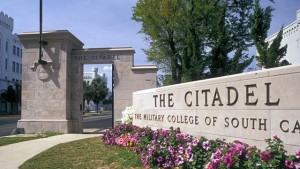
El Cid – Sounds like a Mexican Revolutionary or a cigar broker in Cuba. Neither is true. This is a true us locals use to refer to the The Citadel, The Military College of South Carolina.
The Joe – Is that a coffee shop? Great guess but not correct. Maybe a bro hang out? Nope. The Joe is the affection term for Joe Riley Stadium, the home of the Charleston Riverdogs baseball club.
Palmetto Bugs – That term doesn’t seem that unpleasant when you phrase it that way. Then again it is a term for a bug. There are levels of bugs. When non-locals learn that these are flying cockroaches that can be up to two inches long, yikes!!!! Get to know them and the term well. They love the humidity.
The Recent Unpleasantness – This is a term where the phrase “Too soon” can be used. Down here we use this phrase to describe the War Between the States or the US Civil War.
Y’all – Bless your heart if you don’t know what this means, but I am afraid some do not. This means, you all, all of you, you guys, everyone, the group and many more, but we think you get the point.
Yes Ma’am – This is something you need to get used to. It does not matter about age, title or relation, but down here if you speak to a lady, you address her with “yes ma’am”. It is a sign of Southern hospitality and respect.
Pluff Mud – Not to be mistaken for the porter made by Holy City Brewery. This is a deep murky mud that you sink right into when you step into it in the marsh.
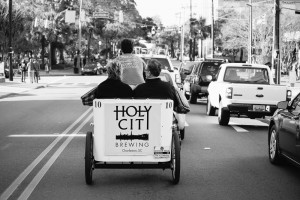
Rickshaw – There are a few places where you may know this term, but here in Charleston, these are how hard working bike taxis that take you all around the peninsula offering up great stories, advice and directions along your ride.
Holy City – Many will instantly think Rome or Florence, Italy when they think of the Holy City. Due to the many gorgeous church steeples and deep religious ties, Charleston has adopted this as a nickname and it holds a lot of meaning to us.
North or Up North – To us, that just means the other “Carolina”. Some may even boldly say the lesser Carolina.
Bless Your Heart – That is a term of endearment right? Not round here. If you grew up in the South, that is not a phrase you want to hear from your Grandma. In fact, you may have recently heard Governor Nikki Haley use it on Twitter to Donald Trump. Enough said.
Flurries – Panic, panic, panic. The idea of snowflakes invading our tropical home sends shivers down our spine. Don’t even joke about that.
There is our little educational lesson for the day. We hope you learned a little something today.
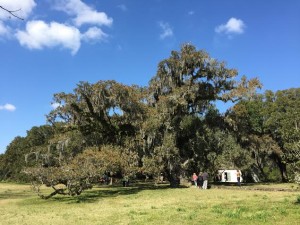
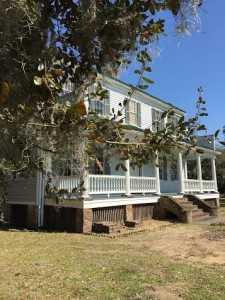
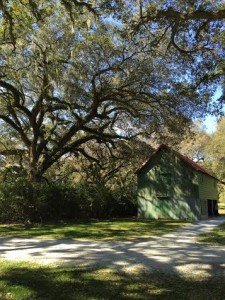
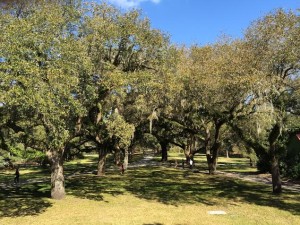
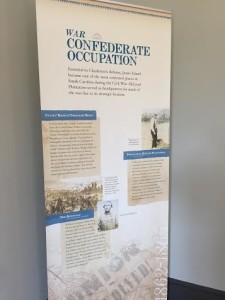
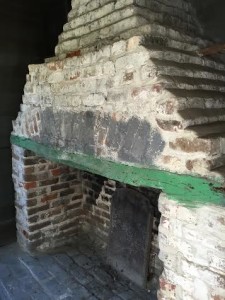
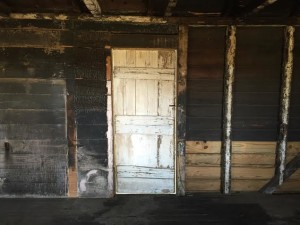
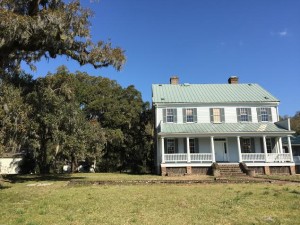
Built in 1851, the McLeod Plantation, located on James Island played a critical role in some of the most significant periods of United States history providing shelter for soldiers during the Civil War, serving as a headquarters point during the war, raising cotton at the hands of slaves and offering transition homestead for freed slaves. In 1991, the final offspring of the McLeod family legacy passed away and with that the end of an era. He donated his land to historic Charleston who came very close to selling the land to the College of Charleston for a sports complex. Fortunate for the legacy of Charleston and its rich heritage, the Charleston County Park Council purchased the land and has restored this critical piece of Charleston history for all of us to share.
I came into my adventure onto this sacred and historic property with a desire for knowledge acquisition about our land and walked away with a feeling of serenity and peace. Like myself, many will go in looking for a little visual history lesson, but will walk away spending time in a place that has preserved its look and integrity for 160 plus years.
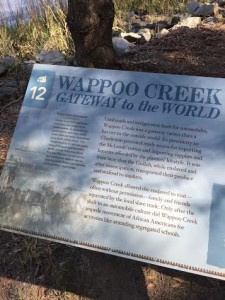
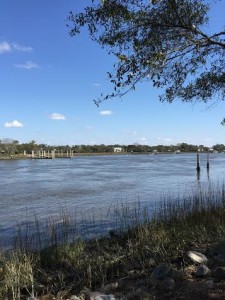
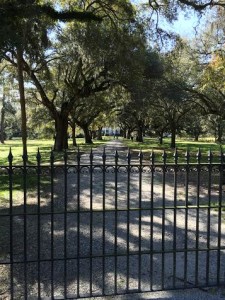
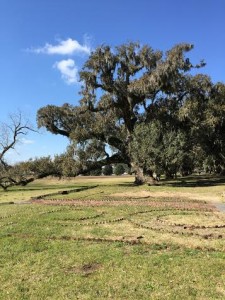
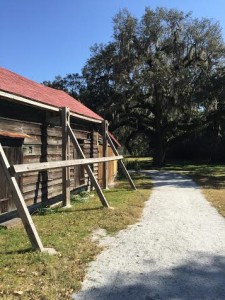
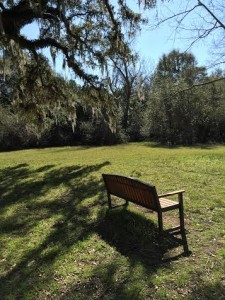
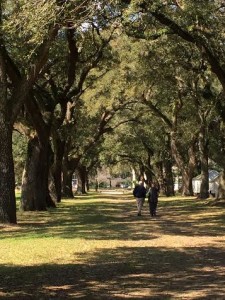
We invite you to step back in time and walk with us as we show you some of the visual spectacle of McLeod Plantation: one of Charleston truest historic and visual gifts. From the Big House to the Wappoo River, you will find yourself lost in yesteryear and get swept away in the romanticism of the land.
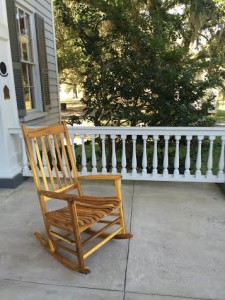
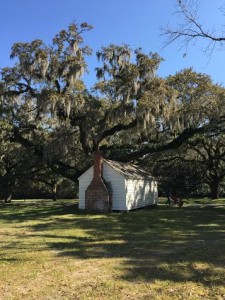
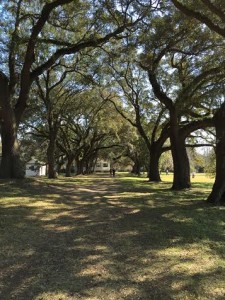
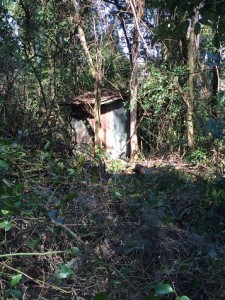
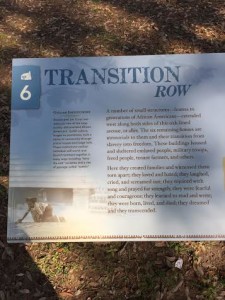
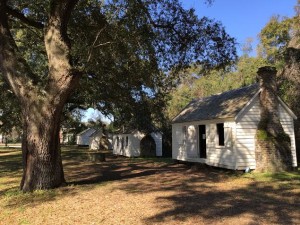
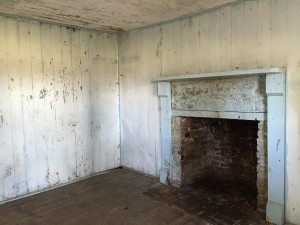
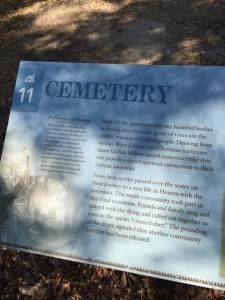
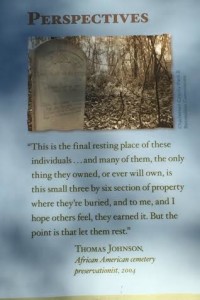
The Big HouseBlossoming flowersMajestic treesBack of the Big HouseCotton storage facilityView from the front porch of the Big HouseLearn a little history inside the houseOr relax on the front porchFresh open views all around the propertyPlenty of shade on those warm summer daysHidden shack in the woodsTransition Row where freed slaves transitioning lived and soldiers during the Civil WarTransition RowTransition row home interiorInterior chimneyDark interiorCemetery on the groundsPerspective on life in those timesWappoo Creek: Gateway to the WorldCalm Wappoo CreekGated Main EntranceOriginal foundationBack of the Big HouseWalking along the property pathRelax in the shadeQuiet romantic walk
Take a morning or afternoon, pack a picnic and enjoy one of the most beautiful escapes just three miles outside of Charleston proper. You will not be disappointed.

 by
by 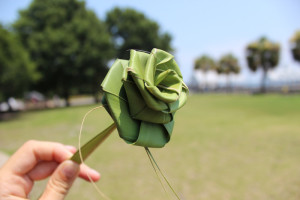
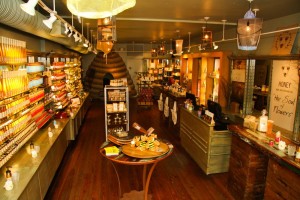 honey products.
 There you have it. The “Must Do’s” during your first time visiting the Holy City. If you have been here and have missed something on the list, come back! If you haven’t been here yet, what are you waiting for?!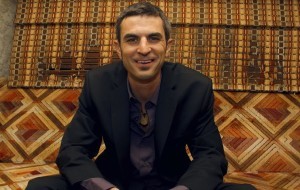
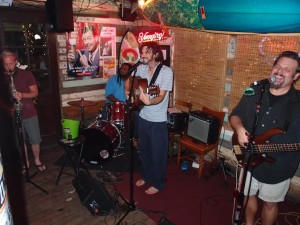 Two weeks prior to the Dog and Duck I first saw Champagne with Friends by accident when I entered the Blind Tiger on Broad Street on a Friday night to catch up with my own friends. With two local musicians in support they belted out an infectious breed of classic rock tunes, and made the old floorboards at the Blind Tiger pay the price as everyone got caught in the rhythm and groove.










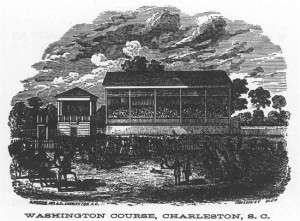 last race was in 1877 due to the damage caused by the Civil War.
 for World War I service?
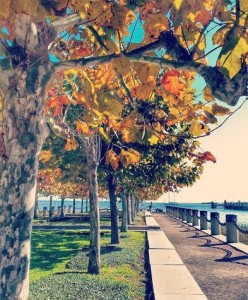 Take a journey with us, accompanied by some of the most beautiful videos of our home. Through the magic of cinematic creativity, these artists have given us the serenity of the harbor, the laughter of children, a community unified, the challenge of the surf and the value of family on America Street.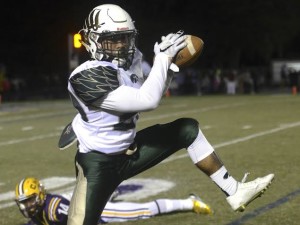
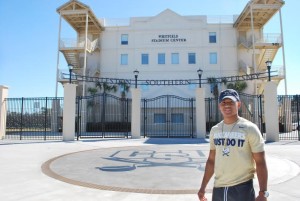 from Charleston Southern Buccaneer Quarterback Coach and Florida Recruiter, Mark Tucker to Viera High School, made the decision easier for the future physical therapist. Coach Tucker along with the rest of the staff knew that Evan was the right “fit” for the university. With a strong faith system, solid academic focus (carrying a 3.8 GPA), a balance of mental and physical health and a future career plan in place, Evan symbolized the player the coaching staff knew would be an integral part of the winning team he wants to build.
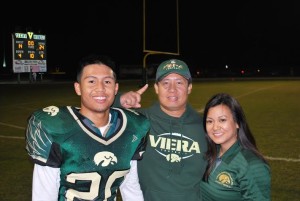 Entering the
 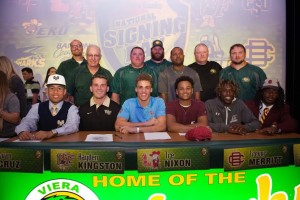 Viera Hawks Football stands behind the mission: Unity defines our willingness to work as a team to put forth the effort to win the battle. These are strong words that will only lead to success with unwavering leadership, confidence and fight. What Ernie Cruz embedded in his little league youth football team ten years earlier was equally enforced during their time representing Viera Hawks Football.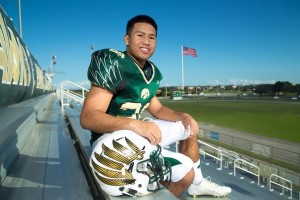
 true us locals use to refer to the The Citadel, The Military College of South Carolina.
 advice and directions along your ride.