High Steaks Butcher Shop on Johns Island is not your typical family owned butcher shop. This is a shop that offers up love with every purchase. Carl and Ryan are cousins and co-owners of this little neighborhood shop that is taking Johns Island, South Carolina by storm. Why is it so beloved and worth celebrating?
Is it the high quality meats? Absolutely
Expansive selection? You best
The undeniable small town community feel each time you come in? Bingo!
This is a butcher shop that cares about the local residents and provides a level of quality unmatched. Our first visit was very specific seeking out a fine skirt steak to prepare for my father for his birthday and oh my was it one of the best tasting skirt steaks we have ever eaten. We were so thankful.
If you don’t live on Johns Island, it is worth the drive. As a little enticement to get you in your car, Somm Wine Bar is located right next door if you want to stop in for a glass of wine and make an afternoon or evening out of the trip.
If you are seeking an excellent cut of Angus beef, prime rib, skirt steak, sausage links, custom cuts, wings, spices, rubs and so much more, make a plan to come to High Steaks Butcher Shop. I kinda feel like once you come in, you will return. P.S. They even have made to order sandwiches for that pop in lunch or don’t feel like cooking dinner feeling.
Largest life sciences gathering in South Carolinaconvenes over 500 industry pioneers, innovators and thought leaders from across the United States.
-Conference to showcase cutting-edge research, breakthrough treatments and next-generation technologies emerging from the Palmetto State’s thriving life sciences sector.
SCbio will unveil its new initiative to define the core pillars of the state’s life sciences and medtech sectors and attract companies to the state.
CHARLESTON, S.C./PRNewswire/ — SCbio will bring national life sciences leaders to South Carolina for its annual conference at The Gaillard Center in Charleston, S.C. February 18-20, 2025.
The SCbio Annual Conference stands as the premier life sciences event in the Southeast, where global leaders and industry experts exchange insights, form powerful connections and discover exciting new achievements from the fastest-growing economic sector in South Carolina. Additionally, SCbio will unveil its new initiative aimed at defining the core pillars of the state’s life sciences and medtech sectors to attract companies to the state—highlighting the organization’s commitment to fostering innovation and growth in these critical sectors.
“We’re thrilled to announce that this year’s SCbio conference will be unlike any other, fueled by the growing momentum of life sciences in South Carolina,” said SCbio President and CEO James Chappell. “I’m particularly excited to share our new campaign that will put our state on the map—showcasing our position as the largest growing state in the life sciences sector. South Carolina has an incredible story to tell, and we’re eager to shine a spotlight on our achievements for the entire country [and world] to see.”
Since 2011, the conference has grown to over 500 attendees from 24 U.S. states and has become a catalyst for collaboration—shaping the future of life sciences both regionally and nationally. Speakers range from international powerhouse brands such as Novo Nordisk to federal leaders from the White House Office of Science and Technology Policy.
This year’s two-day conference will feature how research and technologies from South Carolinacompanies and academic institutions are advancing life sciences, as well as spotlighting the growth of the innovation districts, introducing new and emerging therapeutics and oncology startups, highlighting the latest advancements in women’s health and more.
Hosted by Morgan Nichols Scarnnechia as emcee, the elite lineup of speakers will feature keynote addresses from:
John F. Crowley, President and CEO, Biotechnology Innovation Organization (BIO)
Vinny Durand, Director, Life Sciences, Savills Raleigh/Durham
Andrew Crenshaw, Vice President of Operations, Site Lead, GRAIL, Inc.
Arda Ural, Ph.D., Americas Industry Market Leader, Ernst & Young
As a continued celebration of excellence, SCbio will proudly present its Pinnacle Awards, honoring trailblazers whose contributions to the life sciences have sparked remarkable success, inspired leadership, and propelled the industry forward. These awards recognize not only innovation, but also the profound positive impact on employees, customers and communities across South Carolina.
Registration for the SCbio annual conference is now open. To register, visit https://cvent.me/mB12w1.
About SCbio. SCbio is the definitive, unifying leader in South Carolina’s life sciences sector, fostering authentic collaboration and innovation across academia, startups, government and established enterprises. As a member-driven economic development organization, SCbio represents more than 1,000 organizations employing more than 87,000 professionals. Our members are unified by a mission to positively impact humanity through science across the ecosystem of advanced and specialty manufacturing; digital health and the data frontier; and cutting-edge health specializations. For additional information about SCbio and the life sciences industry, or to become a member, visit www.SCbio.org.
December 27, 2024/Raleigh, NC: Today, Governor Roy Cooper announced donations of $15.5 million made to the NC Disaster Relief Fund are going to the North Carolina Community Foundation to help with Hurricane Helene long-term recovery and unmet needs.
“We are so grateful for this outpouring of generosity toward the people of western North Carolina,” Governor Cooper said. “Recovering from Hurricane Helene will be a marathon and each and every donation helps.”
The NC Community Foundation will use the funds along with another $12 million the foundation has raised to support long-term recovery and unmet needs through grants to nonprofits serving western North Carolina.
Gov. Cooper established the state’s relief fund to raise donations to help western North Carolina rebuild following the unprecedented destruction caused by the storm. In total, donors contributed $16,820,346 to the NC Disaster Relief Fund, with $1,272,391.54 going to immediate needs grants for nonprofits working in hard-hit areas through the United Way of North Carolina.
The NC Disaster Relief Fund was activated shortly after Helene struck North Carolina, with United Way of North Carolina serving as the fiscal agent for the fund and using donations to provide small dollar, immediate needs grants and reimbursement to nonprofits working in communities hit hard by the storm. With immediate needs grants coming to an end, the NC Community Foundation will now step into the role of managing the funds and providing grants for long-term recovery work.
“We are honored to receive these funds and continue to support the recovery of western North Carolina from the devastating impacts of Hurricane Helene,” said Jennifer Tolle Whiteside, President & CEO of the NC Community Foundation. “We know this work will take years, and our grants to nonprofits on the ground will complement efforts already underway.”
The NC Community Foundation will provide grants to eligible organizations supporting Helene recovery efforts over the months and years ahead. A key method for the distribution of grants will be through the NC Community Foundation’s affiliates in western North Carolina. Given the scope of the disaster, grants may also be awarded in communities not typically served by the foundation.
Grants may also be made to organizations that serve the long-term disaster recovery needs of multiple counties or that will conduct larger-scale projects in targeted areas. More information about the NC Community Foundation’s disaster relief grantmaking will be released in early 2025.
Donations Already Helping
United Way of North Carolina has made $1.2 million in grants and reimbursements to 109 nonprofits working in western North Carolina, thanks to donations made to the NC Disaster Relief Fund.
Nonprofits have used these funds to meet the immediate needs of storm victims such as food and water, cleaning products and other emergency supplies:
Community Organized Response Effort (CORE) received $10,000 to provide muck-and-gut services and mold suppression to areas severely impacted by the storm. This included purchasing humidifiers, heaters, and moisture meters so families could safely start rebuilding after the devastation caused to their homes.
Haywood Pathways Center was awarded $10,000 to support their mobile soup kitchen to ensure residents in Haywood County had access to nutritious meals while power and infrastructure was being restored.
Appalachian Sustainable Agriculture Project (ASAP) received $10,000 to support farm business relief and recovery and connect households in need with local and nutritious foods. ASAP serves as a network and resource hub for 550 family farms in western North Carolina and a connection point for rural and urban communities to access fresh, local food.
“Being the fiscal agent for the NC Disaster Relief Fund has been an honor, as we’ve had the privilege of providing immediate grants to nonprofits working tirelessly in communities impacted by the storm. These funds have empowered local organizations to offer urgent support and begin the long road to recovery. We deeply appreciate the Office of the Governor for their invaluable partnership in supporting Western North Carolina during this critical time. Together, we are making a lasting difference in the lives of those who need it most” stated Brittany Pruitt Fletcher, president and CEO of United Way of North Carolina.
Visit the United Way’s website to see a complete list oforganizations that have received grants for immediate needs following Hurricane Helene.
Donations Still Needed
North Carolina’s Disaster Relief Fund received donations from people in all 50 states as well as other countries including Canada, Great Britain and Taiwan. Schoolchildren and churches took up collections to donate. Corporations and foundations also stepped up to give. Read about major donors to the Fund here.
While the NC Disaster Relief Fund is no longer accepting donations directly, monetary donations can be made to the NC Community Foundation in support of Hurricane Helene recovery at nccommunityfoundation.org/helene. United Way of North Carolina also continues to accept monetary donations for Hurricane Helene relief at unitedwaync.org/helene. A number of volunteer organizations remain active in storm relief and recovery efforts. To find and support VOADs (Volunteer Organizations Active in Disasters) working on Helene recovery, visit www.ncvoad.org.
WASHINGTON — The U.S. Postal Service today announced more stamps it will release in 2025. This is a partial list, with additional subjects to be announced in the coming weeks and months. These designs are preliminary and may change.
Powwows: Celebrating Native American Culture The Postal Service strives to tell the stories of all Americans on its stamps, and issuing stamps that honor the living culture and heritage of Indigenous people is an important part of that goal. These stamps celebrate powwows, Native American social and ceremonial gatherings that feature music, dance and festive regalia. For this issuance, Cochiti Pueblo artist Mateo Romero created original paintings of four powwow dancers performing their craft against brightly colored backgrounds that highlight each dancer’s movement and traditional dress. Antonio Alcalá, an art director for USPS, designed the stamps.
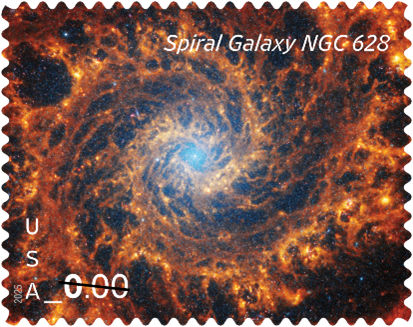
Spiral Galaxy (Priority Mail) USPS celebrates the continued exploration of deep space with an extremely high-definition image of a spiral galaxy 32 million light-years from Earth. The image, captured by NASA’s James Webb Space Telescope, helps researchers update their models of star formation and allows them to better understand the origins of our universe. Greg Breeding, an art director for USPS, designed the stamp with an image from the National Aeronautics and Space Administration, the European Space Agency, the Canadian Space Agency, the Space Telescope Science Institute, Janice Lee (Space Telescope Science Institute), Thomas Williams (Oxford) and the Physics at High Angular resolution in Nearby GalaxieS Team. Upon favorable review by the Postal Regulatory Commission, the stamp will be denominated at the new Priority Mail Flat Rate Envelope rate.
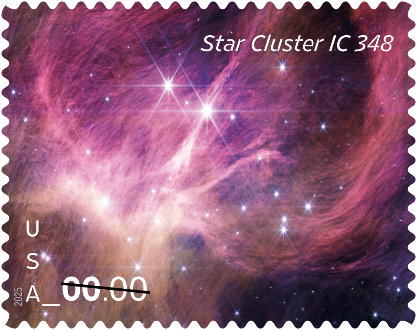
Star Cluster (Priority Mail Express) Featuring a second image captured by NASA’s James Webb Space Telescope, this stamp shows a star cluster approximately 1,000 light-years from Earth. Hidden within the cloud of celestial dust are floating brown dwarfs — objects too small to be stars but larger than most planets. Studying these brown dwarfs will help scientists explore how star-formation processes operate for very small masses. Greg Breeding, an art director for USPS, designed the stamp with an image provided by the National Aeronautics and Space Administration, the European Space Agency, the Canadian Space Agency, the Space Telescope Science Institute, Kevin Luhman (Penn State University) and Catarina Alves de Oliveira (European Space Agency). Upon favorable review by the Postal Regulatory Commission, the stamp will be denominated at the new Priority Mail Express Flat Rate Envelope rate.
Freshwater Fishing Lures Recreational fishing attracts more than 55 million anglers to America’s lakes, rivers, and oceans each year — and lure designs for different environments are part of its growing appeal. These stamps feature brightly detailed photographs by Sarah Cramer Shields showing five lures considered icons of the sport. Greg Breeding, an art director for USPS, designed the stamps.
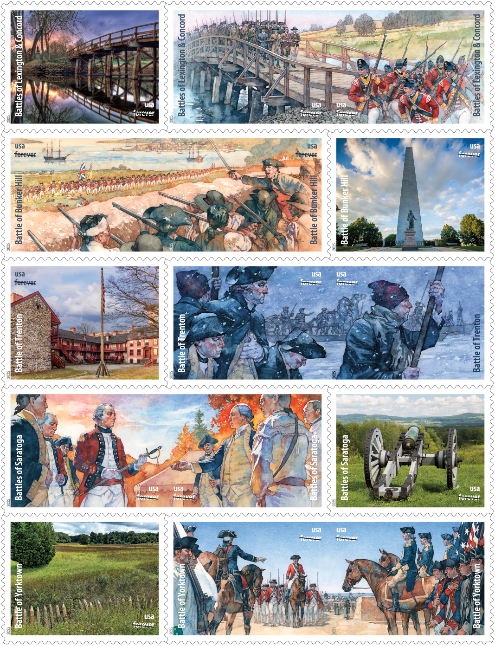
Battlefields of the American Revolution Marking the 250th anniversary of the start of the Revolutionary War, this pane of 15 stamps invites us to witness and remember five turning points in the fight for American independence. Watercolor paintings depicting scenes of five battles appear alongside photographs of sites involved in each battle. Derry Noyes, an art director for USPS, designed the stamps with art by Greg Harlin and photographs by Jon Bilous, Richard Lewis, Tom Morris, Gregory J. Parker and Kevin Stewart.
Dates and Locations: January-March The Postal Service today also announced stamp release dates and locations for January through March of next year:
Stamps
Release Date
City
State
ZIP
Lunar New Year • Year of the Snake
Jan. 14
Boston
MA
02205
Love 2025 Local ceremony
Jan. 17
Kutztown
PA
19530
Spiral Galaxy (Priority Mail)
Jan. 21
Big Sky
MT
59716
Star Cluster (Priority Mail Express)
Jan. 21
Big Sky
MT
59716
1794 Compass Rose (Global) Local ceremony
Jan. 24
Peachtree Corners
GA
30092
Allen Toussaint (Black Heritage)
Jan. 30
New Orleans
LA
70113
American Vistas (Presorted Standard) Local ceremony
Feb. 21
San Diego
CA
92199
The Appalachian Trail
Feb. 28
Dawsonville
GA
30534
Freshwater Fishing Lures
March 13
Springfield
MO
65801
Vibrant Leaves (Postcard Rate) Local ceremony
March 14
Strongsville
OH
44136
Betty White
March 27
Los Angeles
CA
90052
Details on first-day-of-issue cities/ceremony locations for other 2025 stamps will be released throughout the year. Dates and locations are subject to change.
The United States Postal Service is an independent federal establishment, mandated to be self-financing and to serve every American community through the affordable, reliable and secure delivery of mail and packages to 169 million addresses six and often seven days a week. Overseen by a bipartisan Board of Governors, the Postal Service is implementing a 10-year transformation plan, Delivering for America, to modernize the postal network, restore long-term financial sustainability, dramatically improve service across all mail and shipping categories, and maintain the organization as one of America’s most valued and trusted brands.
The Postal Service generally receives no tax dollars for operating expenses and relies on the sale of postage, products and services to fund its operations.
We all know the challenges many face to make a sustainable income to provide for the basic necessities for our health and well-being. Often times, low-income families are placed in situations that require legal assistance but they just can’t afford it. That is where Charleston Pro Bono Legal Services steps in.
As of early December, Charleston Pro Bono Legal Services received 3750 applications and have closed 1680+ cases.
About Charleston Pro Bono Legal Services
Charleston Pro Bono Legal Services provides civil legal aid to eligible low-income residents of Charleston County at no cost to the clients. We are able to do this through various government and foundation grant awards, in addition to the incredible support of the Charleston legal community. Through donations and volunteer services, as well as through engagement in CPB sponsored events like Art on the Beach and our upcoming annual auction, we are able to continue our important work. We field thousands of requests for services and help hundreds in our community every year. Now, more than ever, access to justice is needed in our community. Your tax-deductible donations enable our organization to provide critical legal aid at no cost to the client.
Location: 111 Church Street, Charleston, South Carolina
You can help to continue offering free services to residents in Charleston County. Please donate to support our mission and efforts. https://charlestonprobono.org/donate-2/
Halls Chophouse Charleston has been named the Second Best Steakhouse in America by Yelp—and the only restaurant in South Carolina to make the 2024 list!
From the perfectly cooked cuts to the warm Southern hospitality that makes every visit unforgettable, this honor is thanks to all the customers who continue to celebrate Halls.
Here is what Yelp said about Halls:
This special-occasion Southern charmer from the Hall family has won legions of fans for its “tender,” “juicy” steaks “prepared to absolute perfection.” The “melt-in-your-mouth” cuts come from Allen Brothers of Chicago, purveyors of top-grade meat since the 1800s. “We source only the finest beef, which is expertly prepared and aged to enhance tenderness and flavor,” says General Manager Sara Faienza.
Yelper favorites include the 34-ounce tomahawk rib-eye, 14-ounce New York strip, and 16-ounce slow-roasted prime rib (with a side of their “absolutely incredible” she-crab soup) — all accompanied by nightly live music. While the Halls now own 10 restaurants, diners appreciate that they still stop by tables to chat at this original Charleston spot. “They truly make you feel special,” says Wendy L.
Yelpers say: “Managed to snag a last-minute reservation for the highly sought-after Gospel Brunch at Halls, and it was absolutely worth it!… For my meal, I went all in with the bacon-wrapped filet (because let’s be real — when you’re at Halls, you get the steak) paired with fried over-hard eggs and hash browns. The filet was cooked to absolute perfection, tender and flavorful.” —Yelp Elite Brandy G.
Click HERE for the complete Yelp List of the Top 25 Steakhouses in the U.S.
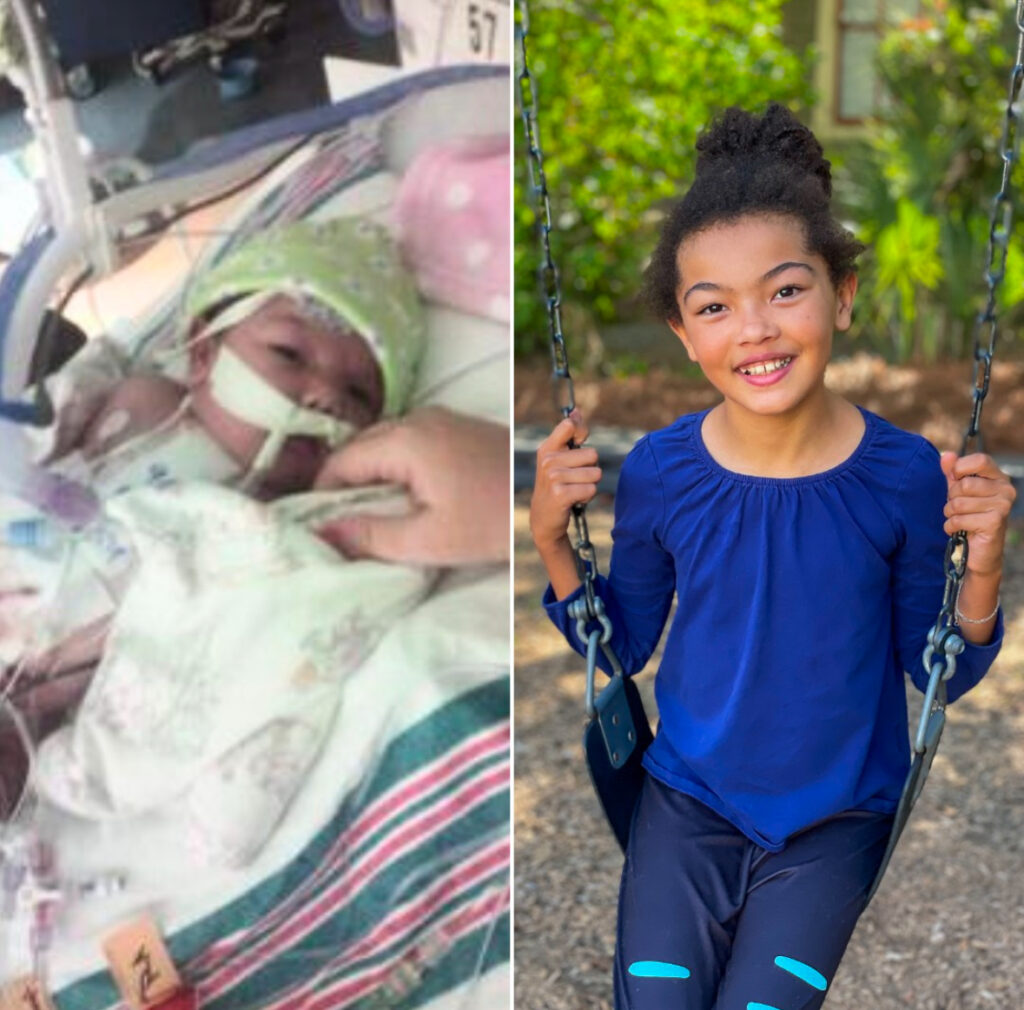
Paisley was born in 2014 with Hypoplastic Left Heart Syndrome (HLHS), meaning she only has half a heart and required three open heart surgeries. While being treated at MUSC Shawn Jenkins Children’s Hospital, her parents found a safe haven at RMHC Charleston for 58 nights.
“Knowing that while we’re not able to stay in our own home, we have a safe place where people know our names, love my baby, and make us feel warm and cared for is priceless.” – Kim, Paisley’s Mother
While Paisley still needs the occasional treatment, the Ronald McDonald House of Charleston has and will continue to be a “Home-away-from-home” for her and her family.
Click HERE to learn more about the Ronald McDonald House of Charleston.
Click HERE to read more about the amazing work of MUSC Kids.
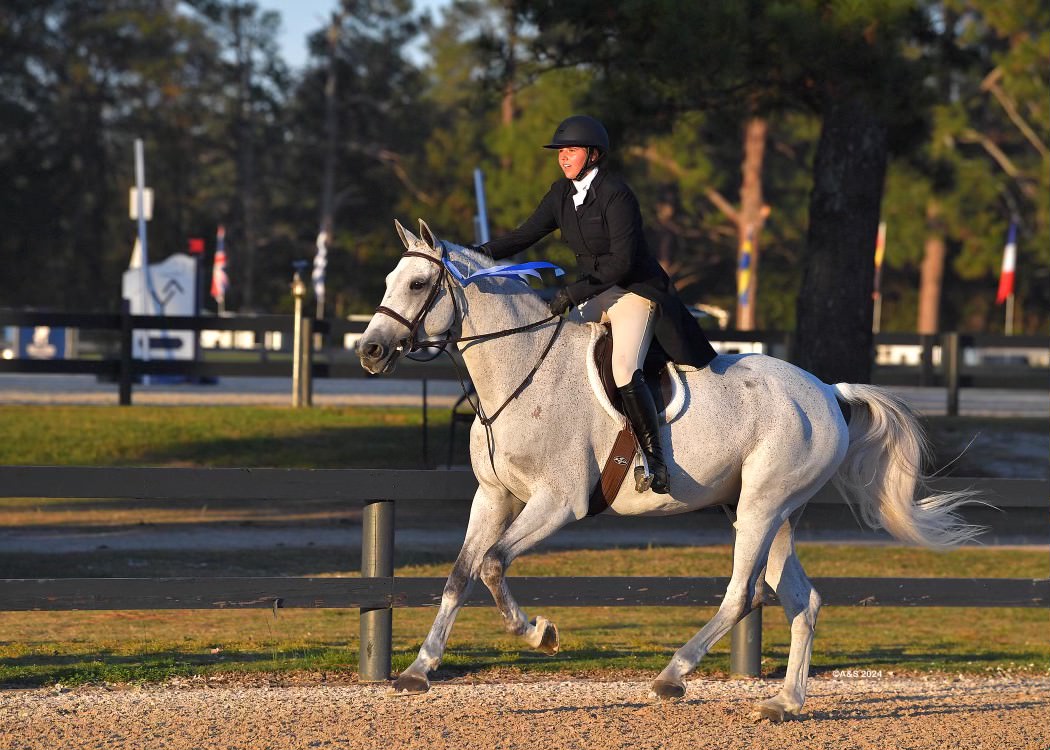
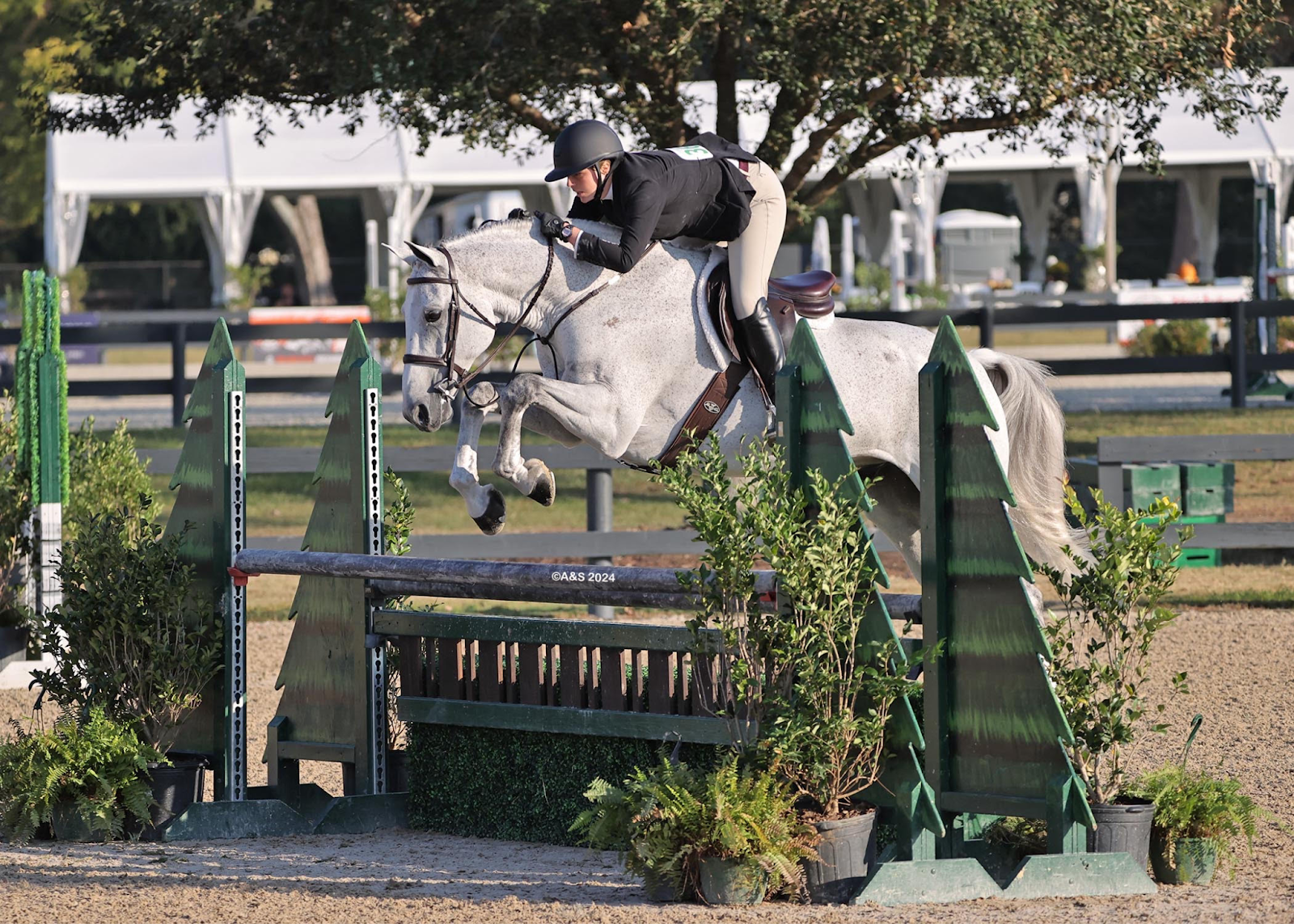
December 24, 2024 – JOHNS ISLAND, SC Charleston Collegiate School (CCS) is thrilled to announce that senior Brooke Farfone has officially signed with the University of South Carolina (USC) to join their prestigious equestrian program. This remarkable achievement highlights Brooke’s dedication, talent, and commitment to excellence both on campus and on horseback.
Brooke, a standout equestrian athlete, has consistently demonstrated her passion and skill in competitive riding, earning numerous accolades throughout her career. Her hard work, perseverance, and sportsmanship have made her a role model for her peers at CCS and beyond. By joining USC’s equestrian team, Brooke will compete at the highest collegiate level, furthering her journey in the sport she loves.
“We are thrilled to have Brooke join the team next year,” said Coach Carol Gwin of the University of South Carolina Equestrian Team. “I always love to have South Carolina athletes and we are building something special here at South Carolina. Brooke fits quite well with the team culture, athletic ability, and excellence in the classroom that we are promoting within Gamecock Equestrian.”
“We are incredibly proud of Brooke and all that she has accomplished,” said Jim Duggan, Head of Athletics at Charleston Collegiate. “Her dedication to her sport and her academics is truly inspiring. We can’t wait to see her excel at USC.”
The University of South Carolina equestrian program is one of the top programs in the nation, competing in the Southeastern Conference (SEC) and boasting a tradition of success. Brooke’s signing marks an exciting milestone, as she joins a legacy of elite student-athletes who balance rigorous academics with competitive excellence.
Charleston Collegiate School congratulates Brooke Farfone on this incredible achievement and looks forward to cheering her on as she continues her equestrian journey at the University of South Carolina.
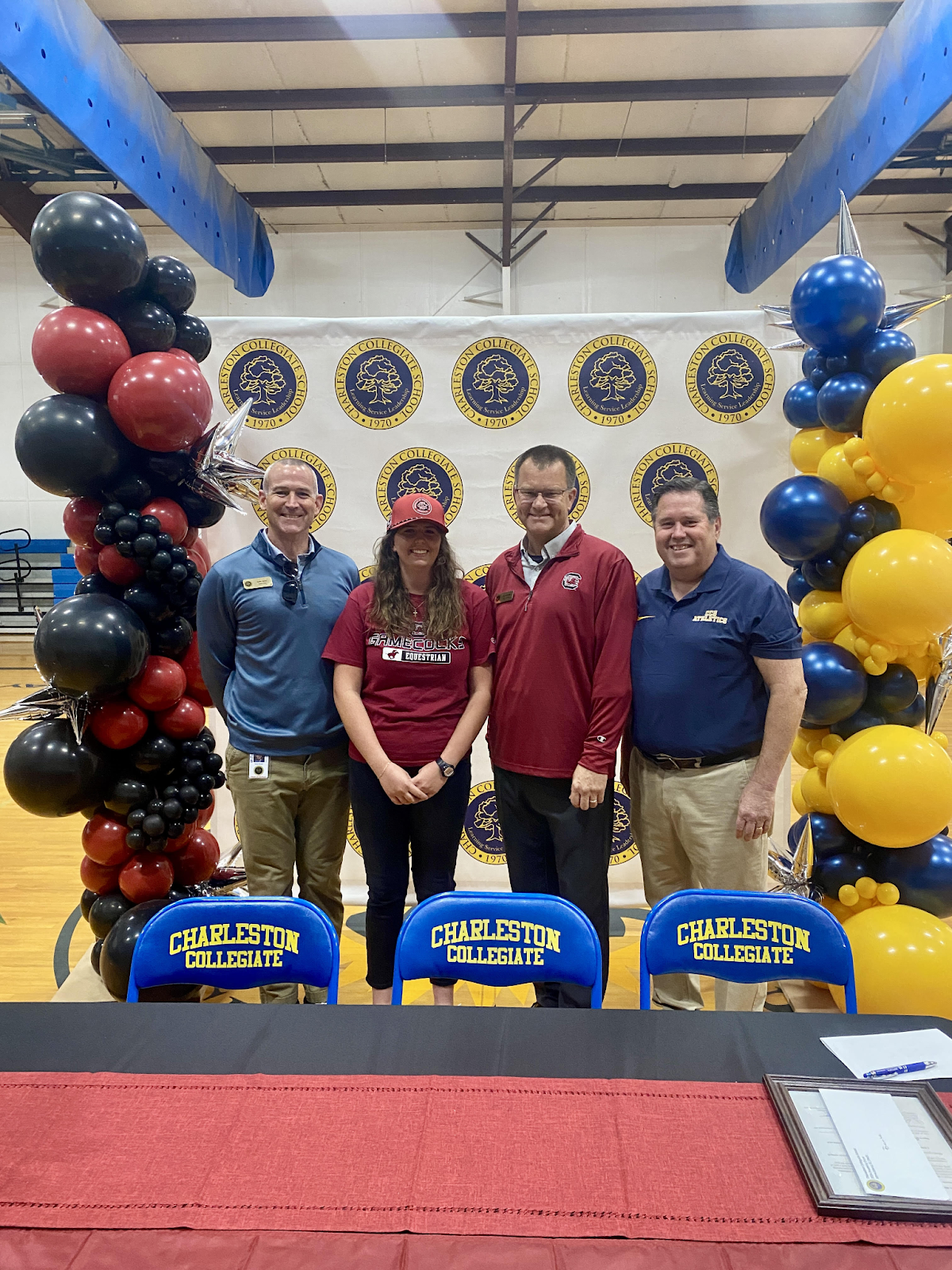
From left to right: Head of School Andy Gyves, CCS Senior Brooke Farfone, Head of Upper School Gareth Griffith, and Head of Athletics Jim Duggan.
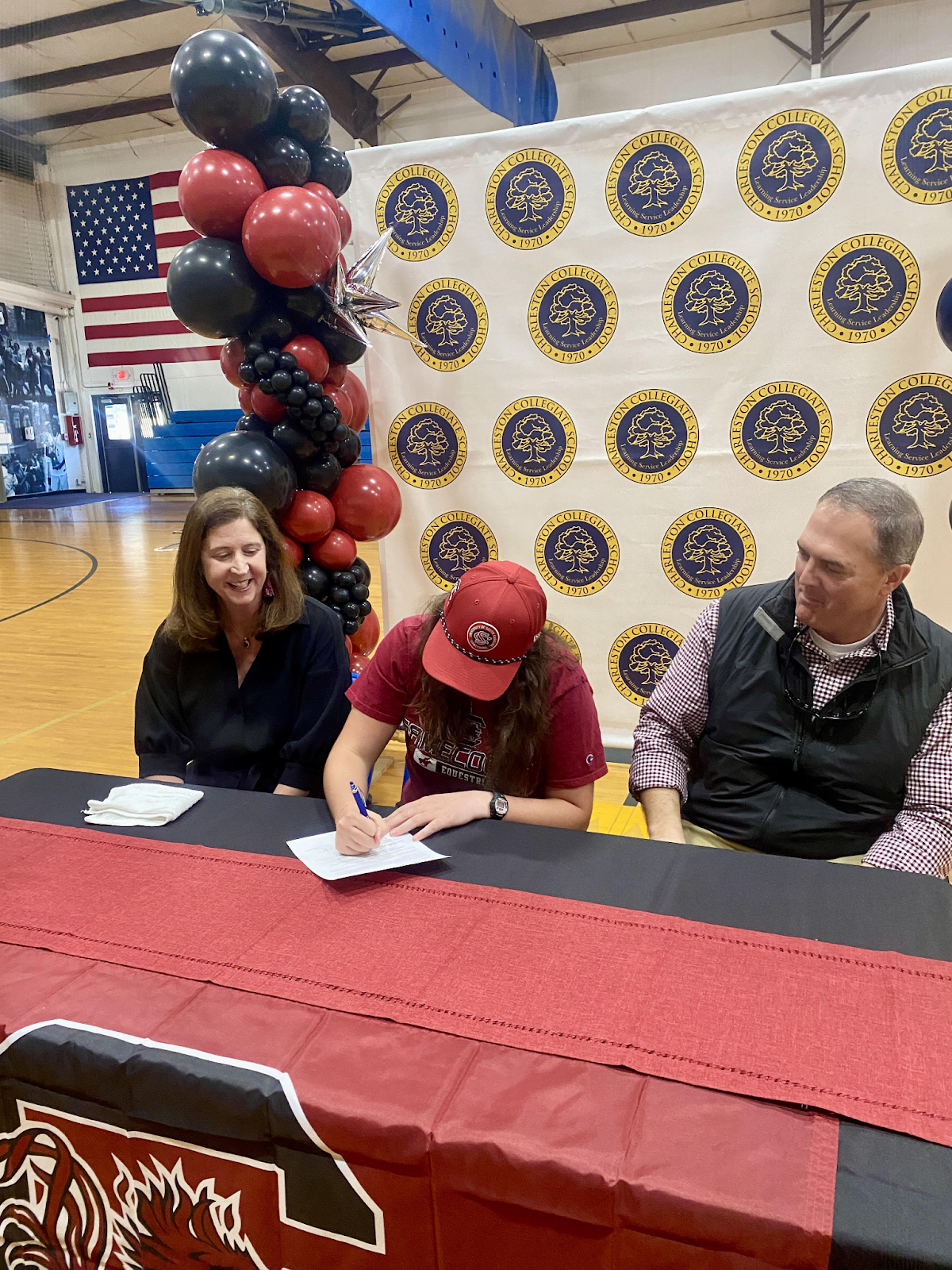
From left to right: Dottie Farfone (mother), Brooke Farfone, and Scott Farfone (father).
Brooke in action, showcasing her skill and dedication during a recent equestrian competition in Aiken, SC.
Brooke jumping with her horse, Zac aka Testify, in Aiken, SC.
Charleston Collegiate School: 2024 Academy Rd, Johns Island, SC 29455
Charleston Collegiate School is a PS3-12 co-educational, nonsectarian, independent school in the Charleston area and is a member of the Southern Association of Independent Schools and the Southern Association of Colleges and Schools. Nestled under grand, moss-laden live oaks, Charleston Collegiate School offers a 55+ acre campus of vast playing fields and wooded trails. This unique environment allows students to embrace nature while growing into conscious leaders that are challenged by rigorous project-based learning. Charleston Collegiate School’s mission is to empower students in a student-centered approach that values collaboration, innovation, and individuality to become resilient leaders for 21st century careers.
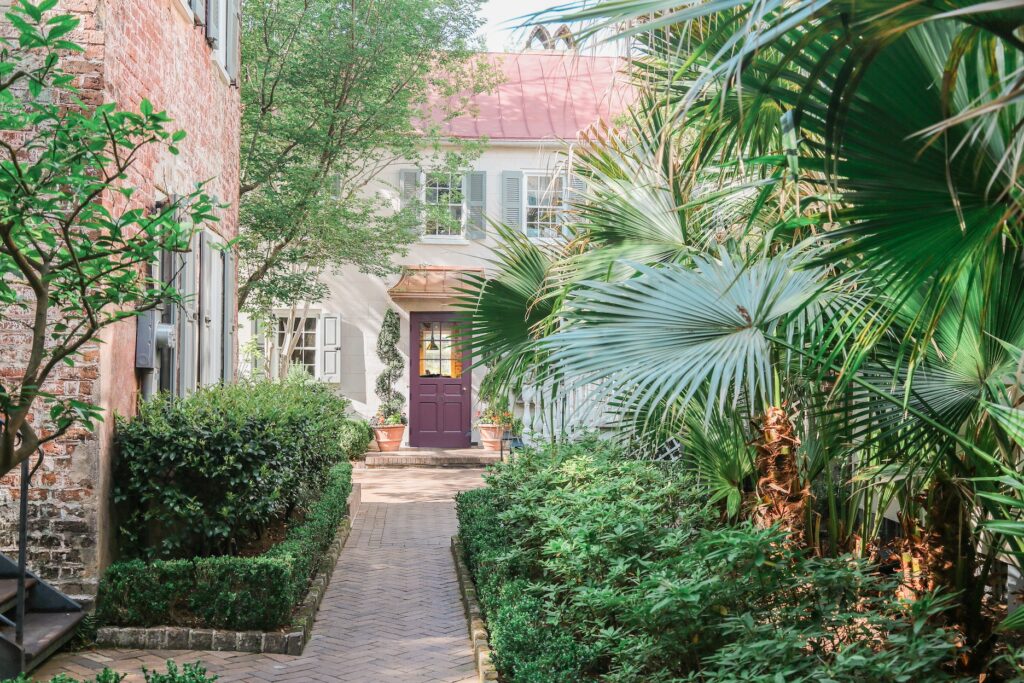
When you think of hospitality, elegance, luxury and comfort, Zero George often comes up immediately in your mind. Their world-class food, accommodations, classes, local partnerships and exceptional customer service are a defining example of Charleston’s culture. We are so pleased to announce that Zero George has received the honor of being named on the esteemed 2025 Gold List.
Click HERE for the complete list of the Best Hotels and Resorts in the World: The Gold List 2025
ABOUT ZERO GEORGE STREET:
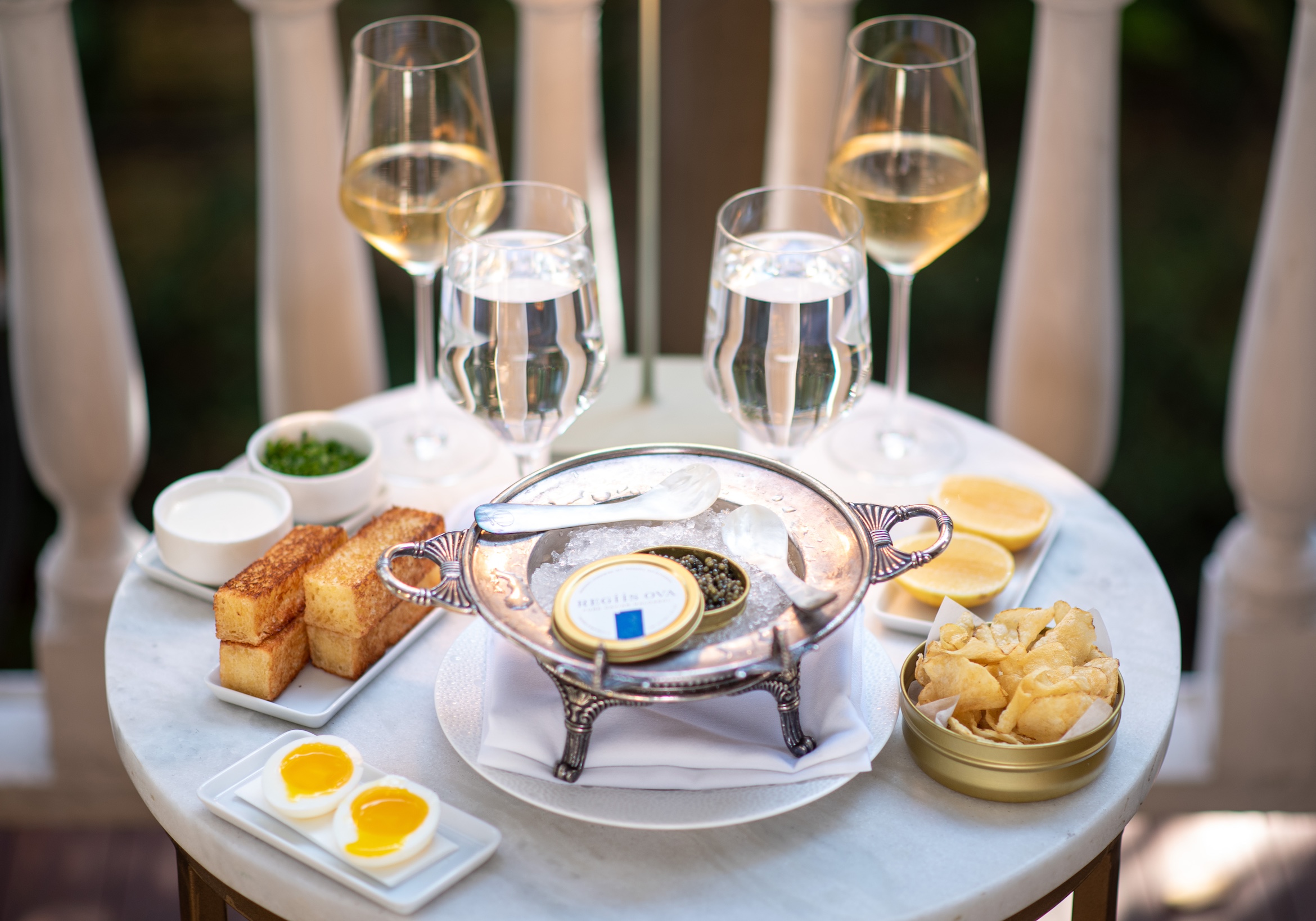
Located in the heart of Charleston’s historic Ansonborough neighborhood, Zero George is an award-winning boutique hotel made up of five restored 1800s era buildings that house 16 guest suites and the heralded cuisine of The Restaurant at Zero George + Caviar Bar. Combining old-world European influenced with understated contemporary elegance, Zero George offers authentic hospitality experiences that extend and enrich guests’ journeys such as the Culinary School, Caviar Bar, one-of-a-kind pickleball outing, etc.
We would like to spotlight a very special group of people in the Lowcountry that make every ocean excursion an adventure to remember: All In One Charters.
Come Navigate and Fish Charleston’s Beautiful Coastal Waters With Our Fun Experienced Fishing Guides, Specializing in Inshore and Offshore Fishing Charters
All In One Charters is your one stop shop for what’s sure to be an exciting saltwater adventure! Known as Charleston’s top inshore fishing charter, plus one of the best nearshore and deep sea fishing tours in the Charleston area, our team at All In One Charters will bring you to where the fish are and ensure you have fun while we do it.
All In One Charters is locally owned and operated and consistently one of the top rated inshore, nearshore and deep sea fishing charter companies in the Lowcountry.
 by
by