by
by 
Highly Anticipated Return Brings New Spring Dates and Star-Studded Lineup; Sign Up Now for Exclusive Presale Access
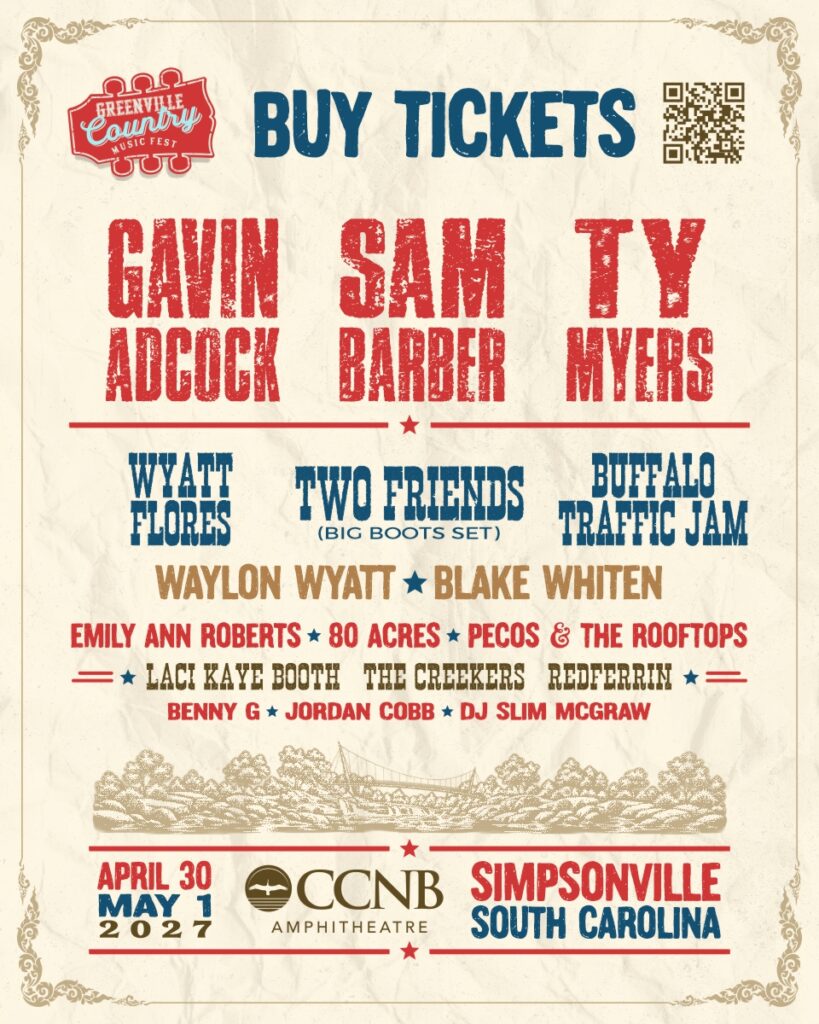
| SIMPSONVILLE, S.C. (OCTOBER 27, 2026) — Greenville Country Music Fest (GCMF) is officially making its highly anticipated comeback in 2027, bringing some of country music’s hottest names back to the Upstate with new spring dates and an exciting lineup. After taking a year off in 2026, the festival returns April 30-May 1, 2027, to CCNB Amphitheatre at Heritage Park in Simpsonville, South Carolina, with Gavin Adcock, Sam Barber and Ty Myers leading the charge.The announcement marks an exciting new chapter for the festival, which has grown from a single-day event into a multiday country music destination drawing thousands of fans to the Upstate. Traditionally held in the fall, GCMF is trading autumn nights for springtime, giving country music fans a new way to kick off festival season. Joining Adcock, Barber and Myers are Wyatt Flores, Two Friends performing their Big Boots Set, Buffalo Traffic Jam, Waylon Wyatt, Blake Whiten, Emily Ann Roberts, 80 Acres, Pecos & The Rooftops, Laci Kaye Booth, The Creekers, Redferrin, Benny G, Jordan Cobb and DJ Slim McGraw.From Adcock’s high-energy performances and unapologetic country sound to Barber’s emotionally charged songwriting and Myers’ soulful vocals, the 2027 lineup brings together some of the genre’s most talked-about emerging artists. With a mix of country, Americana, red dirt and genre-blending performances, the festival promises something for country music fans of all kinds.“Greenville Country Music Fest has built something special in the Upstate, and we’re excited to be part of its next chapter,” said Shawn Krauel, vice president of festivals for Opry Entertainment Group. “With new spring dates, an incredible lineup and the excitement surrounding its return, we see a tremendous opportunity to build on the festival’s success. Our focus is on creating an experience that brings fans, artists and the community together while continuing to grow what makes this event so special. ”Since its debut in 2019 at Fluor Field, Greenville Country Music Fest has grown into a multiday celebration of country music, welcoming thousands of fans and an impressive roster of established stars and rising talent. Over the years, the festival has hosted some of the genre’s biggest names, including Zach Bryan, Brooks & Dunn, Cody Johnson, Jon Pardi, Whiskey Myers, Megan Moroney, Zach Top, Koe Wetzel, Turnpike Troubadours and Travis Tritt. “Greenville Country Music Fest has come a long way since we started in 2019, and seeing what it’s grown into means a lot to us, especially being a hometown festival for me,”said Braxton Wilson, owner of Palmetto Entertainment. “We’ve built something here that goes beyond the music. It’s about the fans, the community and the memories made year after year. After deciding to move it from the Fall to the Spring, we wanted to come back strong, and with this lineup and our new dates, I think we’re doing just that. We’re ready to bring the party back to Greenville. ”The festival’s return also comes during an exciting period for its longtime home, CCNB Amphitheatre at Heritage Park. Opry Entertainment Group, the Nashville-based company behind iconic country music destinations including the Grand Ole Opry and Ryman Auditorium, recently announced a new management agreement for the venue, along with plans to invest $6 million in improvements over five years. The investment includes enhancements to guest amenities, infrastructure, parking, food and beverage offerings, and backstage facilities.Co-produced by Opry Entertainment Group and Palmetto Entertainment, the 2027 event will continue its tradition of bringing major country music talent, professional bull riding and an authentic festival experience to the heart of the Upstate. Tickets and Presale Information Fans can get a head start on securing their spot at Greenville Country Music Fest 2027! Exclusive ticket presales begin Wednesday, Oct. 28, with public ticket sales opening Friday, Oct. 30, at 10 a.m. Fans must register at gvlfest.com by Tuesday, Oct. 27, at 11:59 p.m.to receive their presale access code. Previous festival attendees will automatically receive a code.Two-day General Admission tickets start at $135, with upgraded Main Stage VIP packages starting at $253.62 and Super VIP experiences starting at $428.90. Limited on-site RV and camper camping is also available.Payment plans start as low as $30 down, making it easier to lock in a weekend of country music. Payment plans are subject to applicable fees and terms.For more information and to register for presale access, visit gvlfest.com. About Greenville Country Music Fest: Since its debut in 2019, Greenville Country Music Fest has grown into one of the Upstate’s premier live music events, bringing together thousands of fans and some of country music’s biggest names. Held at CCNB Amphitheatre at Heritage Park in Simpsonville, South Carolina, the festival has welcomed renowned artists including Zach Bryan, Brooks & Dunn, Cody Johnson, Jon Pardi, Whiskey Myers and Megan Moroney, among others. More than just a music festival, Greenville Country Music Fest brings together the excitement of live country music and professional bull riding, celebrating the spirit of country music and the community that surrounds it through unforgettable performances, thrilling rodeo action, local vendors and authentic Southern experiences. For more information, visit gvlfest.com. About Opry Entertainment: Rooted in the unparalleled country music legacy of the Grand Ole Opry, Opry Entertainment Group produces multi-platform entertainment across a growing portfolio of iconic venues and brands. Its properties include the world‑famous Grand Ole Opry, the historic Ryman Auditorium, WSM Radio, ACL Live, Blake Shelton’s Ole Red, Luke Combs’ Category 10, Ascend Federal Credit Union Amphitheater, and CCNB Amphitheatre. Through live concerts, tours, artist‑driven bars, retail, publishing, digital content, and more, Opry Entertainment Group connects millions of music fans to the artists they love through experiences they’ll never forget. Opry Entertainment Group is a subsidiary of Ryman Hospitality Properties, Inc. (NYSE: RHP).About Palmetto Entertainment: Palmetto Entertainment is a premier independent concert and festival promotion, production and venue management company dedicated to creating exceptional live entertainment experiences. With more than a decade of industry experience and over 500 concerts and events produced, the company has worked with some of music’s biggest names, including Chris Stapleton, Post Malone, Luke Combs and Cody Johnson. Its extensive portfolio includes Greenville Country Music Fest, St. Pete Country Fest, Marcus King Family Reunion, Voyage Music Fest, and events at CCNB Amphitheatre at Heritage Park and The Foundry, among many others & while adding to the portfolio annually. Specializing in talent buying, event management, marketing and full-scale production, Palmetto Entertainment combines industry expertise, trusted partnerships and a hands-on approach to deliver seamless, high-quality events. Rooted in the Southeast with a reach extending nationwide, the company is committed to bringing people together through memorable live experiences. |
Stay connected and subscribe to Charleston Daily.