by
by 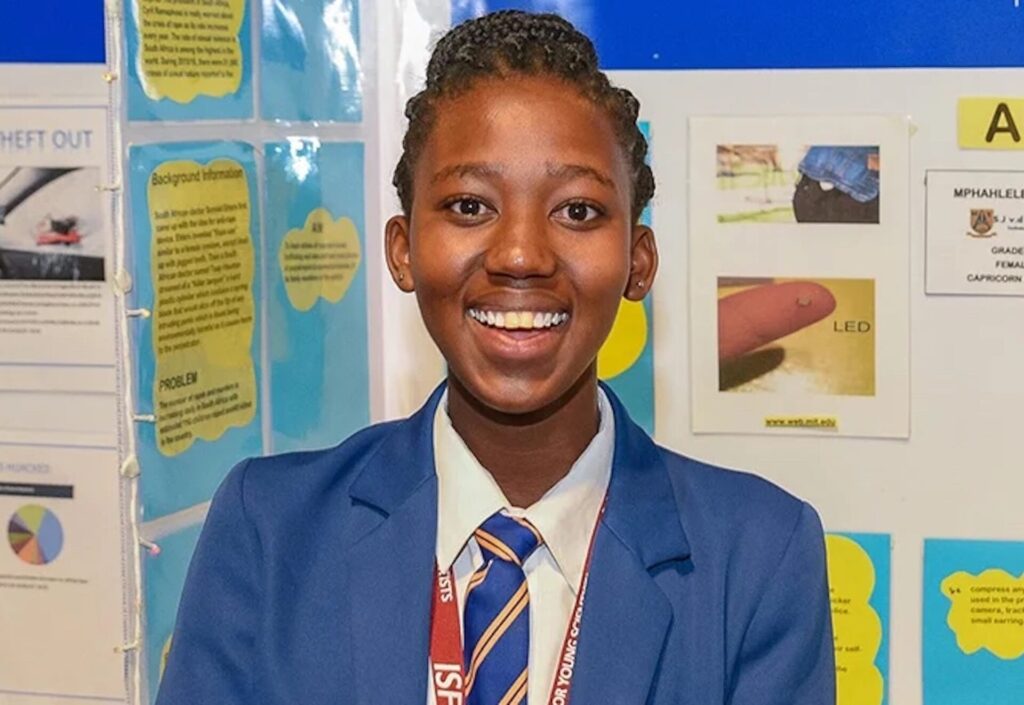
By Mark A Leon
At an age when many teenagers are focused on school, friendships and discovering what the future might hold, Bohlale Mphahlele was thinking about something far more urgent: How can technology help protect women and girls?
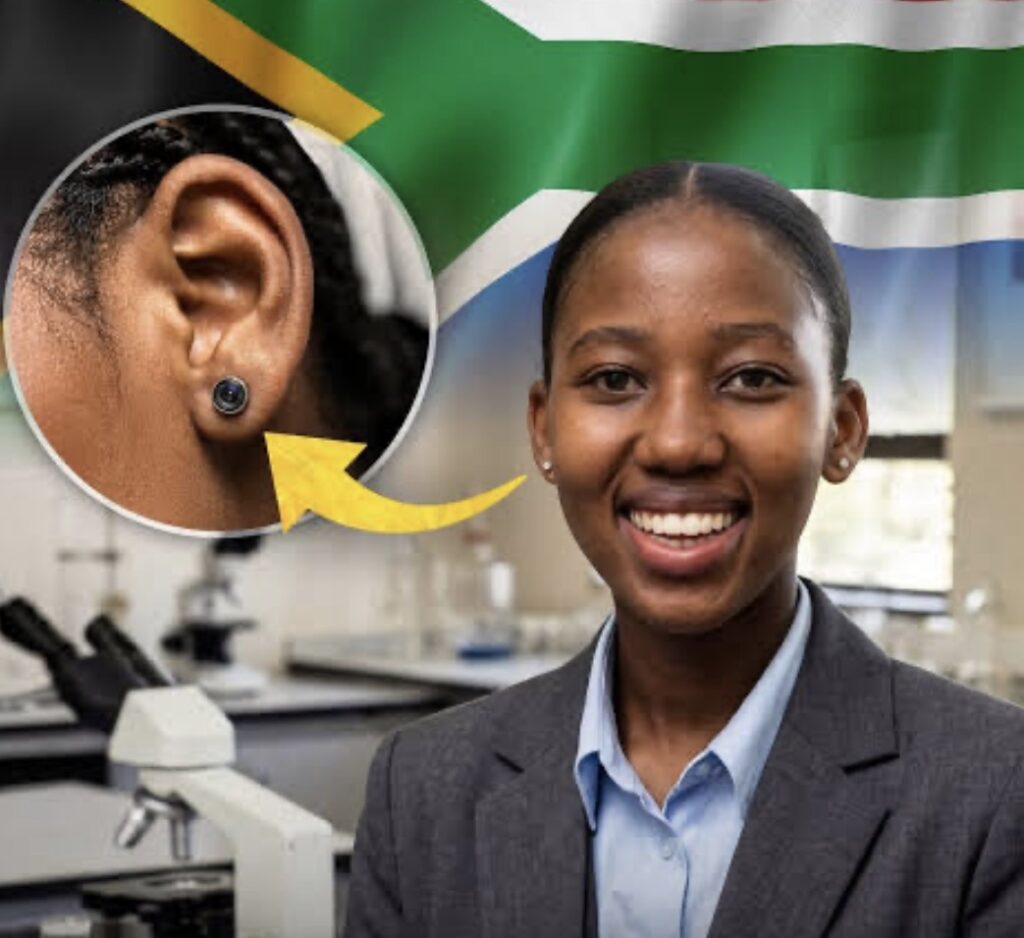
In 2020, while a Grade 11 student at S.J. van der Merwe Technical High School in Limpopo, South Africa, Mphahlele developed a prototype she called the “Alerting Earpiece,” a discreet safety device designed to resemble an ordinary piece of jewelry. Her idea was born amid widespread concerns over gender-based violence and human trafficking in South Africa.
The concept was remarkably simple—and potentially powerful.
The earpiece was designed with a concealed activation button. In a dangerous situation, the wearer could discreetly trigger the device without having to reach for a phone, shout for help or make an obvious movement that might alert an attacker.
Once activated, the prototype was designed to capture an image of the suspected perpetrator and transmit the wearer’s location through GPS, while sending an emergency alert to designated contacts. The goal was to provide help quickly while potentially preserving valuable evidence for authorities. The United Nations has highlighted the invention as a youth-led response to gender-based violence and trafficking.
For Mphahlele, the project was about much more than winning a science competition. It represented an attempt to use technology to address a problem that affects real people and families.
Her invention earned recognition at the Eskom Expo for Young Scientists, where she received a bronze medal in the engineering-electronics category. Her work also attracted attention from South African government officials and was later acknowledged in the country’s National Assembly.
The story did not end with the competition.
Years after the original prototype was created, Mphahlele has continued working toward developing the concept into a practical product. Recent reports say she founded Mphahlele Alerts (Pty) Ltd, while also pursuing studies in Information Technology. She has additionally become involved in mentoring young girls interested in technology and innovation.
In 2026, her story has received renewed international attention, including coverage by France 24, which reported on Mphahlele’s continuing efforts to advance her work and advocate for women’s safety.
There is an important distinction between the prototype and a commercially available safety product. The earpiece has been described as technology being refined for real-world use; it should not be presented as a widely deployed device already capable of guaranteeing police intervention or preventing an attack.
Still, the significance of Mphahlele’s story goes far beyond the technology itself.
She saw a frightening problem and chose to ask a different question—not Why can’t someone fix this? but What can I do?
At just 16, she demonstrated that innovation doesn’t always begin in a corporate laboratory or university research center. Sometimes it begins with a young person looking at the world around her, recognizing something that needs to change and having the courage to imagine a solution.
Bohlale Mphahlele’s story is ultimately a story about young people, technology and purpose—and a powerful reminder that you don’t have to wait until adulthood to begin making a difference.
Stay connected and subscribe to Charleston Daily