by

Charleston Metro Chamber forecast projects 3% employment growth, continued tourism demand and increased airport activity, while housing affordability and economic uncertainty remain concerns.
Mark A Leon | Charleston Daily
The Charleston region’s economy is expected to maintain its growth trajectory through 2027, with employment, tourism, transportation and consumer activity contributing to a positive regional outlook. However, rising living costs, housing affordability and uncertainty in global trade continue to present challenges for businesses and residents across the Lowcountry.
Those are among the key findings of the Charleston Metro Chamber of Commerce’s 2026–2027 Regional Economic Forecast, released following the Chamber’s 34th annual Economic Outlook Conference on November 10.
Developed in partnership with the College of Charleston, the annual forecast examines the economic forces shaping the Charleston metropolitan area and provides businesses, community leaders and policymakers with projections to guide planning and investment decisions.
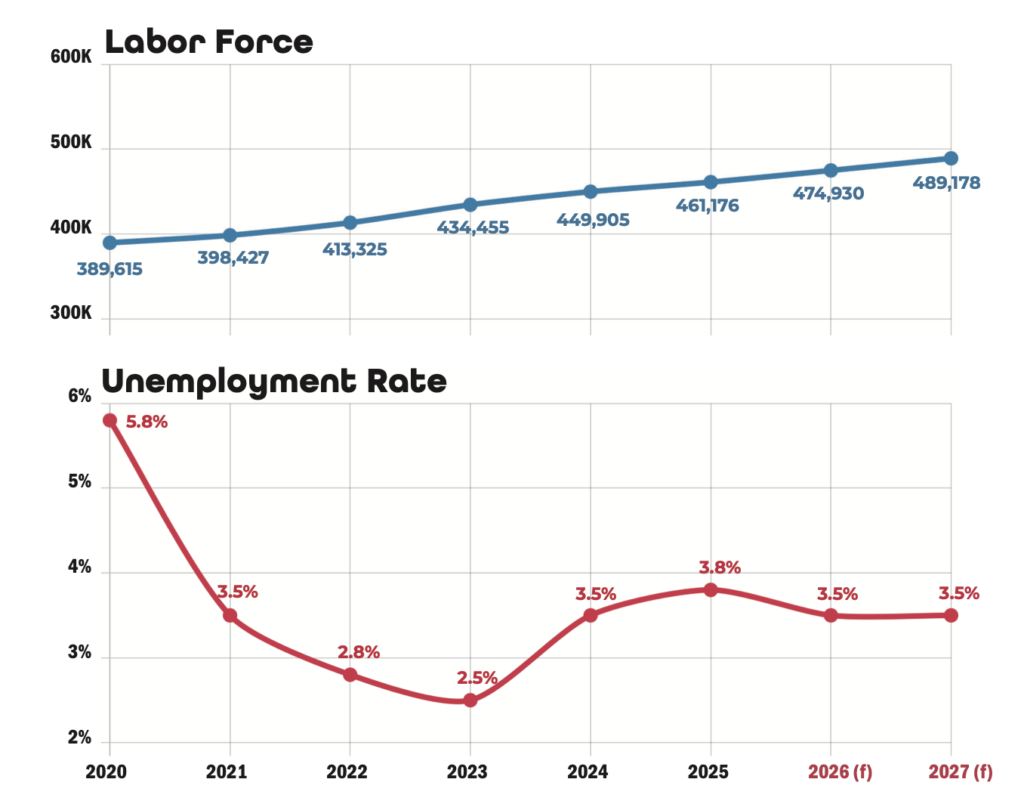
One of the most encouraging indicators is employment growth. The Charleston metro area added more than 9,500 jobs in 2025, and employment and labor force growth are both projected to reach 3% in 2027.
The continued expansion reflects the region’s ability to attract new residents, businesses and investment, reinforcing Charleston’s position as one of the Southeast’s growing economic markets.
Housing Market Faces Affordability Challenges
Despite the positive economic outlook, housing remains one of the region’s most significant challenges.
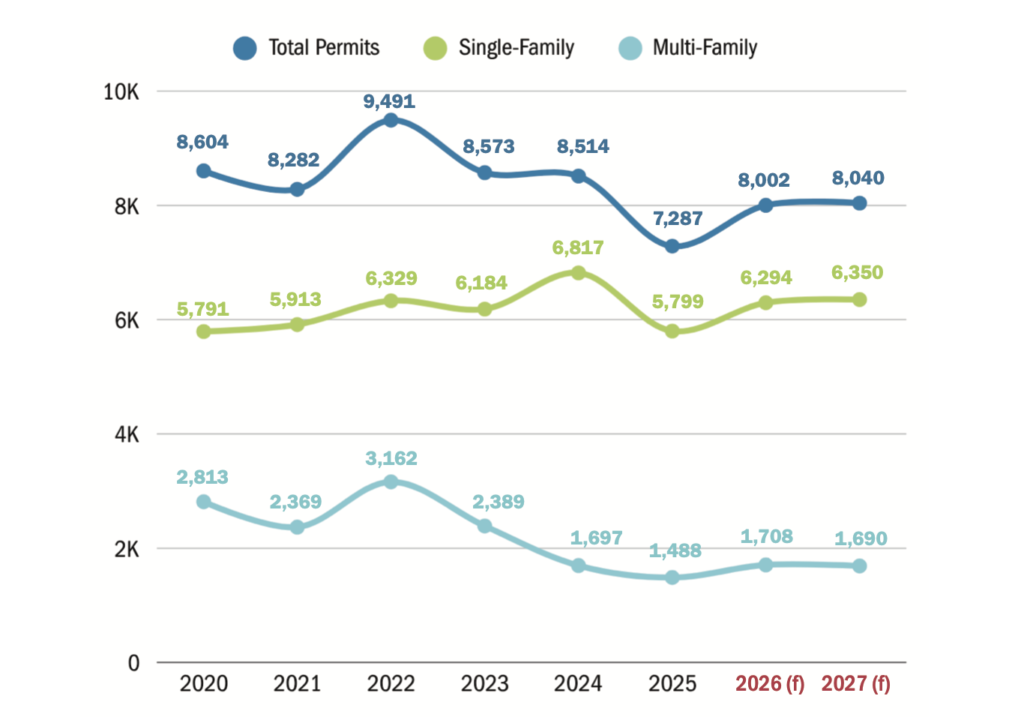
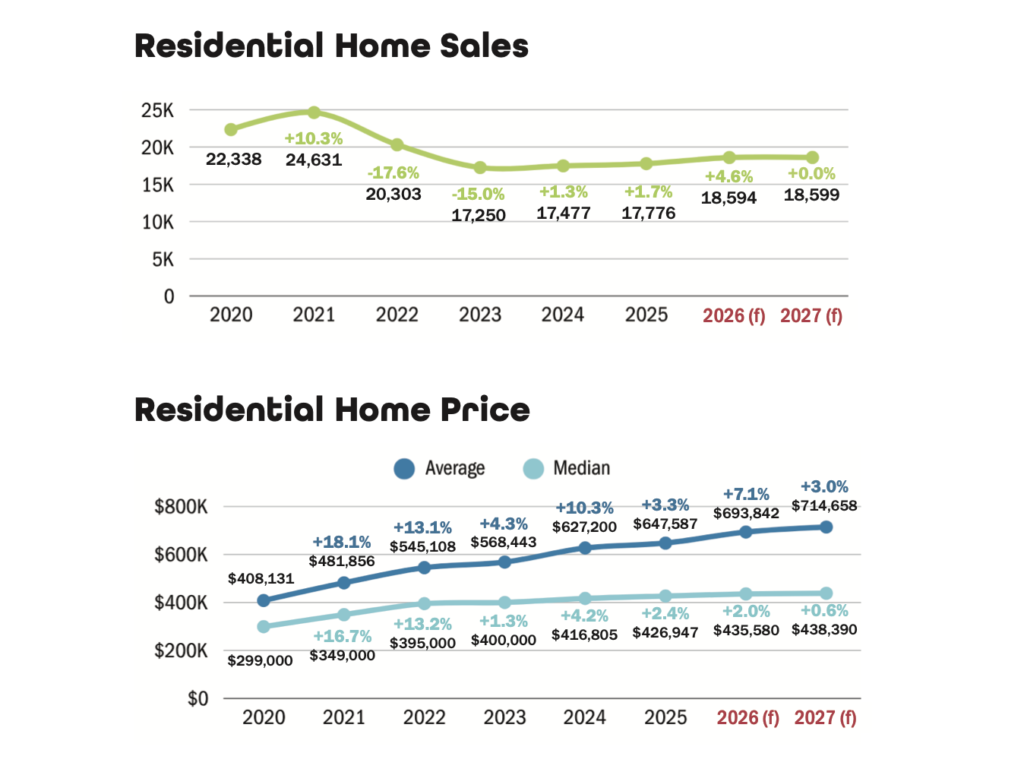
Residential building permits declined 14.4% in 2025. The forecast anticipates a 9.8% rebound in 2026 before construction activity levels off in 2027.
Home prices are expected to continue climbing, with the median home sales price projected to reach $438,390 in 2027. The number of homes sold, however, is expected to remain relatively flat.
The combination of elevated housing costs and limited affordability has implications beyond the real estate market. Employers increasingly face challenges attracting and retaining workers who want to live in the communities where they work.
As population and employment continue to expand, the availability of attainable housing will remain an important factor in sustaining the region’s economic momentum.
Retail and Hospitality Continue to Benefit From Regional Growth
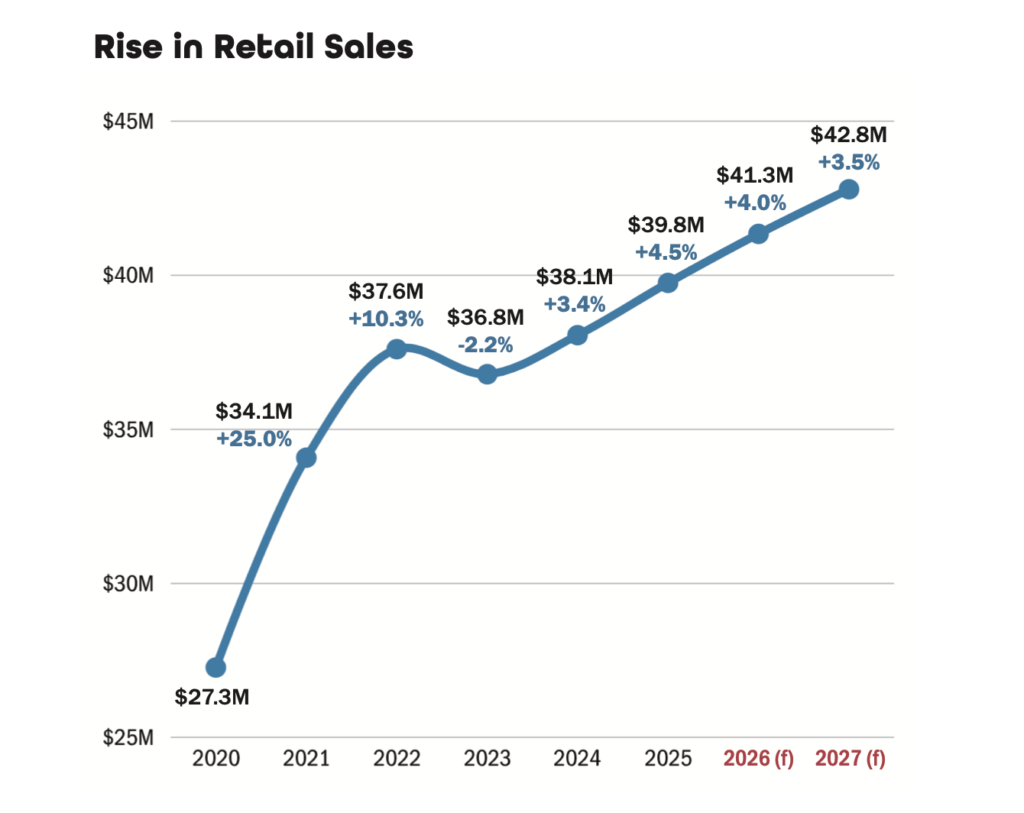
Retail sales across the Charleston region are projected to increase 3.5% in 2027. Population growth and continued visitor activity are expected to support local businesses, shopping districts and commercial development.
However, inflation and rising household expenses continue to put pressure on consumer spending, creating a more complicated environment for retailers.
Tourism and hospitality are also expected to remain important economic drivers.
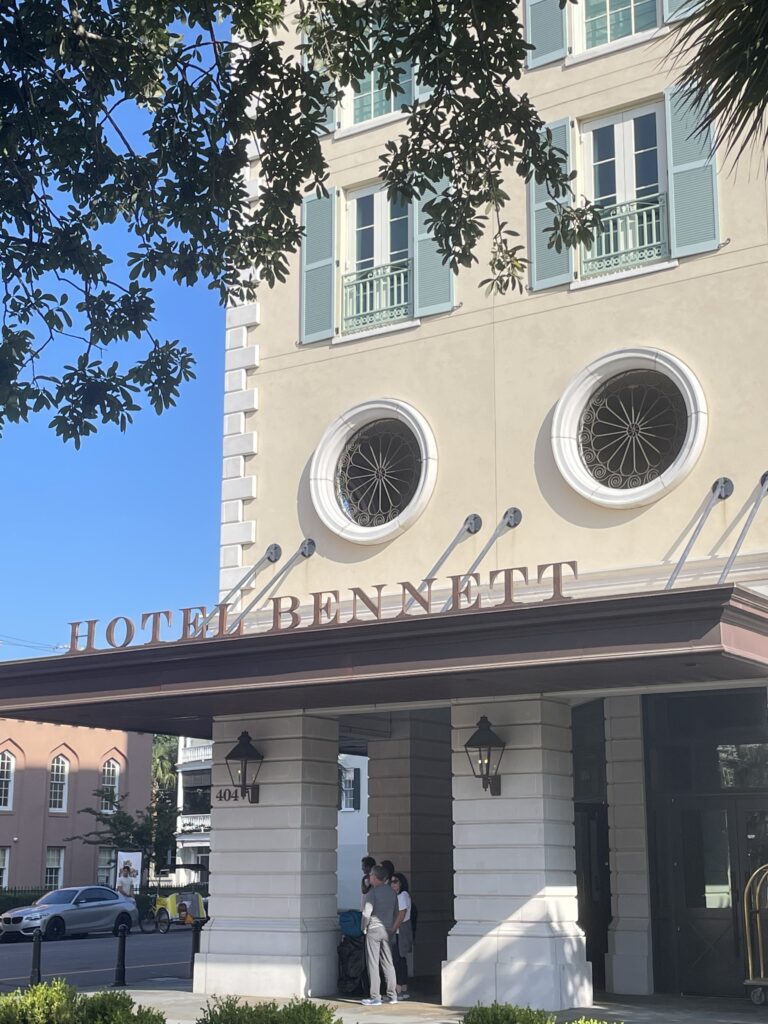
Hotel occupancy is projected to reach 71.2% in 2027, with higher room rates and an increasing number of visitors traveling to Charleston outside the traditional peak tourism season.
The trend toward more year-round visitation could provide opportunities for restaurants, retailers, attractions and hospitality businesses to generate revenue beyond the busiest spring and summer months.
For Charleston’s downtown business community, continued tourism demand is particularly important as businesses balance visitor spending with the needs of the local customer base.
Airport and Port Activity Shape Regional Outlook
Transportation infrastructure remains another significant component of the region’s economic outlook.
Charleston International Airport is projected to serve more than 6.7 million passengers in 2027, reflecting continued demand for air travel and expanded air service.
Increasing passenger activity supports tourism, business travel and the region’s ability to attract companies and workers from outside the market.
The Port of Charleston, meanwhile, faces a more uncertain near-term outlook.
Trade policy uncertainty is expected to contribute to a 4.5% decline in container volume in 2026. However, the forecast anticipates a 4.5% rebound in 2027.
The projected recovery highlights the importance of international trade, manufacturing, logistics and distribution to the broader regional economy.
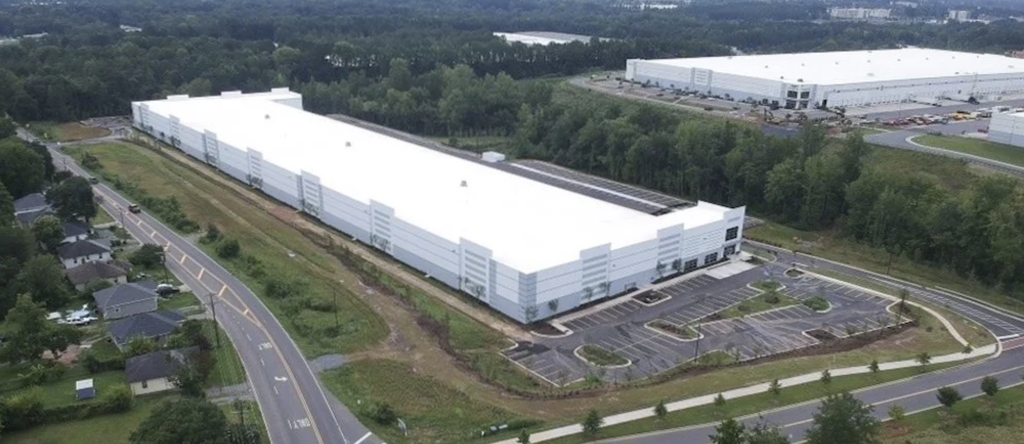
Changes in global trade conditions can have ripple effects throughout the Lowcountry, influencing port operations, transportation companies, manufacturers, warehouses and other businesses connected to international commerce.
Growth Brings Opportunity and Responsibility
Charleston Metro Chamber President and CEO Kevin T. Sheilley said the region’s economic growth creates opportunities for businesses and residents, while acknowledging that housing affordability and the rising cost of living affect the region’s quality of life and employers’ ability to attract and retain employees.
Dr. Mark Witte, professor of economics at the College of Charleston, presented the forecast and emphasized the value of combining economic modeling with the firsthand perspectives of local business leaders.
The forecast incorporates historical data, economic projections and insight from the Chamber’s Economic Outlook Board, which represents major industries throughout the region.
The overall picture is one of continued economic expansion, supported by job creation, population growth, tourism and infrastructure investment. Yet the numbers also underscore the importance of addressing housing affordability, workforce availability and the cost pressures facing households and businesses.
For Charleston, Berkeley and Dorchester counties, the next two years will be about more than sustaining growth. The challenge will be ensuring that the region’s economic success translates into opportunities, affordability and a strong quality of life for the people who live and work here.
Full Report: Click HERE
Stay connected and subscribe to Charleston Daily.