Production Overtakes Information Technology as Charleston Region’s Fastest-Growing Occupation Category

Charleston, SC – Production has overtaken Information Technology as the fastest-growing occupation category in the Charleston metro region, according to the Charleston Metro Region Talent Demand Study 2026, produced by the Charleston Metro Chamber of Commerce and Charleston Regional Development Alliance.

Production jobs are projected to grow 16.7% between 2025 and 2030, adding approximately 3,945 net new jobs. Architecture and engineering follows with projected growth of 14.3%, while information technology is expected to grow 12.6%. The shift reflects continued investment in advanced manufacturing as automation and AI-enabled processes become more integrated into how work is done across the region.

Overall, the Charleston metro is projected to add approximately 33,200 net new jobs by 2030. The study looks beyond the total number of jobs being created to examine where demand is growing, how occupations are changing and whether the region’s workforce pipeline is producing people with the skills, certifications and degrees employers will need.

“The Charleston region is positioned for continued job growth and that growth will not look the same across every occupation. Understanding where demand is accelerating and where potential workforce gaps exist gives us an opportunity to respond earlier and more strategically,” said Celeste Granger, Senior Vice President of Workforce and Leadership at the Charleston Metro Chamber of Commerce. 

“Charleston’s workforce needs are changing alongside its economy. The rise of production, continued demand for engineering and technology talent, and growing importance of both technical and soft skills demonstrate that preparing for future growth requires looking ahead, not simply responding to today’s needs,” said Jacki Renegar, Senior Director of Research and Business Intelligence at the Charleston Regional Development Alliance. “This data helps our region make more informed decisions about where to focus talent development efforts and investment.” 

The findings also point to potential gaps between employer demand and the region’s education and training pipeline. Degree-dependent fields projected to face some of the largest shortfalls include education instruction and library, architecture and engineering and management. Potential gaps also appear in occupations requiring specialized certifications, including certified nursing assistants, licensed practical nurses and workers requiring transportation worker identification credentials.

“Employers and educators across our region have made important progress in aligning curriculum, training and career-connected learning with changing workforce needs,” Granger said. “Continuing that collaboration will be essential to preparing students and workers for the opportunities ahead and helping businesses access the talent they need to grow.”

The Talent Demand Study examines projected job opportunities and potential gaps in skills, certifications and degrees across Berkeley, Charleston and Dorchester counties. The findings are intended to help business, education and workforce leaders better understand where talent supply aligns with employer demand and where additional attention may be needed to support career pathways, training and future investment.

The full Charleston Metro Region Talent Demand Study 2026 is available for download at charlestonchamber.org/talent-demand-study.

Stay connected and subscribe to Charleston Daily.

Emanuel Nine Memorial to Open to the Public in Charleston This November

By Mark A Leon

A new permanent place of remembrance and reflection is set to open in Charleston this fall.

The Emanuel Nine Memorial will officially open to the public on November 14, 2026, honoring the nine parishioners who were killed at Mother Emanuel AME Church on June 17, 2015, as well as the five survivors and all those whose lives were forever changed by the tragedy.

Designed by architect Michael Arad, who also designed the National September 11 Memorial in New York City, the memorial is envisioned as a space for remembrance, learning and reflection.

The memorial seeks not only to preserve the stories of those lost, but also to encourage visitors to consider how understanding, compassion and love can shape the future.

“This Memorial gives people a place to remember them, learn their stories and reflect on how each of us can help build a future rooted in understanding, compassion and love,” said Executive Director Deona Smith.

The Emanuel Nine Memorial will be a permanent part of Charleston’s landscape and a place where residents and visitors can pause, remember and reflect on one of the most consequential moments in the city’s modern history.

Admission will be free.

The public opening on November 14 offers Charleston and visitors from around the world an opportunity to honor the Emanuel Nine and carry their stories forward.

Stay connected and subscribe to Charleston Daily.

At Just 16, Bohlale Mphahlele Turned a Safety Crisis Into an Invention

By Mark A Leon

At an age when many teenagers are focused on school, friendships and discovering what the future might hold, Bohlale Mphahlele was thinking about something far more urgent: How can technology help protect women and girls?

In 2020, while a Grade 11 student at S.J. van der Merwe Technical High School in Limpopo, South Africa, Mphahlele developed a prototype she called the “Alerting Earpiece,” a discreet safety device designed to resemble an ordinary piece of jewelry. Her idea was born amid widespread concerns over gender-based violence and human trafficking in South Africa. 

The concept was remarkably simple—and potentially powerful.

The earpiece was designed with a concealed activation button. In a dangerous situation, the wearer could discreetly trigger the device without having to reach for a phone, shout for help or make an obvious movement that might alert an attacker.

Once activated, the prototype was designed to capture an image of the suspected perpetrator and transmit the wearer’s location through GPS, while sending an emergency alert to designated contacts. The goal was to provide help quickly while potentially preserving valuable evidence for authorities. The United Nations has highlighted the invention as a youth-led response to gender-based violence and trafficking. 

For Mphahlele, the project was about much more than winning a science competition. It represented an attempt to use technology to address a problem that affects real people and families.

Her invention earned recognition at the Eskom Expo for Young Scientists, where she received a bronze medal in the engineering-electronics category. Her work also attracted attention from South African government officials and was later acknowledged in the country’s National Assembly. 

The story did not end with the competition.

Years after the original prototype was created, Mphahlele has continued working toward developing the concept into a practical product. Recent reports say she founded Mphahlele Alerts (Pty) Ltd, while also pursuing studies in Information Technology. She has additionally become involved in mentoring young girls interested in technology and innovation. 

In 2026, her story has received renewed international attention, including coverage by France 24, which reported on Mphahlele’s continuing efforts to advance her work and advocate for women’s safety. 

There is an important distinction between the prototype and a commercially available safety product. The earpiece has been described as technology being refined for real-world use; it should not be presented as a widely deployed device already capable of guaranteeing police intervention or preventing an attack. 

Still, the significance of Mphahlele’s story goes far beyond the technology itself.

She saw a frightening problem and chose to ask a different question—not Why can’t someone fix this? but What can I do?

At just 16, she demonstrated that innovation doesn’t always begin in a corporate laboratory or university research center. Sometimes it begins with a young person looking at the world around her, recognizing something that needs to change and having the courage to imagine a solution.

Bohlale Mphahlele’s story is ultimately a story about young people, technology and purpose—and a powerful reminder that you don’t have to wait until adulthood to begin making a difference.

Stay connected and subscribe to Charleston Daily

Jubilee Development Moves Forward on Johns Island With Hotel, Cottages, Dining and Retail

By Mark A Leon

JOHNS ISLAND, S.C. — A major mixed-use development along Maybank Highway is continuing to move forward, bringing a new hospitality and commercial destination to one of the fastest-growing areas of Johns Island.

Known as Jubilee, the project encompasses approximately 13.3 acres near 2925–2935 Maybank Highway, close to Wildts Battery Boulevard. The approved Planned Unit Development calls for a combination of hospitality, accommodations, restaurants, retail and community-oriented open space. 

The centerpiece is planned to be a 75-room boutique hotel, accompanied by 65 cottage accommodations, creating approximately 140 lodging units across the development. City planning records describe the cottages as individual accommodations that could be rented as whole units, while the hotel would provide the traditional boutique-hotel component. 

A project that has already cleared a major planning hurdle

Jubilee is more than a preliminary concept. On July 17, 2024, the City of Charleston Planning Commission unanimously approved the request to rezone the approximately 13.3-acre property to the PUD–Jubilee zoning designation and approved the associated concept plan, with the vote recorded as 7–0

The property had previously been zoned Commercial Transitional and Residential Office within the Johns Island Maybank Corridor Overlay District. 

Since that approval, the project has continued through the City’s technical review process.

City records show an active preliminary plat, road construction and site-plan review for the Jubilee property at 2935 Maybank Highway. A March 2026 Technical Review Committee record identifies the site as 13.38 acres, with eight lots and 65 units, and describes the site plan as a proposed mixed-use development containing commercial and residential components. 

What is planned?

The current vision for Jubilee includes:

  • 75-room boutique hotel
  • 65 cottage accommodations
  • Restaurants and dining
  • Retail space
  • Green space
  • Community gathering areas
  • Internal roads and connections intended to integrate with the surrounding transportation network

The project is being positioned as a destination rather than simply another residential development, with hospitality, shopping, dining and public-oriented spaces incorporated into the overall plan.

The project’s own website describes Jubilee as a master-planned project coming to Maybank Highway on Johns Island, with a coastal-inspired hospitality concept. 

The hotel design is still moving through review

There is an important distinction between the approved PUD/concept plan and the project’s individual building designs.

In June 2026, the Jubilee hotel appeared before the City’s Design Review Board as a proposed four-story hotel. That particular application, DRB2026-000346, was withdrawn by the applicant before the June 1 meeting. 

That does not mean the larger Jubilee development was rejected. The PUD and concept plan had already received Planning Commission approval, while subsequent site, road and building components continue through their respective review processes.

Recent reporting indicates the hotel proposal is being revised and continues to move toward development. 

Growth—and the questions that come with it

Jubilee arrives at a particularly consequential moment for Johns Island. The area around Maybank Highway has experienced substantial residential and commercial growth, while transportation capacity, flooding and infrastructure remain major concerns for residents.

Those issues were prominent during the 2024 public review of Jubilee. City records document 31 public comments submitted ahead of the Planning Commission meeting, with traffic, flooding and the pace of development among the concerns raised by residents. 

The developer also addressed transportation concerns during the Planning Commission process, pointing to traffic modeling and proposed connections to the surrounding network. 

For Johns Island, the significance of Jubilee may ultimately extend beyond the number of hotel rooms or cottages. If built substantially as envisioned, it would introduce a sizable new hospitality, dining and retail destination along a corridor already undergoing dramatic change.

For now, Jubilee is an approved development concept that remains in the design and technical-review stages—not a completed project and not simply an early idea.

Official project & approval documents

City of Charleston Planning Commission — July 17, 2024 approval:
Official Planning Commission meeting report — Jubilee PUD approval⁠

City of Charleston Planning Commission agenda/application:
Official Jubilee PUD application — 2925 Maybank Highway⁠

City of Charleston Planning Commission minutes:
Official Planning Commission minutes and Jubilee discussion⁠

City of Charleston Technical Review Committee — March 2026:
Official Jubilee preliminary plat, road and site-plan review documents⁠

City of Charleston Design Review Board — June 2026:
Official DRB record for the proposed Jubilee hotel⁠

Jubilee official project website:
Jubilee official website⁠

Stay connected and subscribe to Charleston Daily.
These Are the Best Cities to Live in South Carolina in 2026

By Mark A. Leon

South Carolina continues to attract new residents with its combination of job opportunities, quality of life, relatively affordable housing in many markets and strong sense of community. A new 2026-2027 ranking highlights five South Carolina cities that are standing out among the state’s most desirable places to live.

According to the latest U.S. News & World Report rankings, Mount Pleasant, Greenville, Florence, Charleston and Sumter rank as the top five places to live in South Carolina. The rankings consider factors including value, desirability, job market strength and quality of life. 

For people considering a move to the Palmetto State, the list also illustrates how different South Carolina communities can appeal to different types of residents.

Mount Pleasant takes the top spot

Mount Pleasant ranks No. 1 in the state, making it one of South Carolina’s most sought-after communities for 2026-2027.

The Charleston-area town scored particularly well for job opportunities, community and overall desirability. Its location near Charleston, beaches, restaurants and outdoor recreation continues to make it attractive to families, professionals and retirees.

That popularity, however, comes at a price. U.S. News lists the median home value in Mount Pleasant at about $675,537, considerably higher than several other cities on the list. 

For residents who can afford the housing market, the combination of employment opportunities and Lowcountry quality of life remains a major draw.

Greenville offers a balance of growth and affordability

Greenville comes in at No. 2 and continues to be one of South Carolina’s most closely watched growth markets.

The Upstate city has developed a reputation for combining economic growth with a relatively manageable cost of living. Its downtown, employment opportunities and access to outdoor recreation have helped make Greenville increasingly attractive to people relocating from other parts of the country.

U.S. News reports a median home value of approximately $461,274, with a median monthly rent of $1,234. 

For buyers and investors looking for a balance between growth and affordability, Greenville may be one of the strongest options on the list.

Florence stands out for affordability

At No. 3 is Florence, which offers perhaps the clearest value proposition among the top five.

The Pee Dee city has significantly lower housing costs than Mount Pleasant or Charleston. U.S. News reports a median home value of about $192,970 and median monthly rent of $828. 

While its job market does not rank as strongly as some of the state’s larger economic centers, Florence’s affordability and quality of life make it an appealing alternative for residents who want to keep housing costs lower.

Charleston remains a destination

Charleston ranks No. 4, reinforcing the city’s status as one of the most desirable destinations in the Southeast.

Historic neighborhoods, restaurants, beaches, tourism, culture and a growing economy continue to draw residents and businesses to the Charleston region.

But Charleston also illustrates the tradeoff between desirability and affordability. U.S. News lists the city’s median home value at approximately $488,936

Sumter rounds out the top five

At No. 5, Sumter offers another example of the value available outside South Carolina’s largest and most expensive markets.

The city benefits from relatively affordable housing, a strong sense of community and a lower cost of living. Its median home value is listed at approximately $207,753

What the rankings say about South Carolina

The five cities illustrate that there is no single formula for finding the right place to live.

Mount Pleasant offers strong employment opportunities and Lowcountry amenities. Greenville provides growth and value. Florence and Sumter offer affordability, while Charleston delivers a combination of culture, history, employment and coastal living that continues to attract people from across the country.

The rankings also underscore a broader trend: South Carolina’s appeal is increasingly diverse. From the coast to the Upstate and the Pee Dee, residents have more choices depending on whether their priorities are jobs, affordability, lifestyle or long-term investment.

For anyone considering a move in 2026 or 2027, these five communities provide a useful starting point—but the best place to live ultimately depends on what matters most to each individual or family.

Stay connected and subscribe to Charleston Daily.

Glencore’s Charleston-Area Aluminum Investment and Interest in Venezuelan Resources Signals Bigger U.S. Ambitions

By Mark A. Leon | Charleston Daily

Glencore’s interest in aluminum is hardly new.

The global commodities company has maintained relationships with Venezuela’s aluminum sector dating back decades and has previously provided financing directly to producers there. But while attention is now turning to Glencore’s renewed interest in Venezuelan aluminum, the company has been quietly expanding another part of its aluminum strategy much closer to Charleston.

In April, Glencore announced that it had acquired a 45% stake in an aluminum recycling and remelting operation near Charleston, South Carolina, giving the Switzerland-based commodities giant a direct ownership position in a growing U.S. recycling operation. Alumicore holds the remaining 55% and operates the facility.

The investment builds on a relationship Glencore established in Berkeley County several years ago.

In 2023, ZEB Metals announced plans to establish a new South Carolina operation near Highway 52 in Moncks Corner, creating 28 jobs as part of a joint venture with Glencore. The facility was designed to process aluminum dross and other secondary aluminum scrap that otherwise could have ended up in landfills. State officials described it as the first secondary aluminum remelt facility of its kind in the Southeast.

The project represented an early indication that Glencore saw more than traditional aluminum production in the Charleston region. It saw an opportunity in the growing market for recycled metal.

That strategy has now evolved.

According to Linklaters, which advised Glencore on the 2026 transaction, the deal included the acquisition of the business of ZEB Aluminum and the creation of an aluminum recycling joint venture with Alumicore. The joint venture owns and operates a recycling and remelting complex near Charleston.

For the Charleston region, the property represents another piece of the area’s expanding industrial and logistics economy.

Aluminum recycling is particularly important because recycled aluminum can re-enter the manufacturing supply chain without requiring the energy-intensive process used to produce primary aluminum from raw materials. The Berkeley County project was specifically designed to recover aluminum from scrap and dross, turning material that might otherwise be discarded into a usable industrial product.

Glencore’s move also comes at a time when the United States is looking for more secure domestic sources of aluminum.

The company already owns a 30% stake in U.S. aluminum producer Century Aluminum, and the South Carolina investment gives Glencore another position further down the supply chain — in recycling, remelting and the recovery of secondary aluminum.

The significance of the Charleston-area property, therefore, extends beyond the facility itself.

It places Glencore closer to U.S. scrap supplies, industrial customers and a domestic market increasingly focused on strengthening the aluminum supply chain. The company previously provided funding for the South Carolina facility in exchange for marketing rights. Its decision to take a 45% ownership stake represents a deeper commitment to the operation and to recycled aluminum in the United States.

For Berkeley County and the greater Charleston region, that could make the property an increasingly important part of the Lowcountry’s industrial landscape.

Glencore’s history with Venezuelan aluminum may stretch back decades, but its investment near Charleston shows where part of the company’s future aluminum strategy may be headed — toward recycling, domestic supply and a growing U.S. industrial footprint.

Stay connected and subscribe to Charleston Daily.

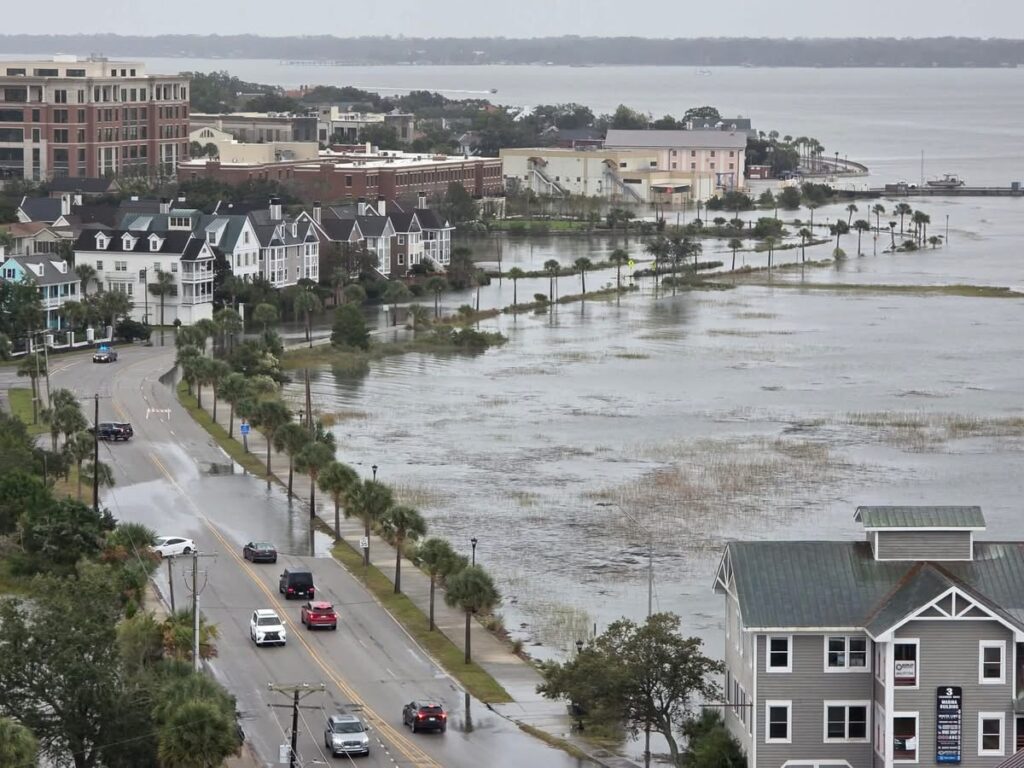
SC Ports, Norfolk Southern expand intermodal access from Charleston to Huntsville, AL

CHARLESTON, SC — Shippers will benefit from enhanced rail access between Charleston and inland markets with the addition of Norfolk Southern’s intermodal service between Charleston and Huntsville, Ala., effective immediately.

Daily direct rail service to Huntsville extends the Port of Charleston’s reach to the growing North Alabama and Middle Tennessee markets, and expands rail access for importers and exporters needing stronger connectivity to key Southeast markets.

“The intermodal service between Charleston and Huntsville is a meaningful addition for our customers, as we work with our partners at Norfolk Southern to give shippers greater flexibility and speed to market at the right cost,” SC Ports President and CEO Micah Mallace said. “Strong intermodal connectivity and reliable port service are key to delivering the efficiency and consistency our customers need, and this service between Charleston and North Alabama and Middle Tennessee markets delivers on all fronts.”

SC Ports moves 25% of its volume by rail and offers customers daily express intermodal service, and direct connectivity to Inland Ports Greer and Dillon. Customers benefit from fast connections to intermodal hubs in Memphis, Atlanta, Birmingham, Nashville, Charlotte, Louisville and beyond.

“The Port of Charleston is a critical gateway to one of the fastest-growing regions in the country, and Norfolk Southern is proud to strengthen our network in this important market,” Norfolk Southern VP of Intermodal Automotive Shawn Tureman said. “This service between Charleston and Huntsville gives shippers another reliable, cost-effective option for moving cargo throughout the Southeast. We will continue working alongside strong partners like SC Ports to expand our offerings.”

In 2025, SC Ports marked the completion of a $55 million expansion at Inland Port Greer, increasing cargo capacity by 50% and adding 9,000 feet of additional rail to quickly handle longer trains. Norfolk Southern provides daily and overnight rail service to the inland port, strategically located along the I-85 corridor between Atlanta and Charlotte.

Source: SC Ports

Stay connected and subscribe to Charleston Daily.
Related: SC Ports announces first step to deepen channel to North Charleston Terminal

Shawna Allen: Raising the Bar for Charleston’s Beverage Culture

By Mark A Leon

There are certain people who don’t simply enter an industry — they see possibilities within it.

For Shawna Allen, that possibility begins with something deceptively simple: a drink.

A glass of wine can start a conversation. A thoughtfully crafted cocktail can introduce someone to a new culture, place or story. A tasting can turn strangers into friends. And around a Charleston table, a shared beverage can become the beginning of a lasting connection.

It is this belief that drives Allen, founder of Charleston Beverage Collective, a visionary company bringing together beverage brands, hospitality professionals and consumers through education, experiences and relationship-building.

Allen’s journey through the beverage industry spans more than 25 years, giving her a rare perspective on the business. Her experience includes distribution, supplier representation, sales leadership and operations — allowing her to understand not only the products themselves, but also the people, businesses and relationships that ultimately bring those products to consumers.

Her approach, however, goes far beyond traditional sales and marketing.

Charleston Beverage Collective is built around the idea that beverage brands need more than shelf space. They need identity. They need a story. And they need meaningful connections with the people who discover, serve and enjoy them.

Allen specializes in helping wine and spirits brands develop their presence and positioning in the marketplace, working across both on-premise and off-premise channels. Her portfolio places an emphasis on brands with compelling stories and distinctive points of view, including locally crafted, Veteran-owned, Minority-owned and Female-led businesses.

That focus reflects something larger about Allen herself: an appreciation for entrepreneurship, individuality and the people behind the products.

Her expertise is backed by extensive professional education. Allen is a Certified Specialist of Spirits & Wine, Certified Sake Sommelier, Level 1 Sommelier and holds WSET Level III certification. But perhaps her greatest talent is taking that knowledge and making it accessible.

For Allen, education shouldn’t feel intimidating. It should feel like an invitation.

Her signature “liquid to lips” activations transform tastings and beverage education into experiences — interactive opportunities where guests can learn, taste, ask questions and, most importantly, have fun.

That philosophy has made Allen a natural fit for Charleston’s culinary community. She has participated in Charleston Wine + Food from 2021 through 2026, becoming part of a citywide conversation about food, beverage, hospitality and the people shaping Charleston’s evolving culinary identity.

And while the beverage industry can be highly competitive, Allen’s vision is remarkably collaborative.

The word “Collective” in Charleston Beverage Collective is more than a name. It captures the company’s philosophy that success happens through relationships — between brands and businesses, producers and consumers, bartenders and guests, and people simply enjoying an evening together.

In Charleston, where hospitality is deeply ingrained in the culture, that philosophy feels right at home.

Allen understands that people may remember the bottle they tasted, the cocktail they ordered or the wine they discovered. But what they truly remember is how the experience made them feel.

That is the space Charleston Beverage Collective occupies.

It is where expertise meets enthusiasm, where education meets entertainment and where a beverage becomes more than a product.

It becomes a story worth sharing.

For Shawna Allen, the future of Charleston’s beverage culture isn’t just about what is in the glass.

It’s about who is sitting around the table.

Meet Shawna

Industry veteran: More than 25 years of experience across beverage distribution, supplier representation, sales and operations.

Founder: Charleston Beverage Collective, focused on beverage brand development, positioning and market connections.

Certified: Certified Specialist of Spirits & Wine, Certified Sake Sommelier, Level 1 Sommelier and WSET Level III.

Charleston Wine + Food: Participant from 2021–2026..

Her philosophy: Make beverage education approachable, tastings memorable and connections meaningful.

The Charleston connection: Building bridges between innovative beverage brands, Charleston’s hospitality community and the people who love discovering something new.

Follow Shawna on Instagram

Stay connected and subscribe to Charleston Daily.
Photo credit: Shawna Allen

Two Bit Club Says Farewell to Charleston

By Mark A Leon

Charleston is saying goodbye to Two Bit Club, with the restaurant announcing that its final day of service will be Sunday, September 13.

Since opening, Two Bit Club has become part of Charleston’s dining community, creating memorable meals and experiences for locals and visitors alike. From its inviting atmosphere and beautiful design to dishes that clearly inspired some serious devotion, it found a place in the hearts—and appetites—of many Charleston diners.

The response to the closing announcement says it all. One longtime fan summed it up perfectly, saying they would “dream about the shrimp curry for the rest of my life.” ❤️‍🩹

The restaurant is also taking a moment to recognize the people who made Two Bit Club what it was—the team whose care, creativity and hospitality brought the restaurant to life every day.

While this chapter is coming to an end, the property isn’t going away. Following a transition to owner self-management, a new culinary concept is expected to be announced at a future date.

For now, Charleston has one final weekend to raise a glass, enjoy a last meal and say goodbye to Two Bit Club.

Final day: Sunday, September 13.

Thank you for the memories, Two Bit Club. Charleston will miss you. ❤️‍🩹🍽️

Stay connected and subscribe to Charleston Daily

Creative Current Charleston: Where Creativity Meets Community

By Mark A Leon

Charleston has never been short on creativity. From art and design to music, fashion, photography and entrepreneurship, the city has a way of attracting people who see the world a little differently.

But there is something especially powerful that happens when creative people come together—not simply to showcase what they make, but to share ideas, encourage one another and build genuine connections.

That spirit is at the heart of Creative Current Charleston.

Creative Current represents the idea that creativity doesn’t have to happen in isolation. A sketch can become a collaboration. A conversation can become a new project. A simple introduction can lead to a friendship, a partnership or the next great idea.

And that sense of community matters.

Charleston’s creative scene continues to evolve, with artists, designers, photographers, makers, entrepreneurs and other creative professionals finding new ways to connect and collaborate. Creative Current Charleston is part of that larger conversation—a reminder that creativity becomes even more powerful when it is shared.

What makes a creative community truly special is the willingness to make room for one another.

Charleston itself provides an endless source of inspiration. It can be found in the architecture along historic streets, the colors of the Lowcountry, the rhythm of the water, the people who call the city home and the generations of artists who have left their mark here.

But inspiration becomes something even more meaningful when people gather to share it.

Creative Current Charleston celebrates that idea by creating opportunities for people to step outside their usual circles, meet fellow creatives and discover new perspectives. Creativity isn’t limited to a particular medium, profession or background. A painter can inspire a photographer. A musician can spark an idea for a filmmaker. A designer can collaborate with a maker. A small-business owner can find encouragement from an artist just beginning their journey.

Those connections can become the foundation of a stronger creative ecosystem.

And perhaps that’s what Charleston needs most as its creative community continues to grow: spaces and people dedicated to connection rather than competition.

Creative Current Charleston is a reminder that there is room for more voices, more ideas and more imagination.

Because when creatives support creatives, everyone benefits. New ideas emerge. Collaborations happen. Friendships form. And the city itself becomes a little more vibrant.

Sometimes the most important thing a creative community can offer isn’t another business card, another follower or another sale.

It’s simply saying:

“I see what you’re creating. Keep going.”

Join the Current

If you’re an artist, maker, designer, photographer, musician, entrepreneur—or simply someone who believes in the power of creativity—connect with Creative Current Charleston. Follow along, introduce yourself, share what you’re creating and become part of the conversation.

Don’t create in isolation. Find your people. Share your ideas. Support another creative. And help keep Charleston’s creative current moving.

In the end, creativity isn’t just about what we make.

It’s about who we meet, what we share and what we inspire in one another along the way.

And in a city as creative, colorful and constantly evolving as Charleston, that current is always moving.

Stay connected and subscribe to Charleston Daily

Photo credit: Creative Current Charleston