Are you wondering how Charleston, South Carolina is doing in technology and innovation?
Check out the 2025 Scorecard developed by the Charleston Regional Development Alliance
Click HERE for report.
Stay connected and subscribe to Charleston Daily.
Are you wondering how Charleston, South Carolina is doing in technology and innovation?
Check out the 2025 Scorecard developed by the Charleston Regional Development Alliance
Click HERE for report.
Stay connected and subscribe to Charleston Daily.

Charleston County Parks have done a refresh of our website! The newly redesigned website is officially live at charlestoncountyparks.com – and it’s built to help members of our community explore, discover, and plan their next park adventure more easily than ever.
What’s new?
We hope the new site makes it easier for members of Charleston community to connect with the parks they know and discover new ones along the way.
Stay connected and subscribe to Charleston Daily.


What we wear carries an environmental cost long before clothing reaches a store shelf. From water-intensive dyeing to chemical processing and waste, the materials used in fashion have a major impact on natural resources. Researchers at Clemson University are working to change that by rethinking cotton from the ground up.
With an $11 million grant from the Bezos Earth Fund, Clemson scientists led by Christopher “Chris” Saski, systems geneticist and professor in the Department of Plant and Environmental Sciences, will advance research aimed at creating cotton that performs better, uses fewer resources and opens new possibilities for growers, manufacturers and consumers.
“Clemson University is proud to be a part of shaping the future of global agriculture and the fashion industry through bold innovation and advancing groundbreaking research,” said Clemson University Interim President Robert H. Jones. “Dr. Saski’s cutting-edge research in the fields of gene editing and synthetic biology has the potential to positively impact the lives of every person on our planet, which is a testament to the work we do every day at Clemson University and to fulfilling our unique land-grant mission of education, research and service.”
For South Carolina, where cotton remains an important part of the agricultural economy, the work could help strengthen a legacy crop while positioning the state at the forefront of sustainable textile innovation.
Reinventing cotton at the source
The project will combine gene editing, synthetic biology and advanced breeding to develop next-generation cotton with built-in color, improved performance and greater resilience. Instead of adding those traits later through resource-intensive manufacturing, researchers are designing them directly into the plant.
The approach could reduce water use, lower chemical inputs and create fibers better suited for modern manufacturing. It could also help growers by increasing the value and versatility of cotton in a rapidly changing global market.
Collaborators from the University of Georgia are also part of the team. The project builds on Clemson’s advances in cotton transformation and eco-friendly fiber coloring.
“This work focuses on growing fibers that are inherently better for the planet by moving color, performance and resilience into the biology of cotton itself,” Saski said. “This approach flips the traditional model that has been used for more than a century to build a future of sustainable fashion, and we’re excited to have support from the Bezos Earth Fund to help us move this research forward and further.”
A global challenge with local impact
The Bezos Earth Fund is investing in new approaches to the materials used in clothing, an industry with a significant environmental footprint, including greenhouse gas emissions, water use, pollution and waste. Clemson researchers say addressing those challenges starts with rethinking how fibers are grown and produced.
For the Clemson team, the grant represents an opportunity to turn scientific discovery into practical solutions with impact far beyond the lab. From South Carolina farms to global supply chains, the work could help shape a more sustainable future for one of the world’s most widely used natural fibers.
Source: Clemson University
Stay connected and subscribe to Charleston Daily.

By Mark A Leon
⸻
Once upon a time, just off the shores of Sullivan’s Island, there lived a friendly dolphin named Sammy.
Sammy loved the sparkling blue water, the soft sandy beaches, and the kind people who visited the island each day.
Sammy spent his days playing in the waves, leaping into the sunshine, and greeting everyone he met.
“Hello!” he would chirp, splashing happily.
To Sammy, the ocean wasn’t just home—it was family.
But one day, Sammy noticed something wasn’t right.
There was trash in the water.
The beaches didn’t sparkle like they used to.
And some of his ocean friends were in trouble.
A sea turtle struggled with plastic wrapped around its flipper.
His friends nodded. They believed in Sammy.
Sammy felt a heavy sadness in his heart.
Sammy swam to shore and gathered his friends—the seagulls, the pelicans, the sea turtles, and even the tiny crabs.

“We all share this beautiful island,” Sammy said gently.
“If we work together and show love for our home, we can help it heal.”
Soon, something wonderful happened.
The people of Sullivan’s Island began to notice.
They picked up litter.
They used reusable bags.
They protected the dunes and cared for the ocean.
They showed love—just like Sammy.
Little by little, the island began to shine again.
The water became clearer.
The beaches became cleaner.
Sammy’s friends were safe and free.
The sea turtle swam with a happy splash.
Sammy leaped high into the golden sunset, his heart full.
He knew something important:
Love can change the world.
Even small acts of kindness can make a big difference.
So remember, little friend:
Love your home.
Protect the ocean.
Take care of each other.
Together, we can keep Sullivan’s Island beautiful—today, tomorrow, and always. ❤️

Stay connected and subscribe to Charleston Daily.

$350 million investment will create 564 new jobs
COLUMBIA, S.C. — Suniva, Inc. (Suniva), a U.S.-owned and -operated solar cell manufacturer, today announced it selects Laurens County for its first South Carolina manufacturing facility. The company’s $350 million investment will create 564 new jobs.
Suniva is one of the largest and oldest merchant solar cell manufacturers in the country. Founded in 2007 out of U.S. Department of Energy-funded research at the University Center for Excellence in Photovoltaics at Georgia Tech, the company became well known for leading the push for solar cell manufacturing in the United States as a pillar of the nation’s energy independence and domestic energy security.
The company plans to lease a 620,000 square-foot building, located at 1200 Commerce Blvd. in Laurens, to produce advanced solar cells. The manufacturing facility, in conjunction with Suniva’s existing plant in Georgia, will support the company’s commitment to independent clean energy production. With the addition of the Laurens County facility, Suniva will produce over 5.5GW of solar cells annually, one of the largest such capacities in the United States.
Operations are expected to be online in 2027. Individuals interested in joining the Suniva team should visit the company’s careers page.
The Coordinating Council for Economic Development approved job development credits related to the project.

QUOTES
“Since its founding in 2007, Suniva has championed U.S. leadership in solar energy manufacturing. Solar is the fastest and most economical way to grow our nation’s energy supply — and at this critical juncture, access to energy will determine how America competes for generations to come. Our expansion in South Carolina means that renewable energy, made right here at home, will now do more than ever to secure that future.” -Suniva CEO Tony Etnyre
“With the addition of 564 jobs in advanced manufacturing and energy, Suniva’s decision to put down roots in the Palmetto State will create new opportunities for our workforce. This investment strengthens our commitment to innovative energy solutions, and we are proud to welcome Suniva to Laurens County.” -Gov. Henry McMaster
“Congratulations to Suniva on establishing its first South Carolina operation. The company’s $350 million investment in Laurens County is a significant win for rural economic development, and we look forward to supporting Suniva’s presence in our state.” -Secretary of Commerce Harry M. Lightsey III
“Laurens County is excited to welcome Suniva and their first South Carolina operation to our community. The investment commitment and job creation are a testament to our business-friendly environment. We look forward to a great partnership with Suniva for many years to come.” -Laurens County Council Chairman Jeff Carroll
“By selecting its location in Laurens County, Suniva joins a growing number of manufacturers in Upstate S.C. whose products help to power the world, deepening our expertise in advanced energy. We’re excited for the opportunities they will create in our region and look forward to watching them grow.” -Upstate SC Alliance President and CEO John Lummus
FIVE FAST FACTS
Stay connected and subscribe to Charleston Daily.
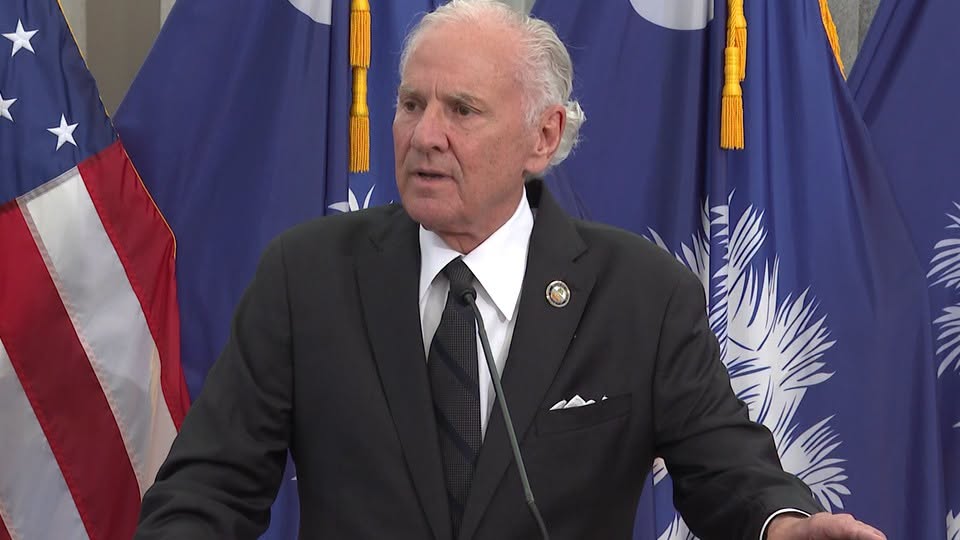
COLUMBIA, S.C. – Governor Henry McMaster was joined today by members of the South Carolina General Assembly and other state leaders for a ceremonial bill signing of H. 4216, the Income Tax bill. The new legislation simplifies South Carolina’s individual income tax structure and establishes a framework to continue reducing income taxes over time.
“Cutting the personal income tax in South Carolina has long been a top priority, and today we are continuing to deliver,” said Governor Henry McMaster. “This is another major step forward that builds on years of hard work and keeps more money in the pockets of hardworking South Carolinians. It puts us on a clear path to continue reducing and ultimately eliminating the personal income tax.”
Beginning in tax year 2026, H.4216 replaces South Carolina’s current three-bracket individual income tax system with a simplified two-rate structure. Under the new law, taxpayers will be subject to a 1.99% rate on taxable income up to $30,000 and a 5.21% rate on taxable income above $30,000, down from 6.0%. These changes will save South Carolina taxpayers an additional $325 million.
“For too long, South Carolina has had one of the highest income tax rates in the country. Today, that is no more,” said Speaker of the House Murrell Smith. “This reform makes us more competitive, more attractive to businesses, and better positioned for job creation across our state. I’m proud of the work we have done and excited about what this means for South Carolina’s future.”
The legislation also decouples South Carolina from certain federal deductions by starting with federal adjusted gross income (AGI) rather than federal taxable income. The bill removes the federal standard and itemized deductions from the state calculation, but it preserves existing South Carolina-specific deductions. To provide additional relief, the bill creates the South Carolina Income Adjusted Deduction (SCIAD). The SCIAD is designed to phase out as income increases, ensuring that the largest benefit is directed to lower-earning households.
“South Carolina is moving forward with a lower, fairer income tax rate that ensures our citizens pay no more than is absolutely necessary,” said Representative Bruce Bannister. “This historic income tax relief bill is the result of strong leadership and a commitment to the people of South Carolina.”
According to the Office of Revenue and Fiscal Affairs, approximately 42.8% of South Carolina taxpayers are projected to see a reduction in their tax liability under the new structure.
Additionally, H.4216 establishes a long-term framework for continued income tax reductions. Beginning in tax year 2027, if individual income tax revenues increase by at least 5% in the following fiscal year, tax rates will be automatically reduced. The law directs that reductions continue until the top rate reaches 1.99%, and then continues downward toward elimination of the income tax over time.
This legislation builds on a series of historic tax cuts signed into law by Governor McMaster, including the largest income tax cut in state history in 2022, which has allowed South Carolina taxpayers to keep an additional $1.275 billion of their hard-earned money.
Source: Office of the Governor of South Carolina
Stay connected and subscribe to Charleston Daily.
By Mark A. Leon
The Jonathan Green Maritime Cultural Center, located at 1211 Harrington Street, Beaufort, SC on the campus of the University of South Carolina – Beaufort, has officially opened its doors on the campus of University of South Carolina Beaufort, marking a transformative moment for the preservation and celebration of Lowcountry culture. Originally slated for a March 2026 debut, the opening now ushers in a new era of storytelling, scholarship, and artistic expression rooted in the traditions of the Gullah Geechee people.
Named for internationally acclaimed artist Jonathan Green, the center stands as both a cultural landmark and a living archive—dedicated to honoring the maritime history, artistic legacy, and enduring spirit of African and African American communities along the South Carolina coast and throughout the African Diaspora.

The Jonathan Green Maritime Cultural Center exists with a clear and powerful mission: to preserve, celebrate, and advance the understanding of Lowcountry and Gullah Geechee maritime heritage through immersive education, exhibitions, and community engagement.
As the first maritime-focused cultural institution of its kind, the center explores the deep and often underrepresented connections between African-descended communities and the Atlantic world. Through curated exhibitions, artist residencies, academic programming, and public events, it serves as a bridge between past and present—ensuring these stories are not only remembered but actively shared and evolved.
“This center is a living testament to the beauty, resilience, and global significance of Gullah Geechee culture—rooted in the Lowcountry, but connected to the entire African Diaspora,” said Jonathan Green of the vision behind the institution.
Prior to its physical opening, the center cultivated a vibrant digital presence, offering a virtual gateway into its mission. Now, with its permanent home established, it expands that vision into a tangible, experiential space where visitors can engage directly with the art, artifacts, and narratives that define the region.

Born on August 9, 1955, in Gardens Corner, South Carolina, Jonathan Green is one of the most important visual storytellers of the African Diaspora. His work is deeply rooted in his upbringing within a Gullah community, where traditions, language, and customs shaped his artistic voice.
After serving in the U.S. Air Force, Green pursued formal training at the School of the Art Institute of Chicago, becoming the first known artist of Gullah descent to receive professional visual arts education. His paintings—rich in color, movement, and symbolism—capture the rhythms of daily life in the Lowcountry, from spiritual practices to communal labor and celebration.
Green’s work has garnered international acclaim, appearing in major collections across the United States, Europe, Africa, and the Caribbean. His art not only preserves cultural memory but elevates it—transforming lived experience into visual poetry.
Through his mastery of form and narrative, he has documented a way of life that might otherwise be overlooked, presenting the Gullah experience with dignity, vibrancy, and historical depth.
Beyond the canvas, Jonathan Green has made lasting contributions as a cultural ambassador. As the honored namesake of the center, his vision extends into an institutional legacy that ensures future generations will have access to the stories, traditions, and scholarship of Sea Island communities.
The Jonathan Green Maritime Cultural Center stands as a testament to that vision—a place where art meets history, and where heritage is both preserved and activated.
As the first museum dedicated specifically to the maritime art, history, and culture of Africans and African Americans, the center positions Beaufort County as a vital cultural destination within the broader narrative of the Atlantic World.
Stay connected and subscribe to Charleston Daily.
Photo Credit: Jonathan Green Maritime Cultural Center

By Mark A. Leon
There are many vantage points from which to understand life along the Southeast coast. But in the South Carolina Lowcountry—from Pawley’s Island to Hilton Head—those perspectives feel guided by something deeper: the lingering spirits of the past, quietly guarding generations of secrets. Secrets that, if revealed, could unravel more than 350 years of cultural tradition and deeply rooted conservatism.
“The Ocean We Swim In,” a world premiere by Brad Erickson, steps directly into that tension. With thoughtfulness and restraint, Erickson explores threads of historical folklore, walking a delicate tightrope between taboo and cultural elegance.
As a longtime resident of the South, I’ve come to embrace its cadence—its courtesy, its ease, its unspoken codes. Erickson’s script captures that world with remarkable authenticity, seamlessly weaving together the 1940s and the present day. Each character feels lived-in, every mannerism precise, creating a portrait of Southern life that is both elevated and deeply human. When a production begins with a script this strong, it establishes a powerful foundation for everything that follows.
At the heart of this production is Andrew Puckett as Tommy Maybank Legare. His performance is nothing short of transformative. With the simplest shift in posture or tone, Puckett moves effortlessly between a wise yet haunted centenarian and a vibrant 20-year-old artist whose dreams stretch as wide as the ocean itself. His portrayal of a celebrated artist burdened by an 80-year-old secret is riveting—a study in restraint, vulnerability, and quiet revelation.
Opposite him, R. W. Smith brings depth and nuance to the role of Jack, a journalist whose confidence is tempered by moments of uncertainty. As Jack peels back the layers of Legare’s past, the two form a bond that is both unexpected and deeply affecting—one that recalls the emotional intimacy of Tuesdays with Morrie.

Joy Vandervort-Cobb and Michael Smallwood provide a vital sense of balance across both timelines, grounding the central performances while deepening and expanding the play’s emotional and narrative scope.
The production’s excellence extends beyond performance. Its use of scenic transformation is particularly striking. In Act I, we are introduced to Jack and Dylan, a married couple settling into Legare’s former Charleston home—initially cluttered, unsettled, yet brimming with possibility. By act’s end, the space becomes refined and orderly, mirroring their emotional grounding. That evolution gives way, almost seamlessly, to a 1946 beach house on Pawley’s Island as Act II begins—a shift where past and present collide in a powerful search for understanding, forgiveness, and retribution.
Here, the play’s central tensions come into focus: truth and illusion, ambition and trust. As the narrative unfolds, it challenges us with questions that linger well beyond the final scene:
Set against a time when identity and access were scrutinized through the narrow lenses of race and lifestyle, “The Ocean We Swim In” becomes more than a story—it is a meditation on reputation, intimacy, and the cost of hidden truths.

Like much of the South itself, the play is layered with complexity—where elegance often coexists with silence, and beauty can shadow darker histories. In the end, this world premiere emerges as a storytelling gem: a poignant exploration of two strangers who, against all odds, find a sense of completeness in one another.
This is a production worth experiencing.
Click HERE for tickets.
Stay connected and subscribe to Charleston Daily.

By Mark A Leon
“Enjoy life one bite at a time.” – Executive Chef Marc Collins
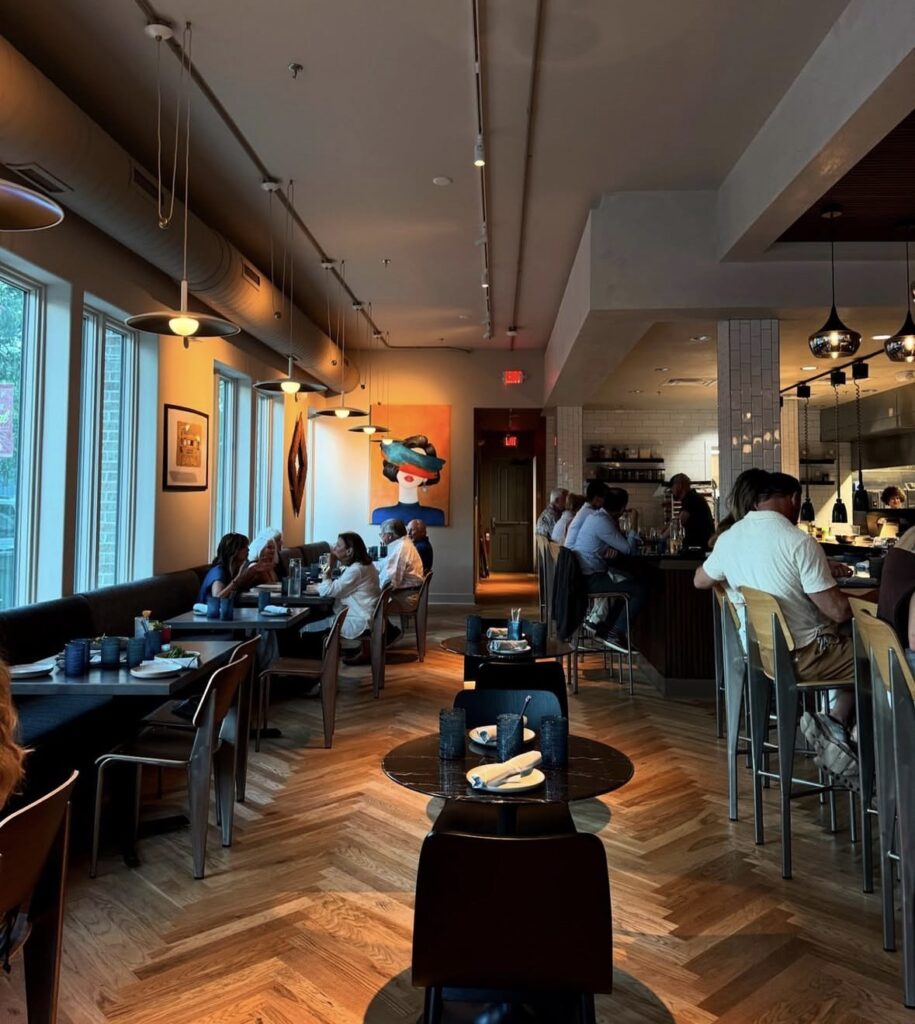
For a quarter-century, Chef Marc Collins has quietly helmed one of Charleston, South Carolina’s most storied dining rooms, turning Circa 1886 into a repository of memory as much as a place for dining. His tenure — now 25 years strong — reads like a study in adaptation: a chef continually interrogating tradition, reweaving it into thoughtful service, and nudging Charleston’s palate forward without discarding the past.
Collins arrived in Charleston after a decade in Texas and a career turn that took him through luxury hotels and culinary tests. From the beginning, he resisted easy labels. “I was never pigeonholed here,” he said, describing the freedom that let him explore the region’s culinary lineage. That exploration turned into a deliberate program: research old cookbooks, consult historians and millers, and map South Carolina’s flavors into a menu that reads like a local history lesson.
The result is neither museum nor gimmick. At the beginning of his tenure at Circa 1886, Collins engineered a four‑quadrant approach that traces the state’s major influences — Native American, European, African and the evolving contemporary South — then translated those threads into seasonal tasting menus and a la carte offerings that invite sharing and curiosity. “We need to tell the story of South Carolina in the food,” he told guests, a phrase that has guided both ingredient choices and presentation.
That storytelling found its most practical expression in a menu format that responds to modern diners’ habits. Rather than a rigid tasting menu or a traditional entrée structure, Circa 1886 now offers two tasting menus named for peninsula rivers alongside a smaller a la carte selection. Collins’ innovation: encourage couples or small parties to each order a tasting so they can share a broader range of dishes without committing to a single, long tasting service. The approach has proven popular: roughly 40–50 percent of diners are opting into the tasting experience, Collins noted, giving the kitchen license to experiment without alienating guests.

Collins’ process is methodical and collaborative. He draws on local experts — historians, millers like those at Anson Mills, and cooks steeped in Lowcountry practice — and he adapts to supply realities. “Because we try to use locally-sourced ingredients, we have to constantly evolve the menu,” he said, describing the logistical tightrope of sourcing seasonal produce in a climate increasingly governed by unpredictable weather. That reality has pushed Circa 1886 toward agility: small, frequent menu changes instead of the old model of wholesale overhauls.
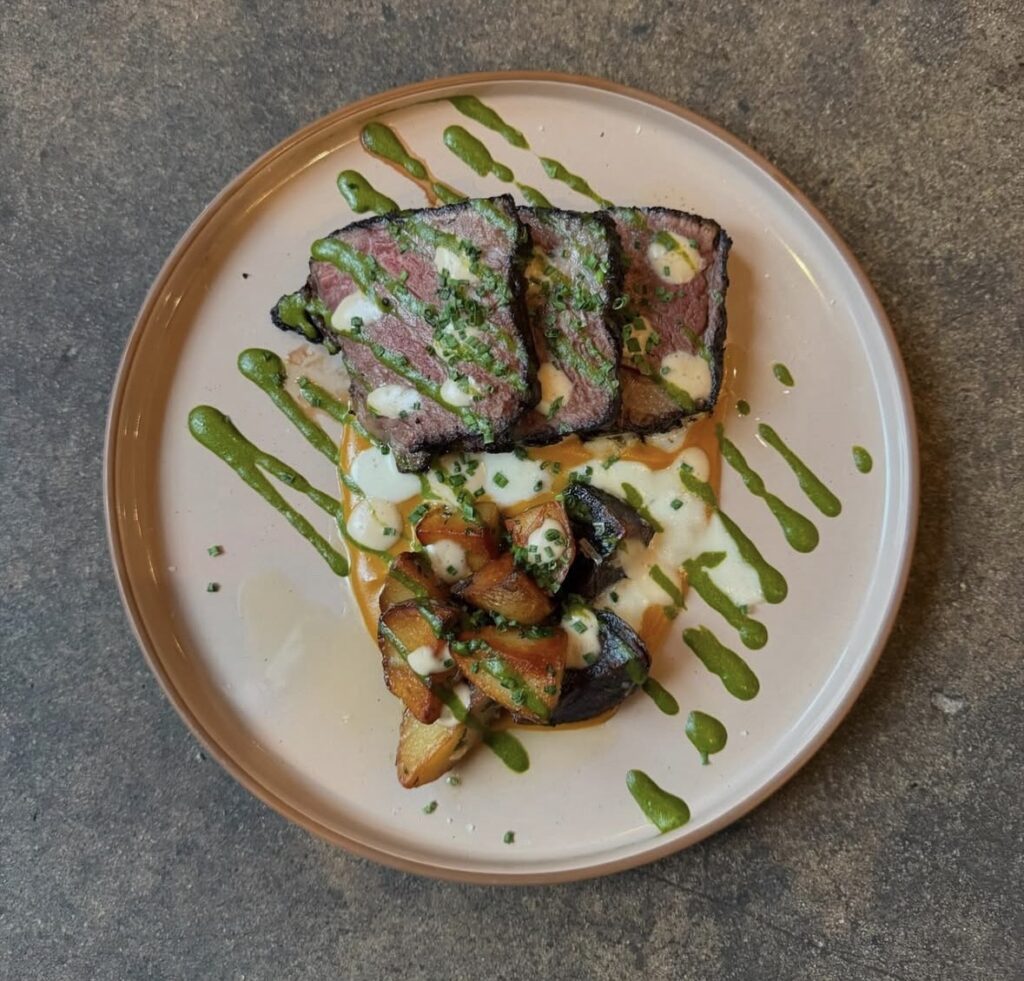
Aesthetic matters to Collins as much as provenance. Influenced early on by his father’s work as a painter, he treats plating as composition. “Putting those together, the flavor compositions and the color compositions, and where you put things on a plate — I attribute a lot of that to what my dad taught me,” he said. His food aims to speak both to the eye and to a diner’s sense of regional belonging.
The last decade in Charleston has been a study in growth and fragmentation. Collins observed that the city shifted from “a historic destination that happens to have great food into a world-class culinary capital.” New neighborhoods and new chefs have multiplied dining options; the peninsula’s historic core now competes with expansion in Mount Pleasant, Summerville and other suburbs. “There’s so much opening up at such a lightning speed now that the newest thing out there is where everybody’s gravitating,” Collins said, noting that the arrival of diverse cuisines has been both a boon to diners and a pressure point for legacy institutions.

Labor and location complicate that spread. Rising housing costs have pushed kitchen staff ever farther from downtown, while new suburban concepts benefit from easier parking and staffing pools. Still, Charleston’s tourist economy continues to prop up its downtown table scene, even as local patronage disperses.
Through the churn, the constant is Collins’ insistence on craft and relevance. He has learned to read the city’s appetite — its desire, in his words, for “decadent comfort food” even amid broader trends toward lighter cuisine — and to bend his menus without breaking their core identity. The balance between experimentation and stewardship has become his signature: a kitchen willing to change one dish a week, and a philosophy that honors history without fossilizing it.
As Circa 1886 looks ahead, Chef Marc Collins is less concerned with trophies than with the quiet business of keeping a restaurant alive and meaningful. “I never sit on my laurels and think that we’re indestructible,” he said. For diners seeking a sense of Charleston on a plate — past, present and in progress — Collins’ 25 years at Circa 1886 offer a rare continuity in a city that keeps reinventing itself.
Click HERE for reservations.
Photo Credit: Circa 1886
Stay connected and subscribe to Charleston Daily.

By Mark A Leon

Charleston is a city that leans into charm, history, and coastal elegance—but part of what defines it is what isn’t there. Unlike larger metros, it has intentionally (and sometimes unintentionally) avoided certain big-ticket developments and cultural staples. Here’s a thoughtful look at what Charleston, South Carolina notably does not have—and how that absence shapes its identity.
1. A Major League Sports Franchise
You won’t find Charleston represented in the NFL, NBA, MLB, or NHL. While minor league teams and college sports thrive, the city has never pursued (or landed) a major league identity—keeping the sports culture more intimate and local.
2. A Large-Scale Amusement Park
There’s no Charleston equivalent to Walt Disney World or Six Flags Over Georgia. The region opts instead for natural attractions—beaches, marshes, and waterways—over roller coasters and mega attractions.
3. A Skyscraper-Dominated Skyline
Charleston famously resists vertical growth. Strict preservation laws prevent a skyline like New York City or Chicago. Church steeples—not glass towers—still define the horizon.
4. A Major International Airport Hub
While Charleston International Airport is efficient and growing, it’s not a global hub like Hartsfield-Jackson Atlanta International Airport. Direct international travel options remain limited.
5. A Comprehensive Public Transit System
There’s no subway, light rail, or commuter rail system comparable to the New York City Subway or Washington Metro. Charleston is still largely car-dependent, with modest bus service.
6. A Major Research University Presence
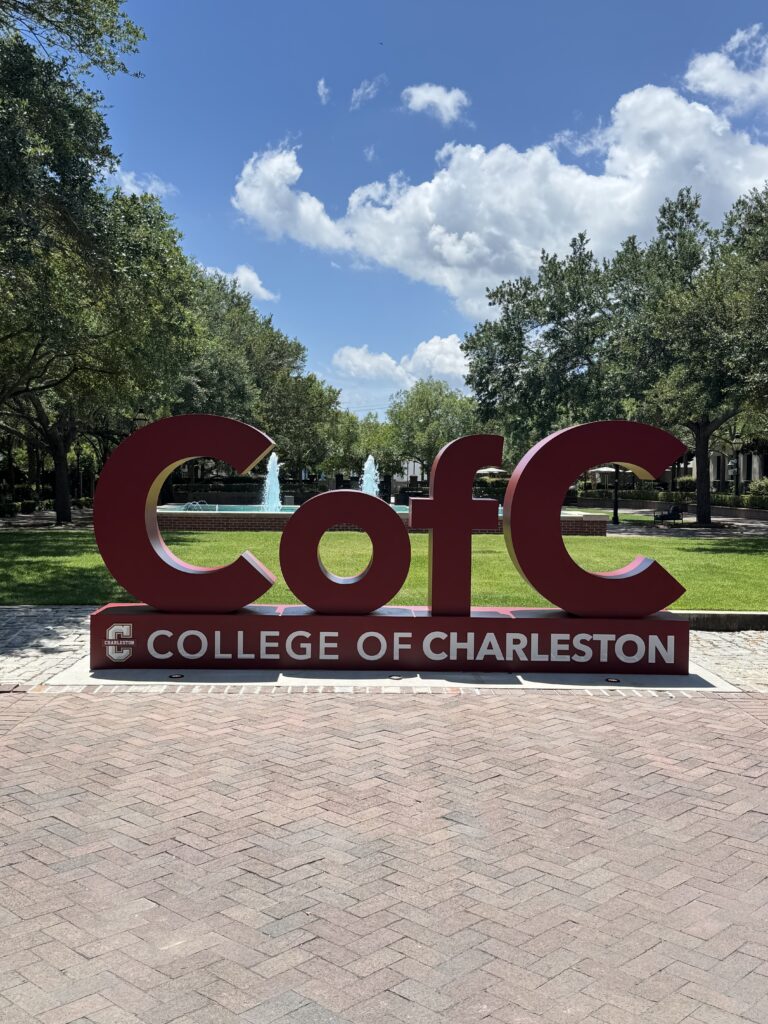
While the College of Charleston is respected, the city lacks a powerhouse research institution on the scale of Duke University or University of North Carolina at Chapel Hill.
7. A Tech Industry Hub
Charleston has a growing startup scene, but it’s not competing with Silicon Valley or even regional players like Austin. The economy still leans more toward tourism, hospitality, and logistics.
8. A Dense Urban Core
There’s no sprawling, hyper-dense downtown filled with high-rise living like Miami. Charleston’s peninsula remains walkable but low-scale, with development carefully controlled.

9. A Four-Season Climate
Charleston doesn’t experience true winters or dramatic seasonal shifts like Boston. Snow is rare, and the climate stays largely warm and humid year-round.
10. A Major Music Festival Circuit Stop
While the city hosts events, it’s not a primary destination for massive festivals like Coachella Valley Music and Arts Festival or Lollapalooza.
11. A Large Convention Mega-Center
Charleston has event space, but nothing rivaling the scale of the Orange County Convention Center. This keeps tourism more boutique than convention-driven.
12. A Pro Sports Stadium Complex
There’s no massive multi-stadium district like those found in Dallas or Los Angeles—again reinforcing a smaller-scale, community-oriented sports culture.
13. A Major Film Production Hub
Though visually cinematic, Charleston isn’t a production powerhouse like Atlanta, which has become a major filming destination for Hollywood.
14. A True 24/7 City Rhythm
Unlike Las Vegas or New York City, Charleston winds down at night. Its pace favors early mornings, long lunches, and evening dinners over all-night energy.
15. A High-Speed Rail Connection
There’s no bullet train or high-speed rail system like Japan’s Shinkansen connecting Charleston to other cities. Travel remains car- or air-based.
The Bigger Picture
Charleston’s “missing pieces” aren’t oversights—they’re part of a deliberate balance. The absence of mega-developments, towering skylines, and industrial-scale entertainment has preserved something increasingly rare: a city that prioritizes character over expansion.
In a world where many cities race to become bigger, faster, and louder, Charleston has quietly chosen to remain something else entirely—refined, restrained, and deeply rooted in place.
Stay connected and subscribe to Charleston Daily.