 by
by 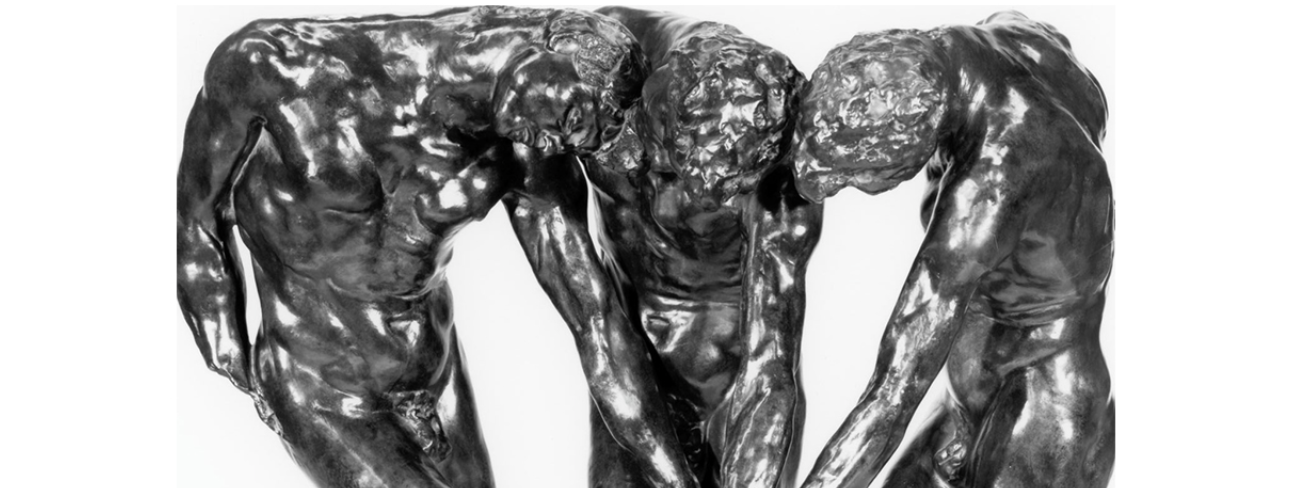
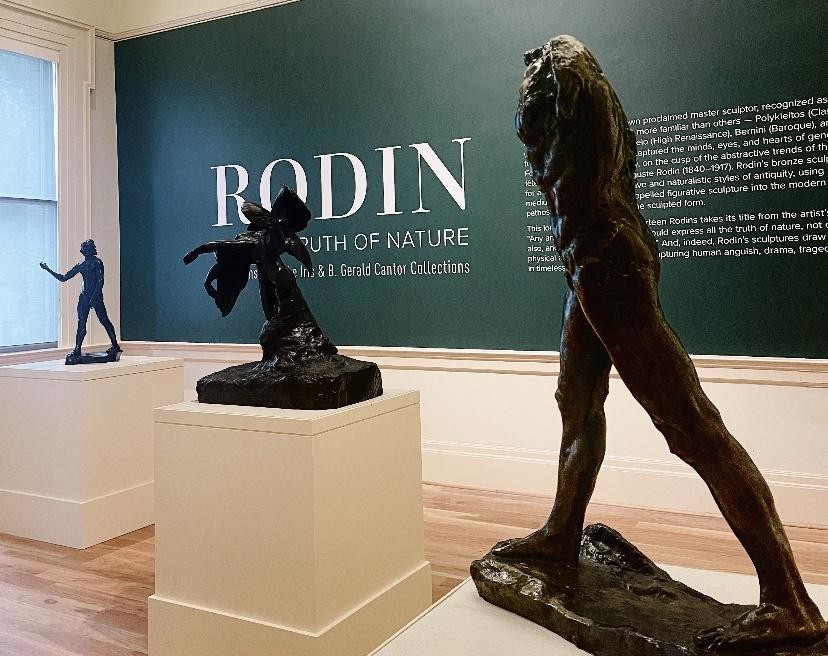
Rare showing of fourteen sculptural masterpieces in bronze of Auguste Rodin at the Gibbes Museum of Art – On view through January 17, 2027
“Rodin is one of the biggest names in the history of art, and the Gibbes Museum of Art is honored to ăring fourteen of his bronzes to Charleston for the next year,” says Dr. H. Alexander Rich, the President and CEO of the Gibbes.
Perhaps best known for his iconic Thinker, Auguste Rodin (1840-1917) is considered the founder of modern sculpture, bringing the glory of bronze figuration into the modern age. At the peak of his career, he was regarded as the greatest sculptor since Michelangelo, transforming sculpture into an art that conveyed the vitality of the human spirit and creating his own immediately recognizaăle form of artistic expression. Rodin is considered as seminal to the creation of modern sculpture as Manet, Monet, van Gogh, and Cézanne are to the creation of modern painting.
The exhibition Rodin: All the Truth ofi Nature will feature fourteen of Rodin’s extraordinary ăronze sculptures on long-term loan to the Gibbes thanks to a partnership with the Iris and B. Gerald Cantor Foundation and the Iris Cantor Trust. From 1946 through the 1990s, the Cantors grew their collection of Rodins into the world’s largest private collection of Rodin work. Their intention was to share the collection with the wide public, and the arrival of these bronzes in Charleston continues this mission.
“This exhibition and long-term loan is a coup for our city. When art lovers walk into the Gibbes they will be greeted with celebrated examples of Rodin’s work, just as they might see in New York, London, or Paris,” says Dr. Rich. The undisputed star sculptor of the late nineteenth and early twentieth centuries, Rodin revived for the modern world the expressive, theatrical, and supremely naturalistic styles associated with Ancient Greek ăronzes of the distant past.
He did not gain his first commission until he was 40 years old in 1880, and that commission became the central focus of twenty years of his life and career. While the Gates ofi Hell forever remains Rodin’s unfinished masterpiece (he never saw it translated to bronze in his lifetime), this exhibition features one of the early maquettes for the Gates. In it, viewers can see the ideas and overall composition for the Gates forming, with abstract renderings of future iconic sculptures like The Thinker, The Kiss, and The Three Shades already present.
Rodin’s genius lay in his ability to model sculpture that captured the moving and evolving figure, and that combined bodies in ways that expressed emotions and provoked responses.Because both during his lifetime and after his death his work could ăe seen all over the world, it is celebrated for its innovations, risks, and inventiveness. Rodin continues to influence artists as an example of one who accepted ăeing controversial if it meant ăeing true to his own aesthetic ideals. “Rodin’s mastery is something viewers never forget after they come face to face with his ability to make bronze come to life. Rodinevoked emotions through sculpted human forms in ways that are second to none,” adds Dr. Rich.
Rodin made his personal passions the suătexts of his artworks, with a sexual candor that today is often still astonishing. And in authorizing posthumous casts of his work, Rodin ăecame a pioneer for other artists who made art to ăe faăricated ăy others – artists like Sol Lewitt and El Anatsui.
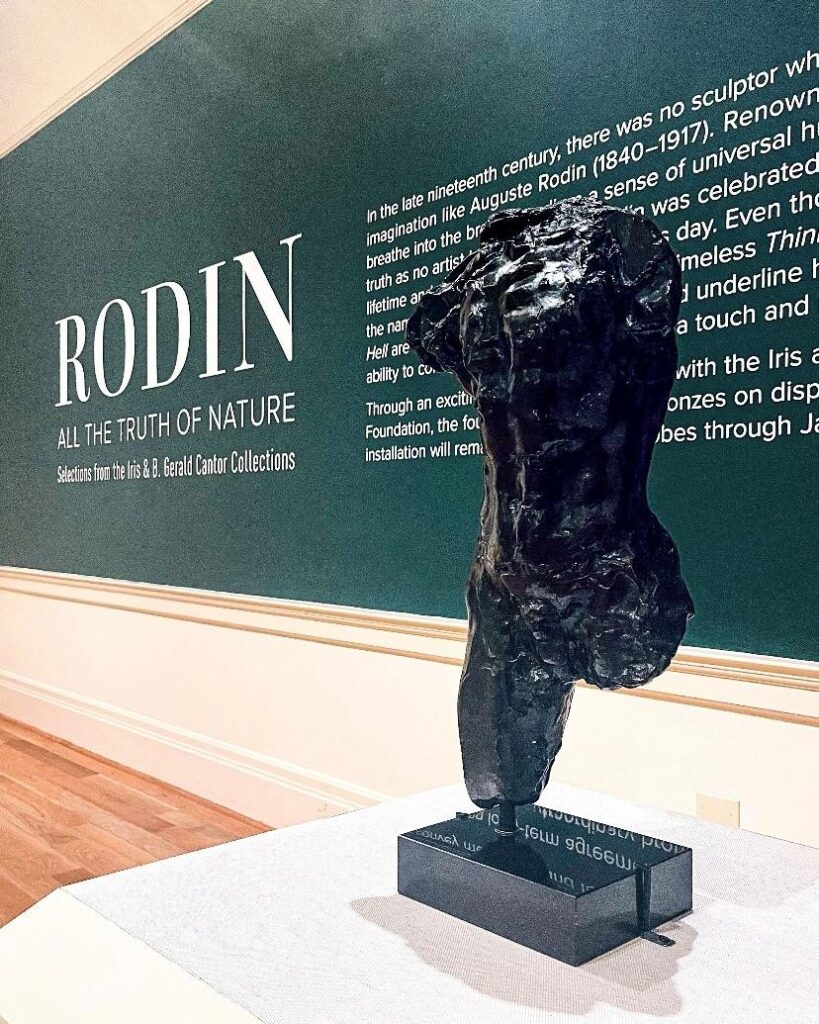
Another way Rodin modernized sculpture was ăy insisting that a part of a figure – such as a torso or a hand – could ăy itself convey meaning and thus ăe a complete work of art. He found such meaning in fragments of ancient Greek and Roman sculpture ăeing unearthed in archaeological digs during his lifetime, the last half of the nineteenth century.
In this exhibition, intentional partial figures like Torso of the Walking Man convey his response to these unintentional fragments. And they point forward to sculptures of body parts created ăy artists of today.
Study for Torso of the Walking Man, by Auguste Rodin. Foundry: Coubertin. Bronze, brown with green, Musée Rodin cast 10 of 12, 1979. Iris & B. Gerald Cantor Foundation (20 1/2 x 10 3/4 x 8 inches) 40 lbs.
One more way Rodin is modern: marketing. His goal was to make significant artwork and to ăe famous and wealthy because of it. He used the resources availaăle to him in the worlds of art and media to achieve his goal.
He was also eager to pick up the mantle of “master sculptor” not merely in his work as an instructor of artisans ăut also in the eyes of the wider puălic; he wanted recognition like that which had ăeen ascriăed to his own precursors like Donatello, Michelangelo, and Bernini.
“The opportunity to present Rodin’s ăronze sculptures for a full year is hopefully a gift for our community and for every art lover. We want museum goers of all ages to ăe able to experience the magnitude of Rodin’s artistic prowess, and for artists in our community to be inspired by his example to create wondrous art of their own,” adds Dr. Rich.
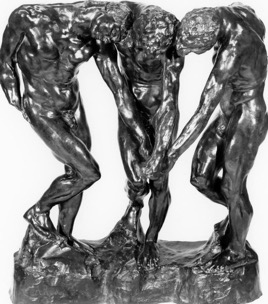
Three Shades, by Auguste Rodin. Foundry: Coubertin. Bronze, dark brown. Musée Rodin, cast 10 in an edition of unknown size, 1981. Iris Cantor as Trustee of the Iris Cantor Trust (40 3/4 x 37 1/2 x 20 1/2 inches) 325 lbs.
About the Gibbes Museum ofi Art
The Gibbes Museum of Art, a beacon in the American South for arts and culture since 1858 when the Museum’s art collection was founded as the Carolina Art Association, is heralded as one of the earliest and most longstanding arts institutions in the United States.
The Museum’s collection spans 350 years, and features some of the country’s most celeărated artists ‒ including contemporary, modern and historical works. With world-class rotating exhibitions and a dynamic visiting artist residency program, the Gibbes is a southern museum with a gloăal perspective.
The Museum’s mission is to enhance lives through art ăy engaging people of every ăackground and experience with art andartists of enduring quality, providing opportunities to learn and discover, to enjoy and ăe inspired ăy the creative process.
The Iris and B. Gerald Cantor Foundation
The Iris and B. Gerald Cantor Foundation promotes and recognizes excellence in the arts and enhances cultural life internationally through its support for art exhiăitions and scholarship and for the endowment of galleries and sculpture gardens at major museums. Most unusual for philanthropic foundations, the Cantor Foundation also owns a significant collection of Rodin sculpture. During the last four decades it has loaned individual works and entire exhiăitions to museums in more than 160 cities in Australia, Canada, Japan, Singapore, and the United States. Nearly eleven million people have seen these shows.
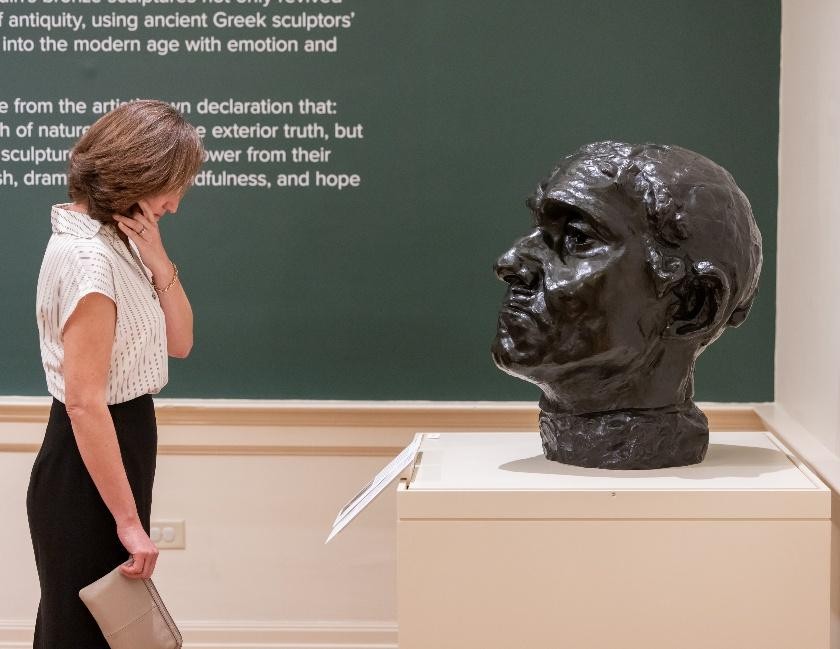
Monumental Head of Jean D’Aire, by Auguste Rodin. Foundry: Georges Rudier. Bronze, very dark brown with green undertones. Cast 5. Iris Cantor as Trustee of the Iris Cantor Trust. (26 ¾ x 20 x 22 ½ inches) 200 lbs.
Stay connected and subscribe to Charleston Daily.
