 by
By Mark A Leon | Charleston Daily
From colonial landmarks and Revolutionary War sites to historic churches, preserved homes and waterfront fortifications, explore the history that makes Charleston one of America’s most fascinating destinations.
Charleston is more than a beautiful coastal city filled with restaurants, cobblestone streets, horse-drawn carriages and waterfront views. It is a city whose history is woven into its architecture, churches, gardens, neighborhoods and streets that have survived centuries of change.
For Thanksgiving visitors, a walk through Charleston can feel like stepping into another time. From the city’s colonial beginnings and role in the American Revolution to its complicated history surrounding slavery, the Civil War and Reconstruction, Charleston offers an experience that goes well beyond sightseeing.
If you are spending Thanksgiving in the Holy City, these 15 historic destinations are worth adding to your itinerary.
1. The Battery & White Point Garden
Few places capture the historic charm of Charleston quite like the Battery. This iconic waterfront promenade is lined with grand historic homes, palmetto trees and views of Charleston Harbor.
At the southern tip of the peninsula, White Point Garden has played a role in the city’s military history, serving as a defensive site during various conflicts. Visitors can explore historic cannons, monuments, shaded pathways and sweeping views of the harbor.
The Battery is the perfect place to begin exploring Charleston on foot, especially for visitors looking to appreciate the city’s architecture and maritime history.
Location: East Battery and Murray Boulevard, Charleston, SC
2. Fort Sumter National Monument
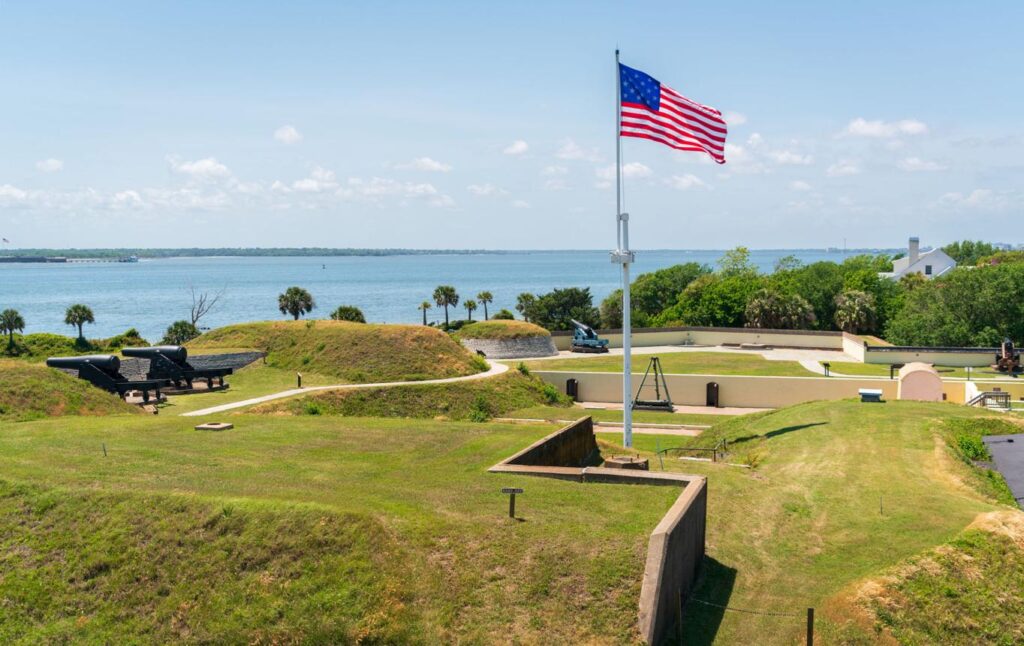
Few historic sites carry the weight of American history quite like Fort Sumter. On April 12, 1861, Confederate forces fired upon the federal garrison stationed here, marking the beginning of the American Civil War.
Accessible only by ferry, Fort Sumter offers visitors a unique opportunity to explore the harbor’s military history while enjoying panoramic views of the Charleston skyline.
Standing inside the fort, visitors can see remnants of its original structures, cannons and defensive walls while learning about the events that changed the course of the nation.
Location: Charleston Harbor
Visitor tip: Ferries depart from downtown Charleston and Patriots Point in Mount Pleasant. Fort Sumter is closed on Thanksgiving Day, so plan your visit for another day during your stay.
3. Rainbow Row
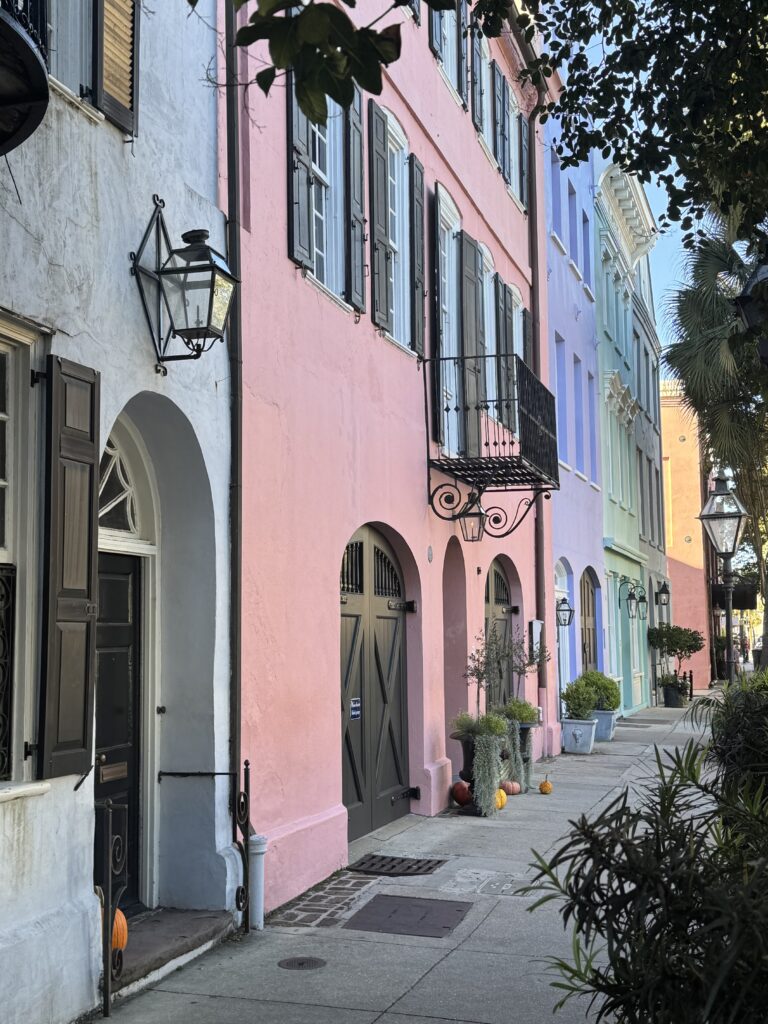
One of Charleston’s most photographed landmarks, Rainbow Row consists of colorful historic homes along East Bay Street. The homes date back to the 18th century, and their pastel hues have become synonymous with the city’s architectural identity.
Although the houses are privately owned, visitors can stroll along the sidewalk and admire the preserved Georgian architecture, decorative shutters, piazzas and historic facades.
Rainbow Row is an ideal stop for photography, architecture lovers and anyone hoping to experience Charleston’s historic streetscape firsthand.
Location: 83–107 East Bay Street, Charleston, SC
4. Old Exchange and Provost Dungeon
Built in 1771, the Old Exchange is one of Charleston’s most important colonial landmarks. Throughout its history, the building served as a customs house, commercial exchange, public meeting place and military headquarters.
During the Revolutionary era, the building played a significant role in Charleston’s political and civic life. Visitors can tour its historic rooms and descend into the Provost Dungeon, where British forces imprisoned American patriots during the occupation of Charleston.
The site provides a fascinating look into colonial Charleston, the American Revolution and the city’s role in the struggle for independence.
Location: 122 East Bay Street, Charleston, SC
5. Aiken-Rhett House Museum
For visitors seeking a more authentic and unfiltered look at Charleston’s antebellum past, the Aiken-Rhett House is an important stop.
Built in the early 19th century and expanded over time, the house has been preserved rather than extensively restored. Visitors can explore the main residence, kitchens, outbuildings and preserved slave quarters, offering an opportunity to better understand both the wealth of Charleston’s elite and the enslaved people whose labor sustained it.
The property provides an unusually direct connection to Charleston’s social structure before the Civil War and presents the history of the household from multiple perspectives.
Location: 48 Elizabeth Street, Charleston, SC
6. Old Slave Mart Museum
Charleston’s history cannot be told honestly without confronting its role in the domestic slave trade. The Old Slave Mart Museum is one of the most historically significant places in the city for understanding that chapter of American history.
Housed in a building once used for the sale of enslaved people, the museum documents the commercial system of slavery, the experiences of enslaved individuals and Charleston’s role in one of the darkest chapters of American history.
This is not necessarily an easy visit, but it is an important one. For visitors who want to understand Charleston beyond its architecture and beauty, the museum offers a deeper perspective on the city’s past.
Location: 6 Chalmers Street, Charleston, SC
Website: https://www.charleston-sc.gov/160/Old-Slave-Mart-Museum
7. The Charleston Museum
Often referred to as America’s first museum, The Charleston Museum is an excellent starting point for visitors wanting to understand the Lowcountry.
Its exhibits explore Charleston’s history, from Native American culture and colonial settlement to the Revolutionary War, Civil War, decorative arts, natural history and everyday life in the region.
The museum’s extensive collection offers a broader historical perspective than many individual historic homes, making it especially worthwhile for visitors who want to connect the dots between Charleston’s different eras.
Location: 360 Meeting Street, Charleston, SC
Website: https://www.charlestonmuseum.org/
8. St. Michael’s Church
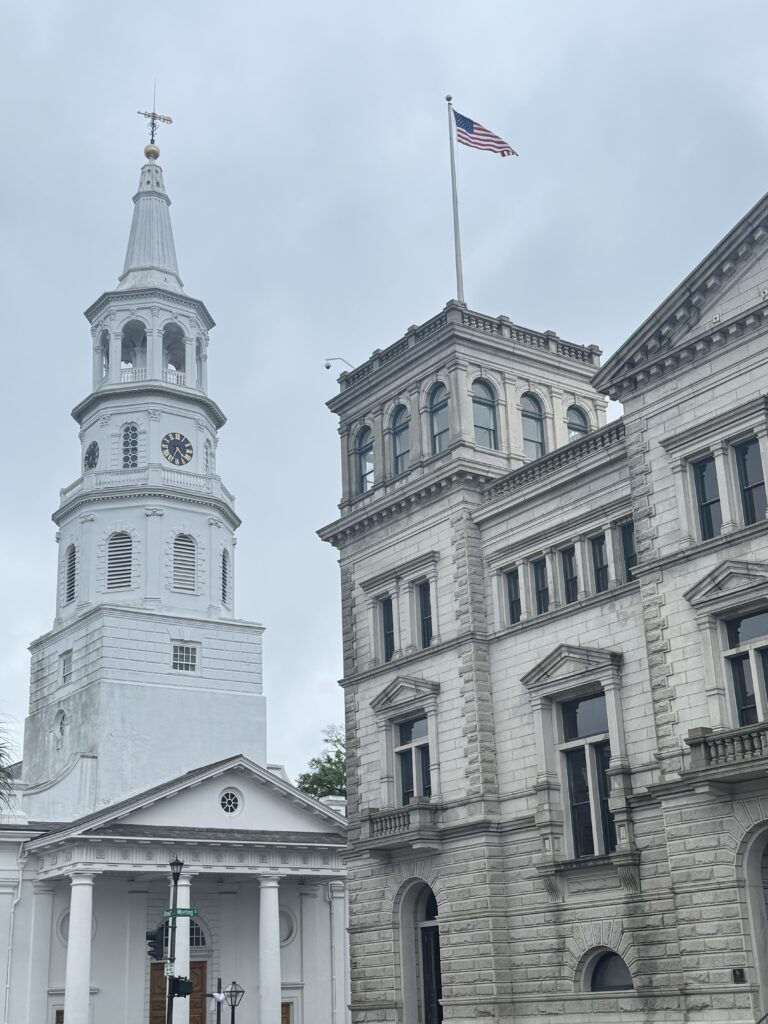
Standing prominently at the corner of Broad and Meeting streets, St. Michael’s Church is one of Charleston’s most recognizable historic landmarks.
Built in the 18th century, the church is a remarkable example of colonial ecclesiastical architecture. Its towering steeple has served as a landmark for generations, while its interior reflects the craftsmanship and religious traditions of early Charleston.
St. Michael’s has witnessed some of the most consequential moments in the city’s history, including the Revolutionary War and Civil War eras. The church and its historic cemetery offer a quiet opportunity to reflect on Charleston’s past and the generations who shaped the city.
Location: 71 Broad Street, Charleston, SC
9. Charleston City Market
The Charleston City Market is more than a place to shop for souvenirs. It is a historic public market that has been part of Charleston’s commercial landscape since the 19th century.
Originally established as a place for the sale of produce, meat and everyday necessities, the market evolved into a gathering place for merchants, residents and visitors. Today, its historic buildings house local artisans, makers, specialty goods and Charleston-inspired gifts.
Visitors can stroll through the market while appreciating its architecture and the role public markets played in the city’s economic and cultural life.
Location: 188 Meeting Street, Charleston, SC
Website: https://www.charlestoncitymarket.com/
10. Fort Moultrie National Historical Park
For visitors willing to cross the bridge to Sullivan’s Island, Fort Moultrie offers a fascinating look at more than two centuries of coastal defense history.
The fort’s history stretches from the Revolutionary War, when South Carolina defenders fought against the British in 1776, through subsequent periods of military development and into World War II.
Unlike Fort Sumter, Fort Moultrie provides visitors with a broader timeline of coastal military architecture, evolving weaponry and the strategic importance of Charleston Harbor.
The surrounding island also offers a quieter coastal atmosphere, making this a rewarding excursion for history enthusiasts who want to venture beyond downtown Charleston.
Location: 1214 Middle Street, Sullivan’s Island, SC
Website: https://www.nps.gov/fomu/index.htm
11. Nathaniel Russell House Museum
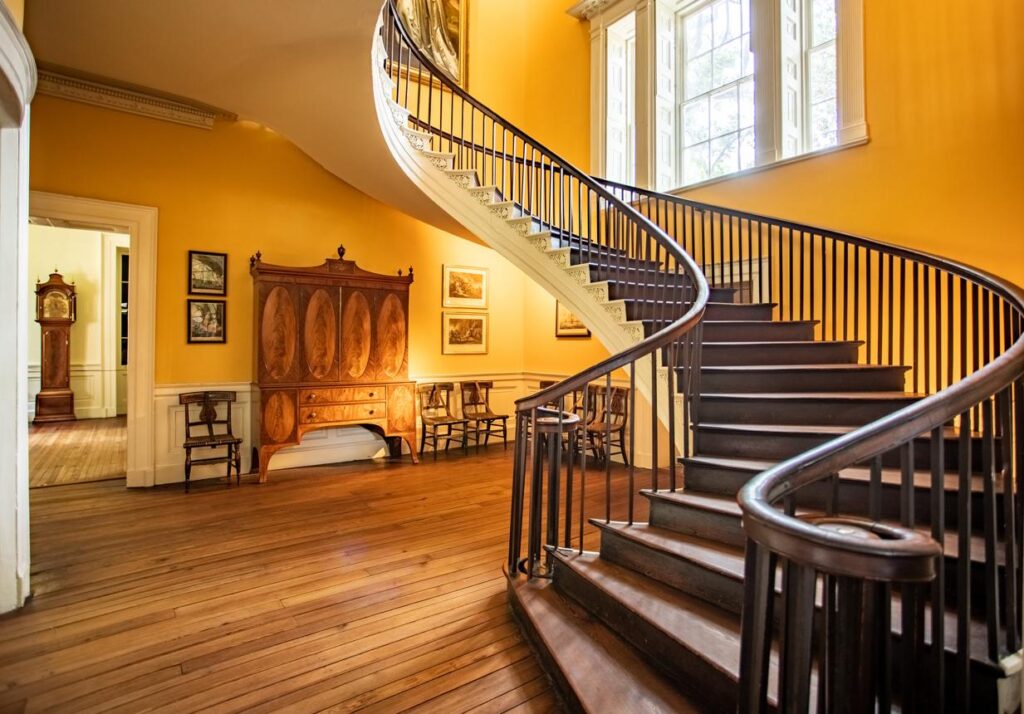
One of Charleston’s most extraordinary historic homes, the Nathaniel Russell House is a National Historic Landmark and a remarkable example of Federal architecture from the early 19th century.
Built in 1808, the home is known for its elaborate interior details, decorative plasterwork, formal gardens and iconic three-story free-flying staircase. But beyond its architectural beauty, the home also tells the story of the wealth accumulated through international trade and the enslaved individuals who worked and lived on the property.
Visitors can tour the restored mansion and explore the history of Charleston’s merchant class, domestic life and the people whose labor made that lifestyle possible.
Location: 51 Meeting Street, Charleston, SC
Website: https://www.historiccharleston.org/
12. Edmondston-Alston House
Located along Charleston’s historic High Battery, the Edmondston-Alston House offers visitors a glimpse into the city’s early 19th-century residential life and the families who occupied some of Charleston’s most prominent waterfront homes.
Built around 1825, the home features original family furnishings, silver, artwork and decorative pieces, along with sweeping views of Charleston Harbor from its second-floor piazza.
The house has survived the Civil War, the devastating earthquake of 1886 and numerous hurricanes, making it a remarkable example of Charleston’s architectural resilience and preservation.
Its history also explores the enslaved people who lived and worked on the property, providing a fuller understanding of the household and the society in which it existed.
Location: 21 East Battery, Charleston, SC
Website: https://www.edmondstonalston.org/
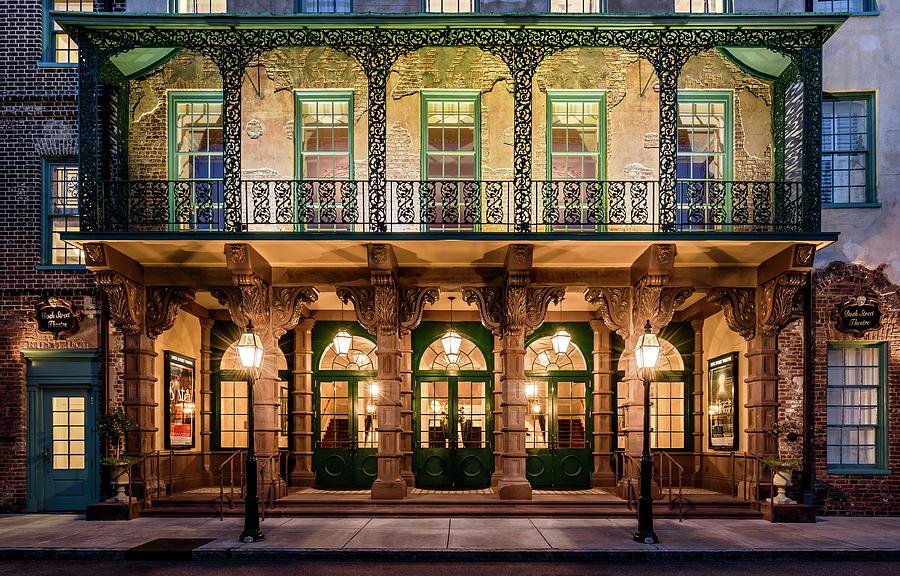
13. Historic Dock Street Theatre
Charleston has long been a city of culture, creativity and the performing arts, and the Historic Dock Street Theatre stands as one of the most important landmarks in that tradition.
Recognized as America’s first theater building, the original Dock Street Theatre opened in 1736. The historic building has undergone numerous transformations over the centuries, including serving as a hotel before returning to its theatrical roots.
Today, the beautifully restored theater is home to Charleston Stage and continues to welcome audiences for live performances throughout the year.
Even if you are not attending a performance, the surrounding historic district is worth exploring for its architectural beauty and connection to Charleston’s cultural past.
Location: 135 Church Street, Charleston, SC
Website: https://www.charlestonstage.com/
14. The Powder Magazine
Dating back to the early 18th century, the Powder Magazine is considered one of the oldest public buildings in the Carolinas and one of Charleston’s surviving colonial military structures.
Originally built to store gunpowder and military supplies, the building played an important role during Charleston’s early years, when the city was vulnerable to military attacks and required a secure location for its ammunition.
Its thick masonry walls and historic construction offer visitors a tangible connection to Charleston’s colonial defenses and the struggles that shaped the city before the American Revolution.
For history lovers interested in the city’s military past, this small but significant landmark is well worth seeking out.
Location: 79 Cumberland Street, Charleston, SC
Website: https://www.powdermagazine.org/
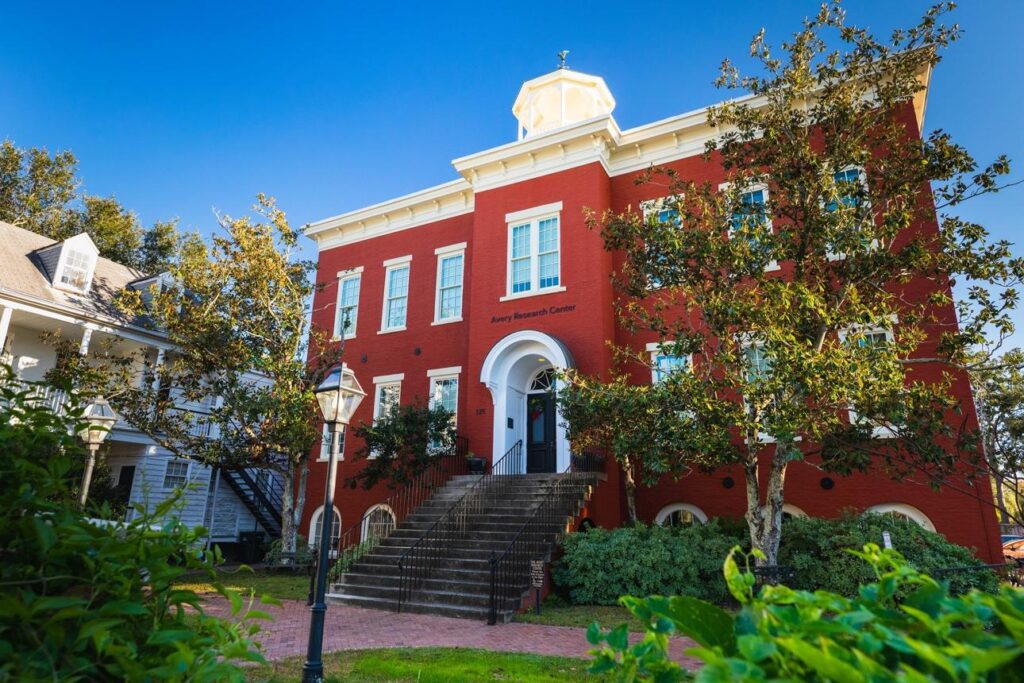
15. Avery Research Center for African American History and Culture
The Avery Research Center is one of Charleston’s most important destinations for understanding African American history, education, culture and the lasting influence of the Black community throughout the Lowcountry.
The historic building was originally home to the Avery Normal Institute, established in 1865 to educate Black students in the years following the Civil War. The institution became an important center for education, leadership and opportunity for generations of African Americans.
Today, the center preserves archives, exhibits, photographs, documents and stories that explore African American life, the fight for education, civil rights and the cultural legacy of Charleston’s Black community.
For Thanksgiving visitors interested in understanding Charleston’s history from a broader and more inclusive perspective, the Avery Research Center is an essential stop.
Location: 125 Bull Street, Charleston, SC
Website: https://avery.charleston.edu/
Planning Your Thanksgiving Visit to Charleston
Charleston is one of those cities best experienced slowly. Walk the historic district, look up at the architecture, step inside a historic church, explore a museum, and allow yourself to wander streets that have witnessed centuries of American history.
A few things to keep in mind during Thanksgiving week:
• Thanksgiving Day closures: Many museums, historic homes and major attractions close on Thanksgiving Day itself. Plan ahead and verify holiday hours directly with each attraction.
• Plan your museum visits for Friday or Saturday: The day after Thanksgiving is often a better opportunity to explore historic house museums and indoor attractions.
• Take a walking tour: Charleston’s historic district is full of architectural details, hidden courtyards, historic churches and stories that are easy to miss without a guide.
• Wear comfortable shoes: Much of the historic district is best explored on foot, and the city’s brick sidewalks and cobblestone streets can be uneven.
• Don’t rush: Charleston’s greatest attraction may be the city itself. Give yourself time to appreciate the scenery, architecture, waterfront and history.
Charleston’s history is beautiful, complicated, inspiring and at times painful. Its streets tell stories of revolution, prosperity, craftsmanship, oppression, resilience, war and reinvention.
For Thanksgiving visitors, taking the time to explore that history offers something more meaningful than a weekend of sightseeing. It offers a chance to better understand the people, events and traditions that helped shape Charleston into the city it is today.
And that may be the most memorable souvenir you take home from the Holy City.
Planning a Thanksgiving trip to Charleston? Check individual attraction websites for holiday hours, ticket availability and tour schedules before visiting.
Charleston Daily | Local stories, places and people worth discovering.
