Senator Tim Scott announces 2026 Service Academy Nomination applications now open

CHARLESTON, S.C. — The Office of U.S. Senator Tim Scott (R-S.C.) is accepting U.S. service academy nomination applications for the class of 2031.

Sen. Scott is able to nominate a limited number of students in South Carolina for attendance at the following U.S. service academies: the U.S. Military Academy, the U.S. Naval Academy, the U.S. Air Force Academy, and the U.S. Merchant Marine Academy (the U.S. Coast Guard Academy does not require a congressional nomination).

“The United States service academies shape the next generation of leaders dedicated to serving our great nation. I am honored to nominate these exceptional young men and women from South Carolina each year as they answer the call to service and take the next step in pursuing academic excellence and leadership.” said Sen. Scott.

Students who are interested in applying for a nomination should apply by 11:59 p.m. ET on Oct. 16, 2026. For more information, visit: www.scott.senate.gov/constituent-services/service-academy-nominations/

Stay connected and subscribe to Charleston Daily.
Grand Opening: Cafe Hosanna is now open in Summerville, South Carolina

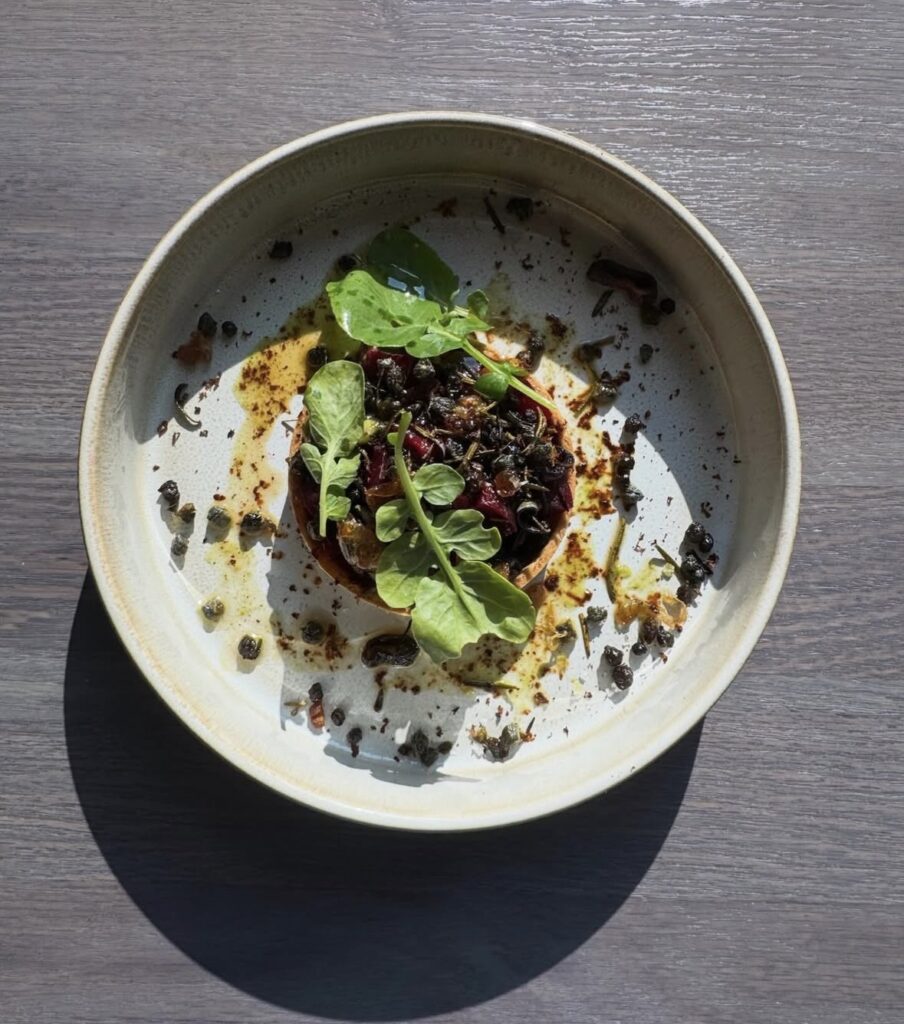
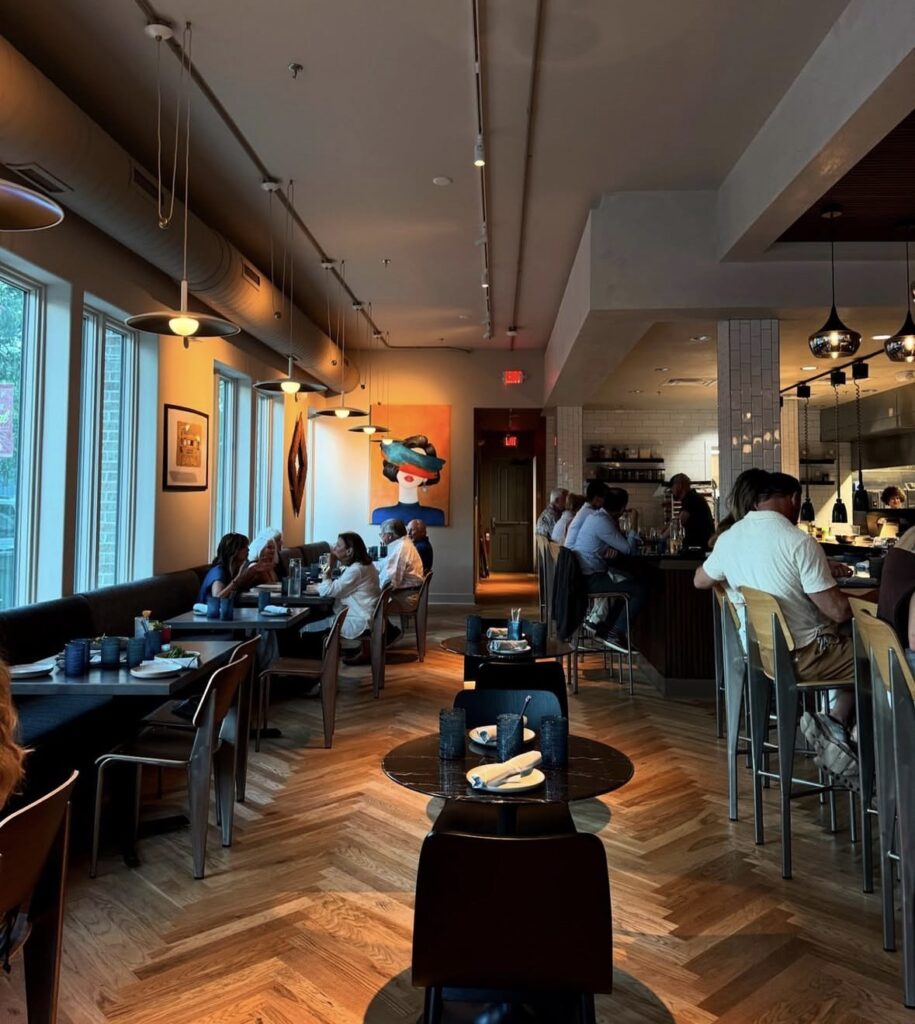
Cafe Hosanna in Summerville, South Carolina has officially opened its doors to the public.

The new cafe is located at Carnes Crossroads (106 Gosling Way, Suite C Summerville, South Carolina).

Here are some things you should know:

Stop in today!

Stay connected and subscribe to Charleston Daily.
Ghosting job candidates can haunt employers, Clemson University research finds

byJonathan Veit

Philip Roth, Trevillian Distinguished Professor in the Wilbur O. and Ann Powers College of Business at Clemson University, has earned national recognition for new research examining a growing problem in the modern job market: post-interview ghosting.

Roth’s paper, “Post-Interview Ghosting Casts Dark Shadows on Applicant Reactions,” was selected as one of the top papers accepted for presentation at the 86th Annual Meeting of the Academy of Management, which will be held July 31-Aug. 4 in Philadelphia. The paper was judged to be among the best accepted submissions in the Human Resources Division, placing it in the top 10 percent of papers accepted to the conference program.

The research explores what happens when employers abruptly stop communicating with job candidates after in-person interviews, without explanation or closure. While ghosting has become a familiar term in dating and online culture, Roth said it has increasingly become part of the hiring process as well.

“I think technology allows organizations to treat people like commodities,” Roth said. “We used to expect fair and equitable interpersonal treatment from organizations when they conveyed how well a person performed in the interview and whether the applicant moved on to the next step of the selection process. This led to feelings of being treated justly. Post-interview ghosting is going in the other direction.”

The study found that the effects on applicants are not mild inconveniences or temporary frustrations. Instead, ghosting produces powerful and lasting anger-based emotional reactions that can damage an organization’s reputation and future hiring efforts.

Roth and his co-authors — Clemson doctoral students Hyunji Suh and Emily Ferrise, along with collaborators from other institutions — conducted two studies examining how applicants respond after being ghosted following in-person interviews. Their larger study surveyed 390 U.S. working professionals, many of whom had experienced ghosting during recent job searches.

The researchers found that applicants who were ghosted perceived organizations as significantly less fair and less respectful. Those feelings often evolved into what the study describes as “ressentiment,” a cluster of emotions including anger, resentment and hostility.

Those emotions had major downstream effects.

 Applicants who experienced higher levels of resentment viewed organizations more negatively and were substantially less likely to pursue future employment opportunities with them. At the same time, ghosting increased the likelihood of retaliatory behavior and even schadenfreude — taking satisfaction in an organization’s misfortunes — increased in likelihood.

“Our study directly addresses how the applicant thinks about the organization’s reputation, whether they would reapply in the future, so organizations could be diminishing their own applicant pools in the future,” Roth said. “We also talk about the dark side. Do people want to do things like complain to the organization just to take up time and get back at them?”

One of the study’s most striking findings was the sheer magnitude of the effects.

“If you look at the relationship between ghosting and organizational image, ghosting and intent to pursue, retaliation and schadenfreude, these are big effect sizes by social science standards,” Roth said. “It’s not like people feel a little bit more this way. The effects are powerful — far stronger than I thought they would be.”

The research also suggests the damage does not quickly fade. The study found little evidence that applicants simply “get over” being ghosted as time passes. In some cases, especially among college students, negative feelings actually intensified over time.

“I think these negative emotions last for a long, long time,” Roth said. “Companies may think time heals all wounds, but those feelings of injustice and those negative emotions, they stay.”

The findings point to significant consequences for employers, particularly at a time when organizations compete aggressively for talent and increasingly rely on employer branding to attract applicants.

Roth said one of the clearest takeaways from the study is that organizations can protect themselves from many of these negative outcomes through something relatively simple: respectful communication.

The study found that informational justice — communicating clearly and promptly with applicants, even when delivering disappointing news — was related to improved organizational image and applicants’ willingness to apply again in the future.

“Be civil, be gracious,” Roth said. “In this day and age, you can craft a nice ‘thank you, but no thank you’ letter that doesn’t put your company in a negative light. Stop making excuses and just be civil and gracious.”

He added that organizations that communicate respectfully may gain an advantage in a hiring environment where ghosting has become increasingly common.

“They insulate themselves from a tarnished image,” Roth said. “The applicant is more likely to reapply in the future, and we know in HR that the bigger the applicant pool, the more likely you are to find a better fit.”

About Roth
Roth teaches organizational behavior and human resource management in the Wilbur O. and Ann Powers College of Business. He is a fellow of the Academy of Management, the American Psychological Society and the Society for Industrial and Organizational Psychology. He recently won the Heneman award for outstanding career contributions from the Academy of Management’s HR division. His research interests include organizational staffing, social media in organizations and meta-analysis methods.

Source: Clemson University

Stay connected and subscribe to Charleston Daily.
Charleston-North Charleston Named Best Mid-Sized U.S. Metro for Small Business Success (New Study)

With 36.2 million small businesses driving roughly 46% of total U.S. employment, small enterprises remain a major force behind the American economy — but location can make a big difference in long-term entrepreneurial success. 

To identify the metros where small businesses are best positioned to thriveCoworkingCafe analyzed 286 U.S. metro areas across three population tiers using 12 metrics tied to entrepreneurial activity, economic performance and workforce strength, including new business formation, small business density and survival rate, GDP growth and coworking availability. 

Among mid-sized metros, Charleston-North Charleston ranks #1 nationally, driven by strong business formation, a high share of employment tied to small businesses and one of the country’s healthiest labor markets.

Here are the key findings: 

  • Healthy labor market conditions: Charleston’s unemployment rate stands at 2.3%, the 5th-lowest among mid-sized metros and well below the national average of 3.3%. 
  • Extensive coworking infrastructure that supports entrepreneurs and small teams: Charleston metro offers 4.1 coworking spaces per 100,000 residents, the 5th-highest density among mid-sized metros. 
  • Strong business formation activity: The metro recorded 2,112 new business applications per 100,000 residents in 2024, the 6th-highest rate among mid-sized metros and well above the national average of 1,553. 
  • Small businesses power local employment: Small businesses account for 53% of all local jobs, the 7th-highest share among mid-sized metros and significantly above the national average of 45.9%. 
  • Strong entrepreneurial culture: Self-employed residents make up 11.6% of the workforce, the 7th-highest share among mid-sized metros and above the national average of 10.2%. 
  • Highly educated workforce: 38.2% of adults in the metro hold a bachelor’s degree or higher, the 9th-highest share among mid-sized metros and above the national average of 33%. 
  • Dense small business ecosystem: The metro is home to more than 11,600 small businesses per 100,000 residents, the 9th-highest density among mid-sized metros and above the national benchmark of 10,376. 
  • Active workforce: Nearly 66% of residents are active in the labor force, the 10th-highest rate among mid-sized metros and above the national average of 63.5%. 
  • Strong earning power: Local workers earn a median of $48,498 annually, the 10th-highest figure among mid-sized metros and above the national median of $46,151. 
  • Healthy business survival rates: Small businesses in the Charleston metro posted a 91.1% survival rate, reflecting favorable conditions for long-term business success. 
  • Competitive coworking costs: Average coworking memberships cost about $235/month, slightly above the national average of $220. 
  • Steady economic expansion: GDP grew by 34.9% between 2019 and 2023. 

At the state level, South Carolina stands out for having multiple metros that perform well for small businesses beyond Charleston-North Charleston itself. Columbia ranks #33 among mid-sized metros for small business success, followed by Greenville-Anderson at #45. Meanwhile, Hilton Head Island-Bluffton-Beaufort places #12 among small metros nationally, while Myrtle Beach-Conway-North Myrtle Beach ranks #53.

Nationally, Miami-Fort Lauderdale-West Palm Beach, FL ranks as the best large metro for small businesses to launch, grow and thrive, while Boulder, CO tops the small metro rankings. 

Full analysis, methodology and expert opinions here: https://www.coworkingcafe.com/blog/best-metro-areas-for-small-businesses/

Stay connected and subscribe to Charleston Daily.
Source: CoWorkingCafe

Berkeley County Man (Goose Creek) Sentenced to 5 Years in Federal Prison for Distribution of Fentanyl that Resulted in Death

CHARLESTON, S.C. — Levi Phillip Miles, 48, of Goose Creek, has been sentenced to five years in federal prison for conspiracy to possess with intent to distribute fentanyl and oxycontin, and distribution of fentanyl, resulting in the death of a local lawyer.

Evidence obtained in the investigation revealed that from at least January 2022 to January 2023, Miles regularly distributed prescription pain pills to his employer and cousin, David Aylor.  By the summer of 2022, Miles could no longer obtain legitimate prescription pain pills from his suppliers. Nevertheless, in December 2022, the victim continued to request pain pills, causing Miles to seek pills for an alternate source.

On Jan. 1, 2023, Miles obtained what he believed to be legitimate pain pills but were illicit pills laced with fentanyl. Miles distributed the pills to Aylor that afternoon. The victim was found dead in his home on Jan. 2, 2023. An autopsy of the victim revealed the presence of fentanyl in his system, and subsequent investigation confirmed that the fentanyl was present in the pills the victim received from Miles on Jan. 1. As part of his guilty plea, Miles agreed not to contest the fact that the victim’s death was caused by the controlled substances that he distributed.
 

“This case is yet another example of the tragic realities of fentanyl in our communities. Let this be a reminder that one pill can kill,” said U.S. Attorney Bryan Stirling for the District of South Carolina. “Our office will continue to aggressively prosecute those who funnel this poison into our communities. We send our condolences to the loved ones of Mr. Aylor and hope this sentence brings a sense of closure.”


United States District Judge Bruce Howe Hendricks sentenced Miles to 60 months’ imprisonment, to be followed by a three-year term of court-ordered supervision. The court also imposed a $40,000 fine.  There is no parole in the federal system.

This case was investigated by the Drug Enforcement Administration. Assistant U.S. Attorneys Whit Sowards and Emily Limehouse prosecuted the case.

Stay connected and subscribe to Charleston Daily.
Source: U.S. Attorney’s Office – South Carolina

Massachusetts Man Sentenced to 20 Years in Federal Prison for Sexual Exploitation of Charleston, SC Children

CHARLESTON, S.C. — Hector Ivan Martinez, 20, of Springfield, Massachusetts, was sentenced to 20 years in federal prison after pleading guilty to two counts of sexual exploitation of children.

Evidence presented to the Court showed that in the summer of 2024, Martinez targeted a group of 10 and 11-year-old minor victims in the Charleston community. Martinez posed as a 15-year-old boy and targeted the minor victims on social media. Martinez engaged in sexually explicit conversations with the minor victims and sent them sexually explicit videos and images of himself. He then manipulated the minor victims into producing and sending him sexually explicit images and videos of themselves. A review of Martinez’s electronic devices showed that he had targeted at least 45 victims across the United States. Martinez was also found to have used an encrypted application to contact an individual in the Philippines to solicit livestreamed child sexual abuse, which he then recorded and saved on his devices. 

United States District Judge Richard Gergel sentenced Martinez to 240 months imprisonment, to be followed by a lifetime of court-ordered supervision. There is no parole in the federal system. Martinez will also be ordered to pay restitution to the victims of his crimes.

This case was brought as part of Project Safe Childhood, a nationwide initiative launched in May 2006 by the U.S. Department of Justice to combat the growing epidemic of child sexual exploitation and abuse. Led by the U.S. Attorneys’ Offices and the Criminal Division’s Child Exploitation and Obscenity Section, Project Safe Childhood marshals federal, state and local resources to better locate, apprehend and prosecute individuals, who sexually exploit children, as well as to identify and rescue victims. For more information about Project Safe Childhood, please visit http://www.justice.gov/psc.

This case was investigated by Homeland Security Investigations and the Charleston Police Department. Assistant U.S. Attorney Katherine Orville prosecuted the case. 

Source: U.S. Attorney’s Office – South Carolina

Stay connected and subscribe to Charleston Daily.

7 Shopping Experiences Couples Can Do Together in Charleston, South Carolina

Read More

Charleston, SC offers a variety of stores that cater to couples, providing opportunities to find unique and meaningful items together. Here are some popular options:

  1. The Charleston City Market (188 Meeting Street, Charleston, SC): Located in the heart of downtown Charleston, the City Market is a vibrant shopping destination. It features local vendors offering an array of goods, including artwork, crafts, jewelry, and specialty items. Exploring the market hand-in-hand can be a delightful experience for couples. It is open daily from 9:30 AM – 5:30 PM.
  2. Historic King Street Shopping: Known for its shopping district, King Street offers a mix of national retailers, boutique shops, and local businesses. Couples can enjoy browsing through fashion boutiques, home decor stores, antique shops, and art galleries. The charming street is ideal for leisurely strolls and finding unique treasures together. Let us not for get that every 2nd Sunday, the street is closed off to vehicles from 1:00 PM – 5:00 PM for an indoor/outdoor shopping, dining and entertainment experience.
  3. Blue Bicycle Books (420 King Street, Charleston, SC): Bookstores can be a wonderful place for couples to explore together, and Blue Bicycle Books is a beloved independent bookstore in Charleston. With its cozy ambiance and a vast collection of new and used books, it invites couples to spend quality time browsing through the shelves, discussing literature, and discovering new reads.
  4. Look Up Charleston (128 Meeting Street (upstairs) – Charleston’s creative spirit comes alive at Look Up Charleston—a one-of-a-kind destination where every piece tells a story and nothing feels mass-produced. More than a storefront, it is a celebration of local talent, bringing together artists and makers whose work reflects the soul and character of the Lowcountry. Home to 35+ local artisans and artists, 3 active art studios, 1 acting studio, and more than 1,000 Charleston-made creations, Look Up Charleston offers an experience unlike anywhere else in the city. Every item is original, locally created, and impossible to replicate. Built on creativity and community, Look Up Charleston stands apart as one of Charleston’s most authentic and inspiring shopping experiences.
  5. Moon and Lola (322 King Street, Charleston, SC): For personalized jewelry and accessories, Moon and Lola is a go-to destination. This boutique offers a range of customizable jewelry pieces, including necklaces, bracelets, and earrings. Couples can find meaningful items to commemorate their love or even design matching or complementary pieces.
  6. Croghan’s Jewel Box (308 King Street, Charleston, SC): Established in 1907, Croghan’s Jewel Box is a renowned jewelry store that offers a mix of antique, vintage, and contemporary pieces. Couples can explore the collection of exquisite jewelry and find something special to celebrate their relationship.
  7. Savannah Bee Company (276 King Street, Charleston, SC): Located in downtown Charleston, the Savannah Bee Company is a delightful store specializing in honey and honey-related products. Couples can sample different varieties of honey, browse through natural skincare products, and find sweet treats to enjoy together. There is also Mead Wine tasting which is always fun and enjoyable.

Remember, exploring stores together as a couple is not just about the items you purchase but also about the shared experience and quality time spent discovering new things. Enjoy the journey of finding unique treasures and creating memories together in the charming city of Charleston.

Look Up Charleston – 128 Meeting Street

Stay connected and subscribe to Charleston Daily

$28M Home for Sale in downtown Charleston, South Carolina

What does $28 Million buy you in downtown Charleston, South Carolina on The Battery? Let us show you:

Details: $28,000,000 / 6 bedrooms / 10 bathrooms / 11,367 square feet

Location: 25 E Battery Street, Charleston, SC 29401

Official Listing

Charleston’s storied Victorian masterpiece reimagined to embrace history, family, and grand celebrations for the next century. Standing proudly among only ten residences along Charleston’s most exclusive waterfront address, East Battery, the Drayton House remains a timeless icon of the city’s architectural heritage.

Once a gracious private home for one of Charleston’s founding families, it has now been reborn through a meticulous and inspired remodel – one that celebrates both its rich past and a vibrant future. Every detail, from the intricate millwork to the soaring piazzas overlooking the harbor, pays homage to the elegance and endurance of Charleston’s architectural heritage, with a total of over 11,000 SQFT.

Drayton house was redesigned with extraordinary living in mind. The incredible kitchen stands alone, like no other in the city, with its own walk-in refrigerator, plus a separate, hidden commercial-grade kitchen, which includes a grill, smoker, deep-fryer, and commercial dishwasher – truly a chef’s dream! Step down into the Ralph Lauren inspired media room to a 163″ digital wall with state-of-the-art audio which opens to a beautiful custom tiger onyx 4-sided bar to relax with family or entertain on a grand scale.

Enter the glass elevator to ascend to the 2,200 SQFT primary suite level which invites you to complete tranquility and peace with luxury spa features that rival the finest homes and hotels in the world. Multiple seating areas allow for views of the Harbor and courtyard. Custom furnishings and lighting, along with an expansive spa bathroom with two grand walk-in closets. These modern luxuries blend seamlessly with the home’s historic past.

Every space in the home has been thoughtfully curated to offer a gracious and beautiful experience while honoring the historical features of Drayton House. The result is like no other in Charleston; a perfectly restored historic landmark.

Stay connected and subscribe to Charleston Daily.


SCDOA is seeking qualified individuals interested in serving on the South Carolina Advisory Council on Aging

The South Carolina Department on Aging (SCDOA) is seeking qualified individuals interested in serving on the South Carolina Advisory Council on Aging. Council members must be South Carolina citizens with an interest in and knowledge of issues impacting older adults. Individuals interested in serving are encouraged to complete the application and provide a brief statement explaining their interest in serving on the Council.

Click HERE for application or visit https://aging.sc.gov  

Applications and questions may be submitted to Lily DeGracia at ldegracia@aging.sc.gov. 

Note: Though there is no deadline, applications will be accepted until the positions are filled.

Stay connected and subscribe to Charleston Daily.
HelloNation Highlights North Charleston as a Finalist for the National Civic League’s 2026 All-America City Award

NORTH CHARLESTON, S.C., May 29, 2026 /PRNewswire/ — How can a growing city rebuild trust while creating stronger connections across neighborhoods and generations? The answer is explored in a HelloNation article highlighting North Charleston, South Carolina, as a finalist for the National Civic League’s 2026 All-America City Award.

The article explains that the All-America City Award recognizes communities that strengthen local democracy through collaboration, civic engagement, innovation, and inclusion. North Charleston’s recognition as a finalist reflects years of resident-focused efforts aimed at rebuilding trust, expanding civic participation, and creating more inclusive opportunities across the community.

According to the article, North Charleston has experienced major economic and population growth since the closure of the region’s Naval Base in the 1990s. While redevelopment and business investment strengthened the local economy, city leaders also recognized the importance of addressing issues involving trust, inclusion, neighborhood connection, and public engagement. The article notes that the city increasingly shifted toward listening-driven governance and community-centered decision-making.

The HelloNation article highlights several initiatives demonstrating this approach, including reforms to policing and community trust-building, the development of inclusive public spaces, and youth-focused education and enrichment programs designed to expand opportunity.

One major focus of the article is North Charleston’s response following the 2015 killing of Walter Scott, which deeply affected public trust between residents and law enforcement. According to the article, city leaders and police officials responded by pursuing a broader strategy centered on accountability, relationship-building, and direct community engagement rather than relying solely on traditional enforcement approaches.

The article explains that North Charleston expanded community policing efforts, introduced recurring neighborhood engagement programs, and implemented anti-bias and racial equity training for officers. Structural reforms included the adoption of body cameras, creation of a citizen advisory commission, and comprehensive analysis of racial disparities within policing practices.

According to the HelloNation article, one of the department’s most significant changes involved integrating direct education about the Walter Scott case into officer training. New recruits study the incident and engage in conversations designed to encourage reflection on bias, accountability, and the responsibilities carried by law enforcement officers. The article notes that these reforms helped improve transparency while strengthening community relationships and public confidence.

Another major area highlighted in the article is Park Circle Reimagined, an initiative that transformed a playground replacement project into the development of one of the world’s largest inclusive playgrounds. City leaders recognized that many children with mobility challenges, developmental disabilities, or sensory impairments lacked equal access to public recreation spaces.

The article explains that North Charleston engaged parents, educators, therapists, disability advocates, and residents throughout a multi-year planning process designed to ensure the park reflected real community needs. The finished space includes accessible play equipment, walking trails, adaptive recreation facilities, gathering areas, and spaces for cultural programming and civic engagement.

The HelloNation article notes that the project became more than a recreational investment. Families who previously faced barriers to participation now gather in a shared community space designed around inclusion and accessibility. The article describes the park as a visible example of how civic investment can strengthen belonging and connection across neighborhoods.

The article also highlights North Charleston’s Liberty Hill Afterschool Enrichment Program, created to support students and families through expanded educational and mentorship opportunities. According to the article, the program focuses on academic support, leadership development, and long-term relationship-building for young residents navigating economic and social challenges.

The article concludes that North Charleston’s recognition as a finalist for the National Civic League’s 2026 All-America City Award reflects the city’s commitment to inclusive leadership, community trust, and resident-centered civic engagement. By investing in accountability, accessible public spaces, and youth opportunity, North Charleston continues building a civic culture focused on dignity, participation, and shared progress.

America at 250: The National Civic League’s All-America Cities highlights why North Charleston was named a finalist for the National Civic League’s 2026 All-America City Award in HelloNation.

About HelloNation

HelloNation is America’s Good News Network, a premier media platform built on the idea that good news travels faster when real people tell real stories. Through its community-focused digital publications and innovative “edvertising” approach, HelloNation delivers expert-driven, good-news content that informs, inspires, and spotlights the leaders making a meaningful impact in their communities. HelloNation maintains partnerships with the U.S. Conference of Mayors, and the United States First Responders Association.

SOURCE HelloNation

Stay connected and subscribe Charleston Daily.