Octapharma selects York County for its first US manufacturing site – 1500 Jobs in South Carolina


$1.5 billion investment will bring over 1,500 jobs to South Carolina

COLUMBIA, S.C. — The South Carolina Department of Commerce (S.C. Commerce) today announced the completion of final approvals for Octapharma’s first U.S. manufacturing and production facility in York County. The $1.5 billion investment is projected to bring more than 1,500 jobs to Rock Hill, and marks a significant milestone as the biopharmaceutical manufacturer moves forward with establishing operations in South Carolina, further strengthening the state’s rapidly growing life sciences industry.

Headquartered in Lachen, Switzerland, Octapharma has more than 40 manufacturing and office sites worldwide, with production facilities in Austria, France, Germany and Sweden. The company, which was founded in 1983, develops and produces medicines based on proteins derived from human cell lines and human plasma.   

This new facility will be located in Rock Hill’s Palmetto Research Park and include an administrative campus for Octapharma’s plasma donation operations.

Operations are expected to commence in the mid-2030s. Individuals interested in joining the Octapharma team can visit the company’s careers page to learn more.

The Coordinating Council for Economic Development approved job development credits related to the project. The council also awarded a $65,000,000 Closing Fund grant to York County to assist with the costs of site preparation, building construction and road improvements.

QUOTES


“South Carolina’s talented workforce and strong life sciences ecosystem made it clear this was the right home for our first U.S. manufacturing facility, and we’re grateful to Governor McMaster, the Department of Commerce, York County and the city of Rock Hill for welcoming us to the Palmetto State. This is just the beginning of a long partnership with Rock Hill and York County, one that will strengthen America’s domestic supply of life-saving, plasma-based therapies for patients, hospitals and those who serve our country.” -Octapharma USA President Flemming Nielsen


“By establishing Octapharma’s manufacturing operations in York County, as well as a corporate campus for Octapharma Plasma, Inc., the company will bring more than 1,500 new jobs to our state, creating opportunities for South Carolinians and advancing innovation in our life sciences industry. We are proud to celebrate this partnership with a global leader in biopharmaceutical manufacturing that will further strengthen our state’s position as a destination for companies looking to invest and succeed.” -Gov. Henry McMaster


 “As Octapharma’s historic $1.5 billion investment in York County officially moves forward, South Carolina is proud to support its expanding U.S. presence. This landmark project underscores why global companies choose the Palmetto State to manufacture, innovate and establish corporate operations — further advancing our burgeoning life sciences industry.” -Secretary of Commerce Harry M. Lightsey III


“Octapharma’s decision to establish its new corporate offices and advanced manufacturing operations in York County is an investment in our community’s future. This transformational project will bring more than 1,500 high-quality jobs, strengthen South Carolina’s growing life sciences industry and generate lasting economic opportunities for our residents. We are proud to welcome Octapharma and look forward to the company’s long-term success in York County.” -York County Council Chairwoman Christi Cox


“Working with the S.C. Department of Commerce, SCbio and the Charlotte Regional Business Alliance, we pursued a development strategy designed to deliver lasting value for our residents, businesses, educational institutions and public-sector partners. Octapharma is exactly that kind of investment, creating high-quality jobs across all education levels for generations to come. We are honored to welcome Octapharma to Rock Hill.” -City of Rock Hill Mayor John Gettys

FIVE FAST FACTS

  • Octapharma selects York County for its first U.S. manufacturing site.
  • The company’s $1.5 billion investment will bring more than 1,500 jobs to South Carolina.
  • Octapharma is a manufacturer of plasma-derived therapies and medicines.
  • The company will be located in Palmetto Research Park in Rock Hill, S.C.
  • Individuals interested in joining the Octapharma team should visit the company’s careers page

Stay connected and subscribe to Charleston Daily.

48 Hours in Charleston, South Carolina: The Ultimate Bachelorette Weekend

https://www.instagram.com/marykathleen.co

Two days. One bride. A whole lot of Charleston.

Charleston was practically made for a bachelorette weekend: pastel historic houses, palm-lined streets, boutiques, luxurious spas, Lowcountry food, rooftop cocktails and enough nightlife to keep the celebration going long after sunset.

The secret is not trying to do everything. Choose a great downtown home base, keep most of the weekend walkable, make reservations for the big moments—and leave room for a little Charleston magic.

Here is the perfect 48-hour Charleston bachelorette itinerary.

DAY ONE

Arrive • Shop • Spa • Photos • Dinner • Rooftops • Nightlife

12:00 PM — Check In & Get Charleston Ready

Stay downtown so you can walk to restaurants, shopping, historic streets and nightlife.

Boutique hotels such as The Restoration or The Dewberry put you close to the action while giving the group a beautiful place to regroup between adventures.

Before everyone arrives, consider arranging champagne, flowers, personalized welcome bags or matching pajamas for the bride and her crew.

1:00 PM — Lunch with a Charleston Twist

Start with a proper Lowcountry welcome.

Book a table at Poogan’s Porch on Queen Street for a quintessential Charleston experience in a historic house setting.

Or choose something contemporary and casual if the group is ready to start exploring immediately.

Pro tip: Reserve ahead. Charleston weekends can be busy.

2:30 PM — King Street Shopping

Now it’s time to shop.

Make King Street your playground, wandering through designer boutiques, local shops and Charleston retailers.

For a luxury splurge, check out Hampden Clothing, a major Charleston fashion destination known for designer clothing, shoes and accessories.

Then wander toward the French Quarter, where the shopping becomes increasingly eclectic and distinctly Charleston.

Bachelorette challenge: Give everyone 30 minutes to find something the bride has to wear that night.

https://www.instagram.com/camelliaschs

4:30 PM — Spa Time

After shopping, walking and trying on approximately 47 dresses, it’s time to slow down.

Woodhouse Spa or Sôlt Wellness offer massages, facials and spa experiences that can work particularly well for groups and bachelorette celebrations.

Another elegant choice is The Dewberry Spa, while Salt Spa & Yoga offers another downtown wellness option.

Best group strategy: Book massages or facials for everyone, then leave enough time to return to the hotel and get ready without rushing.

6:30 PM — Charleston Photoshoot

Now comes the part that will live on Instagram forever.

Hire a professional photographer for a 60–90 minute Charleston portrait session.

Consider:

  • Rainbow Row
  • The Battery
  • South of Broad
  • Philadelphia Alley
  • Waterfront Park
  • St. Michael’s Church
  • King Street
  • Charleston’s historic alleys and piazzas

For a completely different look, head to Folly Beach or Sullivan’s Island for golden-hour photographs.

Photo tip: Have the bride wear white or a standout color while the rest of the group coordinates instead of matching exactly.

https://www.instagram.com/champagnegetaway

8:00 PM — The Big Night Dinner

This is the evening to dress up.

Choose a restaurant with a memorable Charleston atmosphere and reserve well ahead of time. Here are a few exceptional options:

For a more intimate evening, select one of Charleston’s acclaimed contemporary restaurants and ask about a private dining area, group menu, champagne toast or special dessert for the bride.

10:00 PM — Rooftop Cocktails

No Charleston bachelorette weekend is complete without a rooftop.

Consider The Rooftop at The Vendue for downtown views, Citrus Club at The Dewberry for a sophisticated hotel setting, or Pavilion Bar for panoramic views of the city and harbor.

The assignment: One group photo. One bride toast. Zero regrets.

11:30 PM — Dance the Night Away

Charleston nightlife is more than giant nightclubs. The city excels at cocktail lounges, rooftop bars, live music and dancing.

If your group wants a late-night club atmosphere, consider Ritual Nightclub.

The best strategy is to choose two or three spots rather than trying to conquer the entire city.

DAY TWO

Brunch • Create • Shop • Local Gifts • Sunset • Farewell Toast

9:30 AM — Slow Morning & Coffee

Don’t schedule anything too early.

Grab coffee, hydrate, put on sunglasses and let everyone recover from the previous night.

Then head out for brunch.

10:30 AM — The Charleston Brunch

Make brunch another celebration.

Return to Poogan’s Porch for a quintessential Charleston setting or choose High Cotton Charleston Restaurant for a more polished brunch atmosphere. You won’t go wrong with Virginia’s on King or Millers All Day.

And, of course, this is the moment when everyone officially reviews the previous night’s photographs and decides which ones are absolutely never to be posted.

12:30 PM — Make Something Together

Instead of another sightseeing tour, create something you can take home.

Candlefish offers hands-on candle-making workshops using its fragrance library. It’s a fun group experience and gives everyone a physical reminder of the weekend.

For something even more personalized, consider a perfume-making experience at Tijon, where participants create their own fragrance.

Let’s take it even one step more intimate and fun, Southern Ruetz Custom Hat Bar Experience (128 Meeting Street) is a place where you create a hat that is an extension of your personality from shape to accessories and all the flare a girl can want. Let’s enjoy a cocktail or two while we are creating.

For larger groups: Ask about private experiences and group bookings when making reservations.

2:30 PM — French Quarter & Charleston Shopping

Spend the afternoon wandering rather than rushing.

Explore:

King Street → City Market → French Quarter → Broad Street → South of Broad

Look for:

  • Jewelry
  • Local art
  • Charleston souvenirs
  • Bridal gifts
  • Home décor
  • Southern fashion
  • Handmade goods
  • Something fabulous for the bride

The best Charleston shopping isn’t just about what you buy—it’s about wandering into a beautiful shop and discovering something you weren’t looking for.

https://www.instagram.com/carolinacabanacruises

4:30 PM — End-of-Weekend Local Shopping at Look Up Charleston

Before the weekend comes to an end, make one final stop at Look Up Charleston at 128 Meeting Street.

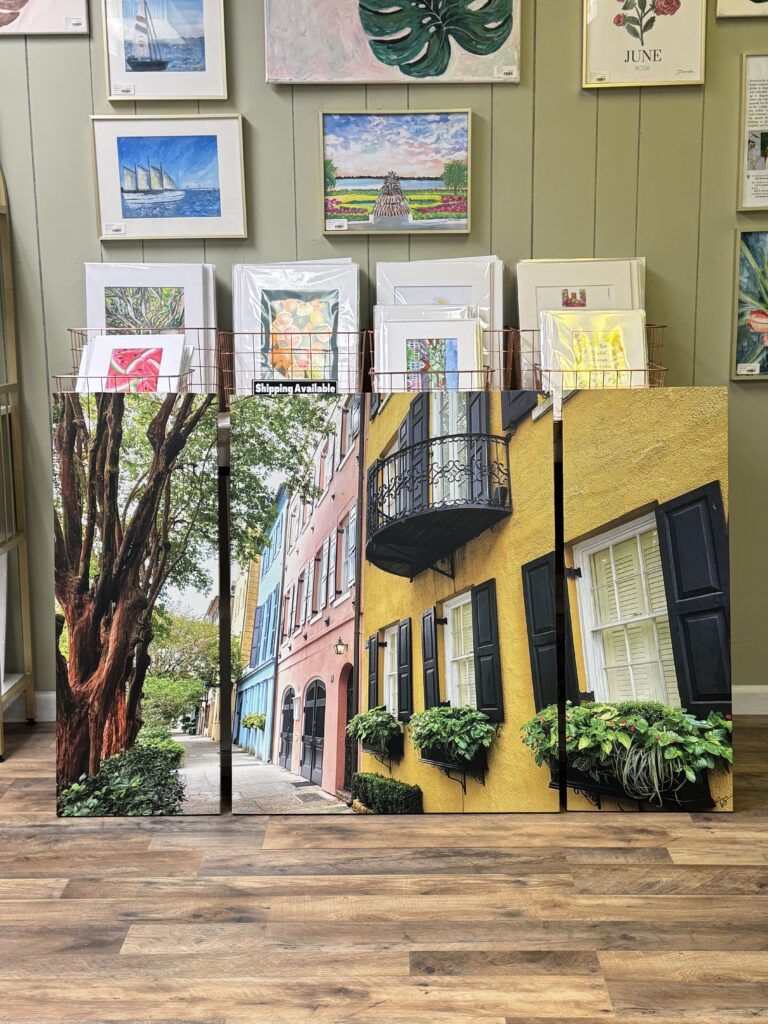
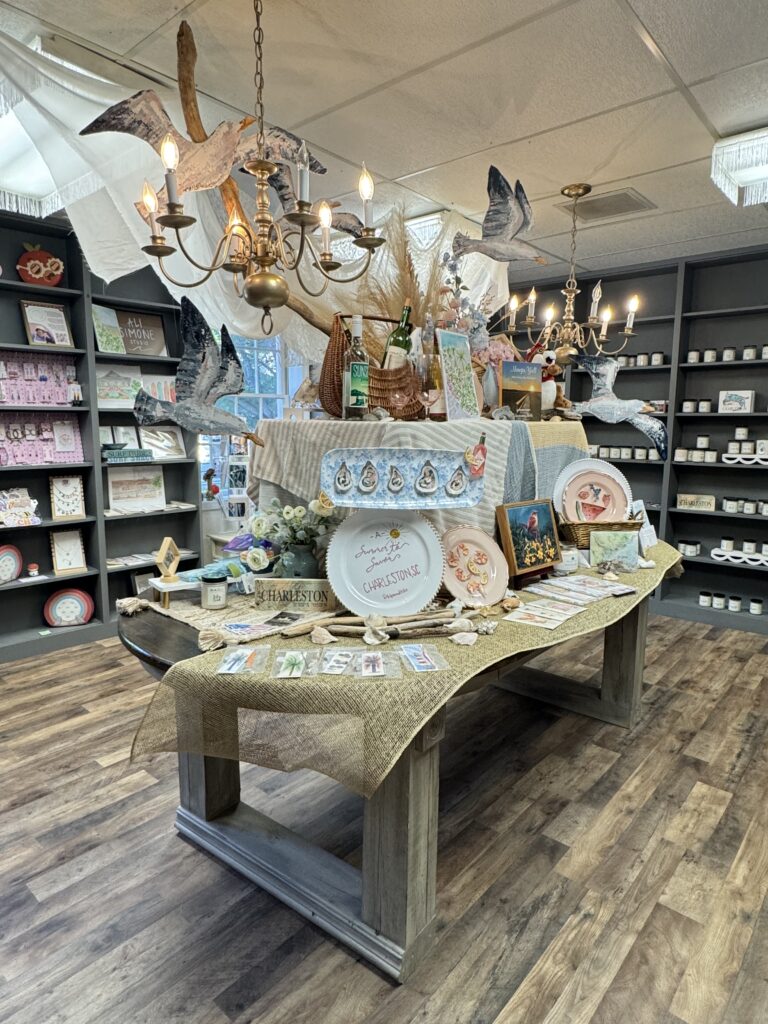
Located upstairs in the heart of downtown, Look Up Charleston is an art collective and gift destination showcasing the work of 35+ local artists and makers and more than 1,000 Charleston-made creations.

This is the place to skip the generic souvenir and find something that actually feels like Charleston.

Browse local artwork, jewelry, accessories, home décor and handmade treasures while everyone searches for that final “I found this in Charleston” gift.

It’s also a perfect stop for:

Bridesmaid gifts • A special keepsake for the bride • Hostess gifts • Charleston-made souvenirs • One-of-a-kind finds

Bachelorette challenge: Give everyone a small budget and have them find one Charleston-made gift that captures something about the bride—or the weekend.

Then gather everyone for one final group photograph before heading toward the waterfront.

Look Up Charleston on Instagram

5:30 PM — One Last Charleston Photoshoot

If the group wants a final set of photographs, this is the perfect time.

Think:

Sundresses. Historic homes. Sweet tea. Palm trees. The Battery.

Or take the celebration to Sullivan’s Island or Folly Beach for a completely different backdrop.

The goal isn’t a formal photoshoot this time. It’s capturing the feeling of the weekend.

www.instagram.com/lookupcharleston

6:30 PM — Sunset Drinks

Don’t rush directly to dinner.

Have one last Charleston cocktail while the sky turns golden.

A rooftop such as Citrus Club makes an ideal setting for the final toast.

Raise a glass to the bride, the friendships and the fact that everyone somehow survived the weekend.

8:00 PM — The Farewell Dinner

Keep the final dinner celebratory but slightly less ambitious than night one.

Choose somewhere beautiful, order a few dishes for the table and let everyone relive the weekend.

Then finish with dessert—or one final cocktail.

Because technically, it’s still the bachelorette weekend.

https://www.instagram.com/thepinkfiggy

THE CHARLESTON BACHELORETTE CHECKLIST

DINING
✓ Lowcountry lunch
✓ Dress-up dinner
✓ Charleston brunch
✓ Rooftop cocktails
✓ Farewell dinner

SPA
✓ Massage
✓ Facial
✓ Wellness time
✓ Group spa experience

SHOPPING
✓ King Street
✓ French Quarter
✓ Designer boutique
✓ Local Charleston gifts
✓ Look Up Charleston

PHOTOS
✓ Rainbow Row
✓ The Battery
✓ South of Broad
✓ Waterfront Park
✓ Historic Charleston streets
✓ Golden-hour beach

EXPERIENCES
✓ Candle-making or perfume-making
✓ Historic streets
✓ Charleston architecture
✓ Optional beach excursion

NIGHTLIFE
✓ Rooftop
✓ Cocktail lounge
✓ Dancing
✓ One final toast

THE SECRET TO A GREAT CHARLESTON BACHELORETTE

Don’t try to conquer Charleston.

Experience it.

Walk slowly beneath the live oaks. Stop for a cocktail you didn’t plan on having. Take too many photographs. Buy something beautiful. Let the bride pick the dessert. Laugh until you’re exhausted.

And before you leave, take home something made by a Charleston artist—not simply something with the word Charleston printed on it.

Because the best souvenirs aren’t things you buy.

They’re the things that remind you where you were, who you were with and how it felt to be there.

Charleston is at its best when the itinerary leaves room for a little magic.

48 hours. One unforgettable bride. And a city that knows something about celebrating life’s beautiful moments.

Planning note: Restaurant, spa, workshop and nightlife hours and availability can change. Confirm current hours, reservations and group policies directly with each business before booking.

Stay connected and subscribe to Charleston Daily.

Francis Salvador: The South Carolinian Who Became the First Jew Killed for American Independence Mortally Wounded 250 Years Ago Today

By Mark A Leon 

Francis Salvador died before he ever knew whether the country he fought for would survive.

On a remote South Carolina frontier, just weeks after the Declaration of Independence was adopted in Philadelphia, a 29-year-old Jewish immigrant named Francis Salvador was mortally wounded fighting for the American cause.

There is a haunting possibility that he never knew the Declaration had been approved. News traveled slowly in 1776, and Salvador was deep in the backcountry when he entered the fight on July 31. By the time the news of American independence reached South Carolina, he was already gone.

He would never return to his wife and children in England. He would never see the United States become a nation.

But Salvador had already helped shape the country he died defending.

His story is extraordinary: an immigrant who arrived in Charleston seeking a new beginning, a Jewish pioneer who broke barriers in South Carolina politics, and a patriot who ultimately exchanged a life of promise for a cause whose outcome remained uncertain.

Francis Salvador was 29. The country he fought for was barely a month old.

And on the last day of July 1776, his name became part of the story of American independence.

Francis Salvador: A Brief Biography

Born: 1747, London, England

Died: August 1, 1776, South Carolina

Age: 29

Faith: Jewish, Sephardic

Occupation: Planter, legislator and militia officer

Arrived in South Carolina: December 6, 1773

Political distinction: First Jewish person elected to South Carolina’s legislature and the first Jewish American elected to a popular assembly

Revolutionary service: Patriot militia during the Cherokee War of 1776

Historical distinction: First known Jewish person to die fighting for the American revolutionary cause

South Carolina connection: His plantation, Corn Acre, was in the Ninety Six District near present-day Greenwood County.

On July 31, 1776, Francis Salvador entered battle. On August 1, he died.

More than two centuries later, his story remains part of South Carolina’s revolutionary history—and the larger American story of those who fought, sacrificed and believed in the promise of a new nation.

Stay connected and subscribe to Charleston Daily.

South Carolina Ranks Among the Worst States for Women in WalletHub’s 2026 Study

By Mark A Leon

South Carolina has once again found itself near the bottom of a national quality-of-life ranking. According to WalletHub’s 2026 Best & Worst States for Women report, the Palmetto State ranks 45th out of 51, including the District of Columbia, placing it in the bottom 10% nationwide for women’s overall well-being.

The annual study compares all 50 states and Washington, D.C., using a broad set of economic, health care, safety, education, and leadership indicators that measure how well each state supports women throughout different stages of life. While South Carolina continues to attract new residents and businesses, the report suggests many women still face significant barriers compared with those living in much of the country.

Why South Carolina Ranked So Low

WalletHub’s methodology examines more than two dozen metrics grouped into two primary categories: Women’s Economic & Social Well-Being and Women’s Health Care & Safety. South Carolina’s lower ranking reflects challenges across several areas rather than a single issue.

Wage and Economic Opportunity

One of the largest contributors is women’s economic well-being. South Carolina continues to trail many states in median earnings for women, and the gender pay gap remains a persistent challenge. Lower average wages, combined with higher rates of financial insecurity for single mothers and working women, reduced the state’s overall score.

Women also face disparities in executive leadership positions and business ownership opportunities compared with higher-ranked states, limiting career advancement and long-term earning potential.

Health Care Access

Access to quality health care also weighed heavily on the rankings. WalletHub evaluates preventive care, the quality of women’s hospitals, access to physicians, and broader health outcomes.

Although South Carolina is home to nationally recognized medical providers, many rural communities continue to experience shortages of physicians and specialists. Geographic disparities can make routine screenings, maternal care, and specialized services more difficult to access for thousands of women.

Safety Concerns

Public safety is another area where South Carolina struggled. WalletHub incorporates measures related to violence against women and overall safety into its rankings.

Advocates have long pointed to domestic violence, sexual assault, and barriers to support services as ongoing issues requiring continued investment in prevention, education, and victim resources.

Political Representation

Women’s representation in elected office and leadership positions also influences the rankings. States with greater participation by women in government and senior leadership tend to score higher, reflecting broader opportunities for civic engagement and policy influence.

South Carolina continues to lag behind many states in female representation across several levels of government.

Bright Spots for the Palmetto State

While the overall ranking is disappointing, the report does not suggest South Carolina is falling behind in every category. The state has experienced strong population growth, expanding employment opportunities, and continued investment from major employers across manufacturing, logistics, health care, and technology.

Organizations throughout South Carolina are also working to improve outcomes for women through workforce development programs, maternal health initiatives, entrepreneurship support, and expanded educational opportunities.

Looking Ahead

WalletHub’s rankings provide a snapshot rather than a definitive measure of life in any one state. Still, landing 45th out of 51 highlights areas where policymakers, businesses, health care providers, and community organizations can focus future efforts.

Improving access to quality health care, narrowing wage disparities, expanding leadership opportunities, and strengthening protections for women could help South Carolina improve its standing in future rankings while enhancing quality of life for the more than 2.6 million women who call the state home.

Stay connected and subscribe to Charleston Daily.

25 Things You Probably Didn’t Know About Charleston, South Carolina

Charleston is consistently ranked among America’s favorite cities, but beyond its cobblestone streets and pastel-colored homes lies a fascinating collection of firsts, hidden stories, famous residents, and remarkable places. Whether you’ve lived in the Lowcountry for decades or are planning your first visit, these 25 facts reveal why Charleston is one of the most unique cities in the United States.

1. Charleston Was Once the Wealthiest City in America

During the late 1700s and early 1800s, Charleston ranked among the richest cities in North America thanks to its booming rice, indigo, and Sea Island cotton industries. At one point, it rivaled New York, Philadelphia, and Boston in wealth and influence. Grand mansions along the Battery and throughout the Historic District were built during this era, many of which still stand today. The city’s prosperity also helped establish Charleston as one of the country’s earliest centers for banking, commerce, architecture, and international trade.


2. America’s First Museum Opened Here

The Charleston Museum opened in 1773, making it the oldest museum in the United States. Its collections include artifacts from colonial Charleston, Civil War history, natural history, and Lowcountry culture. Visitors can also explore preserved historic homes and one of the nation’s most impressive collections of decorative arts and textiles. The museum continues to uncover new discoveries through archaeological research and partnerships with local historians.


3. George Washington Stayed Here for a Week

President George Washington visited Charleston in 1791 during his Southern Tour. Crowds lined the streets, elaborate banquets were held in his honor, and the city celebrated his visit for an entire week. His journey helped strengthen relationships between the newly formed federal government and Southern states after the Revolutionary War. Several buildings and locations associated with his visit remain important landmarks throughout downtown Charleston.


4. The Pineapple Became Charleston’s Symbol for a Reason

Today you’ll find pineapples on gates, fountains, signs, and homes throughout Charleston. In colonial America, the fruit symbolized hospitality because it was rare and expensive to obtain. Returning sea captains often displayed pineapples outside their homes to signal they had safely returned and welcomed visitors. The famous Pineapple Fountain at Waterfront Park has become one of the city’s most photographed attractions and a favorite gathering place for visitors.


5. Charleston Has More Than 2,800 Historic Buildings

The city’s Historic District contains one of the largest collections of preserved historic architecture in the United States, with homes dating back more than 300 years. Walking through downtown feels like stepping into a living history museum. Strict preservation ordinances have helped protect these structures from modern redevelopment for nearly a century. Architectural styles range from Colonial and Georgian to Federal, Greek Revival, Victorian, and Italianate, showcasing every era of Charleston’s development.


6. The First Public College Museum in America Is Here

The Mace Brown Museum of Natural History at the College of Charleston houses one of the world’s largest collections of Oligocene fossils. Its exhibits feature ancient whales, giant sharks, marine reptiles, and prehistoric sea life that once inhabited South Carolina. Many of the fossils were discovered throughout the Lowcountry by local paleontologists and volunteers. Admission is free, making it one of Charleston’s hidden educational treasures.


7. Charleston Was Once Completely Surrounded by Defensive Walls

The city earned its name from King Charles II, and for much of its early history it was known as Charles Town. Massive walls and fortifications protected the settlement from pirates and foreign attacks. Portions of the original defensive system can still be traced through archaeological discoveries and historical maps. These fortifications helped Charleston become one of Britain’s most secure colonial ports in North America.


8. America’s First Golf Club Was Founded Here

The South Carolina Golf Club, established in 1786, is widely recognized as the first organized golf club in the United States. Scottish merchants living in Charleston introduced the game to the city decades before golf became popular elsewhere in America. Although the original club eventually disappeared, its legacy helped establish Charleston as the birthplace of American golf. Today, the region is home to dozens of nationally ranked public and private golf courses.


9. The First Shots of the Civil War Happened in Charleston Harbor

On April 12, 1861, Confederate forces fired on Fort Sumter, marking the beginning of the American Civil War. The battle lasted 34 hours before Union forces surrendered the fort. Today, visitors can reach Fort Sumter only by boat, making the journey part of the historical experience. Rangers provide detailed accounts of the events that forever changed American history and shaped Charleston’s future.


10. Rainbow Row Wasn’t Always Colorful

Today it’s one of Charleston’s most photographed landmarks, but the famous homes were painted in bright pastel colors during the 1930s restoration movement to revive the neighborhood. Before that restoration, many of the buildings had fallen into disrepair after the Civil War. The vibrant colors are now believed to reflect influences from Caribbean architecture and Charleston’s long maritime history. Rainbow Row has become one of the most recognizable streets in the South and appears on countless postcards, travel guides, and social media feeds.

11. Bill Murray Is Practically a Local

Actor and comedian Bill Murray owns a home in the Charleston area and has become something of a local legend. Unlike many celebrities, he’s known for blending into everyday life, often appearing unannounced at local restaurants, bars, and community events. He’s also a co-owner of the Charleston RiverDogs minor league baseball team and is frequently spotted entertaining fans at games. His spontaneous interactions—including serving drinks, singing karaoke, or taking photos with visitors—have only added to his reputation as Charleston’s most approachable celebrity.


12. Darius Rucker Still Calls Charleston Home

Grammy-winning musician Darius Rucker was born and raised in Charleston and proudly represents the city wherever he performs. Long before launching a successful country music career, he gained international fame as the lead singer of Hootie & the Blowfish. Rucker continues to support local charities, educational initiatives, and community organizations throughout the Lowcountry. His annual concerts and philanthropic efforts have helped raise millions of dollars for children’s hospitals and other South Carolina nonprofits.


13. Charleston Has America’s Only Commercial Tea Garden

Nestled on picturesque Wadmalaw Island, the Charleston Tea Garden is the only large-scale commercial tea farm in North America. More than 300 acres of tea plants produce varieties enjoyed across the United States, giving visitors a rare glimpse into American tea production. Guests can tour the fields aboard a trolley, watch tea being processed in the factory, and sample freshly brewed tea. The attraction has become one of the region’s most unique day trips, combining agriculture, history, and scenic Lowcountry landscapes.


14. Angel Oak Is Older Than the United States

The magnificent Angel Oak on Johns Island is estimated to be between 400 and 500 years old, making it one of the oldest living oak trees east of the Mississippi River. Its sprawling canopy shades more than 17,000 square feet, while some of its massive limbs stretch nearly 200 feet from the trunk. The tree has survived centuries of hurricanes, wars, and development, becoming a powerful symbol of resilience. Visitors often describe standing beneath its enormous branches as one of the most unforgettable experiences in the Charleston area.


15. America’s First Purpose-Built Theater Was Here

Charleston’s Dock Street Theatre traces its origins to 1736, making it the site of America’s first building constructed specifically for theatrical performances. Although the original structure was destroyed by fire, today’s beautifully restored theater stands on the same historic location. It continues to host professional productions, concerts, and cultural performances throughout the year. Walking inside the theater offers visitors a chance to experience nearly three centuries of Charleston’s performing arts heritage.


16. Hidden Alleyways Tell Colonial Stories

Downtown Charleston is filled with narrow alleyways that many visitors overlook while exploring the city’s main streets. Passageways such as Philadelphia Alley, Longitude Lane, and Unity Alley were once bustling shortcuts for merchants, horse-drawn carriages, and dockworkers. Philadelphia Alley is especially famous for its history of duels during the 18th and 19th centuries, earning the nickname “Dueler’s Alley.” Today, these quiet lanes provide a fascinating glimpse into Charleston’s colonial past while offering some of downtown’s best hidden photo opportunities.


17. Pirates Once Terrorized Charleston Harbor

Long before Charleston became a popular tourist destination, pirates regularly sailed the waters surrounding the city. Notorious figures such as Blackbeard and the “Gentleman Pirate,” Stede Bonnet, operated along the Carolina coast, attacking merchant ships carrying valuable cargo. Charleston played a significant role in anti-piracy campaigns, helping the British Crown eliminate many pirate strongholds. Pirate legends, hidden treasure stories, and maritime folklore remain woven into the city’s history and continue to inspire ghost tours and local storytelling.


18. Charleston Has Its Own Distinct Accent

The traditional Charleston accent is unlike any other in the South, blending influences from England, France, the Caribbean, West Africa, and the American South. Historians believe the city’s status as one of the nation’s busiest ports created a unique linguistic mix over several centuries. Although fewer lifelong residents still speak with the classic Charleston accent today, it can occasionally be heard among older generations. Linguists consider it one of America’s most distinctive regional dialects and an important part of the city’s cultural identity.


19. Magnolia Cemetery Is Both Historic and Beautiful

Founded in 1850 along the banks of the Ashley River, Magnolia Cemetery is one of Charleston’s most picturesque and historically significant landmarks. The cemetery serves as the final resting place for Confederate soldiers, politicians, prominent families, artists, and community leaders who helped shape South Carolina’s history. Moss-draped live oaks, peaceful ponds, and Victorian-era monuments make it feel more like a botanical garden than a traditional cemetery. It’s also one of the best places in Charleston to spot wildlife, including herons, egrets, and even alligators.


20. Charleston Has Hidden Tunnels Beneath Downtown

For generations, stories have circulated about secret tunnels running beneath parts of downtown Charleston. While historians have confirmed that some underground passages existed beneath older commercial buildings and waterfront warehouses, many of the more dramatic tales remain part local folklore. Some tunnels were believed to transport goods between businesses, while others may have served practical purposes related to drainage or storage. Whether fact or legend, the mystery surrounding Charleston’s underground world continues to captivate historians, ghost tour guides, and curious visitors alike.

21. She Crab Soup Was Born in Charleston

Creamy, rich, and unmistakably Lowcountry, She Crab Soup is one of Charleston’s signature dishes. Local legend credits its creation to the early 1900s when Charleston’s African American butlers and chefs were asked to elevate traditional crab soup for President William Howard Taft during a visit to the city. By adding the bright orange roe (eggs) of female blue crabs and a splash of sherry, they created the luxurious version that remains a staple on menus throughout the region. Today, many Charleston restaurants fiercely guard their recipes, and the annual She Crab Soup Cook-Off celebrates one of the city’s most beloved culinary traditions.


22. Charleston City Market Has Welcomed Visitors for More Than 200 Years

Stretching four city blocks through the heart of downtown, Charleston City Market is one of the oldest continuously operating public markets in the United States. Originally established in the early 1800s as a place where local farmers, fishermen, and merchants sold fresh goods, it has evolved into one of Charleston’s most recognizable attractions. Today, visitors can browse handcrafted artwork, jewelry, locally made foods, and the famous sweetgrass baskets woven by Gullah artisans using techniques passed down through generations. Welcoming millions of visitors each year, the market offers a vibrant blend of history, culture, and shopping that reflects the spirit of the Lowcountry.


23. Charleston Is Known as “The Holy City”

Few American cities have as many church steeples defining their skyline as Charleston, earning it the nickname “The Holy City.” Throughout its history, Charleston became known for its remarkable level of religious tolerance, attracting Anglicans, Huguenots, Presbyterians, Baptists, Catholics, Methodists, Jews, and many other faith communities. The city’s skyline is still dominated by historic churches, many dating back to the 1700s and 1800s, creating one of the most recognizable architectural landscapes in the South. Every spring and fall, tours of these sacred spaces allow visitors to admire stunning stained glass, historic cemeteries, and centuries-old craftsmanship.


24. The Morris Island Lighthouse Once Stood on Dry Land

One of South Carolina’s most iconic landmarks, the Morris Island Lighthouse was completed in 1876 to guide ships safely into Charleston Harbor. When it was first constructed, the lighthouse stood hundreds of feet inland, surrounded by homes and military installations on Morris Island. Decades of hurricanes, erosion, and changing tides gradually claimed the shoreline, leaving the lighthouse standing alone in the Atlantic Ocean approximately 1,300 feet offshore. Although visitors can no longer enter the lighthouse, it remains one of the most photographed locations in the Charleston area, especially at sunrise and sunset from nearby Folly Beach.


25. Charleston Is One of America’s Best Places to Find Shark Teeth

Millions of years before Charleston existed, much of the Lowcountry lay beneath a warm prehistoric sea teeming with giant sharks, whales, and marine life. As ocean currents and tides continue to reshape the coastline, fossilized shark teeth, whale bones, stingray plates, and ancient shells regularly wash onto area beaches and riverbanks. Beaches along Folly Beach, Morris Island, and Edisto Island are especially popular with fossil hunters searching for teeth from the massive Megalodon shark, which lived millions of years ago. It’s one of the few places in the country where an ordinary beach walk can turn into a genuine prehistoric treasure hunt.


Charleston: A City Full of Surprises

Charleston’s beauty is undeniable, but its true magic lies in the stories hidden behind every cobblestone street, church steeple, waterfront view, and centuries-old oak tree. From being home to America’s first museum and first golf club to producing legendary chefs, musicians, and preserving one of the nation’s richest collections of history, the Holy City continues to surprise even lifelong residents.

Whether you’re visiting for a weekend or have called the Lowcountry home for decades, Charleston rewards curiosity. The deeper you explore its neighborhoods, waterways, historic landmarks, and local traditions, the more you’ll discover that there is always another remarkable story waiting just around the corner.

Stay connected and subscribe to Charleston Daily.

6 Can’t-Miss Events Happening This Weekend in Charleston, SC (July 30 – August 2, 2026)

By Mark A. Leon

If you’re looking for the best things to do around the Lowcountry this weekend, you’re in luck. From a farewell performance by a music legend and America’s favorite farmers market to baseball, live music, and waterfront adventures, Charleston and its surrounding communities are offering something for every age and interest. Whether you’re a local planning a staycation or a visitor exploring the Holy City, here are seven events worth adding to your weekend itinerary.

Barry Manilow Brings His Farewell Tour to North Charleston

One of the biggest entertainment events of the weekend belongs to music legend Barry Manilow, who brings “The Last Charleston Concert” to the North Charleston Coliseum. Fans can expect an evening filled with timeless hits including MandyCopacabanaCan’t Smile Without You, and I Write the Songs. The performance marks what is expected to be Manilow’s final Charleston-area appearance, making it a must-see event for longtime fans.

Event Website: https://www.northcharlestoncoliseumpac.com/events/detail/barry-manilow


Charleston Farmers Market

Saturday mornings in downtown Charleston are synonymous with the Charleston Farmers Market at Marion Square. More than just a place to shop, the market brings together local farmers, artisans, specialty food vendors, and musicians in one of the city’s most vibrant outdoor settings. Pick up fresh produce, handmade goods, flowers, baked treats, and enjoy live entertainment while supporting local businesses.

Location: Marion Square, Charleston

Website: https://www.charlestonfarmersmarket.com

Follow on Instagram.


Music to Mimosas at Freshfields Village

Celebrate the weekend with Freshfields Village’s with Music on the Green, Monkee’s and Mimosas and Spirit Tasting. All happening this weekend over on Kiawah.

Website: https://freshfieldsvillage.com/events


Paint & Sip at Magnolia Plantation & Gardens

Learn to paint sunflowers and daisies on your own set of stemless wine glasses. Join us in the Magnolia Workshop for a class with local artist Kristen Cauble-Morse for refreshments, art, and fun!

Enjoy complimentary admission with your ticket!

What’s Included: admission, all materials (including 2 Magnolia logo wine glasses), light bites, & fun sips.

Cost: $75

August 1, 2026

Website: https://www.magnoliaplantation.com/events/paint-sip-sunflowers


Charleston Wine + Food 2026 Summer Sizzle – June 18 – August 18, 2026

Charleston Wine + Food Summer Sizzle tickets are on sale NOW! 

What is the CHSWF Summer Sizzle Series? Running from June through August, CHSWF’s Summer Sizzle blends hands-on experiences, thought-provoking conversations, and bar takeovers — all anchored in the signature hospitality and flavor-forward storytelling Charleston Wine + Food is known for.

There’s still so much more good to cook up, share, and savor. With every bite, every story, and every gathering, we’re setting the table for a more vibrant, inclusive, and delicious future. Visit chswf.org for tickets!

Website: https://chswf.org/schedule/


Sunday Brunch Farmers Market at Charleston Pour House

Wrap up the weekend at the Sunday Brunch Farmers Market hosted by the Charleston Pour House on James Island. This popular weekly gathering features local produce, handcrafted goods, food vendors, live music, and a laid-back community atmosphere that perfectly captures the spirit of Charleston.

Website: https://www.sundaybrunchfarmersmarket.com


Make the Most of Your Weekend

Whether you’re singing along with Barry Manilow, discovering local artisans at Marion Square, catching a RiverDogs game, enjoying live music downtown, or spending time along Charleston Harbor, this weekend offers countless opportunities to experience everything that makes the Lowcountry special.

As always, it’s a good idea to purchase tickets in advance where required and check each venue’s website for the latest schedules, weather updates, and event details before heading out.

Stay connected and subscribe to Charleston Daily.

South Carolina has 3 Nobel Laureates: Learn About The Palmetto State’s Native-Born Prize Winners

By Mark A Leon

South Carolina has produced three Nobel Prize recipients who were born in the state. Their groundbreaking work in physics, medicine, and pharmacology has transformed science and improved the lives of millions around the world.

Charles Hard Townes

Born: July 28, 1915
Died: January 27, 2015
Birthplace: Greenville, South Carolina

Charles H. Townes revolutionized modern science through his pioneering work in quantum electronics. His research led to the invention of the maser, which became the scientific foundation for the laser—technology now used in medicine, communications, manufacturing, astronomy, and countless everyday devices.

In 1964, Townes shared the Nobel Prize in Physics with Nikolay Basov and Aleksandr Prokhorov “for fundamental work in the field of quantum electronics, which has led to the construction of oscillators and amplifiers based on the maser-laser principle.” 

Charles Hard Townes

Joseph Leonard Goldstein

Born: April 18, 1940
Birthplace: Sumter, South Carolina

Although he grew up in Kingstree, Goldstein was born in Sumter and became one of the world’s leading physician-scientists. Alongside colleague Michael Brown, he discovered how cells regulate cholesterol by using LDL receptors.

Their work fundamentally changed the understanding of cardiovascular disease and paved the way for treatments that have prevented millions of heart attacks and strokes.

In 1985, Goldstein received the Nobel Prize in Physiology or Medicine “for discoveries concerning the regulation of cholesterol metabolism.” 

Joseph Leonard Goldstein

Robert Francis Furchgott

Born: June 4, 1916
Died: May 19, 2009
Birthplace: Charleston, South Carolina

Robert F. Furchgott made one of the most important medical discoveries of the twentieth century when he demonstrated that the body produces nitric oxide, a molecule that signals blood vessels to relax and widen.

This breakthrough transformed cardiovascular medicine and led to advances in the treatment of heart disease, stroke, and erectile dysfunction.

In 1998, Furchgott shared the Nobel Prize in Physiology or Medicine with Louis J. Ignarro and Ferid Murad for their discoveries concerning nitric oxide as a signaling molecule in the cardiovascular system. 

Robert Francis Furchgott

South Carolina’s Nobel Legacy

Only three people born in South Carolina have received Nobel Prizes, but their discoveries have had an extraordinary global impact:

  • Charles H. Townes helped usher in the age of lasers, transforming science and technology.
  • Joseph L. Goldstein changed how physicians understand and treat cholesterol and heart disease.
  • Robert F. Furchgott uncovered the role of nitric oxide, reshaping cardiovascular medicine.

Together, these three South Carolinians demonstrate that world-changing discoveries can begin in places as diverse as Greenville, Sumter, and Charleston, leaving a legacy that extends far beyond the Palmetto State.

Stay connected and subscribe to Charleston Daily.

Charleston’s Main Library to Close for Major Renovation Project Beginning August 1

By Mark A Leon

Charleston County’s Main Library at 68 Calhoun Street will temporarily close Aug. 1 as work begins on an extensive renovation designed to modernize the downtown landmark and better serve the community. The renovation is expected to take about 18 months and marks the final phase of the library system’s voter-approved 2014 capital improvement program.

The project will create more accessible, family-friendly spaces by bringing children’s and teen services together on the same floor, refreshing public areas, upgrading technology, and expanding flexible programming spaces for community events and learning.

While the Main Library is closed, Charleston County Public Library will continue serving downtown patrons from a temporary location at 1142 Morrison Drive, where visitors will still be able to check out books, pick up holds, use public computers, access Wi-Fi, and participate in select library programs. The South Carolina Room has also been temporarily relocated as part of the renovation preparations.

Library officials say the renovation represents the final investment in a countywide modernization effort that has transformed library facilities across Charleston County over the past decade, ensuring the Main Library remains a vibrant community resource for years to come.

Stay connected and subscribe to Charleston Daily.

5 Great Live Music Venues Where You Can Dance, Discover Original Music and Feel Right at Home in Charleston, SC

By Mark A Leon

Charleston’s music scene is much more than cover bands on King Street. Across the city, you’ll find intimate clubs, neighborhood stages and legendary venues where touring artists share the spotlight with Lowcountry musicians. Whether you’re looking to dance until last call, hear the next great Americana songwriter or simply enjoy an authentic Charleston night out, these five venues capture the city’s diverse musical personality.

1. Charleston Pour House

If there’s one venue that embodies Charleston’s independent music culture, it’s the Charleston Pour House on James Island. Equal parts neighborhood gathering place and respected concert venue, the Pour House has built a reputation for booking original artists spanning jam bands, Americana, bluegrass, funk, reggae, indie rock and jazz. With both indoor and outdoor stages, nearly every night offers something different.

The atmosphere is refreshingly unpretentious. Locals, visitors, musicians and longtime regulars all mingle together, creating a community where everyone feels welcome. When the music gets moving, so does the crowd—making it one of Charleston’s best places to dance while discovering artists you may not have heard before.

Address: 1977 Maybank Highway, Charleston, SC 29412
Website: https://charlestonpourhouse.com


2. The Commodore

Step inside The Commodore and you’ll feel like you’ve been transported into a vintage supper club. Velvet curtains, chandeliers, dim lighting and a sparkling disco ball create one of Charleston’s most distinctive nightlife experiences.

Live bands perform funk, soul, R&B, Motown, jazz, blues and dance classics almost every evening, and unlike many venues, dancing isn’t just encouraged—it’s expected. The crowd ranges from young professionals to longtime Charleston residents, creating an energetic yet sophisticated atmosphere where people come specifically to enjoy live musicians instead of simply background entertainment.

Address: 504 Meeting Street, Suite C, Charleston, SC 29403
Website: https://www.thecommodorechs.com


3. Music Farm

For more than three decades, Music Farm has been one of Charleston’s premier destinations for live concerts. Following its renovation, the venue continues attracting nationally touring artists alongside regional favorites covering rock, alternative, country, hip-hop, indie, electronic and pop.

Unlike traditional theaters, Music Farm’s standing-room layout keeps audiences close to the performers, making every concert feel energetic and personal. It’s the kind of venue where strangers quickly become concert buddies, united by a shared love of live music.

Address: 32 Ann Street, Charleston, SC 29403
Website: https://musicfarm.com


4. The Royal American

Tucked along Morrison Drive, The Royal American has become one of Charleston’s favorite gathering spots for musicians, artists and creatives. Its laid-back, industrial atmosphere perfectly complements an eclectic lineup of original bands featuring indie rock, country, Americana, folk, blues and alternative music.

The outdoor stage creates a backyard-party atmosphere where conversations happen between songs and the dance floor forms naturally as the night progresses. Rather than polished nightlife, The Royal American embraces authenticity—making it one of the city’s most beloved venues for discovering local talent.

Address: 970 Morrison Drive, Charleston, SC 29403
Website: https://theroyalamerican.com


5. Forte Jazz Lounge

For those who appreciate exceptional musicianship, Forte Jazz Lounge offers one of Charleston’s most intimate listening experiences. The venue showcases nationally recognized jazz artists alongside talented regional performers, while also featuring evenings dedicated to Motown, soul, R&B and classic American songbook performances.

Although guests often remain seated for traditional jazz sets, themed evenings frequently transform into lively nights of dancing. Elegant without being intimidating, Forte attracts music lovers who genuinely come to listen, making every performance feel personal and memorable.

Address: 477 King Street, Charleston, SC 29403
Website: https://fortejazzlounge.com

Charleston’s Soundtrack

One of the best things about Charleston’s live music scene is its authenticity. Instead of massive arenas, the city thrives on intimate venues where audiences connect directly with performers and where original music still matters. Whether you’re dancing to a funk band at The Commodore, discovering an emerging songwriter at the Charleston Pour House, catching a national touring act at Music Farm, enjoying an indie concert at The Royal American or soaking in world-class jazz at Forte, you’ll quickly understand why Charleston’s music community continues to earn a loyal following.

The next time you’re planning a night out, skip the playlists and experience Charleston the way locals do—with live music, great company and a dance floor that always welcomes one more person.

Stay connected and subscribe to Charleston Daily.

Photo Credit: Charleston Daily Publications

Food & Wine Classic Returns to Charleston in November 2026 with Celebrity Chefs, Grand Tastings and Exclusive Experiences

By Mark A Leon

Charleston’s nationally acclaimed culinary scene will once again take center stage this fall as the Food & Wine Classic in Charleston returns November 13–15, 2026, bringing together some of the biggest names in food, wine and hospitality for an unforgettable weekend in the Holy City. Presented in partnership with Food & WineTravel + LeisureSouthern Living and Explore Charleston, the three-day event celebrates Lowcountry cuisine alongside world-class chefs, winemakers, distillers and culinary personalities.

Guests can expect immersive cooking demonstrations, expert-led beverage seminars, exclusive dining experiences and the festival’s signature Grand Tastings, where more than 100 wineries, distilleries, restaurants and culinary brands offer samples throughout the weekend. The event continues to build on Charleston’s reputation as one of America’s premier food destinations.

Festival Highlights

  • Dates: November 13–15, 2026
  • Four Grand Tastings featuring 100+ chefs, restaurants, wineries, breweries and spirits brands.
  • 40+ celebrity chef demonstrations and beverage seminars throughout the weekend.
  • Exclusive culinary experiences curated by Food & WineTravel + Leisure and Southern Living.
  • Opportunities to meet nationally recognized chefs while exploring Charleston’s celebrated culinary culture.

Helpful Planning Links

Whether you’re a dedicated foodie, wine enthusiast or simply looking for a memorable Charleston weekend, the 2026 Food & Wine Classic offers an exceptional opportunity to experience the best of the Lowcountry alongside some of the most respected names in the culinary world. Weekend passes and select exclusive experiences are available now, with several events expected to sell out well before November.

Stay connected and subscribe to Charleston Daily.