Editorial:  When Charleston Stops Tasting Like Charleston

By Mark A Leon

There was a time when Charleston’s culinary identity felt as unmistakable as its architecture.

You could taste the Lowcountry in a bowl of shrimp and grits, a plate of she-crab soup, a basket of fried seafood or a serving of red rice. Charleston cooking was shaped by geography, history, agriculture and the generations of people who called this place home. It wasn’t simply food. It was a sense of place.

But something is changing.

Walk around Charleston today and you’ll find Detroit-style pizza, New York-style bagels, New York-style pizza, Texas-style steaks and restaurants built around culinary traditions imported from cities and regions thousands of miles away. None of these foods are inherently bad—in fact, many are excellent. Charleston has always welcomed outside influences.

The question is whether we are becoming so focused on what’s popular elsewhere that we are slowly losing sight of what makes Charleston different.

Part of this shift is understandable. Charleston is no longer the relatively sleepy Southern city it once was. It is a national destination, a booming tourist market and a magnet for people moving here from across the country. New residents bring their tastes with them, and restaurant owners are responding.

That is business.

If people from New York want the bagels they grew up eating, there is an opportunity. If diners want a Detroit-style square of crispy-edged pizza or a Texas-sized steak, someone will eventually provide it.

But there is a larger cultural question hiding beneath the menu.

When every growing American city begins offering the same culinary trends—smash burgers, Detroit pizza, New York bagels, Nashville hot chicken, Texas barbecue and steakhouses—what separates one city from another?

Charleston cannot afford to become interchangeable.

The irony is that Charleston has an extraordinary culinary history from which to draw. The Lowcountry has one of the most distinctive food cultures in America, influenced by Indigenous traditions, West African heritage, European settlers, enslaved cooks, coastal agriculture and generations of Southern home cooking.

There is an enormous difference between simply serving Southern food and pushing Lowcountry cuisine forward.

Charleston doesn’t need to reject New York pizza. It doesn’t need to banish Detroit-style pizza or pretend a good bagel isn’t worth eating. A great food city should welcome experimentation. Culinary cross-pollination is part of what makes restaurants exciting.

But perhaps the goal should be more than giving Charleston residents everything they can get somewhere else.

Maybe the next generation of Charleston restaurants should ask a different question:

What can we create here that someone cannot experience anywhere else?

Imagine Charleston chefs taking the techniques of New York, Detroit or Texas and filtering them through the Lowcountry. Imagine a culinary evolution that respects tradition without being trapped by it.

That is how food cultures survive. They evolve.

Charleston’s culinary identity doesn’t have to disappear because the city is changing. But it does require people willing to protect, reinvent and celebrate the flavors that made this place special in the first place.

Because Charleston can be a city where you find a great New York bagel.

It can also be a city where, after one bite, you know exactly where you are.

And that distinction matters.

Stay connected and subscribe to Charleston Daily.

New Texas-Style Steakhouse Coming to James Island This Fall

By Mark A Leon

James Island is about to get a new neighborhood steakhouse, and its owners are hoping to create something that feels less like a traditional fine-dining destination and more like a place locals can make their own.

Char House Social, the newest restaurant from Josh and Katie Drewry, owners of The Harlow, is planned for 1234 Camp Road, in the space that most recently housed Smoky Yolk Cafe and previously was home to Smoky Oak Taproom. The restaurant is expected to open this fall. 

The concept will take its inspiration from Texas-style steakhouses, with char-grilled steaks, cocktails, live music and a decidedly relaxed atmosphere.

For the Drewrys, the new restaurant is also a continuation of their relationship with James Island.

From The Harlow to Char House Social

The Drewrys opened The Harlow on Harbor View Road in November 2023. The restaurant quickly established itself as a neighborhood gathering place, combining oysters and other seafood with burgers, cocktails and a casual indoor-outdoor atmosphere. 

Char House Social will take a different culinary direction while maintaining that neighborhood-first philosophy.

The menu is expected to feature familiar steakhouse cuts including ribeyes, filets and New York strips, along with a burger for those looking for something less traditional. 

More than just steak

The restaurant will lean into the kind of casual, social environment that works particularly well for James Island. The space is undergoing extensive renovations designed to accommodate sports fans, live music lovers and groups looking for a place to gather.

Multiple televisions will surround the bar, while a permanent stage will provide space for live performances. Outdoors, several patio areas are planned, along with a second stage in an area the owners are calling The Yard at Char House

The beverage program will feature a broad selection of whiskey and bourbon, along with wine, local craft beer and cocktails. 

A new chapter for an old James Island space

The Camp Road property has seen several restaurant concepts in recent years. Smoky Oak Taproom operated there for 13 years before closing in 2021. Dills & Camp Sundries followed, and later the space became home to Smoky Yolk Cafe, which closed last November. The hope is this new concept will leave a lasting impression.

No reservations, but plenty of reasons to stay awhile

Char House Social will not take traditional reservations, although larger parties will be able to call ahead to request a table. 

With steakhouse fare, bourbon and cocktails, multiple outdoor spaces and live music, the concept appears designed to blur the line between restaurant and neighborhood hangout.

And that may ultimately be the biggest draw.

For James Island residents, Char House Social promises to be less about dressing up for a special occasion and more about having somewhere close to home to grab a great steak, listen to music, watch a game or meet friends for a drink.

Char House Social is expected to open this fall at 1234 Camp Road on James Island. Updates are being shared on Instagram at @charhousesocial

Stay connected and subscribe to Charleston Daily.
University of South Carolina to celebrate 225th anniversary

The university will celebrate two centuries of passion, spirit and success during 2026-27 academic year

In July of this year, the United States commemorated the 250th anniversary of the signing of the Declaration of Independence, and this fall, the University of South Carolina is marking a milestone of its own.

Founded just 25 years after the signing of the Declaration, USC will celebrate its 225th anniversary throughout the 2026-27 academic year — beginning today (Aug. 18) with the start of the fall 2026 semester.

The anniversary will be incorporated across campus events, honoring the impact the university has had on its students, faculty, staff and local community and looking ahead to what the future holds. 

“This milestone year in the life of our university is an ideal moment for celebration, and we are excited to share these events with our community of Gamecock supporters,” USC President Michael Amiridis says. “We are looking back proudly on more than two centuries as the state’s flagship university, and, at the same time, we are renewing our deep commitment to creating a stronger South Carolina through higher education.”

This year will commemorate 225 years of resilience, spirit and success at USC over the last two centuries, anchored in memories and connections that unite all Gamecocks across generations.

That’s reflected in USC’s 225 commemorative graphic, which is inspired by the university’s campus, incorporating the iconic shape of the historic Horseshoe’s signature brick pathway and the Maxcy Monument.

One of the first major events in the fall semester will be the president’s annual State of the University address, which will be Sept. 9 at 10 a.m. on the Horseshoe. The address is an opportunity for the campus community to celebrate the successes of the last year while also uniting around USC’s vision of the future.

Other anniversary activities include: a new exhibit at the South Caroliniana Library blending USC’s celebration with America’s 250th, the Echoes of Independence exhibition running through December at the Thomas Cooper Library featuring South Carolina history, and much more.

The university will also share stories, photos and videos to showcase what life was like at USC over the centuries.

Chartered in 1801, with the first students arriving in early 1805, USC has served as the flagship institution of South Carolina and has blossomed into a statewide educational system.

From its first classes in Rutledge College on the Historic Horseshoe, USC has become an institution with more than 380,000 alumni, seven system institutions and an annual statewide economic impact of $7.4 billion.

More on the university’s 225th celebration can be found on USC’s website.

Stay connected and subscribe to Charleston Daily.
Related: University of South Carolina donors power a record-shattering year of giving with $357.6M

Related: University of South Carolina recognized as national leader in advancing first-generation student success

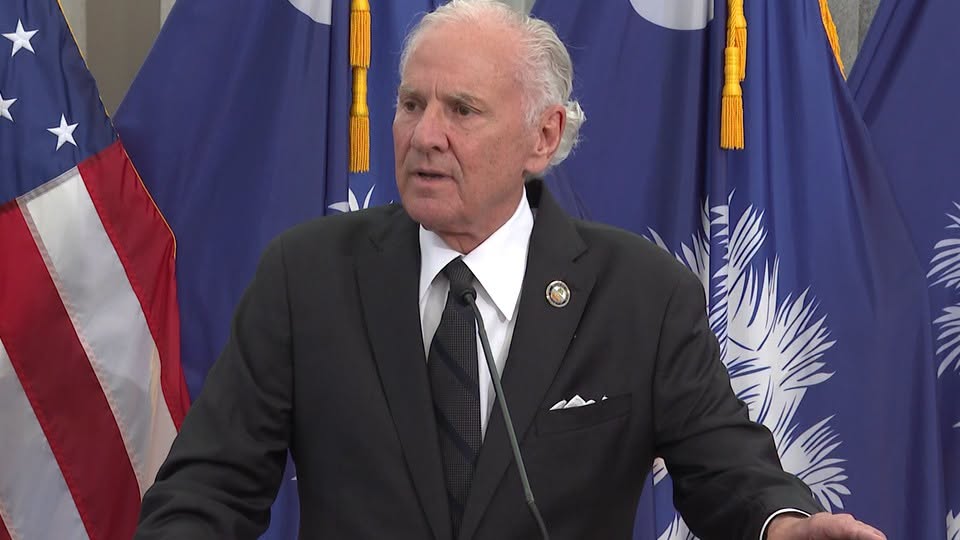
South Carolina Governor Henry McMaster Announces Line Item Vetoes for FY 2026-2027 State Budget

Budget Includes 92% of Gov. McMaster’s Proposals

COLUMBIA, S.C. — Governor Henry McMaster today announced line item vetoes for the Fiscal Year 2026-2027 stage budget. The final budget includes 92% of the governor’s executive budget proposals, including an income tax cut, teacher and law enforcement pay raises, a college tuition freeze, and key investments in conservation, education, infrastructure, and workforce development.

“South Carolina is stronger, safer, and more prosperous than it was ten years ago, and people across the country have taken notice,” said Gov. McMaster. “We have cut taxes, invested in education and workforce development, prioritized public safety and infrastructure, and protected our state’s natural resources. These investments have made South Carolina one of the best places in the country to live, work, and raise a family, and I am confident we will continue building on that success.”

For a copy of the governor’s veto message, click here.

The governor’s priorities funded in the final budget include the following notable proposals (all statements are attributable to Gov. McMaster):

INCOME TAX CUT:

“The cuts to individual income taxes are substantial. In 2017, the top marginal individual income tax rate in South Carolina was 7%. Prior to this year, we had lowered that rate to 6%. This year, we lowered the top rate further, from 6% to 5.21% with passage of Act 110 of 2026. Since 2022, South Carolina has eliminated $3.72 billion in individual income taxes, allowing taxpayers to keep more of their hard-earned money.”

HOMESTEAD EXEMPTION:

“This budget also provides additional property tax relief to homeowners who are 65 years of age or older, who are totally and permanently disabled, or who are legally blind by increasing the Homestead Exemption from $50,000 to $75,000.”

TEACHER PAY:

“I have made raising teacher pay a priority, and working together, we have now fulfilled my pledge to pay every starting teacher at least $50,000. Eight years ago, the minimum starting salary of a teacher in South Carolina was $30,113, and the average starting salary of a teacher in South Carolina was ranked 47th in the country. Last year, the minimum starting salary of a teacher was $48,500, and the average starting salary of a teacher in South Carolina was ranked 22nd in the country. This school year, the minimum starting salary of a teacher is $50,500, and our State’s ranking will improve more.”

SCHOOL RESOURCE OFFICERS: 

“At my request, the General Assembly began funding a school resource officer (SRO) grant program administered by the Department of Public Safety for public schools that did not have an assigned SRO. These law enforcement officers stand on the front lines to keep children safe so that they can learn and grow. In school year 2018–19 there were 406 full-time SROs. In school year 2025–26 there were 1,181 SROs.  This year’s budget continues critical funding for this program.”

FULL-DAY 4K:

“In 2021, I proposed funding for the statewide expansion of the full-day four-year-old kindergarten program, and the General Assembly agreed. This budget adopts my recommendation to expand the program in private providers where there are slots available to children whose annual family income is 300% or less of the federal poverty guidelines.”

SCHOOL CHOICE:

“This budget once again provides funds for the Education Scholarship Trust Fund. These funds will allow parents of up to 15,000 students to choose the type of educational environment and instruction that best suits their child’s unique needs.”

TUITION FREEZE:

“This year’s budget marks the seventh consecutive year that the General Assembly has agreed with my proposal to freeze in-state college tuition.

“Other ways that we continue making education affordable is allocating $80 million in lottery revenues for need-based grants and $20 million in lottery revenues for the South Carolina Tuition Grants Program, which is financial aid to students attending our State’s private, independent, and historically black colleges and universities.

“We also found a new way to make higher education more affordable this year. I proposed, and this budget includes, $18.7 million in lottery revenues for the Meeting Street Scholarship Fund, a new need-based college scholarship.”

S.C. WORKFORCE INDUSTRY SCHOLARSHIPS: 

“To address the high demand for skills, training, and knowledge, this budget once again provides $95 million for the South Carolina Workforce Industry Needs Scholarships (SC WINS) program at our State’s technical colleges. 

“Started in 2020, this program has provided more than 150,000 South Carolinians with a post-secondary or industry credential in high-demand careers like manufacturing, nursing, computer science, information technology, transportation, logistics, and construction.”

CONSERVATION: 

“This budget provides $88 million for the preservation and conservation of historic, pristine, or significant properties across the State, and an additional $7.5 million for statewide mitigation projects.”

INFRASTRUCTURE: 

“There are almost $7 billion in active projects underway across the State, up from $2.7 billion in 2017. Much of that progress is a result of four years’ worth of state appropriations totaling $1.4 billion for new construction and improvements to state-owned roads, bridges, highways, and interstates. This budget includes an additional $377 million for roads and bridges.”

LAW ENFORCEMENT PAY RAISE: 

“This budget provides an additional $8.3 million for pay raises, overtime pay, and the hiring of new officers at our state law enforcement and criminal justice agencies. 

“In addition, the budget also includes a proviso to allow a retired member of the Police Officers Retirement System who has been retired for at least ninety consecutive calendar days to be hired and return to employment and earn up to $80,000 annually without affecting the monthly retirement allowance.”

Stay connected and subscribe to Charleston Daily.
Related: Charleston Approves More Than $9.4 Million in Public Funding—See Who Gets the Money

ALO Brings Its Wellness-First Experience to Charleston’s King Street

By Mark A. Leon | Charleston Daily

King Street has a new destination for Charleston residents looking to make wellness part of their everyday routine.

ALO has opened its new Charleston location at 245 King Street, bringing the Los Angeles-based brand’s combination of activewear, beauty, yoga and community-focused wellness programming to one of the city’s busiest retail corridors. The new store, known as an ALO Sanctuary, is designed to be more than a place to shop. It is intended to be a gathering point for movement, recovery and mindfulness.

The concept reflects ALO’s broader philosophy that wellness should extend beyond the workout itself. The company describes mindful movement as a way to carry the benefits of a studio practice into everyday life — an approach that puts equal emphasis on physical activity, mental well-being and community.

More Than Yoga

For Charleston customers, that means ALO is offering considerably more than yoga apparel.

The ALO Wellness Club platform gives members access to thousands of on-demand classes and hundreds of programs spanning yoga, Pilates, strength training, barre, running, stretching, meditation, breathwork, sound healing, sleep, nutrition and self-care. Classes are organized by both difficulty and intensity, making it possible for someone completely new to fitness to start with an introductory session or for a more experienced athlete to find a demanding workout.

The instructor lineup includes nationally recognized teachers, certified trainers, meditation coaches and wellness experts. Names featured through the platform include yoga instructor Ashley Galvin, Pilates instructor Bianca Wise, strength coach Jade Smith, Pilates instructor Laura Quinn, fitness instructor Louis Chandler and strength coach Sarah Digiovanni.

That variety is part of the appeal. A customer can make strength or flexibility the priority one day, then shift toward meditation, recovery or sleep-focused programming the next.

A Charleston Community Connection

ALO also appears intent on making the King Street location part of Charleston’s existing wellness community rather than operating as an island.

During its grand-opening weekend, the store hosted community programming that included an ALO Runners Club 5K led by Caroline Roncalli of The Works and a wellness walk led by Leslie Corbett of Taylor Grant Pilates. The walk emphasized slowing down, setting intentions and finding balance through movement and meditation.

The events offer a glimpse of what customers can expect from the Charleston location: fitness activities combined with social connection and mindfulness.

And that may be the most interesting part of ALO’s arrival.

The store is positioned to serve someone who wants a new pair of leggings, but it is equally focused on the customer who wants to run with a group, take a yoga class, improve strength, spend a few minutes meditating or simply build healthier routines.

How to Reserve

Charleston customers interested in exploring the wellness programming can join ALO Wellness Club and access the class library here. The service is currently free with an account and provides access to thousands of classes without a subscription fee.

For local events and in-person community programming at ALO King Street, customers can view and reserve upcoming ALO events here.

With its arrival at 245 King Street, ALO is betting that Charleston’s wellness culture is about more than looking the part. The goal is to create a place where movement, mindfulness, recovery and community can become part of the rhythm of daily life — on King Street and beyond.

Stay connected and subscribe to Charleston Daily.
Related: 5 Excellent Spas in Charleston, South Carolina that will take you to a new level of relaxation

Related: Escape to Tranquility and Healing: Charleston’s Sôlt Wellness – A Complete holistic spa experience

Related: Charleston’s MRI Wellness: An Evolutionary Journey into the Future of Preventative Healthcare

Lou Lou’s Tavern on the Tracks Brings a New Kind of Night Out to Charleston’s Upper Peninsula

By Mark A. Leon

There’s a new reason to head up Meeting Street when the sun starts to go down.

Lou Lou’s Tavern on the Tracks has opened at The Refinery, bringing a combination of shareable food, cocktails, live music and a little late-night swagger to Charleston’s Upper Peninsula. The new restaurant is the latest concept from Dave and Chrissy Lorenz, the local hospitality team behind Mex 1 Coastal Cantina and Islander 71.

Located at 1640 Meeting Street next to The Refinery’s open-air music venue, Lou Lou’s was designed with the concert crowd in mind — but you don’t have to have a ticket to a show to understand the appeal. The idea is dinner, drinks and music without having to make the evening feel overly planned.

The restaurant’s menu follows that same philosophy. Rather than building dinner around individual entrees, Lou Lou’s encourages diners to order several plates for the table and share. Current highlights include lobster bao buns, gochujang-inspired short ribs, marinated deviled eggs and crispy maitake mushrooms, with a menu that moves between Southern comfort and more adventurous, chef-driven flavors.

Other offerings include oysters, seafood, vegetables and meat dishes, while the restaurant’s daytime weekend menu shifts toward more familiar tavern fare, including burgers, lobster rolls and salads.

The result is a menu that feels built for a group. You can grab a couple of small plates and a drink before a concert, settle in for a longer dinner with friends or keep ordering as the night develops.

The bar program is just as intentional. Lou Lou’s features handcrafted cocktails, draft wine and kegged cocktails, a setup designed to keep service moving when the restaurant is busy and the concert crowd starts arriving. Classic drinks such as the Old Fashioned and Manhattan are part of the mix, alongside a curated draft selection.

And then there’s the setting.

Lou Lou’s leans into a moody, energetic tavern atmosphere with indoor dining, outdoor space and the unusual backdrop of The Refinery’s rail-adjacent setting. When a band is playing next door, the restaurant becomes part of the larger experience. Guests can have dinner, step outside for the show and return for another drink without ever really leaving the action.

That connection to live music may ultimately be Lou Lou’s biggest differentiator. The restaurant has been built around The Refinery’s concert calendar, making it an especially natural choice for anyone looking to turn a night at a show into a full evening out.

For Charleston diners, expectations should be less “formal restaurant” and more “come hungry, order for the table and settle in.” Lou Lou’s is aiming for the sweet spot between neighborhood tavern, dinner destination and music hangout — polished enough to feel like a night out, but relaxed enough to make a second round feel like the obvious move.

In a Charleston restaurant scene that continues pushing beyond the traditional downtown core, Lou Lou’s may have found a fitting home. It’s a place where the food matters, the drinks matter and, perhaps most importantly, something is usually happening just outside the door.

Follow the journey on Instagram.

Stay connected and subscribe to Charleston Daily.

Related: Reggie’s Tavern: The New North Charleston Bar That Gets the Neighborhood-Bar Formula Right

Related: Babas on Meeting Set to Take Over Former Rodney Scott’s BBQ Location on King Street

Related: Palmetto Pita Brings Fresh Mediterranean Flavor to Calhoun Street in downtown Charleston, SC

Photo Credit: Lou Lou’s Tavern on the Tracks

5 Things You May Not Know About Look Up Charleston

By Mark A Leon

Tucked upstairs at 128 Meeting Street in downtown Charleston, there’s a creative world waiting to be discovered. Look Up Charleston is more than an art gallery or gift shop—it’s a celebration of local makers, artists, designers and the creative spirit that makes Charleston so distinctive.

Here are five things you may not know about this one-of-a-kind downtown destination.

1. It’s Home to 38 Local Creatives

Look Up Charleston brings together 38 local artisans, artists and fashion designers under one roof, creating a constantly changing collection of work that reflects the talent and individuality of the Lowcountry.

Rather than browsing the same products found in traditional retail stores, visitors can discover pieces created by the people who live, work and create right here.

2. Artists Are Creating On-Site

Look Up Charleston is also a working creative space, with three active artist residency studios. That means visitors have the opportunity to see creativity in motion and experience the atmosphere of an evolving artist community.

And when the sun goes down, the creativity continues with an evening acting studio, adding another dimension to the space.

3. There’s a Charm Bar

Yes, a charm bar.

It’s one of the playful experiences that makes Look Up Charleston different from a conventional shopping destination. Whether you’re creating something for yourself or putting together a meaningful gift, the charm bar adds an interactive element to the experience.

4. More Than 700 Handmade Finds Await

With more than 700 unique handmade products, there’s a lot to discover—and no two visits necessarily feel quite the same.

The collection ranges from jewelry, illustrations, greeting cards and photography to oyster-inspired creations, tea towels, coasters, perfume, dresses, shoes and handbags.

You’ll also find 3D-printed animals, art surfboards, fine art, prints, health and wellness products, coffee, handmade chess sets, hand towels, table art, cookbooks, magnets, stickers, vinyl and more.

It’s the kind of place where you can walk in looking for a small Charleston souvenir and walk out carrying an original piece of art.

5. It’s a Journey, Not Just a Store

Perhaps the biggest thing people may not know about Look Up Charleston is that the experience is about discovery.

It’s about meeting local artists through their work. Finding something unexpected. Supporting small creative businesses. Picking up a gift that has a story behind it. Or simply wandering upstairs on Meeting Street and seeing where the journey takes you.

Look Up Charleston is a reflection of Charleston’s creative side—colorful, eclectic, handmade and proudly local.

So the next time you’re downtown, look up.

Stop by today at 128 Meeting Street, upstairs, and start your Look Up Charleston journey.

Follow Look Up on Instagram.

Related: Beyond Retail: How Look Up Charleston Evolved Into a Living Museum of Lowcountry Creativity

Reggie’s Tavern: The New North Charleston Bar That Gets the Neighborhood-Bar Formula Right

By Mark A Leon

There is something wonderfully unpretentious about a good neighborhood tavern.

It doesn’t need velvet ropes, elaborate cocktails with twelve ingredients or a dining room designed for Instagram. It needs a comfortable bar, cold drinks, something good to eat and the feeling that you can walk through the door without having to be anyone other than yourself.

That is the appeal of Reggie’s Tavern, the new bar and grill at 2023 Reynolds Avenue in North Charleston. The tavern opened in 2026 as a collaboration involving the people behind downtown Charleston’s Burns Alley and Legend Deli, bringing a distinctly casual, Chicago-influenced sensibility to the Reynolds Avenue corridor.

And Reggie’s seems to understand something important: a dive bar doesn’t have to mean mediocre food.

In fact, the food may be the biggest surprise here.

The menu takes familiar tavern favorites and gives them enough personality to make you want to come back. The Reuben is an obvious place to start, combining corned beef, sauerkraut, Swiss cheese and Ukrainian dressing on rye. For something even more decadent, those same flavors find their way onto tater tots.

The fried pork sandwich is another reason to arrive hungry. A crisp coating, tender pork, curry mayo and pickled red onion give it the kind of salty, tangy and creamy combination that works particularly well with a cold beer.

Then there are the Chicago-inspired choices, including a Chicago dog and Hot Italian, alongside burgers, wings, cheese curds and other bar snacks.

Nothing about the menu feels like it is trying to reinvent tavern food. And that’s precisely why it works.

The room follows the same philosophy.

Reggie’s has a lived-in, slightly rebellious personality. Vintage-inspired elements, artwork, memorabilia and a rock-oriented soundtrack give the space character. A pool table and casual seating reinforce the idea that this is somewhere to hang out rather than simply somewhere to eat.

The atmosphere also feels particularly appropriate for Reynolds Avenue.

The corridor is undergoing its own evolution, with new businesses and redevelopment bringing additional attention to an area that has long had its own identity. City and regional planners have specifically identified Reynolds Avenue as an important neighborhood center, with preservation and redevelopment both part of the conversation about its future.

Reggie’s fits into that story without feeling overly calculated.

It’s not attempting to turn Reynolds Avenue into another version of downtown Charleston. Instead, it adds another reason to spend an evening there.

And the early customer response has been remarkably enthusiastic. Current business listings show a 4.9-star rating, with customers repeatedly praising the food, bartenders, music and relaxed atmosphere.

That combination is what makes Reggie’s worth watching.

Charleston has plenty of places where the experience begins with a reservation and ends with a carefully composed photograph. Reggie’s belongs to a different tradition. You come in because you want a sandwich, stay because the bartender is friendly, order another drink because nobody is rushing you and eventually realize you’ve been there much longer than planned.

That’s the magic of a neighborhood tavern.

The Charleston Daily verdict: Reggie’s Tavern is an easy recommendation for anyone looking for a casual North Charleston night out. The food has enough ambition to stand on its own, the atmosphere has genuine personality, and the service-first approach gives the place the most important ingredient a neighborhood bar can have: regulars.

What to order: Start with the Reuben or fried pork sandwich. Add the Reuben tots if you’re sharing—or simply if you’re feeling particularly hungry.

Reggie’s isn’t trying to be the fanciest bar in Charleston.

It may be trying to become something better: the place you find yourself returning to because it feels like yours.

Stay connected and subscribe to Charleston Daily.
Photo Credit: Reggie’s Tavern

Babas on Meeting Set to Take Over Former Rodney Scott’s BBQ Location on King Street

By Mark A. Leon

A familiar Charleston restaurant space is getting a new life as Babas on Meeting prepares to expand into the former home of Rodney Scott’s BBQ on King Street.

Babas, the European-inspired café known for its coffee, house-made pastries, all-day menu and evening aperitivo service, has announced plans to move into the former Rodney Scott’s location at 1011 King St. The move marks another step in the growth of a Charleston restaurant concept that began with its small Cannon Street café.

The King Street property has some history of its own. Rodney Scott brought his celebrated whole-hog barbecue concept to Charleston in 2017, turning the location into a destination for locals and visitors seeking South Carolina-style barbecue. The Charleston restaurant closed in May 2026.

For Babas, the move represents a significant change in scale from its original 11 Cannon Street location. The restaurant has built a following around a distinctly European café model, with espresso and pastries in the morning, sandwiches and salads during the day, and wine, cocktails and small plates later on. Charleston Magazine recently described the concept as inspired by cafés in Italy, Spain and France.

Babas currently operates multiple Charleston locations, including its original Cannon Street restaurant and its newer Wentworth Street location. The King Street expansion would put the growing local brand in one of the peninsula’s most visible restaurant corridors.

The move also reflects the continuing evolution of Upper King Street, where several longtime restaurant spaces have changed hands as new concepts move into the area.

For a restaurant that started with a compact neighborhood café, taking over the former Rodney Scott’s space could give Babas room to bring its coffee-to-cocktails concept to an even larger audience — while giving one of Charleston’s best-known restaurant addresses a distinctly different next chapter.

Photo Credit: Babas

Stay connected and subscribe to Charleston Daily.
Goodbye to the Faculty Lounge: Charleston Loses Another Piece of Its Nightlife Soul – Editorial


By Mark A Leon

There are bars in Charleston that are restaurants with a liquor license. There are cocktail rooms designed for Instagram. And then there are the places that become something much harder to define—a second living room, a refuge after a long shift, a place where strangers become regulars and regulars become family.

Faculty Lounge was one of those places.

Now, the unassuming bar at 391 Huger Street has closed, bringing the latest chapter of a story that stretched across generations to an end. The closure was reported in early August, although no public announcement explaining the reason for the closing or what might eventually replace the space has been located.

And perhaps that uncertainty makes the goodbye feel even more poignant.

Faculty Lounge was never interested in shouting for attention. There was no grand sign beckoning pedestrians inside. Instead, there was a door, a doorbell and, for those who knew, an invitation into another world.

Inside, the atmosphere was intimate, shadowy and unmistakably Charleston. There was a long bar, a pool table and music. The drinks could be serious, but the mood never took itself too seriously. Condé Nast Traveler once described it as a Charleston institution, praising its unusual ability to build community through DJ parties while walking the line between cocktail bar and dive.

That ability to create community was always at the heart of Faculty Lounge.

But the story began long before its modern incarnation.

According to Charleston City Paper, the space had roots as a gathering place for African-American teachers in the 1970s and eventually became a nightclub where local musicians got their start. In 2012, owner Joe Major sought to preserve that character, describing the bar as a place where people could listen to music, socialize and have a piece of their own neighborhood.

That history matters.

Because Charleston nightlife isn’t simply measured in years open or cocktails served. It is measured in memories.

It’s the bartender who knew what you wanted before you ordered. The person you met on a Tuesday who somehow became a friend. The musician you discovered. The first date that went better than expected. The night that began with “just one drink” and ended hours later with the lights coming up.

Faculty Lounge was part of those stories for countless people.

It survived changes in ownership, renovations and the transformation of the neighborhood around it. In 2014, neighbors and longtime supporters even helped resurrect the space after a renovation had stripped away much of its character, determined to bring back the intimate neighborhood bar they loved.

That may be the most fitting way to remember Faculty Lounge: a place people cared enough about to save.

Charleston is changing. Some change is inevitable, and some of it is exciting. New restaurants arrive. New bars open. New neighborhoods emerge. But every time a beloved independent gathering place disappears, a small piece of the city’s collective memory disappears with it.

Faculty Lounge wasn’t perfect. It didn’t need to be.

It was wonderfully specific. A little mysterious. A little rough around the edges. And deeply human.

For those who knew it, the door on Huger Street was never just a door.

It was an invitation.

And now, for the last time, the lights have gone out.

Thank you, Faculty Lounge, for the music, the drinks, the late nights, the strange nights, the beautiful nights—and most of all, for giving Charleston another place to belong.

Stay connected and subscribe to Charleston Daily.
Photo Credit: Faculty Lounge – Facebook