by
Before Charleston became known for its churches, cobblestone streets, grand homes and Southern hospitality, the city experienced one of the most consequential and unsettling episodes in its history. In the summer of 1822, fear of a planned uprising among enslaved and free Black residents gripped the Lowcountry. At the center of the unfolding story were two men, Denmark Vesey and Gullah Jack Pritchard, whose names would become forever connected to Charleston’s struggle over slavery, freedom and resistance.
Charleston in 1822 was a city built on contradictions. Its wealth depended heavily on enslaved labor, its streets were filled with merchants and wealthy plantation owners, and its harbor connected the Lowcountry to a world shaped by trade, colonialism and the Atlantic slave economy.
Yet beneath the city’s prosperity was a population of enslaved people and free Black residents who lived under restrictive laws, racial discrimination and the constant threat of violence.
For many, freedom was not an abstract idea. It was a dream that carried enormous consequences.
That summer, Charleston would find itself at the center of an alleged rebellion that sent shockwaves throughout South Carolina and beyond. The episode would become known as the Denmark Vesey conspiracy, although historians continue to debate the precise scope of the plans, the reliability of the evidence and whether every detail presented by authorities was accurate.
Two figures stand out from that history: Denmark Vesey, a free Black carpenter, and Gullah Jack, an African-born man whose spiritual traditions and reputation made him an influential figure among Charleston’s enslaved population.
Denmark Vesey: A man who purchased his freedom but could not forget slavery
Denmark Vesey was believed to have been born around 1767 on the Caribbean island of St. Thomas, then a Danish colony. Enslaved as a young boy, he was purchased by Captain Joseph Vesey, a slave trader who eventually brought him to Charleston.
Vesey spent years working aboard ships and traveling throughout the Atlantic world. Those experiences exposed him to different cultures, political movements and, importantly, the growing movement for freedom from slavery.
In 1799, Vesey won $1,500 in a Charleston lottery. He used $600 of the winnings to purchase his freedom, becoming a free Black man in a city where freedom and equality were far from synonymous.
He established himself as a carpenter, built a business and became involved in Charleston’s Black religious community.
But there was one thing he could not accomplish: purchasing freedom for his wife, Beck, and their children. They remained enslaved.
That personal reality, combined with the conditions facing thousands of enslaved people throughout the Lowcountry, shaped Vesey’s opposition to slavery.
Vesey reportedly drew upon biblical teachings, particularly the Old Testament’s stories of liberation, to challenge the morality of slavery.
He also understood the significance of the Haitian Revolution, which had resulted in the establishment of an independent Black republic in 1804. Haiti offered an extraordinary example of enslaved people successfully overthrowing the system that held them captive.
To those who dreamed of freedom, Haiti represented possibility.
Gullah Jack: The African spiritual leader
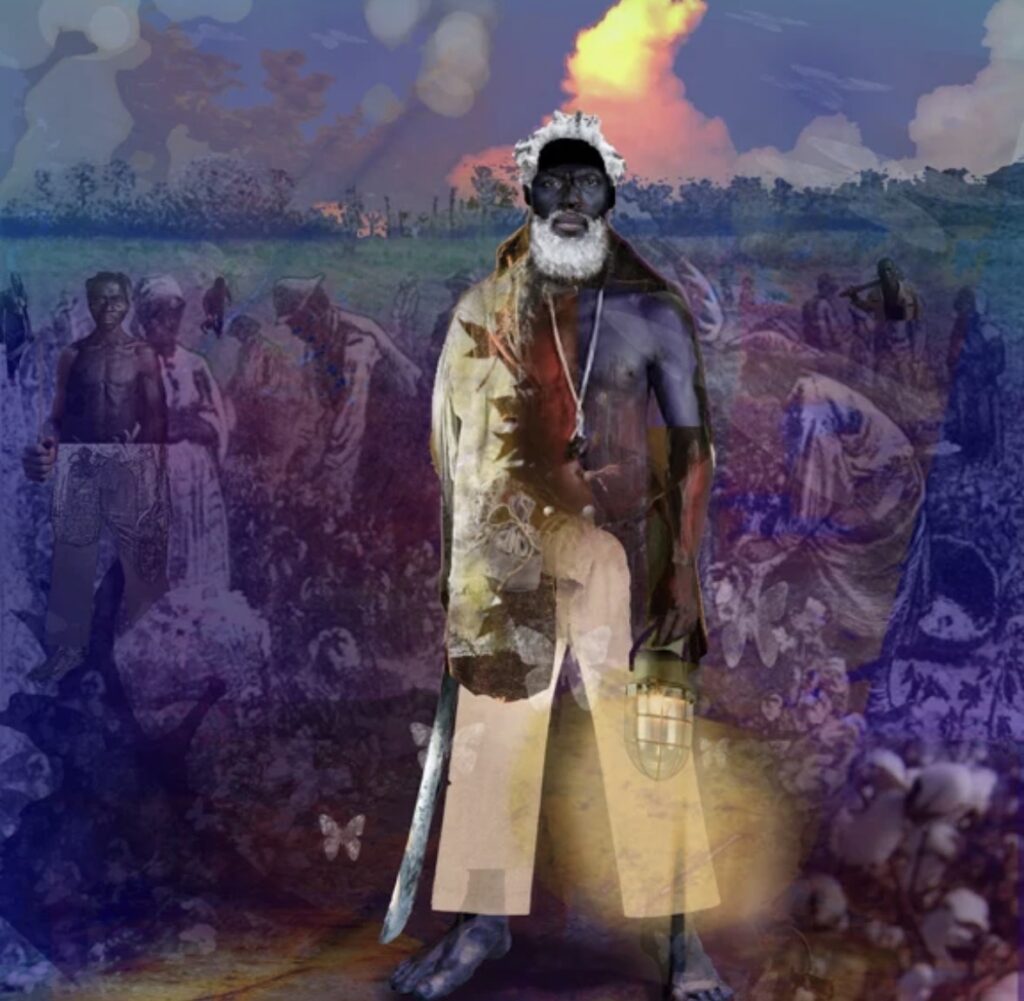
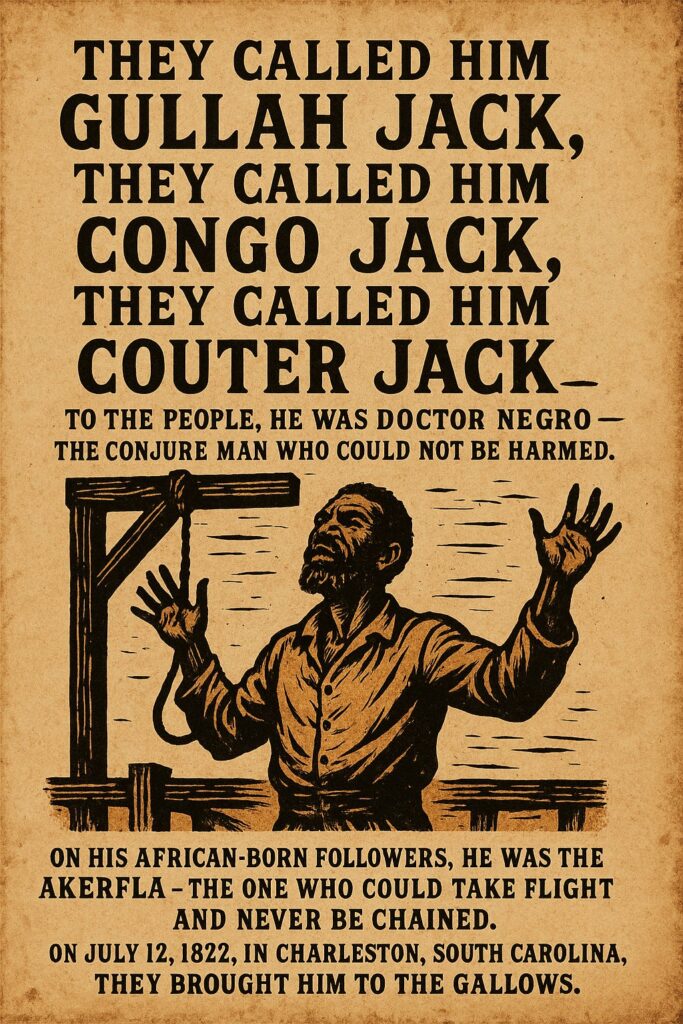
Another important figure in the events of 1822 was Gullah Jack Pritchard, sometimes referred to simply as Gullah Jack.
Unlike Vesey, who had established himself as a free carpenter and businessman, Jack remained enslaved. He worked as a ship caulker in Charleston and was associated with African spiritual traditions that had survived the forced transportation of Africans across the Atlantic.
Historical accounts identify Jack as an African-born man, often associated with Mozambique. Before arriving in Charleston, he had been enslaved by Zephaniah Kingsley, who reportedly described him as a priest in his homeland. Kingsley eventually sold him to South Carolinian Paul Pritchard.
Jack was known for carrying a small spiritual pouch, commonly described as a conjure bag. His religious practices and reputation gave him a particular standing among other enslaved people.
Accounts described him as a relatively small man with a large, unkempt beard. More importantly, he was believed by some to possess spiritual powers and the ability to protect those who followed him.
His influence was rooted in traditions that connected African spirituality, community identity and resistance.
In the unfolding events of 1822, Gullah Jack became associated with Vesey’s movement. He was reportedly an important recruiter among enslaved Africans and helped bring people into the circle of those discussing an uprising.
His presence also illustrates something often overlooked in the history of Charleston: resistance to slavery was not exclusively political or military. It was also cultural, spiritual and communal.
African traditions survived despite extraordinary efforts to suppress them. In Charleston, those traditions became part of the cultural foundation that would help shape the Gullah Geechee community for generations.
The summer Charleston came to a standstill
By the spring of 1822, authorities were receiving reports of conversations about a planned uprising involving enslaved and free Black residents.
The reported plan was ambitious. According to the official account, participants intended to seize weapons, attack strategic locations, overpower the city’s defenses and ultimately escape to Haiti.
The uprising was reportedly planned for July 14, Bastille Day, a date carrying symbolic significance because of the French Revolution and its association with liberty.
But the plans never materialized.
In May, information about the alleged conspiracy reached white authorities. One of the men who helped expose it was George Wilson, an enslaved man who informed his enslaver of what he had heard.
As additional information emerged, Charleston officials moved quickly.
Arrests began, the city increased its security presence, and the investigation expanded. By June, Charleston was gripped by fear and uncertainty.
The authorities convened a special court of magistrates and freeholders to investigate and prosecute those accused of involvement.
The proceedings were conducted behind closed doors. Testimony was gathered, defendants were questioned, and sentences were handed down.
Denmark Vesey was arrested and tried in late June. He was sentenced to death and hanged on July 2, 1822, alongside several other accused men.
Gullah Jack was arrested shortly afterward. He was also convicted and executed.
In total, the official court records reported 131 arrests, 67 convictions and 35 executions. Others faced banishment from the United States.
The consequences extended far beyond those who were arrested.
A trial that remains debated by historians
There is an important distinction between what Charleston’s authorities reported in 1822 and what historians can establish with certainty today.
For nearly two centuries, the Vesey conspiracy has been presented as one of the most extensive planned slave uprisings in American history.
However, the reliability of the original investigation has been questioned.
The proceedings were secretive, testimony was sometimes secondhand, and some witnesses were enslaved men facing extraordinary pressure. Questions have also been raised about whether some statements were coerced and whether the authorities exaggerated the extent of the alleged conspiracy.
Some historians believe Vesey organized a genuine, extensive antislavery movement. Others have argued that the investigation and subsequent executions reflected a broader effort by white authorities to suppress Black independence and religious organization.
The historical debate does not diminish the significance of the people involved. Even discussions about organized resistance to slavery were dangerous under South Carolina law.
The aftermath: A city determined to regain control
The consequences of the summer of 1822 were profound.
Charleston’s white leadership became increasingly concerned about the city’s large Black population, independent Black religious institutions and the possibility of future resistance.
The African Church associated with Vesey was destroyed. Restrictions on the movement and activities of enslaved and free Black residents increased, and the city strengthened its security infrastructure.
The episode also contributed to the development of the institution that became the Citadel, established as a military academy in 1843. The earlier building had been constructed as an arsenal in the aftermath of the 1822 uprising scare.
The fear generated by the events of that summer would continue to influence Charleston’s racial and political landscape for decades.
Remembering the men behind the history
Today, the names Denmark Vesey and Gullah Jack occupy an important place in Charleston’s African American history.
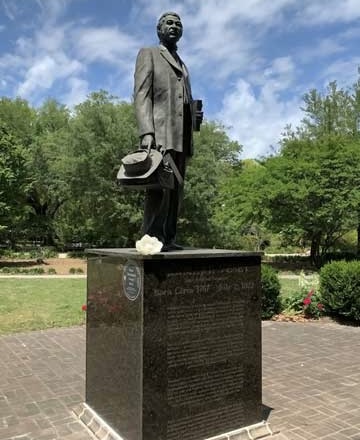
Vesey is commemorated by a monument in Hampton Park, a reminder of a man whose life became intertwined with the struggle against slavery. His legacy is also connected to Mother Emanuel, one of the most historically significant African American churches in the United States.
Gullah Jack’s story offers another perspective, one that brings African spiritual heritage and the survival of cultural identity into the conversation.
Their lives were different, but their stories intersected during a summer that exposed the profound tensions at the heart of Charleston society.
It is easy to walk the streets of downtown Charleston today and admire the architecture, historic homes and beautiful churches without considering the extraordinary human stories that unfolded on those same streets.
But Charleston’s history cannot be told through its grand buildings and celebrated merchants alone. It must also include the people whose lives were shaped by enslavement, the families separated by it, the communities that endured it and those who dared to imagine something different.
The summer of 1822 was a moment of fear, tragedy, resistance and profound consequence.
More than 200 years later, Denmark Vesey and Gullah Jack remain part of a story Charleston should never forget.
Historical note: This article distinguishes the documented arrests, trials and executions from disputed details of the alleged uprising. The surviving official record was produced by the authorities who prosecuted the accused.
Stay connected and subscribe to Charleston Daily.
Painting source: Black Art of America