HelloNation Highlights North Charleston as a Finalist for the National Civic League’s 2026 All-America City Award

NORTH CHARLESTON, S.C., May 29, 2026 /PRNewswire/ — How can a growing city rebuild trust while creating stronger connections across neighborhoods and generations? The answer is explored in a HelloNation article highlighting North Charleston, South Carolina, as a finalist for the National Civic League’s 2026 All-America City Award.

The article explains that the All-America City Award recognizes communities that strengthen local democracy through collaboration, civic engagement, innovation, and inclusion. North Charleston’s recognition as a finalist reflects years of resident-focused efforts aimed at rebuilding trust, expanding civic participation, and creating more inclusive opportunities across the community.

According to the article, North Charleston has experienced major economic and population growth since the closure of the region’s Naval Base in the 1990s. While redevelopment and business investment strengthened the local economy, city leaders also recognized the importance of addressing issues involving trust, inclusion, neighborhood connection, and public engagement. The article notes that the city increasingly shifted toward listening-driven governance and community-centered decision-making.

The HelloNation article highlights several initiatives demonstrating this approach, including reforms to policing and community trust-building, the development of inclusive public spaces, and youth-focused education and enrichment programs designed to expand opportunity.

One major focus of the article is North Charleston’s response following the 2015 killing of Walter Scott, which deeply affected public trust between residents and law enforcement. According to the article, city leaders and police officials responded by pursuing a broader strategy centered on accountability, relationship-building, and direct community engagement rather than relying solely on traditional enforcement approaches.

The article explains that North Charleston expanded community policing efforts, introduced recurring neighborhood engagement programs, and implemented anti-bias and racial equity training for officers. Structural reforms included the adoption of body cameras, creation of a citizen advisory commission, and comprehensive analysis of racial disparities within policing practices.

According to the HelloNation article, one of the department’s most significant changes involved integrating direct education about the Walter Scott case into officer training. New recruits study the incident and engage in conversations designed to encourage reflection on bias, accountability, and the responsibilities carried by law enforcement officers. The article notes that these reforms helped improve transparency while strengthening community relationships and public confidence.

Another major area highlighted in the article is Park Circle Reimagined, an initiative that transformed a playground replacement project into the development of one of the world’s largest inclusive playgrounds. City leaders recognized that many children with mobility challenges, developmental disabilities, or sensory impairments lacked equal access to public recreation spaces.

The article explains that North Charleston engaged parents, educators, therapists, disability advocates, and residents throughout a multi-year planning process designed to ensure the park reflected real community needs. The finished space includes accessible play equipment, walking trails, adaptive recreation facilities, gathering areas, and spaces for cultural programming and civic engagement.

The HelloNation article notes that the project became more than a recreational investment. Families who previously faced barriers to participation now gather in a shared community space designed around inclusion and accessibility. The article describes the park as a visible example of how civic investment can strengthen belonging and connection across neighborhoods.

The article also highlights North Charleston’s Liberty Hill Afterschool Enrichment Program, created to support students and families through expanded educational and mentorship opportunities. According to the article, the program focuses on academic support, leadership development, and long-term relationship-building for young residents navigating economic and social challenges.

The article concludes that North Charleston’s recognition as a finalist for the National Civic League’s 2026 All-America City Award reflects the city’s commitment to inclusive leadership, community trust, and resident-centered civic engagement. By investing in accountability, accessible public spaces, and youth opportunity, North Charleston continues building a civic culture focused on dignity, participation, and shared progress.

America at 250: The National Civic League’s All-America Cities highlights why North Charleston was named a finalist for the National Civic League’s 2026 All-America City Award in HelloNation.

About HelloNation

HelloNation is America’s Good News Network, a premier media platform built on the idea that good news travels faster when real people tell real stories. Through its community-focused digital publications and innovative “edvertising” approach, HelloNation delivers expert-driven, good-news content that informs, inspires, and spotlights the leaders making a meaningful impact in their communities. HelloNation maintains partnerships with the U.S. Conference of Mayors, and the United States First Responders Association.

SOURCE HelloNation

Stay connected and subscribe Charleston Daily.

SCDOT to Replace Toogoodoo Road Bridge in Charleston County

Columbia, S.C. (May 29, 2026) – The South Carolina Department of Transportation will replace the bridge along Toogoodoo Road (S-10-390) over Swinton Creek in Charleston County.

The replacement will begin on June 2, 2026. Weather dependent, the bridge is scheduled to reopen in June of 2027.

Detours have been established on Highway 162, Chapel Road and Toogoodoo Road as shown in the map below.

SCDOT asks that drivers slow down and pay attention to signs and crews when driving through the area.

About SCDOT

The South Carolina Department of Transportation (SCDOT) is the state agency with oversight of South Carolina’s network of highways and bridges, including responsibilities such as planning, design, construction, financing, and roadway safety. To ensure the nation’s fourth-largest highway system is prepared to serve the needs of South Carolina’s growing economy and population, SCDOT has developed a Strategic 10-Year Plan that addresses improvements to the state’s highway and bridge systems. Learn more at scdot.org

Stay connected and subscribe to Charleston Daily.

After almost 5 years, Cold Shoulder Gourmet is saying goodbye and closing their Charleston area location

After nearly five wonderful years serving the Charleston community, Cold Shoulder Gourmet is closing its doors. You still have one more month to get a piece of that deliciousness.

In a statement on Instagram, Craig shared this emotional, thoughtful and insightful message:

FINAL MONTH. FINAL SANDWICHES. FINAL COUNTDOWN. 

After almost five years, Cold Shoulder Gourmet will be leaving our current space at the end of next month. The exact last service date will be announced a little closer to the time.

But let’s make one thing crystal clear right away:

Cold Shoulder IS NOT DONE. NOT EVEN CLOSE. 

This is not the end of the brand, the sandwiches, the pop ups, the collaborations, or the chaos. If anything, this feels like the start of a bigger and far more interesting chapter.

Almost five years ago this thing started with a couple knives, some bread, a stubborn amount of optimism, and a Kenyan kid trying to figure life out one sandwich at a time.

Since then, this tiny sandwich shop somehow became a ritual. A meeting spot. A home for a lot of beautifully chaotic people.

We laughed here. Sold out of bread here. Built something perfectly imperfect here.

And none of it happens without you guys.

Every person that waited in line. Every regular. Every shared post. Every generous tip. Every customer that dragged a friend in and said “trust me, you gotta try this spot.”

You helped turn this weird little sandwich shop into something far bigger than I ever imagined.

And in true Charleston fashion, the city keeps changing faster than the menus at half the new brunch spots downtown. That’s life. Stories evolve. So are we.

The next couple months are going to get very interesting right here in Charleston.

Pop ups. Collaborations. Guest kitchens. Late nights. New ideas/concepts. Some of the coolest food we’ve ever made.

And somewhere in the middle of all that, a few trips back home to Kenya to explore opportunities and chase some long standing dreams too.

This is not goodbye.

It’s a transition.

This is not the last you’ve heard of Cold Shoulder.

And definitely not the last you’ve heard of this Kenyan kid.

Keep an eye out. Follow along. Stay tuned.

Music up. Hands messy. Heart in it.

Let’s make the most out of this last month in the OG space. 

I love you Charleston.

See you soon, race fans. 🥪🔥

Craig 🤘

Thank you Craig and team for everything. Sending love!

Stay connected and subscribe to Charleston Daily.

Hidden City — The Story of Charleston Through the People Who Lived It – We Want to Share Your Story

Charleston carries a rich and layered history unlike any other city. Through generations of storytelling, its narrative continues to grow, inspire, and educate.

This city has witnessed moments of joy and heartbreak, birth and loss, resilience and reconstruction. It is a place shaped not only by historic events, but by the personal memories and lived experiences of the people who call it home.

Through every era, Charleston’s sense of community has remained strong. Yet within that community are the individual stories — the voices, memories, and perspectives — that weave together the true tapestry of this city.

We want to share your story 🫶🫶🫶

If you have a remarkable, emotional, impactful, humorous, or simply meaningful story about your life in Charleston, told through your own lens, we invite you to complete this short form.

Click HERE to apply.

Rooter Man of SC celebrates 20 years supporting the Lowcountry community

Rooter Man of SC celebrates 20 years of providing trusted, family-owned plumbing services throughout the greater Charleston area.

LOWCOUNTRY, SC, UNITED STATES, May 28, 2026 — Rooter Man of SC was founded just over 20 years ago by Charleston entrepreneur Nelson Huggins. On the occasion of the company’s 20th anniversary, Nelson is still the president of Rooter Man of SC, and he notes that the business is doing better than ever, thanks to an incredible team and a longstanding commitment to excellent customer service.

Companies that provide plumbing services are heavily dependent on reputation, and in the modern age that largely means online reviews. Today, Rooter Man SC enjoys more than 150 reviews on ReviewBuzz and nearly 600 reviews on Google, providing a consistently stellar opinion of the company’s workmanship on the part of the public. Residential and commercial customers in Summerville, Georgetown, Mount Pleasant, Charleston, and other cities in the Lowcountry region of South Carolina appreciate the quick response times, friendly attitudes of technicians, and dependability that are hallmarks of the business.

Part of the secret to the success of Rooter Man of SC in the past two decades has been Nelson Huggin’s interest in training the next generation of plumbing experts. Nelson maintains close connections with area high schools, communicating with students in person to present the opportunities associated with a career in the trades. Several young people have joined the Rooter Man SC team as apprentices, building their skills and taking on more responsibilities within the company as they gain experience. 

Nelson’s son, Bear, is one of those team members that joined at a young age, and he has become the primary team member responsible for backflow testing. This important plumbing service requires state certification and ongoing refresher courses, and commercial clients in the Charleston area benefit from the ability to have this service provided by a local plumbing provider that they already know and trust.

As a local company that is headquartered here in the Lowcountry, Rooter Man of SC is able to offer faster response times than most of its competitors. Homeowners with common plumbing emergencies such as clogged drains or water main leaks call Rooter Man of SC when they need a technician to arrive as soon as possible to mitigate damage and conduct repairs or replacement of damaged components. 

Commercial plumbing services offered by Rooter Man of SC include backflow equipment testing, storm drain cleaning, and maintenance and repairs for large scale systems such as commercial kitchens and institutional sewer lines. 

Homeowners and property managers in the greater Charleston area can get more information about Rooter Man of SC and its plumbing services on the organization’s website, rootermansc.com. In addition to emergency repairs, customers can get expert inspections of water heaters, pipes, and other plumbing infrastructure in their building to find out whether they need to be serviced with preventive maintenance. Technicians also sell and install new equipment, and can provide helpful advice on what units are ideal for each customer’s unique situation.

Nelson Huggins
Rooter-Man – Charleston SC
+1 843-402-7799
email us here
Visit us on social media:
Facebook

Stay connected and subscribe to Charleston Daily.
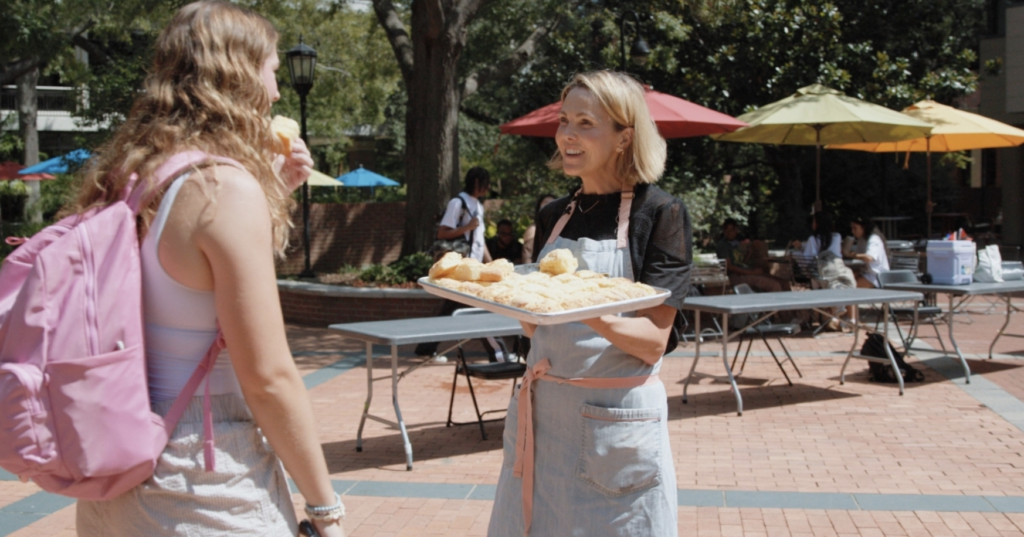
Former South Carolina Governor David Beasley Named to Board of Rockefeller Foundation

The Rockefeller Foundation announced that The Honorable David Beasley, former governor of South Carolina, will serve on its Board of Trustees starting in June. A former executive director of the United Nations World Food Programme (WFP), Beasley was nominated to the WFP role by two U.S. presidential administrations from different parties. 

He joins The Rockefeller Foundation as global food systems face mounting strain and humanitarian needs continue to rise. With decades of leadership and experience steering institutions through complex crises, he brings an unmatched record of translating humanitarian urgency into action — from the statehouse to the frontlines of global food crises.

“David Beasley has spent decades at the intersection of leadership, crisis response, and global impact,” said Dr. Rajiv J. Shah, president of The Rockefeller Foundation. “His strategic perspective, dedication to the most vulnerable, and firsthand experience mobilizing resources and galvanizing international coalitions to address hunger make him an invaluable voice as we work to build more resilient and equitable food systems around the world. We are honored to welcome him to our board.”

Beasley brings deep expertise in global food systems and humanitarian response to the foundation’s board. The timing of his appointment is underscored by a deteriorating global landscape. According to the 2026 Global Report on Food Crises, more than 266 million peopleacross 47 countries faced high levels of acute food insecurity last year — nearly double the share recorded a decade ago. This crisis is compounding at precisely the moment when the resources to address it are shrinking: global official development assistance (ODA) fell by 23 percent in real terms in 2025, the sharpest single-year contraction ever recorded, with humanitarian aid falling nearly 36 percent. Private philanthropy and cross-sector partnerships will be essential to filling that gap.

“The Rockefeller Foundation has a century-long legacy of tackling humanity’s greatest challenges, and I’m deeply honored to join its board at such a critical moment,” Beasley said. “Hunger and food insecurity are not inevitable — they are solvable problems that demand bold leadership and strategic investment. I look forward to contributing to the foundation’s vital work and helping to connect resources, partners, and political will to those who need it most.”

Beasley served as governor of South Carolina (1995–1999), where he led reforms across education, welfare, and criminal justice, oversaw more than $22 billion in investment and 110,000 new jobs, and launched major infrastructure initiatives, including the South Carolina Infrastructure Bank.

“David Beasley is exactly the kind of leader this moment demands,” said Admiral James Stavridis, U.S. Navy Admiral (retired) and chair of The Rockefeller Foundation board of trustees. “He has navigated famine, conflict, and political complexity at the highest levels — and he has done so by bringing people together rather than pushing them apart. His experience and drive to find solutions will make our Board and The Rockefeller Foundation’s mission significantly stronger.”

Beasley served as executive director of the WFP from 2017 to 2023. Under his leadership, WFP became the world’s largest humanitarian organization, assisting over 160 million people in 2022 and raising more than $55 billion to combat global hunger. In 2020, he accepted the Nobel Peace Prize on behalf of WFP for its efforts to provide food assistance in conflict areas and prevent food from being used as a weapon of war.

  • Source: Greenville Business Magazine
  • Photo Credit: Rockefeller Foundation

Stay connected and subscribe Charleston Daily.

Electra Completes First Urban Flight of Hybrid-Electric Ultra Short Aircraft in Downtown Charleston, South Carolina, Signaling a New Era of Regional Air Travel

CHARLESTON, S.C., May 28, 2026 /PRNewswire/ — Electra, the global leader in ultra-short hybrid-electric aviation, announced the successful completion of the first urban demonstration of its Ultra Short airplane at the Columbus Street Terminal, offering a real-world look at how regional air travel can move beyond airports to become faster, simpler, and far more accessible.

Hosted by SC Ports during the CAPA Airline Leader Summit Americas, the flight (captured on video) highlights how Electra’s hybrid-electric propulsion and blown-lift technology enable takeoffs and landings in 150 feet or less, opening up entirely new places for air services to operate, called Ultra Short Access Points, like parking lots, rooftops, fields, and barges. While Electra’s EL2 technology demonstrator completed the flight, Electra’s flagship EL9 nine-passenger aircraft will ultimately serve as a regional shuttle to fill the regional mobility gap.

“This demonstration is about showing what’s possible in the real world for urban/suburban airspace access,” said Marc Allen, CEO of Electra. “When you can offer air services close to where people live, work and play, that opens the door to transformative options for regional mobility. It is new way to travel that’s more direct, flexible, and much easier to use.”

This new approach is called Direct Aviation—a model that targets the more than 35 million daily trips that fall between driving and flying on routes where travelers can save hours by going direct without the usual friction of commercial air travel. It’s designed for a wide range of travelers, from business professionals looking to save hours in a day, to families trying to make the most of a weekend getaway, or anyone who wants to stay connected to loved ones without turning a short trip into an all-day journey.

The Charleston demonstration builds on Electra’s recent release of the first-ever Direct Aviation Market Outlook, a nationwide analysis of U.S. travel patterns that quantifies the scale of regional mobility demand and outlines how Direct Aviation will reshape it. The report uncovers a massive opportunity: tens of millions of trips happen every day at distances that are too long to drive efficiently but poorly served by traditional aviation. These are exactly the kinds of trips where Direct Aviation will cut hours off door-to-door travel times.

Among routes with at least 1,000 travelers per day, the analysis identifies:

  • 1,851 routes with more than one hour of potential time savings
  • 540 routes with more than two hours of potential time savings
  • 227 routes with more than three hours of potential time savings

Earlier this year, Electra was selected as an inaugural participant in the U.S. Department of Transportation’s Advanced Air Mobility pilot operations program (the “eIPP”), which is accelerating the safe deployment of Advanced Air Mobility aircraft. As part of that effort, Electra is working with public and private partners on groundbreaking demonstrations including connecting urban and regional destinations in Florida and linking metropolitan centers in New York, New Jersey, and Pennsylvania. The company also supported the submission from the State of Louisiana.

To learn more about the Direct Aviation Market Outlook, visit www.electra.aero/direct-aviation.

About Electra.aero

Electra.aero, Inc. (Electra) is an advanced air mobility (AAM) company building hybrid-electric Ultra Short airplanes that deliver unprecedented performance advantages to fly people and cargo seamlessly without airports, emissions, or noise. With the EL9 Ultra Short, Electra is pioneering Direct Aviation, the next level of connectivity that brings air travel closer to where we live, work, and play. Electra’s Ultra Short technology delivers 2.5x the payload and 10x longer range with 70% lower operating costs than helicopters and eVTOLs with significantly greater safety and far less certification risk. 

Electra’s team includes some of the most respected and successful entrepreneurs and engineers in novel aircraft design, with over 40 prior aircraft successfully developed and/or certified. Lockheed Martin Ventures, Honeywell, and Safran are among Electra’s strategic investors along with Prysm Capital, the Virginia Innovation Partnership Corporation (VIPC), and other private investors. Electra’s contracted customers include the U.S. Air Force, the U.S. Army, the U.S. Navy, and NASA along with over 2,200 letters of intent from 60+ commercial customers, including both airlines and helicopter operators. 

SOURCE Electra.aero

Stay connected and subscribe to Charleston Daily.
South Carolina Set to Join the Flat Tax Revolution

By  GEMMA NAJARRO

With Governor Henry McMaster’s signing of H.4216 on Tax Day, South Carolina is set to join the Flat Tax Revolution.

For years, South Carolina wore an unwanted label: the Southeast’s highest personal income tax rate. At 7%, the Palmetto State sat atop the wrong kind of ranking. However, that era is coming to an end.

In 2022, the General Assembly passed the Comprehensive Tax Cut Act, which at the time was the largest income tax cut in South Carolina history. This legislation reduced the top rate from 7% to 6.5%, collapsed the brackets, cut the property tax for manufacturers, and delivered a one-time $1 billion rebate to taxpayers. This marked the start of the Palmetto State’s campaign to boost competitiveness.

The next year, the top rate was trimmed to 6.4%; in 2024, lawmakers dropped it to 6.2%. By 2025, the rate fell to 6%, saving taxpayers an estimated $193.5 million.

Now, with H.4216 in place, South Carolina’s three-bracket income tax system will be simplified to a two-rate structure. Taxpayers will be subject to a 1.99% rate on taxable income up to $30,000 and a 5.21% rate on taxable income above $30,000, down from 6.0%. This move will save taxpayers an additional $325 million annually.

Beginning in 2027, if personal income tax revenues increase by at least 5%, tax rates will be further reduced until the top rate reaches 1.99%. At this point, South Carolina will officially become part of the Flat Tax Revolution.

Since 2022, nine states have switched from progressive to flat personal income taxes.ArizonaIowaGeorgiaMississippi, and Idaho did so in 2022; Louisiana and Kansas in 2024; and Ohio in 2025.

If the revenue triggers in H.4216 are met, South Carolina would have the lowest flat personal income tax rate in the nation, below Arizona’s current 2.5%, and could eventually join the ranks of states with no income tax, like Texas, Florida, and Tennessee.

As we have detailed for 19 years in Rich States, Poor States, taxpayers vote with their feet in favor of economic opportunity. Lowering income tax rates is a great way to improve economic outlook and attract job creators and new residents. According to the latest Census Bureau net domestic migration data, North Carolina led the nation in net domestic in-migration, followed by Texas, South Carolina, Florida, and Tennessee. Altogether, these states have added nearly 283,000 new residents between 2023 and 2024. These states have demonstrated a commitment to lower taxes, limited government, and fostering economic opportunity and prosperity.

With lower income tax rates and a simpler tax code, the Palmetto State is sending a clear message: South Carolina is open for business. The states that win the competition of the next decade will be the ones that allow taxpayers to keep more of what they earn and embrace economic opportunity through the free market.

Source: American Legislative Exchange Council

Stay connected and subscribe to Charleston Daily.

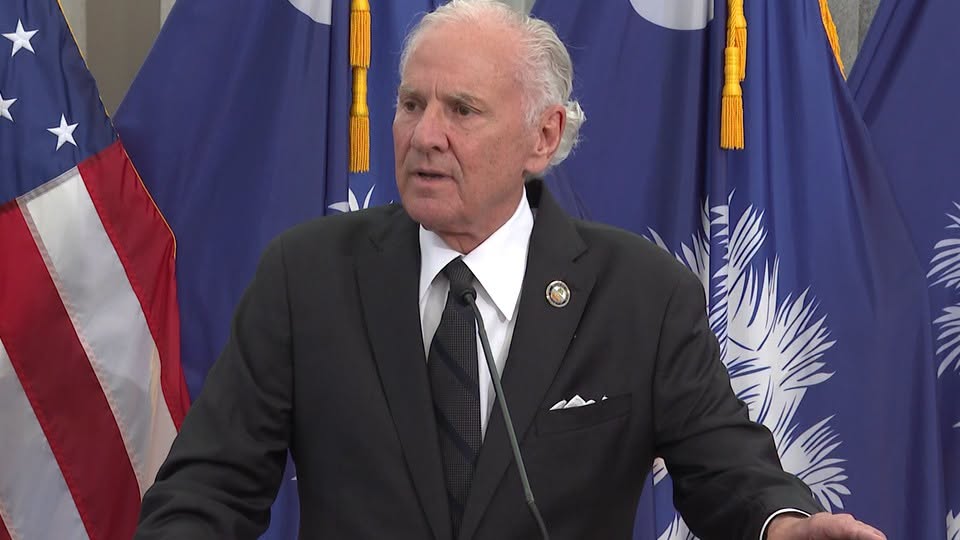
Statement from South Carolina Governor Henry McMaster on Congressional Redistricting

COLUMBIA, S.C. – Governor Henry McMaster today issued the following statement after the South Carolina Senate adjourned without giving third reading to H. 5683, ending consideration of a new congressional map ahead of the 2026 election:

“President Trump needs a Republican Congress to continue pursuing conservative policies that make our nation stronger. I am confident that one day South Carolina’s congressional delegation will be completely Republican. I am disappointed that day has not yet come,” said Governor Henry McMaster. “With the Senate’s vote today, it is clear that South Carolina will not have a new congressional map for the 2026 election. It is time for South Carolinians to go vote confidently in a safe and secure election for the June 9 primary. And it is time for the General Assembly to return in its extra session to pass a budget for the coming fiscal year. As in all elections, I encourage our citizens to exercise their precious right to vote, especially during this 250th anniversary of the Declaration of Independence.” 

When the South Carolina General Assembly adjourned on May 14 without having resolved the issue of redistricting, Governor McMaster immediately ordered them to return for a special session. The General Assembly did so the next day. Today, after the debate and pursuant to its rules, the Senate adjourned to June 10 without giving third reading to H. 5683. There will be no new congressional map for this election.

Source: Office of the Governor of South Carolina

Stay connected and subscribe to Charleston Daily.

Kevin Guskiewicz named 16th president of Clemson University

For the 16th time in 136 years and only the second time in the past 27 years, Clemson University’s Board of Trustees selected the next president of Clemson University. Following a national search, Kevin Guskiewicz was named on Wednesday as the unanimous selection as Clemson University’s next president.
 
A neuroscientist and higher education leader, Guskiewicz previously served as president at Michigan State University and chancellor at the University of North Carolina at Chapel Hill. Details regarding a start date are being finalized.
 
“I’ve known for many years how special Clemson University is, and I’m honored by the opportunity to build on the extraordinary tradition of excellence and to help lead the University into the future,” said Guskiewicz. “I look forward to engaging with students, faculty, staff, alumni and the many South Carolinians whose passion and support have shaped Clemson into one of the nation’s leading global public research universities. Together, we will build on Clemson’s strong foundation while advancing student success, academic excellence and the University’s land-grant mission of serving the people of South Carolina and beyond.”
 
In a specially called meeting, the Clemson University Board of Trustees selected Guskiewicz for the role. The search began in December and was assisted by Funk Associates.
 
“The search committee was overwhelmed with the robust and highly qualified candidates who expressed interest in leading our great University,” said Search Committee Chair Cheri Phyfer ’93, M ’99. “Dr. Guskiewicz rose to the top of a remarkable list with his deep understanding not only of higher education on the national level, but familiarity with Clemson University and its land-grant mission.”
 
An internationally recognized researcher, Guskiewicz received the prestigious MacArthur Fellowship in 2011 for his pioneering work on the diagnosis, treatment and prevention of sport-related concussions. His research has influenced collegiate and professional football safety guidelines, and he has published more than 200 peer-reviewed papers while maintaining an active research portfolio. In 2013, Time magazine named him a Game Changer, one of 18 “innovators and problem-solvers that are inspiring change in America.” He also represented both Michigan State and the University of North Carolina at Chapel Hill through leadership roles in national higher education, research and civic organizations.
 
A 2020 National Athletic Trainers’ Association Hall of Fame inductee, Guskiewicz earned a bachelor’s degree in athletic training from West Chester University, a master’s in exercise physiology/athletic training from the University of Pittsburgh and a doctorate in sports medicine from the University of Virginia.
 
“Kevin Guskiewicz comes to Clemson with extensive experience leading national universities coupled with a vision to guide Clemson into its next chapter,” said Board Chair Kim Wilkerson. “The entire Board of Trustees is excited to welcome Dr. Guskiewicz and continue to build upon Clemson’s 136 years of excellence and service to the citizens of this state.”
 
Through the search process, the committee conducted stakeholder meetings and interviews to engage the campus community in the process prior to the finalization of a position description and criteria for the search. The committee engaged with 18 different stakeholder groups including the faculty and staff senates, student governments, affiliated organizations such as the Alumni Association, IPTAY, the Board of Visitors, Clemson University Foundation, Clemson University Research Foundation and community representatives — among others.
 
“I want to express my sincere appreciation to Trustee Phyfer and the search committee for their dedicated service throughout this process,” added Wilkerson. “Their thoughtful leadership and commitment helped bring forward a visionary leader to shape Clemson’s future.”
 
Originally from Latrobe, Pennsylvania, Guskiewicz and his wife, Amy, have four children: Jacob, Nathan, Adam and Tessa.

Source: Clemson University

Stay connected and subscribe to Charleston Daily.