 by
by 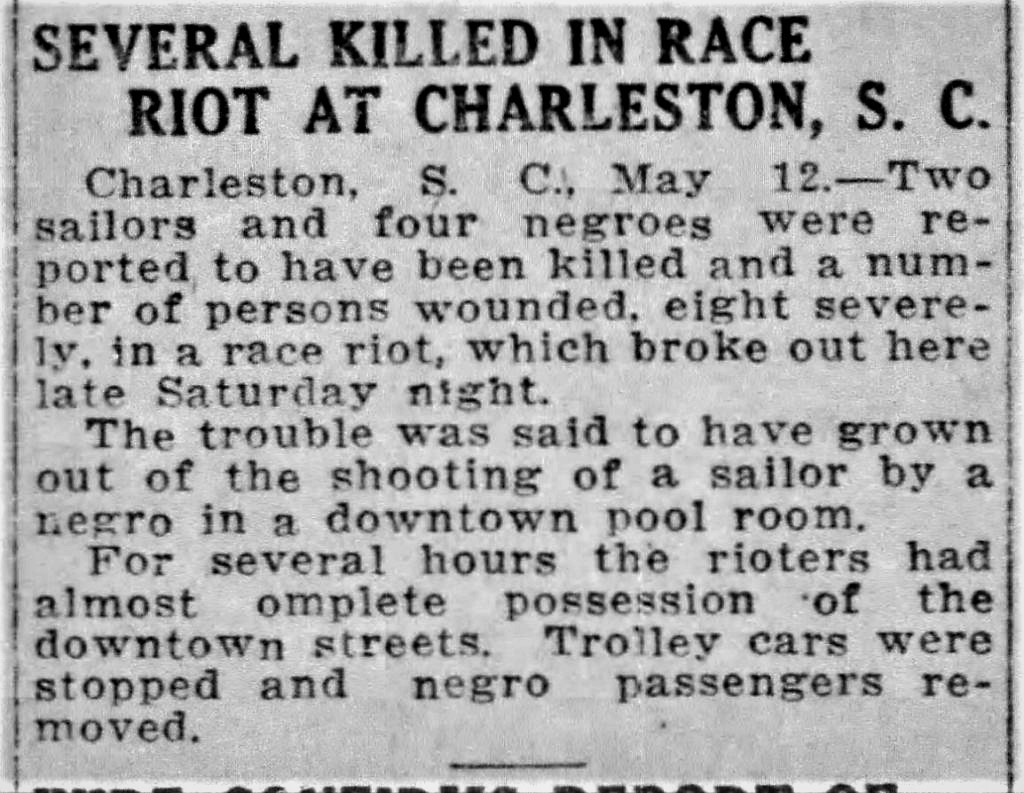
By Mark A Leon
For Charleston, 1919 was supposed to be a year of transition. World War I had ended, thousands of servicemen were returning home, and the city’s population and economy were changing. Instead, on the night of May 10, Charleston became the scene of one of the most serious episodes of racial violence in its history.
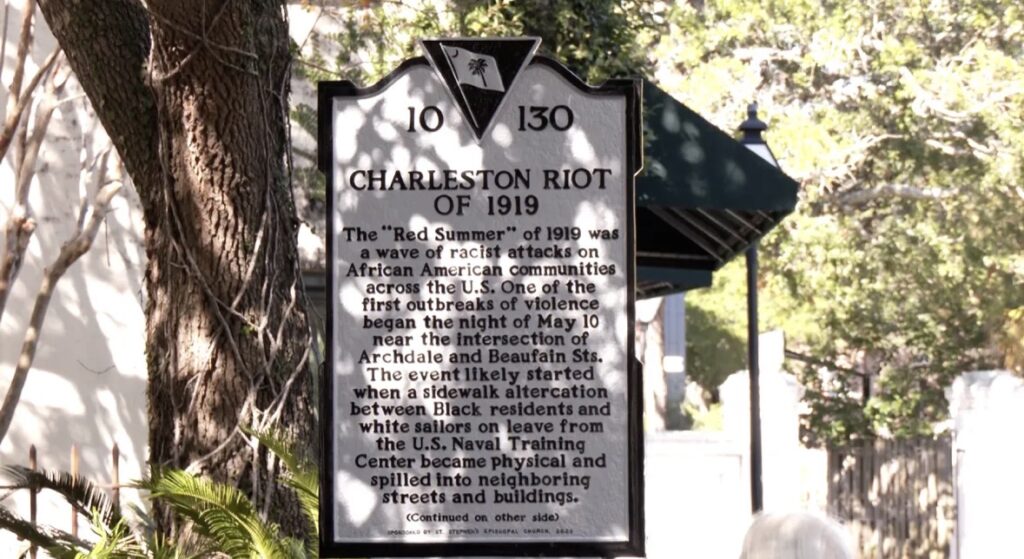
The Charleston riot of 1919 occurred during the period now known as the Red Summer, when racial violence erupted in communities across the United States. In Charleston, the violence was concentrated in the downtown area and involved white U.S. Navy sailors, local white civilians and Black Charlestonians.
A City Under Pressure
Charleston in 1919 was a deeply segregated city, but it was also a city undergoing significant demographic and economic change. During World War I, the Charleston Navy Yard expanded dramatically, bringing large numbers of sailors and military personnel into the region. At the same time, African Americans throughout the South were increasingly asserting their rights and seeking greater economic and social independence.
The return of Black servicemen from World War I was particularly significant. These men had served their country overseas and returned with expectations of greater dignity and citizenship. Across the nation, however, the postwar period brought heightened racial tensions rather than immediate equality. South Carolina was no exception.
The Night of May 10
The precise spark for the Charleston violence has never been established with complete certainty. Contemporary accounts offered conflicting explanations, including rumors of a fight at a pool hall and claims that a Black man had shot a white sailor.
A later U.S. Navy investigation concluded that the most likely beginning was a confrontation between two white sailors and a Black man near Beaufain and Archdale Streets. The encounter escalated, and rumors quickly spread among sailors that a Black man had attacked or shot a sailor.
Those rumors proved devastating.
White sailors began moving through the surrounding streets, attacking Black residents. Some raided shooting galleries and took rifles, pistols and ammunition. Armed groups then moved through portions of downtown Charleston, targeting Black people and Black-owned businesses.
The violence spread along King Street and into surrounding neighborhoods. A Black barber shop was destroyed. Black passengers were pulled from streetcars and beaten. Black pedestrians were attacked seemingly at random. In one particularly disturbing episode, a Black man was dragged from a streetcar and shot.
The Charleston County Public Library’s historical account notes that the disturbance eventually involved a large crowd of sailors, with some civilians participating as well. The attacks were not confined to one location but spread across much of the downtown commercial district.
Three Deaths and Dozens Injured
The human toll was severe.
Among those killed was Isaiah Doctor, a 22-year-old Black laborer who was shot during the early stages of the violence. James Tolbert, 23, was also fatally wounded. William Brown, 20, was shot while attempting to return home and died several days later. Historical records identify numerous additional Black Charlestonians who suffered gunshot wounds, beatings and other injuries.
The violence overwhelmed the city’s police force.
As the situation deteriorated, Navy authorities sent additional military police and Marines into downtown Charleston. Armed Marines moved through the streets, ordering sailors and civilians to disperse and returning sailors to the Navy Yard. By the early morning hours of May 11, the violence had largely subsided.
What Happened Afterward
In the aftermath, the Navy suspended liberty for many sailors and conducted its own investigation. Two sailors, Jacob Cohen and George Holliday, were tried in connection with the shooting of Isaiah Doctor. They were acquitted of manslaughter but convicted of rioting and received one-year sentences in a naval brig.
The newly established Charleston branch of the NAACP also pressed city and federal authorities to respond. Its demands included protection for Black residents, compensation for damaged businesses, greater accountability for the sailors involved and the hiring of Black police officers. Mayor Tristram Hyde agreed to several requests, although he rejected the proposal to hire Black policemen.
The events of May 10–11 were more than an isolated night of violence. They reflected the broader racial tensions of postwar America and the collision between an increasingly assertive Black population and a white society determined to preserve the existing racial order.
Today, the Charleston Riot of 1919 remains a difficult but important part of the city’s history. It reminds us that Charleston’s past is not only one of beautiful architecture, commerce and cultural traditions, but also one shaped by segregation, racial violence and the long struggle for equal citizenship.
Remembering May 10, 1919 does not diminish Charleston’s history. It makes that history more complete.
Stay connected and subscribe to Charleston Daily.

Taļ ab0ut the yamesee war stop refering to south catolinians as african american we are indigenous look up sundry moores of 1790 tell how the black 5 c8vilized tripes slayghtered the white immigrants f9r miss commin9cation and 7 european nations invsded from russia to spain portugalb