Could a rail system fix Charleston’s traffic? Options, costs and what to expect
Could a rail system fix Charleston’s traffic? Options, costs and what to expect
Charleston’s growth has put real pressure on roads, and planners have spent recent years looking at a range of transit solutions — from modern light rail and heritage-style streetcars to expanded ferries and the bus-rapid-transit project already underway. Below is a concise guide to the realistic options for a “little rail” (or light-rail/streetcar) system in the Lowcountry, how much each might cost in ballpark terms, and the likely advantages and tradeoffs for the region.
The main options
- Light rail
A light-rail line uses rail vehicles on fixed guideways with dedicated stations and can move big volumes of people at relatively high frequency. It’s typically considered for corridors with high ridership potential that justify the higher capital cost and permanent infrastructure. The region would need substantial right-of-way or conversion of existing road lanes, and careful integration with historic downtown streets. - Streetcar / tram
Streetcars are lower-speed rail vehicles usually sharing road space (or running in short, dedicated lanes). They can work well for downtown circulation and short-distance connections (e.g., park-and-ride to historic districts) and tend to stimulate local development — but passenger capacity and top speed are lower than light rail. - Commuter rail / existing-rail upgrades
If existing freight corridors or short-distance rail rights-of-way can be used, a commuter or regional rail approach is an option — best for longer-distance commuters (e.g., Summerville–North Charleston–Charleston), but less suitable for frequent one-seat trips inside downtown where stops must be close and frequent. - Bus Rapid Transit (BRT) — the path already chosen
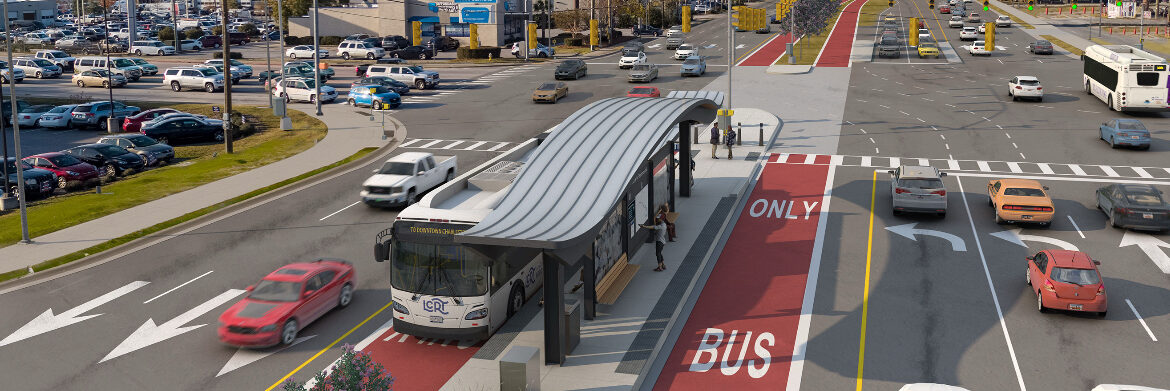
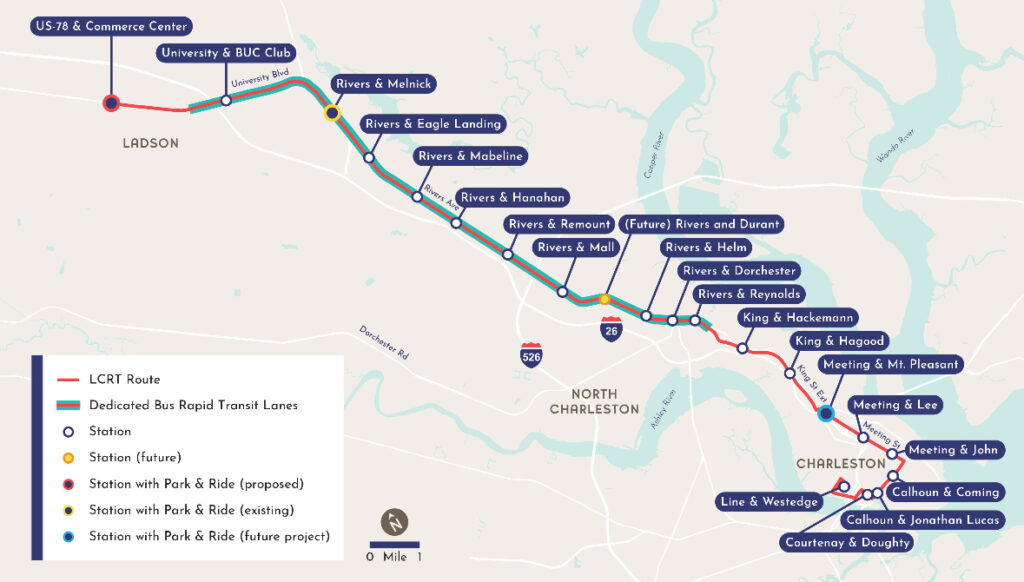
Charleston’s region is actively building the Lowcountry Rapid Transit (LCRT), a modern BRT corridor with dedicated lanes, articulated electric buses, off-board fare collection and frequent service. BRT can deliver near-rail service levels at substantially lower cost and with faster delivery. The LCRT is advancing through engineering and federal approvals now. - Ferries, microtransit, and demand management
Expanded ferry service, microtransit (on-demand shuttles), better bike/ped infrastructure, congestion pricing and parking policy changes are lower-capital or complementary steps that reduce car trips and increase the usefulness of any fixed-guideway system.
Costs — big picture and real examples
Transit capital costs vary enormously depending on whether lines are at-grade, elevated or tunneled, and how much land acquisition and station work are required. Historical U.S. projects in the Federal Transit Administration database demonstrate a huge range — from roughly $10 million per mile for very simple at‑grade projects to hundreds of millions per mile (and in rare cases near $1 billion/mi) for complex tunneled segments. That variability means any Charleston estimate must be corridor‑specific.
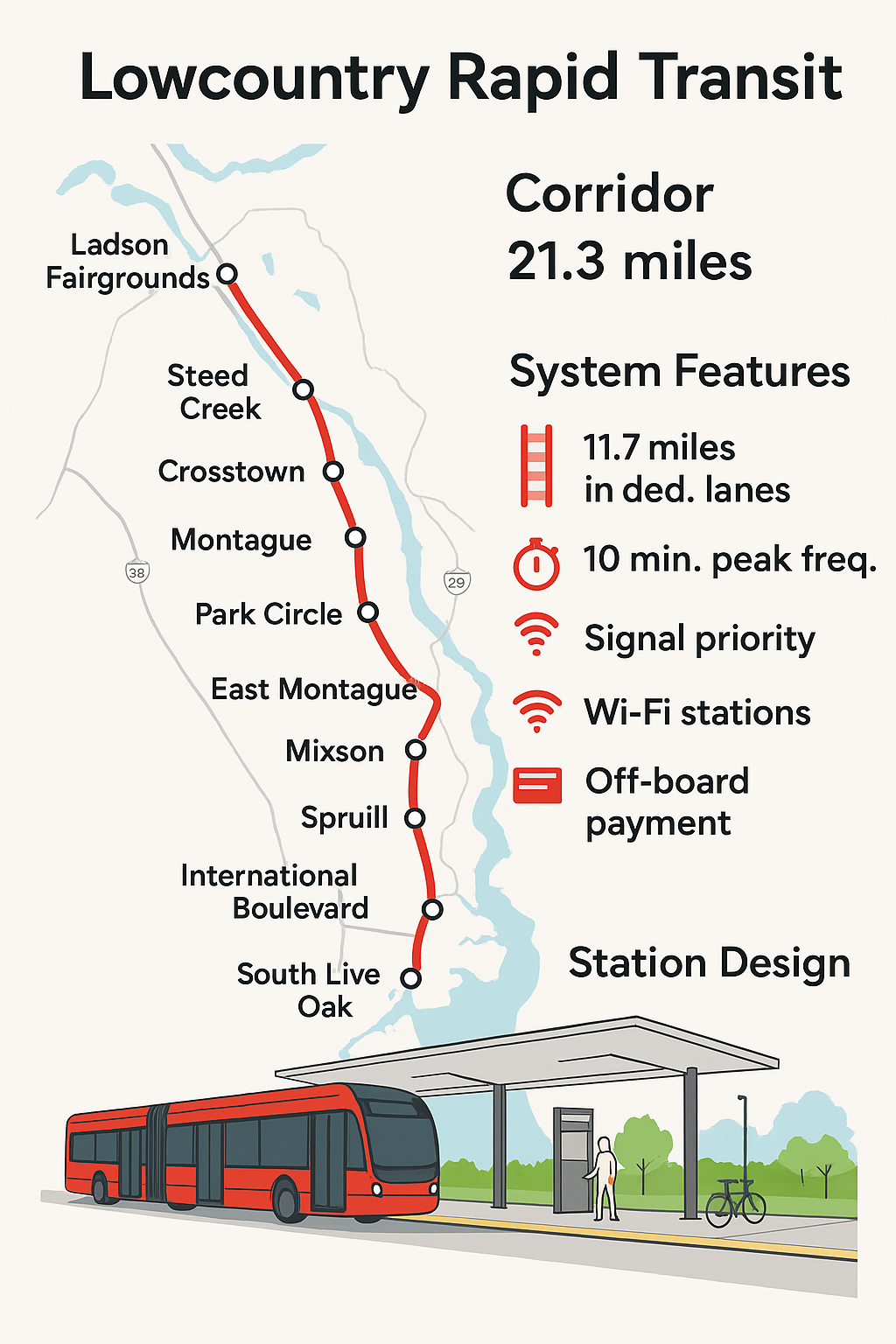
By contrast, the Lowcountry Rapid Transit BRT project — a 21‑mile system with dedicated guideway in many sections, electric buses, stations and a maintenance facility — is being planned at a total regional cost in the hundreds of millions (press reporting and project materials have cited figures in the $600M+ range for major phases). BRT’s per‑mile capital cost is typically much lower than light rail for equivalent service and can be a faster way to get high-quality frequent transit in place.
Estimates to build new light‑rail in U.S. cities commonly fall into the tens to low‑hundreds of millions of dollars per mile for at‑grade projects, and much higher if significant elevated or tunneled work is required. Operating costs, rolling stock and maintenance facilities are additional and ongoing line-item expenses.
Advantages (what Charleston would gain)
- Traffic relief and reliability: High‑capacity transit shifts people off single-occupant cars, reduces congestion on key corridors, and provides predictable travel times during peak periods.
- Economic development: Rail and high‑quality BRT stations often spur transit-oriented development, increase property values and concentrate jobs and housing near frequent service.
- Environmental and equity benefits: Electric vehicles and modal shifts reduce emissions; transit gives options to residents without cars, improving access to jobs and services.
- Tourism and downtown circulation: Frequent, legible transit helps move visitors and residents through the dense historic core without adding cars to fragile streets.
Challenges and tradeoffs
- Cost and financing: Rail is expensive and takes time to build; it usually requires a mix of local, state and federal money and political consensus. The historic downtown’s narrow streets make dedicated rail lanes politically and technically tricky.
- Right‑of‑way and construction impacts: Building fixed rail can require property acquisition or long construction periods that disrupt neighborhoods and businesses.
- Ridership and justification: Any expensive rail program must demonstrate sufficient projected riders to justify capital and operating subsidies. Planners must carefully model demand and land‑use scenarios.
- Resilience: Charleston faces flooding and sea‑level rise; any fixed infrastructure must be sited and designed with resilience and long‑term maintenance needs in mind.
A pragmatic path forward
- Finish LCRT and measure results: The current Lowcountry Rapid Transit BRT is a near-term, federally-supported investment that can deliver many benefits similar to light rail at lower cost and can be built faster. Monitor ridership, traffic impacts, and development effects.
- Use BRT as a stepping stone: If demand grows along BRT corridors, corridors can be upgraded incrementally (higher-capacity vehicles, more dedicated guideway, or in the long term conversion to rail where justified).
- Invest in downtown circulation and feeder services: Complement trunk corridors with frequent local shuttles, ferries, safe bike lanes and improved pedestrian access so the whole system works together.
- Protect funding and design for resilience: Pursue federal capital grants, state and local matches, and make sure projects account for flooding and sea‑level rise in siting and design.
Charleston has the pieces of the puzzle — an active regional transit authority, a major BRT program underway, and detailed downtown transit study work — which together create an opportunity to build a multimodal network that reduces congestion and supports sustainable growth. Whether the next step is “little rail” (streetcar or light rail) or upgrading BRT to rail over time will depend on corridor‑level studies, funding availability, and whether ridership and development patterns support the higher up‑front cost of track-based systems.
Stay connected and subscribe to Charleston Daily.

Charleston Daily
Charleston Daily is a concept in community. Its mission is to promote, assist, and celebrate in everything Charleston, South Carolina. By partnering with businesses, community leaders, volunteers and events, we are spreading the love that is Charleston. As this city continues to grow and prosper, we want to help spread the message to all about how wonderful this community is. Charleston is about the people, community, water, land, history, heritage and the true southern warmth it brings with each and every day.
On paper, great idea. Would people actually use it or would it be a white elephant? How many decades would it take to get it working? Who funds it? Who would manage it? It could work!
Absolutely, it would be great!!!
This whole article reads as AI slop and the map provided at the bottom is COMPLETELY AI-generated. While the article does a good job of explaining paths forward with placing light rail after BRT, and where it should go, it doesn’t acknowledge how we actually need to change the way we think when it comes to designing cities capable of holding transit in the first place. I’m working alongside people with the LCRT BRT project in Charleston and one of their main priorities is transit-oriented development (TOD) like medium-density and mixed-use businesses. If we don’t address TOD and explain that it’s highly necessary for light rail or BRT, people will always complain that they don’t have anywhere to park their car. We need to fundamentally change the way we think about how we build our cities and we can’t ignore this overall baseline problem.
AI bad.
The plan is great for people with no cars or working close to the proposed service line. There is very little industry within walking distance of the proposed line. Without adequate horizontal line service it will have little impact on vehicular traffic from those whose jobs are not walking distance from the lines.