 by
by 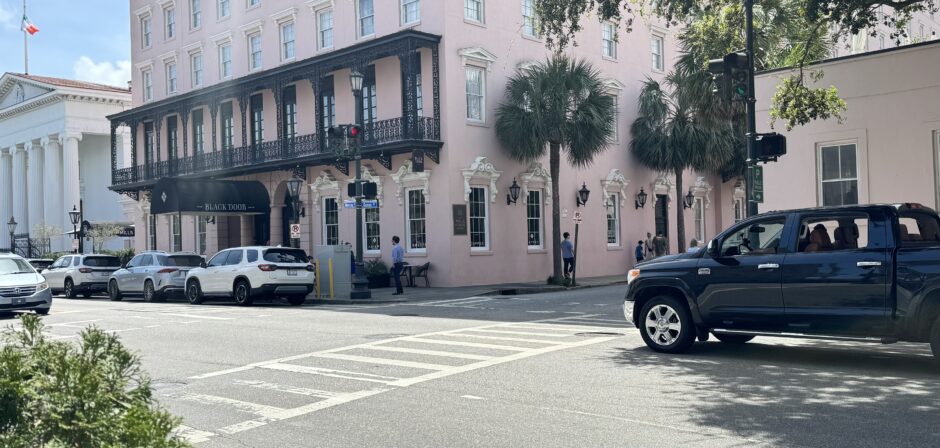
By Mark A Leon
Charleston, South Carolina’s historic peninsula is one of the most walkable and visually celebrated urban environments in the United States. Yet beneath its charm lies a growing public safety concern: pedestrian behavior—particularly jaywalking—has become an increasingly dangerous factor contributing to serious injuries and fatalities. While infrastructure improvements and driver accountability are essential, stronger enforcement of jaywalking laws must be part of the solution.
Charleston’s narrow streets, dense tourism, and constant vehicle flow create a uniquely hazardous environment for pedestrians who cross outside designated areas. Unlike modern cities designed with wide sidewalks and controlled crossings, the peninsula’s historic layout leaves little margin for error. When pedestrians step into traffic unexpectedly, drivers often have only seconds to react—especially on busy corridors like King Street or the Crosstown. This unpredictability significantly increases the likelihood of collisions.
The data underscores the urgency. Between 2018 and 2022, the Charleston metropolitan area recorded 147 pedestrian fatalities, placing it among the more dangerous regions in the country for walkers. Even more concerning, Charleston Police reported 259 vehicle-pedestrian collisions in just a three-year period, with roughly 70% resulting in hospitalization. These are not isolated incidents—they reflect a systemic safety issue.
A key contributor to these accidents is crossing behavior outside of marked crosswalks. National safety research shows that nearly 60% of pedestrian deaths occur away from crosswalks, where drivers are less likely to anticipate foot traffic. In a city like Charleston, where traffic patterns are already complicated by tourism, rideshares, and delivery vehicles, jaywalking amplifies this risk dramatically.
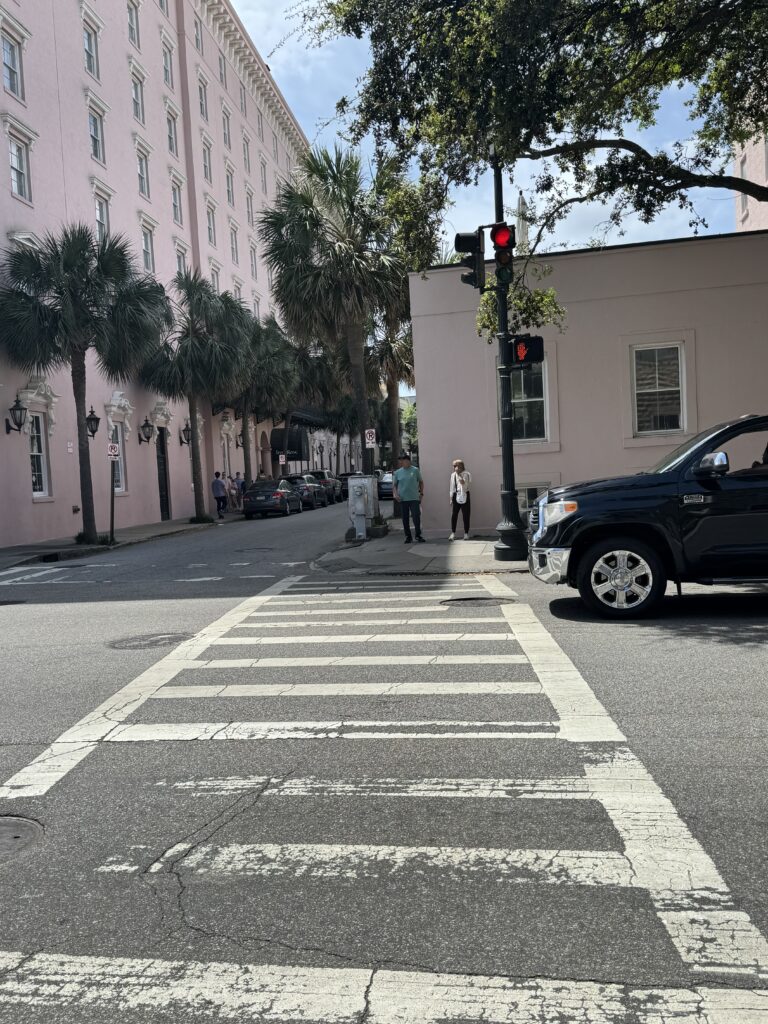
Recent tragedies on the peninsula highlight the real-world consequences. In December 2025, a pedestrian was struck and killed on King Street—one of the city’s busiest corridors—marking the seventh auto-pedestrian fatality of the year investigated by Charleston Police. Incidents like this are not anomalies; they are part of a troubling pattern. Downtown intersections such as King & Broad and the Septima P. Clark Parkway corridor have long been identified as high-risk zones for pedestrian-vehicle conflicts.
Jaywalking not only endangers the individual crossing the street but also creates ripple effects that can harm drivers and other motorists. Sudden stops, swerving, and chain-reaction crashes can occur when a pedestrian enters traffic unexpectedly. In many cases, pedestrians have little protection against the force of a vehicle, often resulting in catastrophic injuries such as head trauma or spinal damage.
Critics may argue that enforcement unfairly targets pedestrians or detracts from larger infrastructure issues. However, enforcement and education can work hand in hand. Clear, consistent policing of jaywalking laws would reinforce safe crossing habits, particularly in high-traffic tourist areas where visitors may be unfamiliar with local traffic patterns. Just as seatbelt laws and DUI enforcement have changed driver behavior over time, pedestrian compliance can improve through visible accountability.
Ultimately, Charleston’s identity as a walkable, historic city depends on its ability to protect those on foot. Strengthening enforcement of jaywalking laws is not about punishment—it is about prevention. With rising pedestrian fatalities and a growing population, the city cannot afford to ignore the role unsafe crossing behavior plays in these incidents. Proactive enforcement, combined with public awareness and smarter urban design, can help ensure that Charleston’s streets remain not only beautiful, but safe for everyone.
Stay connected and subscribe to Charleston Daily.

This article gets the problem exactly backwards.
Charleston isn’t dangerous because people are “jaywalking.” It’s dangerous because we keep forcing cars into a place that was never designed for them in the first place.
The peninsula is one of the most walkable places in the country—that’s the whole point. People are supposed to move freely, cross where it makes sense, and exist in the street environment. That’s how cities worked long before cars showed up. Charleston’s streets were built for walking, then horses, then carriages—not for steady streams of fast-moving traffic.
Blaming pedestrians for crossing mid-block is like blaming water for flowing downhill. If large numbers of people are crossing outside of crosswalks, that’s not a behavior problem—it’s a design problem.
Groups like Strong Towns have been clear about this: when a street has frequent “jaywalking,” it’s a signal that the street is failing people. The safe response isn’t more enforcement—it’s to slow cars down, reduce traffic volume, and design streets that match how humans actually move.
Instead, this article suggests more policing of pedestrians while ignoring the real issue: we’ve turned a dense, historic, human-scaled downtown into a corridor for cars, rideshares, and delivery vehicles. Then we act surprised when conflicts happen.
The data doesn’t prove pedestrians are the problem—it proves the environment is unsafe. And unsafe environments are created by the speed and volume of cars, not by someone crossing the street.
If Charleston actually wants safer streets, the solution is obvious:
* Fewer cars downtown
* Slower speeds
* More pedestrian-priority spaces
* Better crossings where people already want to cross
Not more tickets for people walking in a city built for walking.
You don’t make a walkable city safer by cracking down on pedestrians. You make it safer by finally treating cars as guests—not the priority.