 by
by 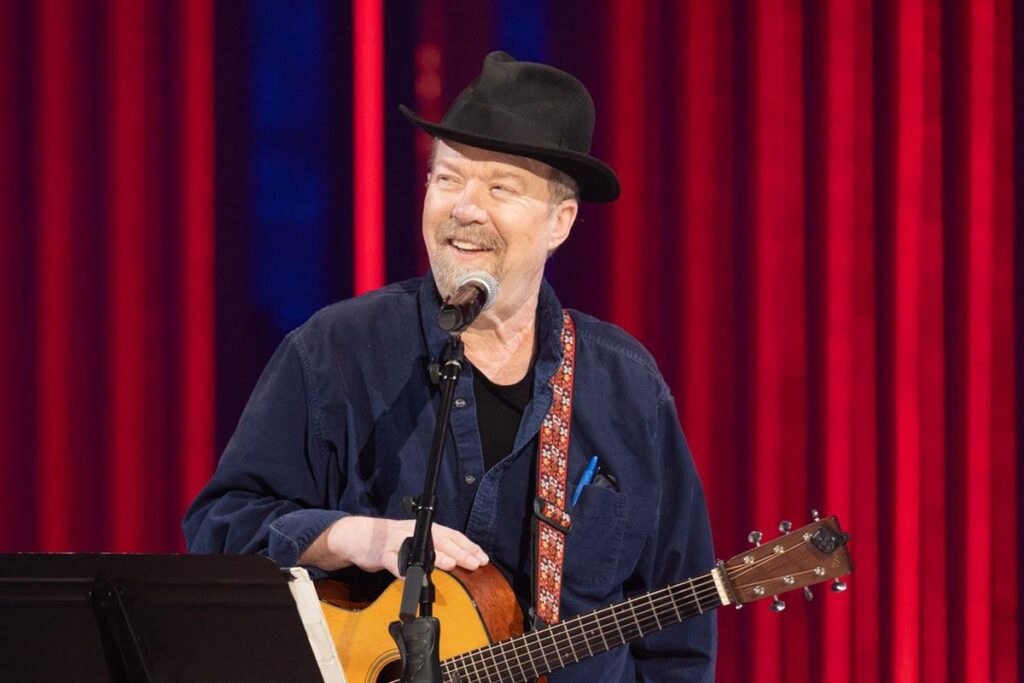
By Mark A Leon
August 29, 1952 — April 16, 2026
Today would have been Don Schlitz’s 74th birthday.
Born on August 29, 1952, in Durham, North Carolina, Schlitz grew up to become one of the most accomplished songwriters in the history of country music—a man whose words found their way into the voices of Kenny Rogers, Randy Travis, The Judds, Keith Whitley, Alison Krauss, Mary Chapin Carpenter, Tanya Tucker, Reba McEntire, George Strait and countless others.
Schlitz died in Nashville on April 16, 2026, at the age of 73, following a sudden illness. But his songs had already given him the kind of immortality that only great songwriting can provide.
And it all began in North Carolina.
Growing up in Durham, Schlitz absorbed music from everywhere. He later recalled hearing Motown, Johnny Cash, Roger Miller, The Beatles, The Rolling Stones and Bob Dylan on the radio. He also developed an early fascination with words, reading and song structure. As a child, he studied hymnals for their rhythms and rhyme patterns and became fascinated with language.
At 20, Schlitz left North Carolina for Nashville, arriving with little more than ambition. He worked nights as a computer operator at Vanderbilt University while spending his days trying to get his songs heard. For years, the doors of Music Row remained stubbornly closed.
Then came “The Gambler.”
Kenny Rogers recorded Schlitz’s song in 1978, and suddenly the struggling songwriter had written one of the defining songs of modern country music. The song became a No. 1 hit, won the Grammy for Best Country Song and the CMA Song of the Year, and ultimately became part of the Library of Congress National Recording Registry.
But “The Gambler” was not the end of Schlitz’s story. It was the beginning.
His songwriting catalog reads almost like a history of country music itself.
With Paul Overstreet, he co-wrote Randy Travis classics including “Forever and Ever, Amen,” “On the Other Hand,” “Deeper Than the Holler” and “Heroes and Friends.” “Forever and Ever, Amen” became another Grammy-winning landmark.
Then there was “When You Say Nothing at All,” first made famous by Keith Whitley and later recorded by Alison Krauss, becoming one of the most enduring love songs of the modern country era.
Schlitz also helped give Mary Chapin Carpenter some of her signature songs, including “He Thinks He’ll Keep Her,” “I Feel Lucky” and “I Take My Chances.” He wrote hits for The Judds, including “Rockin’ With the Rhythm of the Rain,” “I Know Where I’m Going” and “Turn It Loose.” His catalog also includes songs recorded by Alabama, Garth Brooks, Reba McEntire, George Strait, Tanya Tucker, The Nitty Gritty Dirt Band, Michael Johnson and others.
The numbers are remarkable: Schlitz amassed more than 50 Top 10 country hits, including 24 No. 1 songs. He won two Grammy Awards, three CMA Song of the Year awards and two Academy of Country Music Song of the Year awards. He was inducted into the Nashville Songwriters Hall of Fame, the Songwriters Hall of Fame, the North Carolina Music Hall of Fame and, in 2017, the Country Music Hall of Fame.
Yet perhaps the best measure of Don Schlitz’s legacy isn’t a trophy, a chart position or even a Hall of Fame.
It’s recognition.
You hear the opening of “The Gambler” and know the story.
You hear “Forever and Ever, Amen” and think of lasting love.
You hear “When You Say Nothing at All” and remember that sometimes the deepest feelings don’t require many words.
And somewhere in all of those songs is the voice of a boy from Durham who grew up listening to the world through a transistor radio and eventually learned how to turn what he heard—and what he felt—into songs that millions of people could call their own.
Don Schlitz once described all those musical influences as filling the “jukebox” in his head.
On his birthday, the jukebox is still playing.
And for a songwriter, there may be no better legacy than that.
Stay connected and subscribe to Charleston Daily.

Hadn’t thought of him in a long time. He made Durham proud. Never let go of your dreams or you will never reach your full potential. Don did.