 by
by 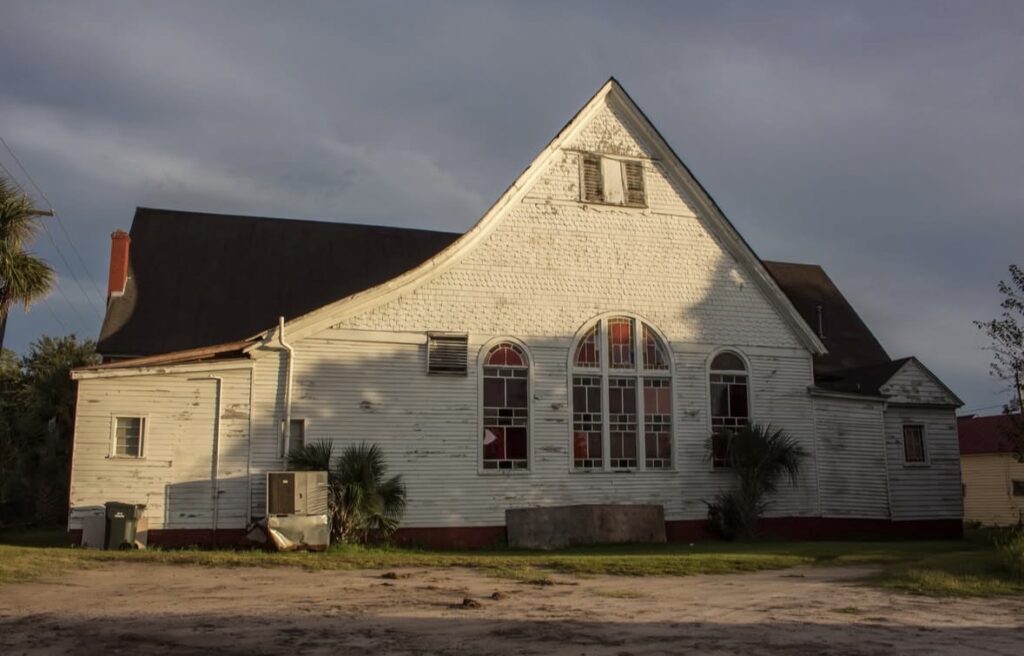
By Mark A Leon
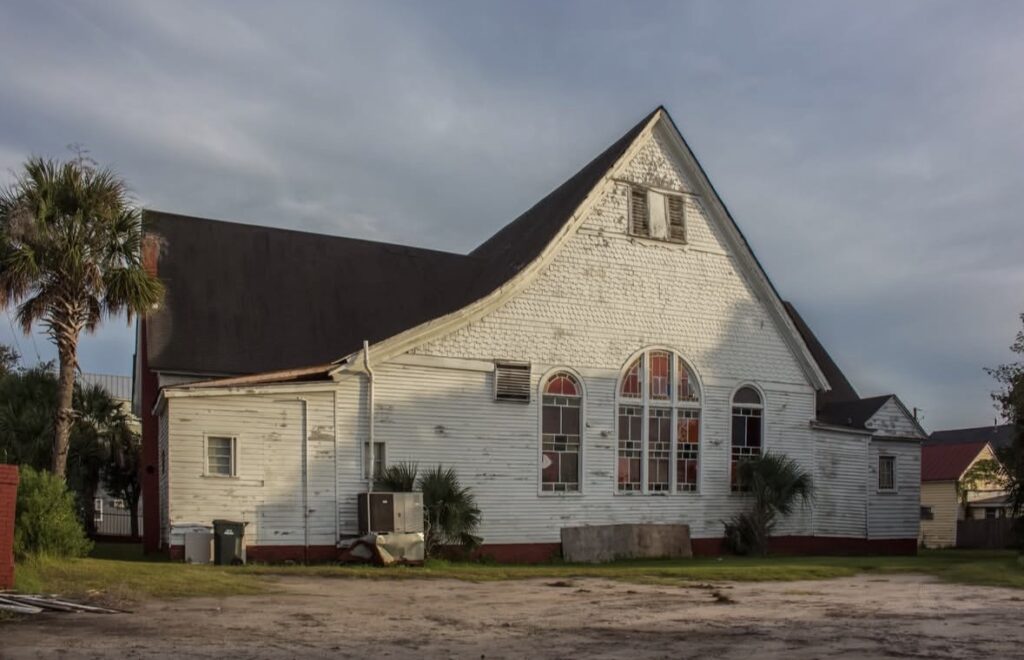
For more than 130 years, a small wood-frame chapel stood at 52 Cooper Street on Charleston’s Eastside.
Known as the Emma Abbott Memorial Chapel and later home to the Mt. Sinai Holiness Church of Deliverance, the building was constructed in 1892 as a mission church serving the Eastside community. Its connection to opera singer Emma Abbott, its distinctive architecture and its long association with Charleston’s African American history made the building more than simply an old structure.
This week, it was demolished.
What happened in between is now the subject of a City of Charleston review.
The timeline
1890–1892: The chapel is born
In 1890, Citadel Square Baptist Church purchased property at Cooper and America streets for a mission church intended to serve Charleston’s Eastside.
The church later received a $5,000 bequest from the estate of opera singer Emma Abbott, who had attended Citadel Square Baptist Church during visits to Charleston.
Architect S.H. Foulk designed the Romanesque Revival-style building, and construction was completed in December 1892.
1977: Mt. Sinai Holiness Church takes over
After its years as a Baptist mission church, the building became home to the Mt. Sinai Holiness Church of Deliverance, which occupied the property beginning in 1977.
For generations, the building became part of the Eastside’s religious and community landscape.
Around 2021: A preservation-minded redevelopment plan
Approximately five years ago, the property came before Charleston’s Board of Architectural Review with a proposal to rehabilitate the historic church.
The plan called for converting the existing structure into six residential units, while preserving the historic exterior. Two additional townhomes were also proposed for the property.
At the time, preservationists viewed the project as an opportunity to give the historic building a new life.
2021–2026: The building deteriorates
The rehabilitation did not occur as originally envisioned.
According to preservationists, the building remained exposed to the elements, including water intrusion through portions of the roof.
The Preservation Society of Charleston has argued that basic stabilization and weather protection could have slowed or prevented the deterioration.
That point is now part of the larger debate: Was the building’s eventual condition inevitable, or did years of inadequate stabilization contribute to the crisis?
That is an important distinction to make in the article because the preservationists’ position is an allegation/argument, not an established finding.
August 12, 2026: Engineering report raises alarm
An engineering report dated August 12 found extensive deterioration associated with prolonged water intrusion.
According to the City, portions of the roof, structural beams and columns had deteriorated significantly, with signs of potential failure.
The assessment concluded that stabilization could not safely be undertaken without substantial risk to workers.
August 21, 2026: Demolition permit issued
The city issued a demolition permit on August 21.
This is where the controversy escalated.
Preservationists say they did not discover the permit through a public notification process. Instead, they found it while reviewing the city’s online permit system.
They argued that the public—and particularly the surrounding Eastside community—should have had an opportunity to understand what was happening before demolition became imminent.
September 21: Demolition is suddenly put on hold
News of the impending demolition became public.
Community members and preservation advocates raised concerns about the loss of the historic structure.
Charleston officials then paused demolition and sought an independent assessment of the building’s condition.
City Councilmember Aaron Polkey said the community should have a voice because of the church’s importance to the Eastside and Charleston’s African American history.
September 22: Preservationists make a last-minute appeal
The Preservation Society of Charleston met with representatives connected to the development.
Preservationists urged that, if demolition could not be avoided, historic materials should at least be carefully salvaged rather than simply discarded.
There were discussions about preserving and potentially reincorporating architectural elements into the redevelopment.
The proposed future project was designed to retain elements of the original building’s architectural character.
September 23: The chapel comes down
Despite the temporary pause and calls for additional review, the historic structure was demolished.
The city subsequently acknowledged the significance of what had happened.
In a statement, Charleston officials called the building’s loss “a loss” and described it as a sacred place connected to generations of Eastside families and Charleston’s African American history.
September 23: The City acknowledges problems with its process
Perhaps the most significant development came after the demolition.
The City of Charleston said it is conducting a full review of what happened, including whether the conditions attached to the demolition permit were followed.
The city also acknowledged:
“What is already clear is that our own process has gaps, and those are ours to fix.”
The city says it intends to:
- Guarantee meaningful public notice before future historic demolitions
- Conduct a funded survey of downtown historic buildings
- Add cultural significance to the factors considered in these decisions
- Review the circumstances surrounding the 52 Cooper Street demolition
The question Charleston is now left with
The central question isn’t simply “Why was the church demolished?”
The city says there were serious structural concerns and an imminent safety threat.
The more complicated question is:
How did a historic building that had once been the subject of a preservation-oriented redevelopment plan reach a point where demolition became the city’s only safe option?
And perhaps even more importantly:
Could something have been done years earlier to prevent it from reaching that point?
Preservationists say yes.
City officials are now acknowledging that the process itself needs examination.
And the building that prompted those questions is no longer standing.
For 134 years, Emma Abbott Memorial Chapel occupied this corner of Charleston’s Eastside. On September 23, 2026, it disappeared.
What remains is the history—and a much larger conversation about how Charleston protects historic buildings before they reach the point of no return.
The city says it intends to examine what happened at 52 Cooper Street and change the process going forward.
But for the families and community members who considered the chapel part of their history, there is an unavoidable reality:
A process can be changed. A building can be restored. But once a historic structure is gone, it cannot be brought back.
Stay connected and subscribe to Charleston Daily.
Photo Credit: Brandon Coffey – https://www.instagram.com/itsbrandoyo
