Ribbon Cutting and Grand Opening for Rita’s Italian Ice & Frozen Custard in Mount Pleasant, SC

Read More

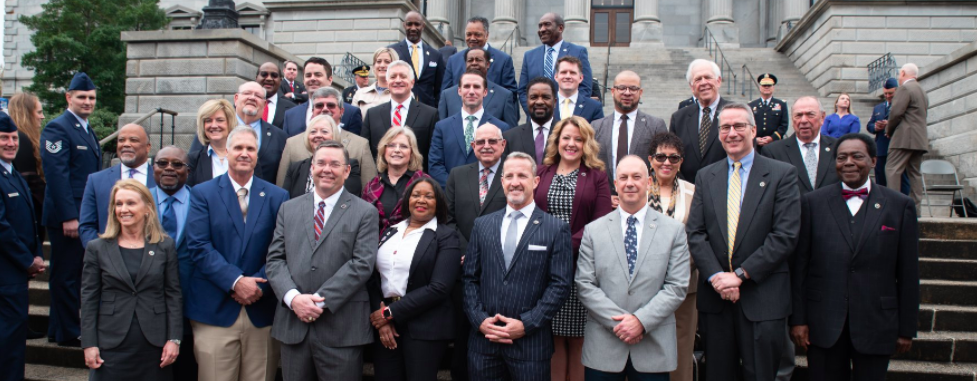
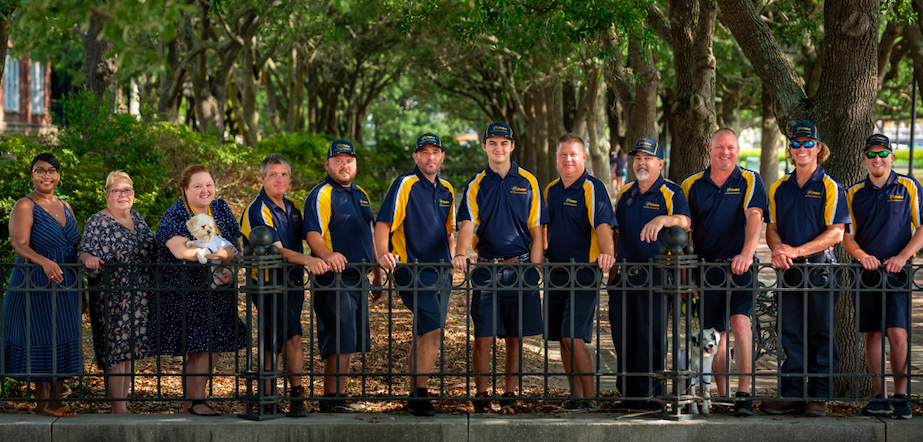
“My family and I could not be more ecstatic about the reception from the community thus far,” Kevin said. “We are looking to keep that up for everyone!” – Owner Kevin Brooks with wife Jen, family, and staff, joined by Councilman John Iacofano and Councilman Howard Chapman, P.E., partnered with Mount Pleasant Chamber of Commerce Vice President Tammy Becker and Chamber Board Members, celebrated the grand opening of Rita’s Italian Ice & Frozen Custard with a ribbon-cutting ceremony.

The business is located at 401 Faison Road, Suite 102, Mount Pleasant, SC.

Read the full press release: https://lnkd.in/gyaC8S-X

Photo Credit: Town of Mount Pleasant, SC

Charlotte based real estate firm Corcoran HM Properties completes expansion into Charleston, South Carolina

Read More

Corcoran HM Properties, an affiliate of the Corcoran Group LLC, has moved into the newly constructed 741 Meeting Street building located in the Upper Peninsula district of downtown Charleston.  They will celebrate the move on Thursday.

Middle Street Partners recently completed the 30,000-square-foot building for commercial use of office suites, retail and food/beverage businesses, according to a news release.

Corcoran HM Properties is headquartered in Charlotte and expanded its operation into Charleston in September 2022.

A private ribbon-cutting ceremony and celebration will be held for the agents and staff of Corcoran HM Properties’ Charleston office on Thursday, Aug. 31.

Corcoran HM Properties was founded by Valerie Mitchener in 2006, and the locally owned boutique firm grew to be a market leader in the Charlotte metro area, the news release said. The expansion to Charleston was Corcoran HM Properties’ first since affiliating with the Corcoran Group in June 2021.

It was a strategic step in the firm’s growth plan to broaden its reach throughout the Carolinas, the release said. In addition to the Charleston office, Corcoran HM Properties has three offices in the Charlotte region and is working to expand into other areas of the Carolinas.

Source link

New Podcast: The 1955 Cannon Street (Charleston, SC) All-Stars – How a group of Charleston teens became Civil Rights pioneers

Read More

Stolen Dreams: The Cannon Street All-Stars and Little League Baseball’s Civil War.
The Story Continues.
https://lnkd.in/gGwSxVm5

Please listen to Joseph Levin’s telling of the story of The Team Nobody Would Play on his Slate podcast One Year ….

Click to Listen

About the Podcast:

Interviews with the former players and Chris Lamb.

This is the subject of Chris Lamb’s book, Stolen Dreams: The 1955 Cannon Street All-Stars and Little League Baseball’s Civil War.

When the 11 -and 12-year-olds on the Cannon Street YMCA All-Star team registered for a baseball tournament in Charleston, South Carolina, in June 1955, it put the team and the forces of integration on a collision course with segregation, bigotry, and the southern way of life. White teams refused to take the field with the Cannon Street All-Stars, the first Black Little League team in South Carolina. The Cannon Street team won the tournament by forfeit and advanced to the state tournament. When all the white teams withdrew in protest, the Cannon Street team won the state tournament. If the team had won the regional tournament in Rome, Georgia, it would have advanced to the Little League World Series. But Little League officials ruled the team ineligible to play in the tournament because it had advanced by winning on forfeit and not on the field, denying the boys their dream of playing in the Little League World Series. Little League Baseball invited the Cannon Street All-Stars to be the organization’s guests at the World Series, where they heard spectators yell, “Let them play! Let them play!” when the ballplayers were introduced. This became a national story for a few weeks but then faded and disappeared as Americans read of other civil rights stories, including the torture and murder of fourteen-year-old Emmett Till.

Related link: Learn about the Cannon Street All-Stars

Southern Environmental Law Center partners with the South Carolina Aquarium to track Charleston’s high tides

Read More

Tracking Charleston’s high tides with help from South Carolina Aquarium. New partnership will bolster resilience efforts statewide

Southern Environmental Law Center kicked off our partnership with South Carolina Aquarium with a little citizen science.

On July 30, the SELC team and aquarium staff spent the evening measuring high tidal waters in Charleston. This new partnership will support ongoing resilience work, from habitat restoration projects and citizen science data collection to training workshops and community outreach events, to help tackle some of the toughest environmental challenges facing South Carolina.

“We are dedicated to finding solutions to solve the climate emergency that are rooted in science and respond to local needs. That’s why SELC is so proud to partner with the South Carolina Aquarium on their critical, science-focused resilience work.” – Alyssondra Campaigne, SELC Climate Initiative Leader

Learn more about sea-level rise and how our partnership will bolster resilience efforts in South Carolina: https://lnkd.in/gWedzKAV

Follow and subscribe to Charleston Daily.

JJR Development completes 6 affordable living houses on the East Side (Charleston, SC)

Read More

Release from JJR (LinkedIn)

Charleston, SC- Peninsula- Historic Downtown (America St. and Father Grants Ct.- Eastside) JJR Development is proud to announce our completion of 6 affordable, fee simple houses for the City’s Homeownership Initiative Program by the Department of Housing and Community Development.

Two families already closed and moved in, with the remaining ones in rapid succession. Affordable housing; a prime initiative of the Administration of Charleston’s Mayor John Tecklenburg, these workforce houses, with downpayment subsidy from the City are indistinguishable from their “market based” counterparts. JJR is honored and proud to have developed these for the City on a site that languished for 15 years prior; now done in 8 months, with new owners taking possession.

While just a micro-solution, it is a prime example of the Public Sector joining up with an efficient Private Sector development team that can leverage economies of scale and expertise to produce impactful and expedient results. This was a real team effort by a core nucleus of participants.

Special thanks to JJR’s long time COO Sherry Brown, Patrick Head, our Director of Development, Lindsay Flynn, CPA our CFO, in addition to internal JJR attorney Rebecca Fisher, Esq. Extra shout outs to Trey Linton, Civil Engineer, julia martin project architect and Erin Lanier from Julia’s office, Carrie Newbern GC, Matthew Mullins from Builders FirstSourceSteve Humphreys at ServisFirst BankAndy Gowder, CRE, Project Attorney, and Charleston Public Works – all of whom showed extraordinary commitment to this wonderful project. 

Related stories:

Workforce housing project breaks ground on east side of Charleston peninsula

City of Charleston, JJR Development LLC announce creation of six new affordable homes under homeownership initiative

The College of Charleston Receives NSF Grant to Study Mass Extinction

Read More

Sept. 1, 2023, will be a momentous day for the College – and, perhaps, the future of our planet. That’s when geology professor Teddy Them will begin using the College’s share of a prestigious $3 million collaborative research grant, which amounts to close to $290,000, to study mass extinction. He will start by mentoring two undergraduate students, junior Rachel Webster and sophomore Kami Beats, as they analyze geologic samples. He’ll then continue to work with students over the next five years as they do fieldwork in Colorado and North Dakota, generate geochemical data at a lab at Virginia Tech, present their research at international conferences and receive financial support.

The purpose of the grant from the National Science Foundation Frontier Research in Earth Sciences program is to make important contributions to understanding how life on Earth recovered after the end-Cretaceous mass extinction 66 million years ago, when about 75% of species on the planet went extinct. The event completely changed the trajectory of the evolutionary tree of life, leading ultimately to the formation of today’s extraordinary mammal diversity, including humans.

But the project isn’t just to learn about the evolution of many modern plants and animals; it should also provide valuable insights into the current biodiversity crisis facing the planet, as ancient extinctions can teach about the extinctions happening today.

And it will also show once again how the College punches above its weight.

“For the geology department, I hope that we can highlight the reality that smaller colleges have the necessary resources and ability to perform cutting-edge research in a predominantly undergraduate student setting,” Them says. “The experiences that our CofC students will have are commonly only for graduate students at larger research institutions, so I am extremely grateful to be able to provide these types of world-class opportunities.”

Tyler Larson, curator of vertebrate paleontology at the Denver Museum of Nature and Science, is leading the ambitious, five-year research project and the multidisciplinary team of 12 scientists at eight collaborating institutions: City University of New York Brooklyn College, the College of Charleston, Colorado College, Smithsonian National Museum of Natural History, University of British Columbia, University of Colorado Boulder, University of Oregon and University of Wyoming.

The two CofC geology students’ first task is to analyze geologic samples previously collected for this project for mercury concentrations, which may allow them to track the timing of the eruption of the Deccan Traps, a large volcanic province that was erupting during the mass extinction, as well as the moment an asteroid struck the planet, which is traditionally thought to have caused the extinction event.

“Over the last 15 years, there has been a contentious debate over which mechanism caused the mass extinction event, so our work should give insight into this,” Them says. “The fieldwork expeditions will take place in May–June over the next four years, so there will be multiple opportunities for our students to take part in the research.”

Source link

Mount Pleasant based Tobias & West Structural Engineers celebrates 20 years in the Lowcountry

Read More

Tobias & West Structural Engineers is proud to announce the celebration of their 20-year anniversary. Founded in 2003 by Eric Tobias and Stephen West, they have been committed to excellence and innovation for structural engineering projects in the commercial, residential, industrial, multi-family, telecommunications, healthcare and historic renovation sectors in South Carolina and across the country.

“It fills us with immense joy and gratitude to mark two decades of excellence and growth, and we are incredibly appreciative of our loyal clients, dedicated employees and supportive partners who have all been integral to our success throughout this remarkable journey – we look forward to another 20 years” said Founders, Eric Tobias and Stephen West.

Big Bad Breakfast Announces Grand Opening of Second Charleston, South Carolina on August 29, 2023

Read More

Popular Southern Breakfast Chain Created By Award-Winning Chef John Currence Expands Charleston Presence With A Second Restaurant In Mount Pleasant

OXFORD, Miss., Aug. 22, 2023 (GLOBE NEWSWIRE) — Big Bad Breakfast (“BBB”), the acclaimed from-scratch breakfast restaurant with 16 locations across the southeast, announces the grand opening of its newest restaurant in the Charleston, SC area on August 29, 2023. The newest BBB location, the 18th in the group’s growing portfolio and second in the Charleston area, will be in Mount Pleasant, South Carolina at, 2664 North Highway 17, Suite 101, Mount Pleasant, SC 29466. Big Bad Breakfast is the creation of award-winning southern chef, author, and restaurateur John Currence who launched the first BBB in Oxford, Mississippi in 2008.

“Big Bad Breakfast has really found a great home in Charleston, so when the opportunity to open a second location in the area became available it was a no-brainer,” said Chef John Currence, Owner of Big Bad Breakfast. “Everyone on the team is excited to open our second Big Bad Breakfast location in the area and that’s largely because the Charleston community has welcomed us so positively and has been interested in our food, our style and business.”

BBB specializes in the most important meal of the day, serving food full of inspiration and energy. Visitors can enjoy the classic from-scratch breakfast and lunch dishes, along with delicious brunch cocktails. Highlights include fluffy buttermilk biscuits, jellies and jams, omelets and various unique breakfast dishes made from scratch, daily.

Big Bad Breakfast will open for breakfast and lunch daily from 7 am to 2:30 pm. For more information, visit BigBadBreakfast.com.

About Big Bad Breakfast:
Founded by award-winning chef and author John Currence, Big Bad Breakfast (BBB) is a southern-inspired breakfast concept fueled by childhood memories and the soul of southern cuisine. Located at 2664 North Highway 17, Suite 101, Mount Pleasant, SC 29466, the restaurant has 17 southern locations throughout Alabama, Arkansas, Florida, Kentucky, Mississippi, North Carolina, South Carolina, and Tennessee. The Big Bad Breakfast Charleston location serves both breakfast and lunch, incorporating local and regional ingredients to craft chef Currence’s signature menu items. The restaurant is open for breakfast and lunch daily from 7 am to 2:30 pm. For more information, visit BigBadBreakfast.com and follow on Facebook and Instagram.

Media Contact
Oak PR
Drew Tybus
drew@oakpr.com

Charleston Business Spotlight: How a Mother’s Love Became a Passion for Charleston Real Estate – Kerri Fotta Real Estate

Read More

Finding hope under a Palmetto sky is the inspiration for our Charleston Business Spotlight.  Kerri Fotta, Pro Agent with TeamWork Realty, LLC is a compassionate, intelligent, and warm real estate agent in the Lowcountry with a focus on connecting the right home with the right buyers.  Her love for Charleston and the community is deeply rooted in her commitment to family. 

Kerri married her high school sweetheart, had three wonderful children, and a successful photography career, but this Cinderella story had a setback.  Her youngest, Kamilyn had a neurogenic disorder that has kept her in an out of hospitals since early childhood, but a fated move by her doctor from New York to Charleston changed Kerri and her family’s lives forever.  

This is her story.

Kerri Fotta and how Charleston and Real Estate changed her life

23 years ago, Kerri married her high school sweetheart, Michael in the small town of Boonsboro, Maryland.  For 17 years, Kerri was a successful photographer, business owner and proud mother of 3 wonderful children, Michael (20), Kennadi (18) and Kamilyn (17).  

Kerri’s connection to Charleston is deep and personal and began when their youngest daughter’s surgeon transferred from New York to MUSC in Charleston, SC.  Kamilyn has a neurogenic bladder and bowel with kidney involvement and endured a difficult medical and surgical history since childhood. When their chief surgeon and advisor transferred, the decision to follow was simple.  

Five years ago, Kamilyn endured a 13-hour surgery and 2-week hospital stay to prolong the life of her kidneys in Charleston.   Post-surgery, Kerri and family came to Charleston every few months, often monthly for continued care.  

During that time they fell in love with a city that gave hope for a healthy future.  The Charleston charm won them over and soon it became clear that this was their life calling.  

During their Charleston visits, Kerri’s middle child Kennadi fell in love with the College of Charleston and is now a freshman living on campus and a proud sorority sister in Alpha Delta Pi.  Kerri’s son, Michael attends Trident Community College and will be transferring to the College of Charleston next fall alongside his youngest sister Kamilyn who will attending her freshman year.

That is quite a journey, but only the beginning.

“During this time it become obvious to me that I desperately wanted to give back to the Charleston community in the way it did for me and my family during such a difficult time.  I wanted to find a way that I could benefit others on their journey South just like us.  The move for us was exciting, but also scary with a lot of unknowns and I was often left in the dark on what was right and what wasn’t.  I found real estate to be my calling.”

“Real estate has not only allowed the opportunity to give back to my community, but to also take care of our daughter.  It provides the flexibility to be present not only for my own family, but for my clients and their families too.  My passion for everything Charleston and the Lowcountry has fueled my desire and need to do more for my family, clients, and the community.”

We are so proud to share Kerri’s story and recommend her to those seeking a partner as they begin their search for their next home.

We’re Still Fighting for Fair Electoral Maps in South Carolina – Update on redistricting case SC NAACP v. Alexander

Read More

An update on our redistricting case, South Carolina NAACP v. Alexander

By Paul Bowers, Communications Director

Democracy doesn’t just happen. It doesn’t fall from the sky or spring up from the soil. We the people have to protect and advance it.

Earlier this month, the ACLU of South Carolina was proud to play its part in the ongoing struggle for democracy in our state. On August 11, as part of a legal team including the ACLU, the Legal Defense Fund, and Arnold & Porter, we filed our brief in Alexander v. South Carolina NAACP. The case is set to be the most consequential racial gerrymandering case of the decade.

On Oct. 11, the Supreme Court of the United States will hear oral arguments in our case. If the Court affirms our trial victory from last year, South Carolina will be forced to redraw its Congressional districts more fairly. As we prepare to go to court, we’d like to catch you up on the case and what its outcome will mean for all South Carolinians. 

One of the plaintiffs we represent in this case is Taiwan Scott, a seventh-generation resident of Hilton Head and member of the Gullah community. When we filed our brief with the Supreme Court earlier this month, he summed up the case this way:

The configuration of my current congressional district—CD1—represents a continuation of majority white legislative bodies seeking to minimize Black voters’ electoral power and the full promise of equal citizenship for Black people in my community. A panel of federal judges has already ruled once that we are entitled to a fair map, and I am hopeful that the Supreme Court will affirm the panel’s decision and remind South Carolina that my community has the same constitutional rights to equal and fair representation as our non-racially gerrymandered neighbors.

The case

This case, originally called South Carolina NAACP v. Alexander, is about the redrawing of electoral maps in South Carolina. Every time there is a census (every 10 years), state lawmakers must redraw electoral districts to ensure that each includes the same number of voters. In South Carolina, the process is often deeply fraught. In 4 of the last 5 redistricting cycles, federal court intervention was necessary to ensure our maps were compliant with the law and the protections of the Constitution.

Our case before the Supreme Court focuses on two Congressional Districts: District 1, a Charleston-area district currently represented by Rep. Nancy Mace, and District 6, a sprawling district reaching from Columbia to Charleston that is currently represented by Rep. Jim Clyburn.

We went to an 8-day trial featuring 652 exhibits and testimony from 42 witnesses. We were able to show that mapmakers disregarded traditional redistricting principles and sorted thousands of voters on the basis of race. Furthermore, despite lawmakers telling the public throughout the redistricting process they were not going to politically gerrymander (that is, intentionally manipulate the district lines to benefit Republican politicians), they testified in court that they had done just that.

Our plaintiffs won their case. In January 2023, a panel of three federal judges found that lawmakers had “bleached” Black voters out of District 1 and made a “mockery” of traditional districting principles. The judges found that lawmakers had illegally manipulated racial demographics in District 1 in order to shore up a 6-1 Republican majority in South Carolina’s congressional delegation.

The judges ordered South Carolina lawmakers to redraw their maps, writing at the time:

Reducing the African American population in Charleston County so low as to bring the overall black percentage in Congressional District No. 1 down to the 17% target was no easy task and was effectively impossible without the gerrymandering of the African American population of Charleston County.

The defendants, including Senate President Thomas Alexander, appealed the decision to the Supreme Court of the United States. This brings us to our upcoming court date in October.

The evidence

We’re legal nerds here, and we know court filings are not always a riveting read, but our brief to SCOTUS has some details that should raise real concerns about the state of our democracy. You can read it all on the Cases page on our website or look around in the other filings at supremecourt.gov.

For example, we show that South Carolina’s lawmakers “offset virtually every Black voter added to CD1 from Beaufort, Berkeley, and Dorchester by expelling a Black Charlestonian from CD1 to CD6.” Majority-Black communities in Charleston and North Charleston were pushed out of District 1, separating them from majority-white parts of the county and the coast.

We include evidence presented by Dr. Kosuke Imai, a statistician who used algorithms to generate alternative maps of the two districts based on traditional redistricting principles while ignoring racial data. After running the numbers, he testified that the low Black population in District 1 was “astronomically” unlikely to occur if, as the defendants claim, the map drawers never considered race.

There’s also some interesting reading in the amici curiae, or “friend of the court” briefs on this case. These are statements submitted by people who are not parties to the case but want to lend some expertise or perspective.

Consider the opening paragraph of the amicus brief from the League of Women Voters of South Carolina, Gullah Geechee Chamber of Commerce, Charleston Branch of the Association for the Study of African American Life and History, and Circular Congregational Church:

Fifty-five million years ago, the Atlantic Ocean and South Carolina’s coast converged in the Midlands, more than one-hundred miles from the state’s modern-day shoreline. Not since that time has Columbia held interests resembling those of Charleston County. Nevertheless, in 2021, the South Carolina General Assembly needlessly deepened the split of Charleston County between Congressional District Nos. 1 and 6 and, for the first time ever, lumped together in a single district the whole of the Charleston Peninsula and downtown Columbia, which are separated by several rural counties and more than half the state’s length. The General Assembly’s fragmentation of Charleston County and amalgamation of communities with disparate interests typify the Enacted Plan’s disregard for traditional redistricting principles and demonstrate the predomination of race as the General Assembly’s primary redistricting consideration.

That is, if nothing else, some good writing.

Why we fight

Beneath the legalese and the mountains of paperwork in this case, you’ll find some bedrock principles of American life: that one person should have one vote; that every person is deserving of equal protection under the law; that voters should choose their representatives and not the other way around.

These are enduring ideals that transcend party lines. In fact, if you look at the long history of redistricting challenges in South Carolina, it was the South Carolina Republican Party that fought for fairer districts in 1984, alongside the NAACP. Again and again, regardless of who held power and who stood to gain, people of principle have stood in the gap for the sake of democracy.

As ACLU founding member Helen Keller once said, “Rights are things we get when we are strong enough to make good our claim on them.” After more than a century in existence, the ACLU is still striving to make voting rights real and lasting in the United States. Working arm in arm with partners like the NAACP and LDF, we aim to protect the ballot and the rights of South Carolinians. We want a democracy, and we’re willing to fight for it.

Source link