 by
by By Mark A Leon
Charleston has never struggled to make a first impression. The skyline of church steeples, the rhythm of carriage wheels, the soft palette of Rainbow Row—it’s all part of a well-earned reputation. But the version of Charleston that stays with you long after you leave isn’t always the one on display. It’s the one you discover slowly, almost accidentally. The one that asks you to look a little closer.
Sometimes, that means quite literally looking up.
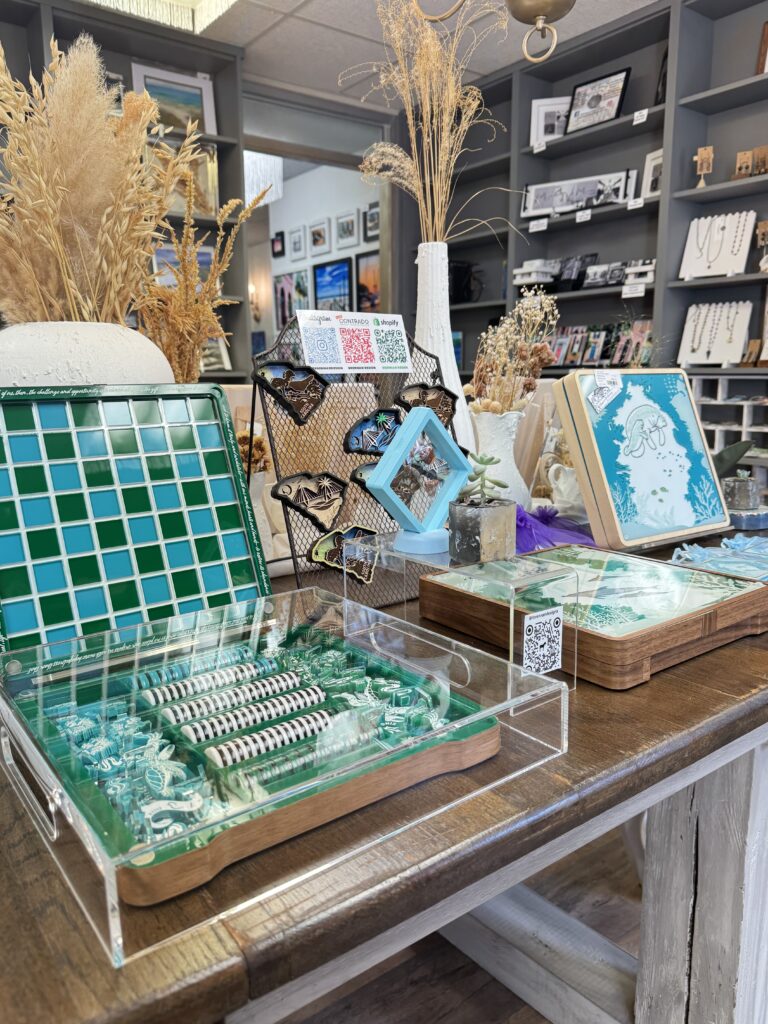
At Look Up Charleston Gift Emporium & Art Gallery, located at 128 Meeting Street, the city reveals itself through the hands of its artists. It’s not a place built for foot traffic—you have to choose to go there. And once you do, you’ll find a collection of 37 unique local artists and artisans whose work feels deeply personal: bold prints, handcrafted goods, and pieces that reflect Charleston not as a postcard, but as a lived experience. It’s the kind of place that quietly redefines what a souvenir can be.
That same sense of discovery carries through at 54 Broad Street, where The Commons opens into a courtyard that feels worlds away from downtown. Sunlight filters in, landing softly on ceramics, textiles, and carefully chosen objects. There’s no rush here. It’s a space designed for lingering, for reconsidering what beauty looks like in the everyday.
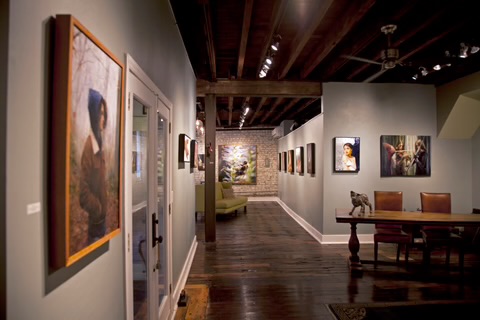
Art, in Charleston, isn’t confined to walls—it’s part of the conversation. At Robert Lange Studios, that conversation is happening in real time. Artists paint just feet away from visitors, blurring the line between observer and participant. A few blocks away, Lowcountry Artists Gallery offers something equally rare: a direct connection to the creators themselves. Here, the person who made the piece is often the one handing it to you, sharing the story behind every brushstroke.
Of course, Charleston’s soul isn’t just found in galleries—it’s tasted, too.
There’s nothing polished about Bertha’s Kitchen (2332 Meeting Street Road, North Charleston), and that’s precisely the point. A James Beard–recognized institution, it serves food that feels rooted in memory—fried chicken, lima beans, cornbread—each dish carrying the weight of tradition and community. It’s not designed for trend cycles or social media moments. It’s built on something far more lasting.
Not far away, a different kind of discovery awaits inside Exchange Factor. Here, style isn’t curated—it’s uncovered. Racks of vintage clothing stretch across decades, inviting you to dig, to search, to find something that feels entirely your own. It’s less about shopping and more about the thrill of the unexpected.
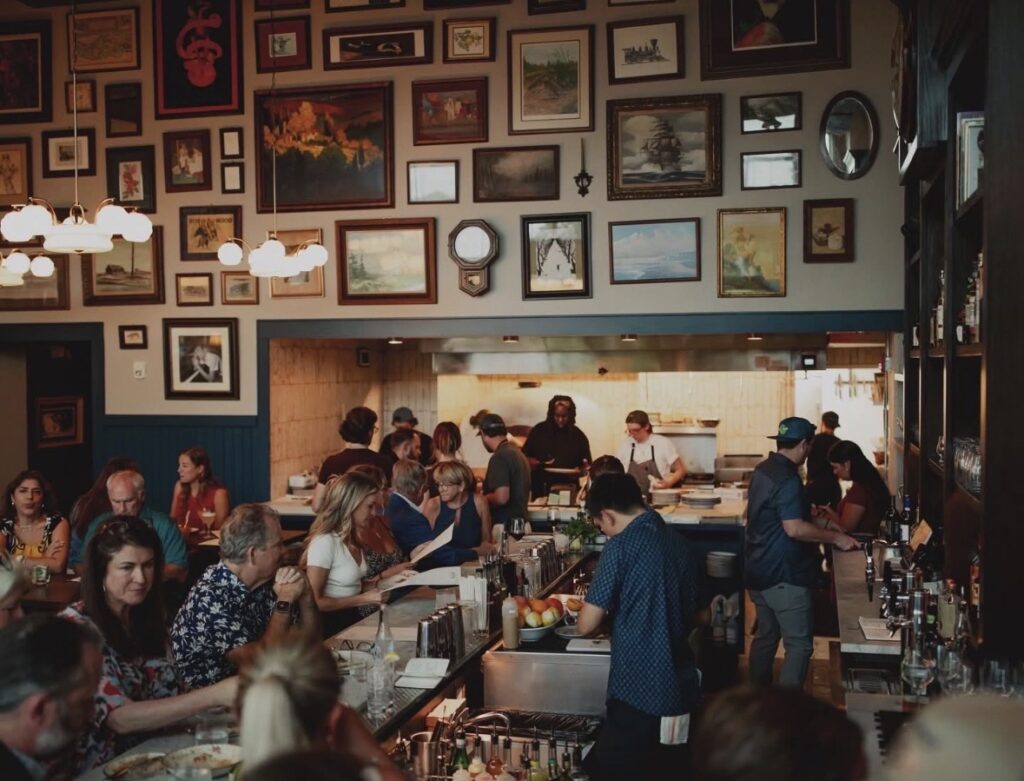
Back downtown, the day softens into evening, and Charleston reveals yet another layer. At The Archer, the lighting is low, the cocktails are precise, and the mood is quietly confident. It’s the kind of place locals slip into when they want something elevated without the spectacle. Nearby, tucked inside Hotel Emeline, Frannie & The Fox hums with a different energy—warm, lively, and just a little transportive. Beneath string lights and open sky, it feels less like a restaurant and more like a gathering.
Even in the more familiar parts of the city, there are layers waiting to be noticed. Croghan’s Jewel Box has been part of King Street for generations, but step inside and it becomes something more than a storefront. It’s a place where history is worn, gifted, and passed down—where craftsmanship carries the weight of time.
And then there are the spaces that ask nothing of you at all.
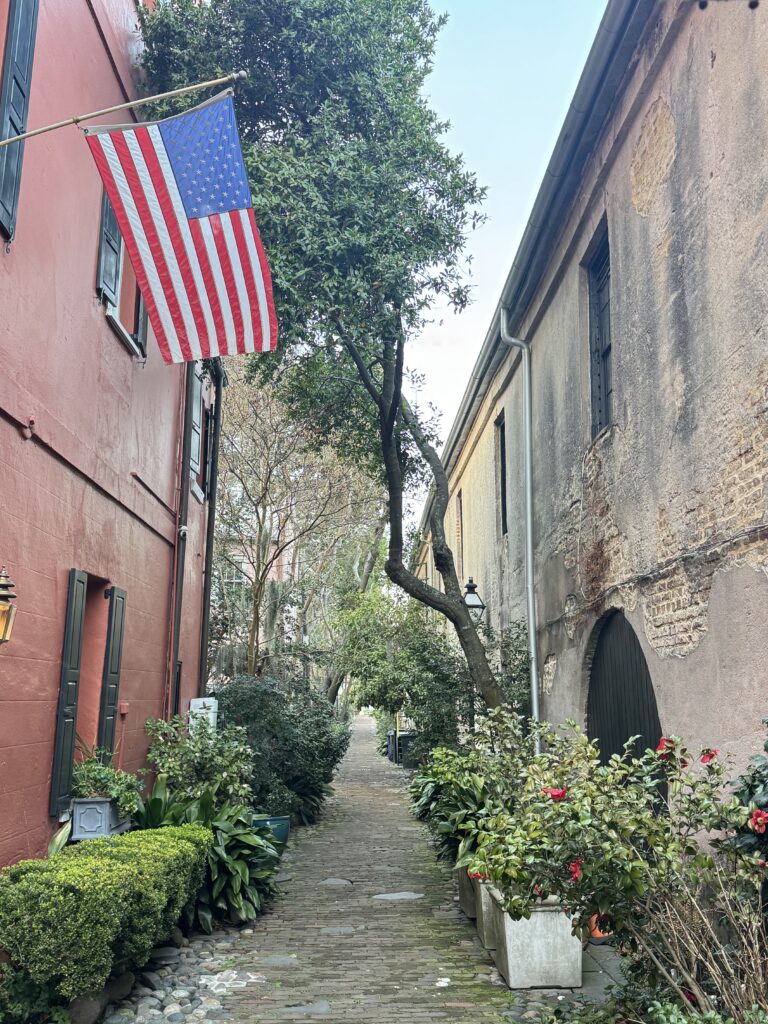
Philadelphia Alley is easy to overlook, shaded and quiet, its cobblestones holding centuries of stories. There are no displays, no menus, no invitations to buy or browse. Just a moment of stillness in a city that knows how to move—and how to pause.
This is the Charleston you almost miss. Not because it’s hidden, exactly, but because it doesn’t insist on being seen. It exists in second-floor galleries, behind unmarked doors, and in the spaces between destinations.
And more often than not, it’s where the city feels most like itself.
Stay connected and subscribe to Charleston Daily.
