Charleston-Based Level Up Video Just Released a 3 Part Documentary on the Effects of the Pandemic on Charleston F&B

Read More

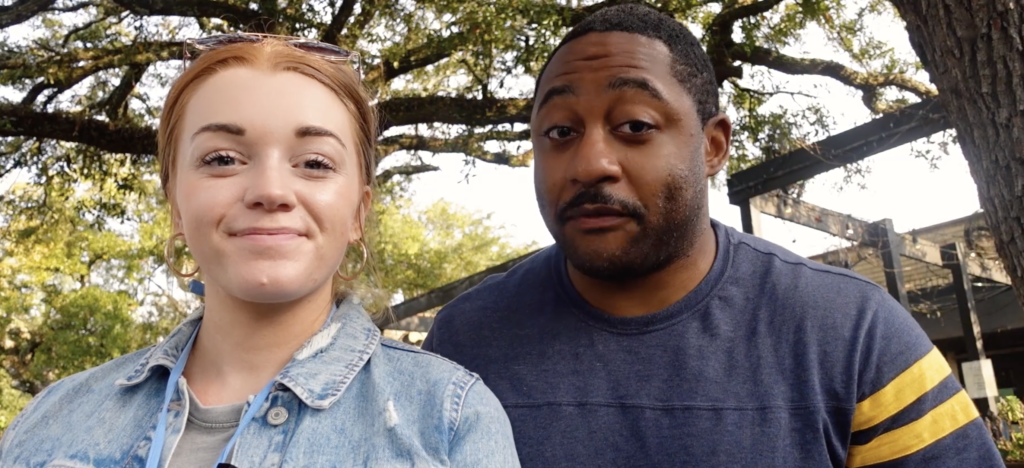
Charleston-based Level Up Video has JUST RELEASED a brand new documentary highlighting the March to now effects of the pandemic on our city’s beloved F&B industry- featuring incredibly powerful and moving interviews with Queen Street Hospitality Group’s CEO Jonathan Kish, Jalisco‘s Executive Chef Michael Harvey, and a few other local Food & Beverage employees in Charleston Community.

Episode 1 – How Coronavirus Created a Crisis at This Restaurant

Episode 2 – How Food Delivery Saved This Restaurant During Coronavirus

Episode 3 – How One Restaurant Business Beat the Coronavirus Shutdown

Link to the Documentary (All 3 Parts)

Mount Pleasant, SC Startup Non Disclosure Apparel Donates Bras to Hollings Cancer Center as Part of Pink For Pink Campaign

Read More

CHARLESTON, S.C. — Startup bra company Non Disclosure Apparel donated 45 bralettes to women undergoing breast cancer treatment at MUSC Hollings Cancer Center. During Breast Cancer Awareness Month in October, Non Disclosure Apparel pledged to donate one hot pink bralette to MUSC for every hot pink bralette sold. 

To celebrate the success of the Pink For Pink campaign, Non Disclosure Apparel founder Becky Connelly presented Abby Parks, associate director of development and director of special events, with 45 comfortable bralettes for cancer patients. 

“I’ve heard from my customers undergoing radiation treatment about how comfortable this bra is” Connelly said. “After radiation, they tell me their skin feels sunburned and this was the only bra they were able to wear.   The bralette is soft, stretchy and also seamless so it doesn’t have any wires or clasps that poke or cause pressure.” 

Mount Pleasant resident Connelly began developing the bralette in 2014 after spending years searching for her dream bra: lightweight, no padding, no pre-molded cups or underwire, yet still concealing. When she couldn’t find the bra she wanted, she decided to make it herself and launched Non Disclosure Apparel in early 2020. The Elli Bralette is ideal for preteens, teens and small-breasted women. 

Hollings Cancer Center is close to Connelly’s heart. Women in her family have been treated there and she’s been a part of fundraising efforts at Hollings for many years. 

“These bralettes will be available to breast cancer patients on the Mammography floor at Hollings.  I’m hoping they will alleviate some guesswork with regard to the ‘what bra to wear now’ situation,” she said. “These women have enough to deal with, I want this bralette to be a relief for them.”

Learn more about Non Disclosure Apparel at www.ndapparel.com. 

About Non Disclosure Apparel
Non Disclosure Apparel is a startup company in Mount Pleasant, S.C.  In 2014, owner Becky Connelly founded the company to begin developing a concealing bra. In early 2020, she launched the company’s first product, The Elli Bralette, in three sizes and colors. The bra is seamless, wire-free, non-padded and has a patent-pending concealer inside each cup. Comfort being its No. 1 feature, the The Elli Bralette is designed for tweens, teens and small-breasted women. For more information, visit www.ndapparel.com.

Photo caption: Becky Connelly (left), owner of Non Disclosure Apparel presents Abby Parks, Associate Director of Development and Director of Special Events, with 45 bras to be distributed to women undergoing breast cancer treatment at MUSC Hollings Cancer Center. The donations were the result of a Pink For Pink campaign Non Disclosure Apparel hosted during Breast Cancer Awareness Month. Photo by Gately Williams

Humanity’s Primal Connection to Oysters – From the History to the Nutritional Value of Oysters

Read More

By Kevin Joseph, Owner and Operator of Empire Oyster – Charleston, S.C.

To continue to learn about the importance of Oysters, Click Here to Sign up for the Oysterhood Newsletter

Oysters literally saved our species in the wake of a dramatic and violent climate shift in a period, that ranged from about 200,000 to 100,000 years ago. The successful exploitation of oysters by early Homo Sapiens at that time contributed heavily to the survival, success and spread of our species. This episode is therefore a seminal part of the human origin story and remains an important part of our human experience today. Following is the brief history of how it happened, why it matters and what it says about our relationship with oysters, and each other, today.

“IT WAS A BOLD MAN WHO FIRST ATE AN OYSTER!” – Jonathan Swift

But was it a “bold man”? Certainly, it was not one in the times of Rome or in the time of Jonathan Swift, who is so often credited as the person who coined this famous and often cited expression. No, it happened long before that. Most certainly, it happened in Africa. And our modern civilization can thank that “bold human” directly for our survival and existence today.

Genetically, Homo Sapiens evolved into what we are today about 200,000 years ago. Not long thereafter, they survived the real threat of extinction caused by dramatic changes in the climate on Earth.

Dr. Rick Potts, Director of The Human Origins Program Smithsonian Institution, writes:

“BEGINNING 195,000 YEARS AGO, the global climate entered a period of cold and dry conditions, that lasted for 70,000 years. In interior Africa, this shift triggered drought conditions so severe, that much of the continent would have become uninhabitable. Genetic studies of modern human DNA tell us, that at some point during this period, human populations plummeted from more than 10,000 breeding individuals to as few as 600. Homo Sapiens became a highly endangered species; we almost went extinct. This “population bottleneck” means, that all humans alive today are descended from this tiny group of survivors. The result: Our species has less genetic diversity than a single troupe of West African chimpanzees.”

WELCOME TO THE OYSTERHOOD

So there we were, 100,000 BC (give or take a few millennia) with our backs to the wall, facing extinction. A growing desert, expanding south pushed a new species to the brink. As few as 600 Homo Sapiens were left alive. But this tiny, surviving population was forced into their own salvation when they found themselves on the southernmost tip of Africa. For the first time, humans took up residence beside the sea. And now, for the first time, there were oysters to eat.

This is a seminal moment in human history because when we began to exploit oysters, it was a moment that altered the course of human history forever. Fossil records indicate that oysters quickly became an incredibly important part of our diets. At first, they allowed us to survive. Ultimately, they allowed us to thrive. They changed us, for the better, in many ways. What occurred in a relatively brief span of time (25,000 – 50,000 years) was a miracle. A quantum leap in the fitness of Homo Sapiens occurred. A population exploded and expanded. The questions of how and why that was so and come to be understood follows.

A MIRACLE PROTEIN

The Homo Sapiens, who discovered and exploited oysters (and other shellfish) had many (and new) advantages and chances to survive and thrive, than their ancestors of 100,000 or 20,000 years prior. There are many reasons for this. First was the cost of this protein versus other protein, at that time. Oysters were a “cheap protein”. In this case, “cost” refers to the calories extended and casualties experienced in the hunting and gathering of protein. Chasing small or medium-sized animals reptiles, mammals and birds or collecting roots, nuts, berries, grubs, larvae and eggs in interior Africa was strenuous and dangerous. Prior to having oysters as a primary protein source human hunters were hunting and gathering in terrestrial environments. This put early humans in competition with and in the company of big cats, venomous snakes and many other dangers. But when they moved into caves on the sea coast, things changed.

Why would they hunt and gather exclusively in the hills and valleys above and behind them when they could more easily look to the sea for oysters when the tide went out? Hunting on land, for meat,  was much more expensive. Danger literally surrounded you. This was not the case by the sea. Terrestrial hunting took many more calories, hours and, inevitably, many of the fittest hunters & gatherers of any given group were injured or even eaten in the process. As a source of protein oysters were a far easier, safer and faster way to eat better.

Oysters were everywhere and just outside their “door”. They needed only to walk around and collect them. Few, if any, predators were present and none were competing with them for this protein. Humans easily opened oysters with crude tools and fire. They consumed them in massive quantities as fossilized oyster middens in and around these caves have recently revealed. They were now getting more protein with a lot less effort and time, with much less danger and fewer casualties. Moreover, this protein was better for them (in many ways) than other forms of protein. The same is true today.

OYSTERS, THEY DID SOME BODIES GOOD!

As important as the volume of protein itself were the rare nutrients (like zinc, iodine and amino acids) which oysters are full of. Some of these nutrients (particularly iodine) are rather important to human organ health (especially the brain) and extremely rare in the diets of previous generations of inland African populations who could not exploit oysters.

As a result of the consumption of a protein that was superior nutritionally, ubiquitous and easy to procure, those populations who consumed oysters were truly blessed. Physically, they grew larger is size and stature. They became bigger, faster, stronger. Their skulls and brains grew as well. This allowed for additional and equally important mutations to occur. As their brains grew larger and stronger they functioned better. These people became better thinkers, tool-makers, problem-solvers and communicators. Finally, with less time spent hunting and gathering they had more time to think, wonder, create, communicate and nurture.
Oyster consuming populations became “alpha”. They dominated the gene pool. Their best and strongest hunters produced more food for their communities. Women had more time and resources to nurture their young. Infant mortality rates dropped. Individuals lived longer. Ultimately, their populations increased and their range expanded. As the climate warmed and got wetter, the Sahara receded. These larger, smarter populations were no longer “stuck”. They began to spread North, East and West from Africa into Europe and Asia. Once there they were better able to survive, thrive and expand ever further. 

THE ART OF THE OYSTER

One could still argue that none of this separated those first few that consumed the first oysters from “the beasts”. Or those that followed them 10 generations later. I mean this figuratively. The earliest surviving populations were very primitive “people”. It was tens of thousands of years since their DNA was “primate” but they were not much like us, really, culturally. Descendants of these early populations were just bigger, stronger and smarter than they were 50,000 years before. And a bit more than that 25,000 years on from there. And so on. And there were a lot more of them 2,500 generations and 75,000 years later after those that first exploited the new resource. But were they what we’d call “human”? How, if at all, were these early populations exceptional? Did oysters have anything to do with that.

Recent paleo-anthropolicical research has done much to support the theory that oysters and shellfish were a singular reason for the success of Homo Sapiens as well as the exceptional-ism of certain groups of them. The simple fact that their skulls and brains grew supports the beginning of some kind of an exceptionalism. But where is the proof? Well, the writing was on the wall!

Many archeological excavations in the caves of Southern Africa have now proven the link between significant oyster and shellfish consumption and the first expressions of symbolism & art. We see the first red ocre paintings in the same (and so far, the only) caves we see large shellfish middens in. These caves were inhabited by the earliest known oyster-eating Homo Sapiens. So, it can be deduced, that those who first exploited oysters (and ate them most regularly) created the first known expressions of art. And therefore, culture.

This was the first giant step for mankind which took place over a very short time and coincides precisely with the discovery and exploitation of oysters. In a blink of an evolutionary eye, we now have an exceptional population totally distinct from any other Genus and even other Homo Sapien populations (if any survived). “All of a sudden”, we have a population with significant leisure time, tools, language, art and culture.

Art is an expression of complex thought, communication and symbolism common to more complex, organized and successful populations of humans. It is not found in animals. Art and culture is what separates man from beast (not tools or language as animals do often use tools and most certainly have “language”, even culture). Art combined with the ability to engage in symbolic, syntactic speech leads to the development of human awareness, identity and culture.

THE PROOF IS IN THE EVOLUTIONARY TREE

Recent paleo-anthropolicical research has done much to support the theory that oysters and shell sh were a singular reason for the success of that “bottlenecked population” of Homo Sapiens (and their ancestors) as well as the exceptionalism of Homo Sapiens. We are the only members of the Genus Homo to have exploited oysters. Period.

Current scholarship and research suggest that the coastal, cave-dwelling populations of Homo Sapiens, isolated there by a cold and expanding desert, had many advantages over other members of the Genus Homo that did not migrate south, to the coast. The oyster was one of these advantages. Oysters helped this population become better suited for success and survival. These humans became exceptional and they dominated the planet in the 100,000 since. They became, well, US!

The final supporting fact is simply this: Other species of the Genus Homo who were not lucky enough to exploit oysters (Heidelbergensis, Neaderthalensis, Erectus, Floresiensis, Rudolfensis and Habilus), well, they all became extinct even though they came much later. Neaderthalensis and Floresiensis may have interacted even bred with Homo Sapiens (there is some genetic evidence of this) but in the end, Homo Sapiens are the only survivors of the Genus Homo and the only one we know of who exploited oysters.

Source: http://donsmaps.com/hobbits ores.html

AN OYSTER IS FOREVER

Curtis W. Marean, a paleoanthropologist and the team leader and with the Institute of Human Origins at Arizona State University writes, “Shellfish was one of the last additions to the human diet before domesticated plants and animals were introduced more than 10,000 years ago (the dawn of agriculture). It is possible that this population could be the progenitor population for all modern humans.”

If this is true then it is possible that we can all trace our ancestry back to a tiny and isolated population of humans who were forced by climate change onto the top of Southern Africa only to discover oysters (over generations perhaps) as a useful path out of this evolutionary cul-de-sac. And that makes sense when we consider that there is in all humans, from every continent and every nation, from every epoch share the exact same genome. The benefit of hindsight and 10,000 years of “modern” science and research made possible by our new, big, brains allows us to see this oyster bond we have had with our earliest, toughest, smartest and perhaps luckiest ancestors has lasted, well, forever.

Just as it was then, it is still today. Better access to better food allows segments of human populations to thrive. But it gets better. In the past 4,000 of human history, another bond between humans can be traced through oysters. It is a common denominator that transcends race, nation, creed, creed, color and class. We have all consumed oysters. All of us still do. Granted, some more than others. But the rich and the poor of every nation, on every continent, have consumed oysters (both cooked and raw) on every continent since we discovered them. 

Simple tools and beads created by oyster consuming early Homo Sapiens of Southern Africa.

As we always have, when we eat oysters we feel blessed, rich, nourished and connected in a way that we can feel a sense of gratitude for. Oyster consumption then marks a turning point in the history of our species and our planet. It created a bond between all Homo Sapiens that proves eternal (so far). This is our primal connection to oysters. This is the oyster’s singular role in history and humanity.
K.I.S.S. – KEEP IT SIMPLE SAPIENS

If oysters helped make certain early Homo Sapiens exceptional from a biological and neurological standpoint it would follow that they make modern humans feel exceptional culturally, emotionally and even spiritually. I would suggest that eating oysters also makes us feel more human. They make us feel more alive. They tie us to our survival as a species. We channel that fact every time we eat an oyster. It is metaphysical.

But could oysters be part of a solution to the problems humanity faces today? Are we not confronted by climate change issues now as we were then. Whether natural, man-made or accelerated by man, the climate IS changing. It IS warming. What this will mean for our ability to thrive or even survive is yet to be agreed upon. Regardless, it does not bode well for a great many places or people…or oysters.

These are immutable, measurable material facts. Whatever the causes, ocean levels ARE rising. Oceans and bays are more acidic, warmer, more hypoxic, less diverse and less productive. Many are dying. Many are dead. Most are threatened. We have lost and are losing habitat and ecosystems (particularly coastal, estuarine ecosystems) at an alarming rate. Oysters are a cornerstone species in those ecosystems. Healthy oyster populations (wild or farmed) allow many other species to live and ecosystems to survive and thrive. Humans are dependent on the health and diversity of these ecosystems for our climate, foods (wild and domesticated) and survival.

More and more of us are understanding oysters as a cornerstone species and oyster farming to be a way to create more organisms whose existence supports healthier and more diverse ecosystems. We are witness to the growth and strengthening of bonds between those who love oysters, between those who value sustainable, responsible & beneficial aquaculture.

We are recognizing and appreciating oysters not just as food but also as a way to:

  • Live and eat in ways that make us feel good, strong, nourished and inspired…
  • Create new jobs, protect lifestyles and the culture for those who’ve made a life and a living from the sea…
  • Support sustainable and ecologically beneficial forms of food production…
  • Improve water quality and foster greater biodiversity…
  • Provide solutions to restore, protect and preserve coastlines and estuarine environments which:
    • is where much of the seafood we eat depends upon and spends a great deal of its life in…
    • are the most biodiverse zones on earth…
    • protect coastal populations and infrastructure from storm surges and flooding.

Homo Sapien translates to “Wise Man”. Are oysters Wise Man’s answer, again? Maybe doing what saved us before is the correct way to protect our species once more. Perhaps cultivating oysters and creating additional value in their consumption is a path to salvation or part of the solution. That seems a wise path as the first populations that originally exploited wild oysters became exceptional. They became alpha. And as in any population of any organism, alpha genes survive, win, thrive and spread. Any current or future population is a result of the success of the alpha specimens of its ancestors. In all evolved species, the smartest and strongest individuals provide for and lead those they love to greater opportunities

I’ve built a life and a career around this theory before I even understood it before I could articulate it. My mantra for some time now has been “Live on purpose. Make a living by making a difference.” Oysters, it occurred to me some time ago, were the best way for me to accomplish all of that. Oysters involve nature, science, history, culture, cuisine and hospitality: the things I love most. My oyster advocacy allows me to deliver a message about environmental stewardship without preaching, blaming or being dismissed as a “tree-hugging, liberal, hippie” or climate change alarmist.

MY MESSAGE IS SIMPLE:

“You like these delicious oysters? Great! So let’s protect, where they come from and reward those, who bring them to us fairly – so we don’t lose oysters forever.” I aim to build value in oysters, because I know, they are great for both – our bodies and the ecosystems – and communities depend on them. Oh, and because they saved us once before. I leverage our primal connection to oysters for a future where oysters and Homo Sapiens continue to benefit from one another.

Source Link

Cleaning from the Heart: Meet Local business owner Kaydean, Founder of Charleston-based 7Doves Cleaning, LLC

Read More

Starting a business takes courage, determination, inspiration, and purpose. For Kaydean, her business was a calling, mixed in with a passion and wrapped in a bit of spiritual awakening. Learn more about this amazingly talented small business owner of 7Doves Cleaning, LLC and find inspiration in your own life.

Meet Kaydean German and her inspirational story behind founding and operating 7Doves Cleaning, LLC

My journey to starting my own cleaning business began around the time I had my very first spiritual awakening. I’m not going to get deep into that whole experience, but it definitely set the tone for the way my current life is unfolding as well as what my future holds. I was one of those people who didn’t truly know their abilities in this world.

Once upon a time, I was unaware of the fact that speaking positive words into our dreams plays a huge role in the process and outcome of what we wish to create. I will admit that I didn’t believe in myself when I came to a lot of things, so of course, becoming a business owner never even crossed my mind  – then that all changed.

“I began to see myself as the creator of my own life as well as someone who could make other people’s lives easier with the cleaning experience I have to offer. I look at my love for cleanliness as a gift (rather than pure OCD) and a skill I can use to be a helping hand to those in need. By putting my heart into my business as well as embracing that this is my positive way of serving my community, I’ve grown to accept that this is definitely one of my purposes in this world.”

Coming to this realization and actually experiencing the fruits of my labor has been such a fulfilling feeling! Over the years I was ashamed of my occupation. I noticed how a lot of individuals in my generation looked down on janitors, housekeepers, etc. But I’m thankful that I never fully let the opinions of others affect the decisions I made in my life. Though I’ve succeeded in numerous jobs in different fields, I’d always find myself coming back to cleaning positions.

To be completely honest, at first, it was because cleaning jobs were so easy to find! Then it became something I didn’t want to stop doing. Even when I had other types of occupations, I’d always keep a side hustle cleaning, so it was always apart of me somehow. 

The reason I hold my business so close to my heart is because this was the first experience where I stepped out on faith, completely blind to the direction it could all take. Though I’d have negative thoughts at the beginning about the “what ifs”, I still trusted that all things would fall into place… and they did just that! I never would’ve imagined that by me simply surrendering all control of what the outcome of my business could be, that all of my dreams so far would come true. 

I wish to be someone who inspires others to have confidence in their visions as well as a positive attitude when it comes to going after the things we desire. It’s been proven many times throughout my journey of building my business that nothing prospers unless we believe in ourselves first. 

My aim is to leave every individual I encounter with a refreshing type of comfort in this environment; like a breath of fresh air. For me, knowing that things are clean provides peace of mind and I know there are many other people who would agree.

I am blessed to have met and built beautiful relationships with those I’ve provided services for and I’m absolutely looking forward to meeting and helping more people in my community! 

Reviews:

“Kaydean’s housekeeping skills are systematic, thorough and outstanding. She’s personable, competent, willing to please.”Rochelle, Summerville SC

“I would highly recommend Kaydean German’s services-  to anyone who is in need of a cleaning service. She is very focused on each task put before her and doesn’t seem to mind cleaning anything that is asked of her. She is very pleasant and personable. I decided to print up a list by room of everything I wanted to be cleaned in my house. Not only did she not mind me giving it to her, but she said she loves lists too and feels a list helps keep her on task.  My husband and I hope to have Kaydean in our employ for a very long time!”Audrey, Mount Pleasant SC

“Kaydean is a good worker and has cleaned my house thoroughly since I hired her several months ago. She is pleasant in my home and always has a smile on her face.” Mary, Charleston SC

Contact information:

7Doves Cleaning, LLC – Kaydean German

Can the Charleston, Berkeley, and Dorchester flooding, traffic, and overall livability issues be resolved? Here are a few suggestions our elected official should take seriously

Read More

The Tri-county is growing. If you blink, you miss a new subdivision, apartment complex, office building, brewery or self contained living community. We have become the final destination of choice on the East Coast for starter families, veterans and retirees and there is still no sign of slowing down. That is where the pain points become elevated.

It is almost on a daily basis that you see in the media reference a new land acquisition or commercial real estate purchase. Yet, in the same pages in black and white, we are seeing foundation businessess that have thrived for generations fold to the hands of new investors or bankruptcy.

Rent prices are on the rise. Taxation is at a record high. Meters prices increased in price and operating hours and hundreds of thousands cannot live with the current cost of living.

How do we reverse the trend that is destroying the simple traditional way of life that has remained for over 300 years? Or is it too late?

Here are a few suggestions to help curb the flooding, traffic, cost of living and growing pains and hopefully begin to slow or reverse the trajectory.

  • Create a Tri-County Advisory Board – We must work together to pool ideas, resources, and work as one.
  • Put a 5-year restriction on new residential housing development – Until the 526 Corridor, road infrastructure, and flooding issues are resolved, we need to curtain population growth.
  • Add a Tri-County additional gas tax – Drive revenue growth from tourists and reduce unnecessary driving by changing behavior with increased gas prices. Also, South Carolina is one of the top 5 lowest gas price states in the nation. This is a revenue stream that the area can truly benefit from.
  • Our current administration speaks about “liveability” but actions dictate tourism is the top priority. Work to fix that. Add additional taxes to airlines and rental cars and put that funding toward subsidies for parking for downtown workers and small businesses.
  • Identify tiered priorities of the locations with the most systemic flooding issues – Tier 1: Highest Priority, Tier 2: Mid-Level Priority and Tier 3: Low priority with potential for more severe issues in the future. Begin to build a plan to address Tier 1 and work toward creating short to long term solutions for our most difficult locations of flooding. Then tackle the next two tiers.
  • Add a non-resident toll for beach entrance for Isle of Palms, Sullivan’s Island and Folly Beach. This can be as low as $2.00 – $5.00 per car and put this funding toward additional resources in education, roadway repair, flooding solutions and subsidies for small business in times of crisis.

If we look at some of these alternative solutions, we may find our way back to the place we love to call home.

Charleston Based Springbok Coffee Releases 2020 Holiday Blend

Read More

When making your list (and checking it twice) this season, Springbok Coffee Roasters‘s 2020 Holiday Blend should be at the top! A delightful combination of Springbok’s crowd-pleasing Ixlama coffee with its natural-processed Finca Medina, this brand new blend features bold notes of sweet strawberry, chocolate and subtle baking spices- perfect for everyone under the tree. 

Whether using for your daily morning brew or combining with a spirit to create the perfect buzzworthy holiday cocktail, Springbok’s Holiday Blend won’t disappoint. You can order for $18.50, along with Springbook’s other coffees and cool mugs, at springbokcoffee.com, with free shipping on all orders over $25.

Madison Capital Group Acquires 275 Units in Downtown Charleston, South Carolina

CHARLOTTE, N.C., Dec. 3, 2020,/PRNewswire/ — Madison Capital Group, LLC is pleased to announce the acquisition of Foundry Point Apartments, a 275-unit multifamily community located in Downtown Charleston, SC.

Foundry Point is a premier mid-rise community located on the upper peninsula section of Downtown Charleston. Foundry is located blocks away from several restaurants and breweries and a short distance to Historic Downtown Charleston.

(PRNewsfoto/Madison Capital Group)

“Foundry Point is an asset that we plan to hold long term as we believe in the long-term growth of Charleston, particularly on the Peninsula. The nearby corridor is continuing to transform, and we are excited to see how the area looks in 10 – 15 years”, said Ryan Hanks Founder of MCG.

Madison Capital Group has been very active over the last 10 years in the Charleston region and has a large office in Downtown Charleston. Madison has been involved in the acquisition and development of 13 other communities in the Charleston MSA since 2009 and has two more communities planned in Downtown and West Ashley.

Madison Capital Group, LLC is a multifamily investment firm based in Charlotte, NC, and focuses on the development and acquisitions of Class A multi-family projects throughout the Southeast.

Contact: investors@madisoncapgroup.com

SOURCE Madison Capital Group

Lowcountry Christmas Tree Lightings – Dates and Locations

Read More

Here are details for some of the area tree lighting ceremonies:

  • Summerville, SC – Thursday, December 3, 2020 – 5:00 PM – Hutchinson Square
  • North Charleston, SC – Friday, December 4, 2020 – 6:00 PM – Felix C. Davis Community Center
  • James Island – Saturday, December 5, 2020 – 6:30 PM – James Island Town Hall
  • Charleston, SC – Sunday, December 6, 2020 – 5:00 PM – Colonial Lake (Ashley Avenue an Broad Street)
  • Hanahan, SC – Sunday, December 6, 2020 – 6:00 PM – Hanahan Amphitheater
  • Moncks Corner, SC – Sunday, December 6, 2020 – 6:00 PM – 418 E. Main Pavilion

A New Take on Holiday Cocktails with Charleston, SC Based Springbok Coffee

Read More

Here is a treat for all our readers who love cocktails and coffee.

Owner Jason Bell, Springbok Coffee Roasters, is a licensed Arábica Q Grader who roasts small-batch, hyper-local, artisan coffee for some of Charleston’s top coffee shops (Butcher & Bee, The Daily and Mercantile & Mash to name a few) with the mission of producing the highest quality morning brew possible. He has created 3 fun and delicious cocktail recipes to help you through the holiday season and beyond.

The Drunken Snowman

Made with Springbok’s Harleston Village Blend (named after Charleston’s quaint downtown neighborhood), which has hints of chocolate and almond, this frosty drink makes the perfect sweet ending for any holiday celebration.

  • 1 scoop of chocolate ice cream
  • 1 oz. Baileys
  • 2 oz. Springbok’s Harleston Village Blend
  • Peppermint whipped cream, for garnish

Bourbon Butterscotch Latte

Ideal for cozying up by the fire on a blustery winter night, Springbok’s Uraga coffee from Ethiopia has notes of brown sugar and caramel, pairing perfectly 

  • 4 oz. Springbok Uraga
  • 1 oz. bourbon
  • 1 oz. butterscotch sauce

Naughty Breakfast 

Red berry, chocolate and peach notes define Springbok’s Kayon Mountain Farm coffee, which pairs perfectly with Irish Whiskey and maple syrup for a sweet start to a buzzworthy morning.

  • 4 oz. Springbok Kayon Mountain Farm
  • 1 ½ oz. Irish Whiskey 
  • 2 tsp. brown sugar
  • 1 oz. maple syrup 

Photos courtesy of Springbok Coffee Roasters

Lowcountry Land Trust Protects More Land in the ACE Basin

Read More

Magnolia Hall part of a critical mass of protected properties 

CHARLESTON, S.C. — The Lowcountry Land Trust has announced the permanent protection of 14 acres of critical land in the ACE Basin. A conservation easement was donated to the Land Trust by owners Dean and Jean Harrigal.

The property, known as Magnolia Hall, is located in southern Colleton County along the Old Chehaw River. It contains maritime forest, mixed pine-hardwood upland forest, and wetlands. 

“Most of our professional careers have been centered around conservation, and we believe in being good stewards of the land,” the Harrigals said. “We’re grateful we can protect Magnolia Hall forever. It’s a special place to us and we’re excited to officially join the Lowcountry Land Trust family.”  

“Placing Magnolia Hall into a conservation easement is another win for the Lowcountry,” said David Ray, acting CEO & chief conservation officer of Lowcountry Land Trust. “We are thrilled to protect 14 more acres of critical wildlife habitat and over 500 feet of river frontage. This land fills a gap in a very large network of permanently protected lands in the ACE Basin.” 

Magnolia Hall is directly adjacent to other privately protected lands and directly across the Old Chehaw River from the publicly accessible 8,048-acre Donnelley Wildlife Management Area, which is owned and managed by the S.C. Department of Natural Resources. It is part of more than 100,000 acres of contiguous protected lands stretching from US Highway 17 to the mouth of St. Helena Sound, and across three counties—Charleston, Colleton and Beaufort. 

This area is also part of the more than 300,000 acres of protected land in the ACE Basin that preserves a network of wildlife corridors, clean water, and scenic beauty. 

“We are so grateful to the Harrigals for adding their property to the incredible story of landowner-led conservation in the ACE Basin,” Ray said. “Their foresight and generosity will help preserve this critical area of the South Carolina Lowcountry for generations to come.” 

The ACE Basin landscape is exceptionally diverse, supporting more than 267 species of terrestrial and aquatic birds, 83 species of reptiles and amphibians, 20 species of mammals, and 130 species of fish and shellfish.

Lowcountry Land Trust has protected over 147,000 acres of land across 14 South Carolina counties. Since 2019, the Land Trust has protected four other properties in the ACE Basin, totaling more than 3,400 acres. 

About Lowcountry Land Trust 
Founded in 1986, the Lowcountry Land Trust is a 501(c)(3) nonprofit organization with the mission to honor the relationship between people and land by protecting irreplaceable Lowcountry lands and treasured places. Lowcountry Land Trust has protected over 147,000 acres across 14 counties in South Carolina. More information about the Lowcountry Land Trust is available at www.lowcountrylandtrust.org.