Charleston, South Carolina: The City of American Firsts

Read More

By Mark A. Leon

Charleston, South Carolina, is a city where history doesn’t just live in museums—it lingers in the cobblestone streets, whispers through the live oaks, and resonates from its centuries-old architecture. Founded in 1670, Charleston has been a crossroads of commerce, culture, and politics, playing a vital role in shaping the American story. From its colonial prominence to its pivotal moments in the Revolution and Civil War, Charleston has not only witnessed history—it has made it. In fact, the Holy City boasts an extraordinary list of “firsts” that set it apart as one of the most historically significant cities in the United States.

1. First Public College, Museum, and Playhouse

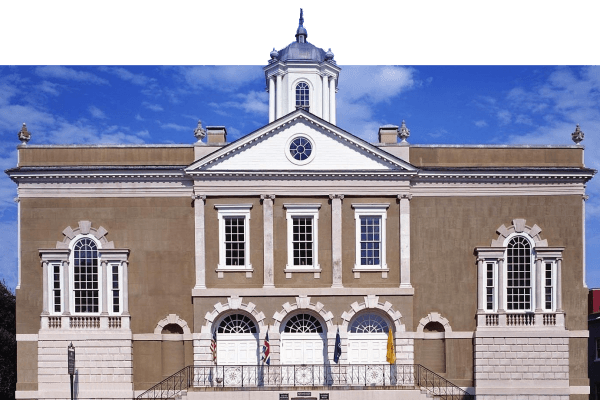
Charleston was home to the first public college in America—the College of Charleston—chartered in 1770 and operational by 1785. It also claimed the nation’s first museum, the Charleston Museum, founded in 1773. Just a year later, in 1736, the Dock Street Theatre opened as the first building in the U.S. constructed exclusively for theatrical performances.

Dock Street at night

2. First Golf Club in America

Golf arrived on American shores in Charleston. In 1786, the South Carolina Golf Club was established, predating other clubs by decades and marking the sport’s introduction to the colonies.

College of Charleston – Historic postcard

3. First Passenger Rail Service

In 1830, Charleston became the starting point for America’s first regularly scheduled passenger rail service. The Charleston & Hamburg Railroad connected the city to inland South Carolina and helped revolutionize U.S. transportation.

4. First Shot of the American Civil War

On April 12, 1861, Fort Sumter in Charleston Harbor became the flashpoint for the Civil War when Confederate forces fired the war’s opening shots—a moment that altered the course of American history.

5. First Fire Insurance Company

Charleston also pioneered organized risk management, establishing the first fire insurance company in America in 1735, protecting the city’s vital commercial hub from devastating losses.

6. First American Ballet Company

In 1791, Charleston formed what is considered America’s first professional ballet company, bringing European art forms to the colonial South.

The Tavern at Rainbow Row

7. First and Oldest Liquor Store

The oldest liquor store in America is The Tavern at Rainbow Row in Charleston, South Carolina. It has been selling alcohol since 1686.

8. First Municipal College Integrated into a City Government

The College of Charleston became the first municipal college in the nation in 1837, intertwining higher education with civic governance.

Charleston’s long list of firsts reflects its role as a leader in innovation, art, commerce, and politics. More than a city of beautiful scenery, it is a living monument to the spirit of progress—always ready to try something new, and often, to do it first.

Related: MRI Wellness in North Charleston – The only full-service preventative MRI Center in the state of South Carolina

Stay connected and subscribe to Charleston Daily.
Charleston-Based R2P Innovations Ranks #5 on the 2025 INC. 5000 List of America’s Fastest Growing Private Companies

Read More

R2P Also Claims #1 Spot in U.S. Manufacturing, #1 in South Carolina and #1 in Charleston Metro Area

CHARLESTON, SC – R2P Innovations, the Charleston-based manufacturer of the world’s most advanced bulletproof doors has been ranked #5 on the 2025 Inc. 5000list of America’s fastest-growing private companies. In addition to its national top five ranking, R2P also earned the #1 spot for manufacturing in the U.S., as well as the #1 spots overall in South Carolina and the Charleston metro area.

R2P Innovations is the only company in the world producing office and classroom doors capable of stopping over 100 rounds of assault-rifle fire in a design aesthetic that matches classroom and office settings while being light enough for children to operate.  R2P doors are also fire-rated and ADA-compliant.

The annual Inc. 5000 list recognizes the most dynamic and successful privately held companies in the country. R2P’s three-year revenue growth reflects the growing demand for its life-saving technology and the strength of its mission-driven business model.

“This incredible recognition is a testament to our team and the vision we’ve built together,” said Tony Deering, CEO of R2P Innovations. “We aren’t just building bulletproof doors—we’re building trust, safety, and peace of mind for every employee, student and teacher. To be named the fastest-growing manufacturer in the country, and one of the top five companies overall, is both humbling and motivating.”

Behind the technology is a team with decades of experience protecting men and women in uniform.  The R2P team is united by a purpose to save lives and a workplace culture that prioritizes the company’s lifesaving mission.

“Working at R2P isn’t just a job—it’s something I’m proud of every day,” said Simon Holmes, a master machinist. “We know our work directly impacts kids’ lives, and the company goes out of its way to support us. It feels like a family with a real mission.”

This year’s Inc. 5000 honorees stood out by growing and innovating in the face of global uncertainty, inflation, and a tight labor market. Among the top 500 firms, the median three-year revenue growth rate is 1,507 percent. These companies have collectively added more than 52,000 jobs to the U.S. economy over the past three years.

“Making the Inc. 5000 is always a remarkable achievement, but earning a spot this year speaks volumes about a company’s tenacity and clarity of vision,” said Mike Hofman, editor-in-chief of Inc. “These businesses didn’t just survive—they grew through adversity, and their stories reflect the power of the entrepreneurial spirit.”

R2P Innovations will be honored at the 2025 Inc. 5000 Conference & Gala, taking place October 22–24 in Phoenix. The top 500 companies will also be profiled in the Fall issue of Inc. magazine. Past honorees include companies such as Microsoft, Meta, Chobani, Under Armour, Timberland, Oracle, and Patagonia.

To view the full list and learn more, visit: www.inc.com/inc5000

METHODOLOGY

Companies on the 2025 Inc. 5000 are ranked according to percentage revenue growth from 2021 to 2024. To qualify, companies must have been founded and generating revenue by March 31, 2021. They must be U.S.-based, privately held, for-profit, and independent—not subsidiaries or divisions of other companies—as of December 31, 2024. (Since then, some on the list may have gone public or been acquired.) The minimum revenue required for 2021 is $100,000; the minimum for 2024 is $2 million. As always, Inc. reserves the right to decline applicants for subjective reasons. 

About R2P Innovations:
R2P Innovations is a leading developer and manufacturer of the world’s most advanced bulletproof doors, specifically designed to blend seamlessly into office and school settings. Learn more at 
r2pdoors.com.

About Inc.:
Inc. is the leading media brand for entrepreneurs and business leaders shaping the future. Through trusted journalism, Inc. informs and elevates the innovators, risk-takers, and visionaries driving America’s most dynamic companies. Inc. is published by Mansueto Ventures LLC, which also publishes Fast Company. Visit 
www.inc.com for more.

Stay connected and subscribe to Charleston Daily.
Charleston, SC Based BOSSCAT™ Home Services and Technologies Recognized for Fourth Consecutive Year on the Inc. 5000 List of America’s Fastest-Growing Private Companies

Read More

BOSSCAT Ranks No. 1493 With Revenue Growth of 291 Percent From 2021 to 2024

CHARLESTON, S.C., Aug. 13, 2025 /PRNewswire/ — BOSSCAT Home Services and Technologies today announced that it has been named to the prestigious Inc. 5000 list for the fourth consecutive year, earning recognition as the 1493rd fastest-growing private company in America. This four-year achievement places BOSSCAT among less than 6% of all companies recognized. The list provides a data-driven snapshot of the most successful companies within the economy’s most dynamic segment—its independent, entrepreneurial businesses.

“We are incredibly proud of this achievement, recognizing our hard work, innovation and resilience, especially in a challenging time for proptech, real estate and venture-backed companies,” said Min Alexander, CEO and Founder of BOSSCAT. “Our mission has always been to create simplicity, transparency and joy for homeowners throughout their homeownership journey and this recurring achievement confirms we are on the right path.” 

Since its founding, BOSSCAT has transformed the way homeowners and real estate professionals order and manage home services online through personalized insights, recommendations and transparent pricing. BOSSCAT offers home repair, renovation and maintenance services in its operational markets and its proprietary Instant Estimate technology is available to homeowners, investors and real estate professionals across the United States and in Canada through BOSSCAT’s platform, HOMEBASE, now serving nearly 700,000 users.

“Our financing strategy was developed to create new opportunities to expand and improve our products and services, despite economic and real estate sector challenges,” said Mark Kearns, CFO of BOSSCAT.  “Our Series A capital raise in 2022 along with our subsequent financing rounds through 2025 have allowed BOSSCAT to continually invest in technology and product development to support our growth while driving toward profitability.”

This year’s Inc. 5000 honorees have demonstrated exceptional growth while navigating economic uncertainty, inflationary pressure, and a fluctuating labor market. Among the top 500 companies on the list, the median three-year revenue growth rate reached 1,552 percent, and those companies have collectively added more than 48,678 jobs to the U.S. economy over the past three years.

“Making the Inc. 5000 is always a remarkable achievement, but earning a spot this year speaks volumes about a company’s tenacity and clarity of vision,” says Mike Hofman, editor-in-chief of Inc. “These businesses have thrived amid rising costs, shifting global dynamics, and constant change. They didn’t just weather the storm—they grew through it, and their stories are a powerful reminder that the entrepreneurial spirit is the engine of the U.S. economy.”

For the full list, visit: www.inc.com/inc5000.

About Inc. 

Inc. is the leading media brand and playbook for the entrepreneurs and business leaders shaping our future. Through its journalism, Inc. aims to inform, educate, and elevate the profile of its community: the risk-takers, the innovators, and the ultra-driven go-getters who are creating the future of business. Inc. is published by Mansueto Ventures LLC, along with fellow leading business publication Fast Company. For more information, visit www.inc.com.

About BOSSCAT Home Services and Technologies

BOSSCAT Home Services and Technologies is the real estate platform reshaping homeownership through instant repair estimates and personalized repair, renovation and maintenance recommendations for homeowners.  Through strategic alliances with Pillar To Post, RE/MAX, the National Association of Realtors®, The Home Depot and partners throughout the real estate ecosystem, BOSSCAT has created exclusive offerings to deliver lifecycle services for homeowners, investors and real estate professionals. BOSSCAT’s Instant Estimate technology and HOMEBASE platform are available in all 50 states and Canada. BOSSCAT’s major investors include Sweetwater Private Equity, Morpheus Ventures, Second Century Ventures and The Home Depot. Learn more at www.BosscatHome.com 

Could a rail system fix Charleston’s traffic? Options, costs and what to expect

Read More

Could a rail system fix Charleston’s traffic? Options, costs and what to expect

Charleston’s growth has put real pressure on roads, and planners have spent recent years looking at a range of transit solutions — from modern light rail and heritage-style streetcars to expanded ferries and the bus-rapid-transit project already underway. Below is a concise guide to the realistic options for a “little rail” (or light-rail/streetcar) system in the Lowcountry, how much each might cost in ballpark terms, and the likely advantages and tradeoffs for the region.

The main options

  1. Light rail
    A light-rail line uses rail vehicles on fixed guideways with dedicated stations and can move big volumes of people at relatively high frequency. It’s typically considered for corridors with high ridership potential that justify the higher capital cost and permanent infrastructure. The region would need substantial right-of-way or conversion of existing road lanes, and careful integration with historic downtown streets.
  2. Streetcar / tram
    Streetcars are lower-speed rail vehicles usually sharing road space (or running in short, dedicated lanes). They can work well for downtown circulation and short-distance connections (e.g., park-and-ride to historic districts) and tend to stimulate local development — but passenger capacity and top speed are lower than light rail.
  3. Commuter rail / existing-rail upgrades
    If existing freight corridors or short-distance rail rights-of-way can be used, a commuter or regional rail approach is an option — best for longer-distance commuters (e.g., Summerville–North Charleston–Charleston), but less suitable for frequent one-seat trips inside downtown where stops must be close and frequent.
  4. Bus Rapid Transit (BRT) — the path already chosen
    Charleston’s region is actively building the Lowcountry Rapid Transit (LCRT), a modern BRT corridor with dedicated lanes, articulated electric buses, off-board fare collection and frequent service. BRT can deliver near-rail service levels at substantially lower cost and with faster delivery. The LCRT is advancing through engineering and federal approvals now.  
  5. Ferries, microtransit, and demand management
    Expanded ferry service, microtransit (on-demand shuttles), better bike/ped infrastructure, congestion pricing and parking policy changes are lower-capital or complementary steps that reduce car trips and increase the usefulness of any fixed-guideway system.

A clear view of the 21.3-mile LCRT route linking Ladson, North Charleston, and Downtown’s WestEdge area. Includes around 20 stations and outlines major neighborhoods and activity centers along Rivers Avenue.  


Costs — big picture and real examples

Transit capital costs vary enormously depending on whether lines are at-grade, elevated or tunneled, and how much land acquisition and station work are required. Historical U.S. projects in the Federal Transit Administration database demonstrate a huge range — from roughly $10 million per mile for very simple at‑grade projects to hundreds of millions per mile (and in rare cases near $1 billion/mi) for complex tunneled segments. That variability means any Charleston estimate must be corridor‑specific. 

By contrast, the Lowcountry Rapid Transit BRT project — a 21‑mile system with dedicated guideway in many sections, electric buses, stations and a maintenance facility — is being planned at a total regional cost in the hundreds of millions (press reporting and project materials have cited figures in the $600M+ range for major phases). BRT’s per‑mile capital cost is typically much lower than light rail for equivalent service and can be a faster way to get high-quality frequent transit in place. 

Estimates to build new light‑rail in U.S. cities commonly fall into the tens to low‑hundreds of millions of dollars per mile for at‑grade projects, and much higher if significant elevated or tunneled work is required. Operating costs, rolling stock and maintenance facilities are additional and ongoing line-item expenses. 

Advantages (what Charleston would gain)

  • Traffic relief and reliability: High‑capacity transit shifts people off single-occupant cars, reduces congestion on key corridors, and provides predictable travel times during peak periods.  
  • Economic development: Rail and high‑quality BRT stations often spur transit-oriented development, increase property values and concentrate jobs and housing near frequent service.  
  • Environmental and equity benefits: Electric vehicles and modal shifts reduce emissions; transit gives options to residents without cars, improving access to jobs and services.  
  • Tourism and downtown circulation: Frequent, legible transit helps move visitors and residents through the dense historic core without adding cars to fragile streets.  

Challenges and tradeoffs

  • Cost and financing: Rail is expensive and takes time to build; it usually requires a mix of local, state and federal money and political consensus. The historic downtown’s narrow streets make dedicated rail lanes politically and technically tricky.  
  • Right‑of‑way and construction impacts: Building fixed rail can require property acquisition or long construction periods that disrupt neighborhoods and businesses.
  • Ridership and justification: Any expensive rail program must demonstrate sufficient projected riders to justify capital and operating subsidies. Planners must carefully model demand and land‑use scenarios.  
  • Resilience: Charleston faces flooding and sea‑level rise; any fixed infrastructure must be sited and designed with resilience and long‑term maintenance needs in mind.  

A pragmatic path forward

  1. Finish LCRT and measure results: The current Lowcountry Rapid Transit BRT is a near-term, federally-supported investment that can deliver many benefits similar to light rail at lower cost and can be built faster. Monitor ridership, traffic impacts, and development effects.  
  2. Use BRT as a stepping stone: If demand grows along BRT corridors, corridors can be upgraded incrementally (higher-capacity vehicles, more dedicated guideway, or in the long term conversion to rail where justified).  
  3. Invest in downtown circulation and feeder services: Complement trunk corridors with frequent local shuttles, ferries, safe bike lanes and improved pedestrian access so the whole system works together.  
  4. Protect funding and design for resilience: Pursue federal capital grants, state and local matches, and make sure projects account for flooding and sea‑level rise in siting and design.  

Charleston has the pieces of the puzzle — an active regional transit authority, a major BRT program underway, and detailed downtown transit study work — which together create an opportunity to build a multimodal network that reduces congestion and supports sustainable growth. Whether the next step is “little rail” (streetcar or light rail) or upgrading BRT to rail over time will depend on corridor‑level studies, funding availability, and whether ridership and development patterns support the higher up‑front cost of track-based systems. 

Stay connected and subscribe to Charleston Daily.
Celebrating 20 Years – Muddy Waters Coffeeshop: A James Island Gem Rooted in Community and Love

Read More

By Mark A Leon

Nestled on Maybank Highway in the heart of James Island, Muddy Waters Coffeeshop (1739 Maybank Hwy) has been a cornerstone of Charleston’s coffee culture since Michele Hoben and her family opened its doors in 2005. Born from the owners’ West Coast backgrounds and their love for the coffee scene in Seattle, Muddy Waters was founded after Michele and George Hoben noticed a lack of locally owned, quality coffee shops in Charleston.

Their vision: create an inviting space for the community to gather, connect, and enjoy exceptional coffee crafted with care.

A Welcoming, Local Experience

Locals and visitors alike praise Muddy Waters for its warm ambiance and friendly atmosphere. The coffee bar caters to early risers, students, busy professionals, and casual coffee lovers with its extensive hours—opening at 6:30am most days and welcoming guests well into the evening. Whether stopping in for a quick caffeine fix or settling in for a relaxed conversation, patrons find comfort in the shop’s unique menu (standouts include the lavender honey latte and Muddy Mocha) and the personal touch provided by the staff.


Reviewers frequently mention the sense of community that radiates from Muddy Waters. The shop is described as more than a business—it’s a local hub where connections form, ideas spark, and neighbors greet one another as friends. The dedication to remaining locally owned ensures that the coffeeshop reflects the spirit and tastes of James Island itself.

Michele Hoben: Heartfelt Commitment to Community

At the center of Muddy Waters’ success is Michele Hoben, owner and operator. Michele’s commitment to community goes beyond serving excellent coffee; it’s about fostering a sense of belonging and supporting the vibrancy of James Island. She intentionally sources local goods to feature in the shop, showcases regional artists, and helps create opportunities for small business partnerships.

Michele’s leadership style encourages both her team and customers to value kindness, creativity, and mutual support. Her approach—rooted in years spent among Seattle’s vibrant coffee scene—translates to an ethos where every guest feels appreciated, and the shop actively participates in community betterment. Muddy Waters frequently hosts community events, supports local causes, and remains a welcoming environment for all, underscoring Michele’s lifelong dedication to making a difference at the neighborhood level.


Why Muddy Waters Matters
• Local Ownership: Michele and her family’s stewardship ensures every decision benefits both the shop and the wider James Island community.
• Community Connection: The coffeeshop acts as a hub for local creatives, students, and professionals, reinforcing social ties and supporting local enterprise.
• Longevity and Reliability: Open for over twenty years, Muddy Waters is a trusted mainstay that continues to evolve and serve new generations.

Muddy Waters Coffeeshop isn’t just where Charleston goes for coffee—it’s where James Island goes to find community, comfort, and connection. Thanks to Michele Hoben’s ongoing commitment, the shop stands as a testament to what a passionate, local owner can do for a neighborhood and beyond.

Follow Muddy Waters on Instagram.

Stay connected and subscribe to Charleston Daily.
Photo Credit: Muddy Waters

Bonnie Brunt Cakes: Blending South Carolina Roots, Southern Flavor, and Artistic Imagination

Read More

Nestled just outside of Columbia in the small rural town of Saint Matthews, South Carolina—what Bonnie affectionately calls “the middle of nowhere” on her family farm—Bonnie Brunt Cakes is a celebration of Southern roots, creativity, and heartfelt tradition.

From Farmer’s Daughter to Cake Artist

Bonnie Brunt’s journey began in a warm, close-knit family surrounded by Sunday lunches after church, where cake was always a simple yet cherished treat—her grandmother’s pound cakes with sprinkles, the ultimate luxury in a child’s eyes. Her passion for baking and design blossomed over time, ultimately paired with her background in graphic design. Initially using her creative skills in web development and visual arts, Bonnie wove in cake-making almost as a hobby until a fateful ad in 2010 sparked a blossoming second career.

Growing a Business with Heart

With unwavering family support and her husband at her side, Bonnie transformed her basement into a professional kitchen, earning a perfect score on her health inspection and even winning the “Golden Spatula” from a local TV station. Today, that same farm-based space holds a magical 1,700-square-foot studio brimming with creativity, laughter, and the sweet aroma of cake in every step.

Southern Flavors, Artistic Flair

What truly sets Bonnie Brunt Cakes apart is the seamless blend of Southern flavor and artistry. From “Mississippi sweet potato” (their signature flavor) to French vanilla, lemon, red velvet, hummingbird, and more—each cake is carefully crafted in small batches to evoke the taste of Bonnie’s childhood and the region’s culinary heritage. Every flavor pairs perfectly with a wide array of inventive icings and fillings, from caramel and fresh strawberry to amaretto velvet and spiced cream, transforming every cake into an edible masterpiece.

Attention to Detail and Customer Delight

Bonnie’s customers rave about the experience: from personalized consultation and custom sketches to picture-perfect delivery and setups that mirror the initial vision. Reviews brim with excitement: “It literally took my breath away!” or “the most beautiful and tastiest cakes imaginable!” Their designs range from vintage-inspired elegance to themed groom’s cakes and playful birthday creations, always with a side of Southern hospitality.

Rooted in family tradition, shaped by creative ambition, and baked with Southern charm, Bonnie Brunt Cakes is more than a bakery—it’s a legacy crafted one spectacular cake at a time.

Follow Bonnie’s deliciously fun journey on Instagram.

Photo Credit: Bonnie Brunt Cakes

Stay connected and subscribe to Charleston Daily.
Outer Banks (OBX) Season 5 Casting in Charleston, SC – August 12-19, 2025

Read More

Outer Banks, Season 5
Charleston, SC & surrounding areas

IF SUBMITTING FOR MULTIPLE ROLES, ONLY SEND 1 EMAIL.

PLEASE do not leave any of the required submission information out.

BACKGROUND ACTOR RATE – $132/12 per day
FEATURED RATE – $150/10 per day


Tuesday, August 12:

–DOCTOR–
All races, All genders, Ages 30 & up

–EMT–
All races, All genders, Ages 25 & up

–PATIENT–
All races, All genders, Ages 40 & up


Monday, August 18:

–PEDESTRIAN w/ VEHICLE–
All races, All genders, Ages 21 & up
NO RED & NO WHITE VEHICLES
Include photo of your vehicle in your submission
$25 added to pay for Vehicle being parked in the scene.


Tuesday, August 19:

FEATURED MAID–
FEMALE, All races, Ages 30 & up ONLY – HAVE NOT WORKED ON SEASON 5 YET.
Director will be selecting this role. Rate $150/10
PHOTOS MUST BE TAKEN WITHIN 48 HOURS OF SUBMITTING, TAKEN IN A WELL LIT AREA & NO FILTERS!

–WORKER–
MALE, All races, Ages 30 & up


SUBMISSION INSTRUCTIONS

Submit via email stewartcastingbg@gmail
.com
Subject line of email should be the Role/s & DATES you’re submitting for

-If you’re submitting for multiple roles – ONLY SEND 1 EMAIL!

-Please do not submit unless you are fully available to work with no prior engagements.

-You must included 2 CURRENT photos of yourself in your submission:
1 headshot framed shoulders up & 1 full body shot
NO professional headshots.
Photos MUST be taken within the last 2 weeks & accurately represent your current look.
NO FILTERS!! NO MIRROR SELFIES, NO CAR SELFIES
NO SUNGLASSES, NO HATS & NO OTHER PEOPLE IN THE PHOTO WITH YOU UNLESS YOU ARE SUBMITTING WITH ANOTHER TO WORK TOGETHER.
PLEASE only send 2 photos unless otherwise specified!

ALL OF THE FOLLOWING MUST BE INCLUDED IN YOUR SUBMISSION ALONG WITH PHOTOS.

Please do not leave anything out or you will not be considered.
-NAME-
-PHONE NUMBER-
-AGE-
-HEIGHT-
-WEIGHT-
-SHIRT SIZE-
-PANT SIZE-
-SHOE SIZE-
-HAVE YOU WORKED YET THIS SEASON-
-IF YOU HAVE WORKED DURING OBX Season 5, WHAT WAS YOUR ROLE-
-COLOR, YEAR, MAKE & MODEL OF VEHICLE-
-CITY, STATE YOU LIVE-
-IF NOT LOCAL TO CHARLESTON, SC, PLEASE CONFIRM YOU UNDERSTAND YOU ARE RESPONSIBLE FOR TRAVEL COST-

Stay connected and subscribe to Charleston Daily.
South Carolina Stingrays and Charleston International Airport Donate $3000 to One80Place

Read More

NORTH CHARLESTON, S.C. – The South Carolina Stingrays, proud ECHL affiliate of the NHL’s Washington Capitals and AHL’s Hershey Bears, in partnership with the Charleston International Airport, proudly donated $3,000 to One80 Place

The donation from the Stingrays and Charleston International Airport came from a portion of the proceeds from the Stingrays game-worn and autographed CHS navy alternate jersey auction following the conclusion of the 2024-25 season. 

On August 11, Stingrays President Rob Concannon and Caroline Connolly, Manager of Public Affairs at Charleston International Airport, presented the check to One80 Place continuing to show the organization’s commitment to making a difference in the community. 

“The Stingrays have been a big part of the Charleston community for the last 32 years,” Concannon said. “It’s always been our main objective to give back and be helpful for the community. It’s our pleasure to be able to work with good people like the Charleston International Airport and One80 Place who do wonderful things for the people in the Charleston community.”

One80 Place is an organization in Charleston committed to ending and preventing homelessness. The donation from the Stingrays and the Charleston International Airport will benefit all of One80 Place’s services including housing, shelter, clinics, legal services and community kitchens. 

“I’m really grateful,” Mary Steury, Manager at One80 Place, said. “It’s people like you guys, and groups like you, that keep this place funded, keep it going and keep the people here to make that next step.”

The Stingrays are proud to continue their partnership with the Charleston International Airport and remain dedicated to supporting those in the community. Thank you to all the fans who contributed to this meaningful cause. 

____

The Stingrays’ 2025-2026 season begins on Saturday, October 18th, with the Home Opener against the Norfolk Admirals at 6:05 p.m. The full schedule can be viewed on our website here.

2025-26 Season ticket plans are on sale now! For more information or to purchase, contact the Stingrays by phone at 843-744-7418 or submit this form.

Save money with group tickets! For more information or to purchase, contact the Stingrays by phone at 843-744-7418 or submit this form.

Source: South Carolina Stingrays

What It Really Costs to Live Comfortably in Charleston County — From Downtown to Mount Pleasant, With Childcare Factored In

Read More

Mark A Leon

The question about cost of living seems to be part of every day conversation for most.

Here’s a well-rounded breakdown of what it might take to live comfortably in key areas of Charleston County—Downtown Charleston, West Ashley, James Island, and Mount Pleasant—as of August 2025:

Cost of Living Snapshot in Charleston County

General Metrics

  • Charleston County’s overall cost of living is approximately 12% higher than the U.S. average and 25% higher than South Carolina’s average. 
  • BestPlaces recommends:
    • $97,920/year for a family to live comfortably.
    • $54,400/year for a single person. 
  • For the city of Charleston specifically, a similar metric cites:
    • $94,680/year for a family.
    • $63,600/year for a single person. 

Key Costs by Category

  • Rent and Housing:
    • 1-bedroom in city center: $2,430/month (~$29,160/year). 
    • 1-bedroom outside center: $1,831/month (~$21,972/year). 
    • Median two-bedroom rent county-wide: $1,530/month (~$18,360/year). 
    • Housing cost index: up to 74% above national average. 
  • Monthly Cost of Living (General Estimate):
    • Single adult: $2,915 including rent ($35,000/year total). 

What Income Means Comfortable Living in Each Area

1. Downtown Charleston

  • Housing demands are highest—expect ~$2,400+/month.
  • For a single person, budget ~$65,000–70,000/year to cover rent, utilities, groceries, transportation, and leisure.
  • For a family, target $95,000–100,000/year, aligning with BestPlaces benchmarks. 

2. West Ashley

  • Slightly more affordable than downtown—housing, utilities, and services may cost a bit less.
  • Recommended income:
    • Single person: around $60,000/year
    • Family: around $90,000/year

3. James Island

  • Similar to West Ashley, with moderate savings.
  • Estimate:
    • Single person: ~$60,000/year
    • Family: ~$90,000/year

4. Mount Pleasant

  • Often more expensive due to high desirability, schools, and amenities.
  • Estimated needs:
    • Single person: $70,000/year
    • Family: $100,000/year or more


Childcare Costs in Charleston, SC

Here’s what reliable sources reveal about childcare costs in Charleston and South Carolina:

  • Center-based infant care in South Carolina averages around $9,048 per year, or about $754 per month. 
  • For a 4-year-old, center-based care costs approximately $8,727/year. 
  • An updated analysis reports Charleston-area infant care runs about $959/month ($11,512/year), while care for a 4-year-old averages $873/month ($10,476/year). 
  • Hourly provider rates in Charleston average $18.53/hour, translating to roughly $2,409/month for a 130-hour care week. 

Bottom line: Depending on age and type of care, expect $9K–$12K/year per child, with infants on the higher end.

Conclusion (Not factoring childcare)

  • Charleston’s cost of living is notably above average, largely driven by steep housing costs. 
  • A single person generally needs $60K–70K/year for comfortable living, depending on the neighborhood.
  • For a family, $95K–100K/year is a reliable benchmark—especially for desirable areas like downtown or Mount Pleasant.

Stay connected and subscribe to Charleston Daily.
From Market Street to Eastside: City Lights’ Artistic Revival and Community Spirit in Charleston, South Carolina

Read More

By Mark A Leon

City Lights Eastside is a vibrant neighborhood café in Charleston that carries rich roots from its Market Street origins while establishing a fresh identity through a strong commitment to the arts and a closely-knit owner relationship. 

The original City Lights Coffee on Market Street was a beloved community staple for 15 years before closing in 2021. This closure sparked a new vision from co-founder Candace Patterson, who sought to carry forward the spirit of City Lights but as a more expansive, community-oriented space. 


In partnership with photographer and fellow former City Lights co-owner Gregg Lambton-Carr, Patterson co-founded City Lights Eastside, which opened in April 2024 on Line Street, breathing new life into a historic building that had been vacant for decades.

The location that houses City Lights Eastside has a storied past of nearly 100 years, having served as a corner store, candy shop, billiards hall, and restaurant. The meticulous renovation by Patterson and artist Will Kiser brought a nostalgic art deco vibe combined with modern touches, evoking a sense of old-world charm blended with contemporary community warmth. Their outdoor patio features an eye-catching mural of Lowcountry marshlands, creating a “tropical urban oasis” that fits Charleston’s subtropical climate.

Central to City Lights Eastside’s mission is a deep commitment to the arts. Both Patterson and Lambton-Carr are artists themselves and have infused the café with an artistic soul. 


The interior showcases rotating exhibits of local artists’ work on an art wall, while the patio hosts live music and poetry slams, turning the café into a lively cultural hub. This aesthetic commitment extends to the culinary side with offerings such as South African-inspired dishes honoring Lambton-Carr’s heritage, alongside classic café fare that elevates the experience beyond the ordinary.

The owner relationship at City Lights Eastside is rooted in shared history, mutual passion for creativity, and a community-first mindset. Patterson emphasizes the café as a “third place” beyond home and work where people can gather, connect, and feel at ease. She and Lambton-Carr have diligently crafted a space that balances affordability with unique culinary and artistic expressions, opening as early morning breakfast spot and transforming into an evening venue with beer, wine, and entertainment.


City Lights Eastside stands as a rejuvenation of a beloved local institution, continuously building on its Market Street legacy while embracing artistry and community connection as its foundation. It is a testament to Charleston’s evolving cultural landscape and the power of neighborhood spaces to inspire and unite.

Stay connected and subscribe to Charleston Daily.