U.S. Justice Department proposes settlement with Charleston, SC based Greystar to end alleged rental price collusion

Read More

August 11 (Reuters) – The U.S. Justice Department said on Friday that it had filed a proposed settlement to resolve claims against apartment manager Greystar in a case alleging algorithmic collusion and anticompetitive practices in rental markets.

If approved, the settlement would require Greystar, among other conditions, to refrain from using any anticompetitive algorithm that generates pricing recommendations using its competitors’ data, the Justice Department said.

The proposal would also require Greystar to refrain from sharing competitively sensitive information with competitors and accept a court-appointed monitor if it uses a third-party pricing algorithm that is not certified in the settlement terms, the department added.

The proposed U.S. settlement deal would require Greystar to cooperate with the United States in its ongoing lawsuit against RealPage. The Justice Department in 2024 sued RealPage over its revenue management software.

RealPage did not immediately respond to a request for comment about the lawsuit and GreyStar’s potential cooperation.

Greystar has also reached a settlement in principle to resolve a related lawsuit brought by private attorneys representing renters.

The proposal includes what the plaintiffs’ lawyers on Friday called “significant” monetary damages for tenants nationwide. The details of the accord will be presented to a judge for approval as early as October, they said.

“This agreement represents meaningful relief for renters affected by the alleged practices,” the plaintiffs’ attorneys said in a statement. “We are pleased that Greystar has stepped forward to resolve these claims, and we commend the DOJ for its parallel efforts to protect competitive markets.”

Greystar in a statement on Friday denied any wrongdoing and said it maintains that its use of RealPage’s revenue management software complied with applicable laws.

“The settlements provide clarity for Greystar and the industry at large,” Greystar said. The accords will allow the company to focus on its clients and business operations, it said.

Reporting by Ismail Shakil in Ottawa and Mike Scarcella in Washington, Editing by Rosalba O’Brien

Closing King Street (Charleston, SC) to Cars Permanently: Advantages and Disadvantages

Read More

By Mark A Leon

Closing a major commercial spine like King Street to cars is a big move — it reshapes daily life, business, transit, and the character of a city. Below is a balanced look at the likely benefits and trade-offs of making King Street permanently car-free.

Advantages

  1. Improved pedestrian experience and safety. Removing cars creates wider walkways, safer crossings, and fewer vehicle–pedestrian conflicts. That encourages foot traffic, leisurely browsing, lingering at cafés, and family-friendly street life.
  2. Boost to local businesses and placemaking. Pedestrianized streets often see higher dwell time and spending per visitor. Outdoor dining, pop-up markets, and street performances can thrive, strengthening King Street’s identity as a destination and improving property values over time.
  3. Lower noise and air pollution. Fewer vehicles means quieter streets and better air quality, which benefits residents, workers, and visitors — especially vulnerable groups like children and older adults.
  4. Climate and urban-design benefits. Removing through-traffic supports sustainable transport: more biking, walking, and transit use. It also frees space for greenery, permeable paving, and stormwater features — important in a low-lying coastal city.
  5. Stronger tourism and branding. A car-free King Street could become an iconic attraction, offering memorable, Instagram-ready experiences that differentiate Charleston from other historic downtowns.

Disadvantages

  1. Traffic diversion and congestion elsewhere. Cars won’t disappear — they’ll be forced onto adjacent streets, potentially increasing congestion, noise, and pollution in residential neighborhoods. Without good traffic planning, the net mobility outcome could be worse.
  2. Access and equity concerns. People with mobility impairments, older residents, and those relying on cars for errands may find access harder. If alternatives (accessible transit, curbside drop-offs, nearby parking) aren’t well-provided, the policy risks excluding some groups.
  3. Delivery, service, and emergency logistics. Businesses need deliveries; emergency vehicles need access. Permanent closure requires carefully designed loading zones, scheduled delivery windows, and clear emergency ingress plans — all of which add complexity and cost.
  4. Economic risk for some businesses. While many retail and hospitality businesses benefit, others (certain service providers, destination shops that depend on short-term parking) might see reduced footfall without targeted mitigation.
  5. Implementation and enforcement costs. Physical changes (bollards, regrading, furniture, landscaping), signage, enforcement, and transit upgrades require upfront investment and ongoing maintenance. Funding and political will are necessary.

Mitigations and design principles

  • Phase the change with pilot closures and robust data collection to adapt before going permanent.
  • Provide accessible drop-off zones, dedicated delivery times, and emergency corridors.
  • Expand high-quality public transit, bike lanes, and parking hubs at the periphery with shuttle connections.
  • Invest revenue-sharing or grants to help small businesses adapt (streeteries, façade improvements).
  • Engage residents and businesses in planning to surface equity concerns early.

Conclusion

A permanently car-free King Street could unlock major quality-of-life and economic benefits for Charleston, creating a safer, greener, and more walkable downtown. But success depends on thoughtful planning — managing traffic spillover, ensuring accessibility, funding infrastructure, and bringing the community along. With careful design and adaptive implementation, the upside is substantial; neglected, the downside could deepen existing access and congestion problems.

Stay connected and subscribe to Charleston Daily.
Bangin’ Vegan Eats: Charleston’s Healthful, Flavor-Packed Vegan Comfort

Read More

By Mark A Leon

Nestled in Charleston’s vibrant food-truck scene, Bangin’ Vegan Eats elevates traditional comfort cuisine using 100 % plant-based ingredients, proving that vegan food can be both indulgent and nourishing  . This mobile kitchen serves up rich “cheezesteaks,” Beyond Meat burgers, and loaded fries—but with significantly less guilt and more nutritional value  .

From kale-packed sides to cauliflower wings, their menu isn’t just tasty—it’s thoughtfully designed to offer healthier alternatives without skimping on flavor  . Patrons rave about standout dishes like the “Hunny Garlic Bangers” and “Thic Chic,” praising both taste and quality—“Always amazing food… you can’t go wrong eating anything from Bangin Vegan Eats”  . Another reviewer noted: “Some of the best cauliflower wings I have ever had! The ranch is awesome as well”.

The passion behind the truck shines through in every detail. The owners’ mission to make plant-based comfort food vibrant and accessible fuels their creative menu and community presence. Their commitment brings veganism into the mainstream with that familiar, irresistible comfort-food feel  .

3 Other Healthy Food Trucks in Charleston

Looking for more health-conscious grub on wheels? Here are three excellent local options:

  1. Platia (Greek-inspired fare) – Serving fresh, locally sourced cuisine like salads and gyros that are light yet satisfying.
  2. Roti Rolls – Wraps combining Asian, Latin, and Indian flavors in customizable, veggie-forward roti creations.
  3. Healthy Listings via Roaming Hunger – Explore a curated list of 29 healthy-focused food trucks (vegan, organic, veggie bowls, smoothies) operating across Charleston.


Final Bite

Bangin’ Vegan Eats stands out in Charleston by making plant-based comfort food exciting, flavorful, and health-minded—backed by genuine passion from the team. And if you want to keep exploring healthy options on the go, Platia, Roti Rolls, and the wide range featured on Roaming Hunger are great places to continue your culinary adventure.

Get updates on where to find Bangin’ Vegan Eats on Instagram.

Photo Credit: Bangin’ Vegan Eats

Stay connected and subscribe to Charleston Daily.

The Rising Tide: Climate Change, Water Levels, and the Growing Danger to Charleston, SC

Read More

By Mark A Leon

Charleston is a beautiful, historic coastal city — and one of the most climate-exposed cities in the continental United States. Over the past century the city’s waterfront and low-lying neighborhoods have already seen measurable sea-level rise and a dramatic uptick in high-tide (“sunny day” or “nuisance”) flooding. If greenhouse-gas emissions continue to push global warming upward, Charleston faces increasing frequency and severity of floods that threaten lives, infrastructure, the local economy, and irreplaceable cultural assets. This article summarizes the best available data, what it means for risk in Charleston, and practical actions the city and residents can take.

What the data shows

The long-term tide gauge at Charleston shows a relative sea level trend of about 3.51 mm per year, roughly 0.35 m (≈1.15 ft) per century at the gauge’s location.  

Tidal flooding in Charleston has gone from occasional in past decades to near-routine: researchers and federal agencies report counts like 10–25 tidal floods per year in the 1990s, rising to dozens of events annually (e.g., 89 events in 2019). Projections from local and federal analyses foresee tens to hundreds of flood-days per year under mid-century sea-level scenarios.    

Why Charleston is especially vulnerable

1. Measured sea-level rise plus land subsidence.

The tidal record at the Cooper River/Charleston gauge documents an accelerating relative sea-level rise (the combination of rising ocean and any local land movement). That baseline trend amplifies the height of ordinary tides, king tides, and storm surges — turning what used to be a rare “high water” into repeated street-flooding events.   

2. Rapid increase in nuisance/tidal flooding.

NOAA, NASA and peer-reviewed researchers have documented rising nuisance flooding frequency in Charleston. One forecast for the Charleston peninsula indicates nuisance flood exposure growing substantially by mid-century (for example, dozens of flood days per year under plausible scenarios). Those floods happen without storms and can shut down downtown streets, overwhelm drains, and salt-contaminate soils and infrastructure.   

3. Compound events (tides + rainfall + storms).

High tides combined with heavy rainfall, or synchronized with tropical storms and nor’easters, produce much larger impacts than any single driver alone. Recent nor’easters and tropical events have produced some of the highest recorded tide levels and widespread coastal and urban flooding in Charleston.

4. Threat to infrastructure, public health and heritage.

Rising, repeated flooding damages roads, bridges, sewer and stormwater systems, electrical substations, and water treatment plants. Floodwaters can cause sewage overflows, mold in buildings, and longer-term salt water intrusion into freshwater and soils — all with public-health and economic consequences. Historic properties and cultural landscapes that make Charleston unique are also at risk. Studies on coastal U.S. infrastructure show many critical sites (hospitals, schools, utilities) could face routine flooding by mid-century.   


Numbers that matter (selected quantitative findings)

• 3.51 mm/year sea-level trend at the Charleston tide gauge (monthly mean record covering 1901–2024). That’s about 1.15 feet per 100 years if the trend persisted.  

• Historic increase in tidal floods: Charleston’s tidal-flood frequency has shifted dramatically — single-digit/low-double-digit events in the 1990s versus dozens to nearly 100 reported events in recent years (e.g., 89 in 2019).   

• Projected nuisance-flood days: national and regional NOAA outlooks indicate many coastal communities could see 45–85 high-tide flood days per year by 2050 under a ~1-ft sea-level rise scenario; localized forecasts for the Charleston peninsula suggest dozens of flood-days per year by mid-century.   

(Each of the numbers above comes from tide-gauge records, NOAA analysis, peer-reviewed modeling, and local projections. See sources cited throughout.)

Concrete impacts already being observed

• Regular street flooding in downtown Charleston during seasonal high tides; closures of low-lying roads such as parts of Lockwood Boulevard and East Bay Street.

• Storm-enhanced tides producing record highs and acute damage during nor’easters and tropical systems (examples documented in 2023–2024 events).  

• Growing municipal concern and planning: the City of Charleston has updated a 2023 Flooding & Sea Level Rise Strategy that expands investments in drainage, infrastructure elevation, and planning tools.  

Why this matters for people and policy

• Economy & livelihoods: repeated flooding disrupts tourism, retail, and ports; repair costs (public and private) compound over time.

• Equity: flood impacts often fall hardest on lower-income neighborhoods and historically marginalized communities that lack resources to adapt, raise homes, or relocate. National studies show many critical public assets (schools, public housing, health facilities) will likely face recurrent flooding unless adaptation accelerates.  

• Cultural heritage: Charleston’s historic district and National Historic Landmarks are at risk from chronic inundation and episodic storm damage. Preservation raises complex tradeoffs between protecting fabric in place and potential retreat strategies.  


What science and local planning recommend (evidence-based actions)

City and federal guidance point to a mix of strategies — there is no single fix. Effective approaches generally include:

• Upgrade and redesign drainage and stormwater systems to accommodate higher base water levels and backflow from tidal channels. (City strategies emphasize targeted drainage projects and pump capacity upgrades.)  

• Raise or harden critical infrastructure (roads, utilities, substations) and prioritize protection of hospitals, emergency routes, and wastewater plants.  

• Nature-based solutions — restore and expand marshes, oyster reefs, and living shorelines that attenuate wave energy and provide ecological benefits.  

• Strategic retreat and zoning reforms in places where protection is not cost-effective or causes unacceptable ecological or social harm. Thoughtful planning can reduce long-term costs and avoid locking in vulnerable investments.  

• Equity-centered policy — prioritize funding and adaptation measures for disadvantaged communities to avoid worsening environmental injustice.  

What residents can do (practical steps)

• Know your flood risk: check updated local maps and the Charleston Sea Level Rise Viewer or TideEye tracker for tide forecasts and inundation mapping.  

• Buy appropriate flood insurance and understand coverage limits (standard homeowners’ policies usually do not cover flooding).

• Prepare an emergency plan and kit, elevate critical utilities where possible, and consider property-level flood proofing (elevating HVAC, adding check valves).

• Engage in community planning — attend local adaptation workshops and support equitable investment in resilience.

Key takeaways

1. Charleston’s tide gauge shows a multi-decadal sea-level rise trend of ~3.51 mm/yr, already contributing to more frequent tidal flooding.  

2. Nuisance (high-tide) flooding has jumped from rare to routine; recent years saw tens to nearly 100 high-tide events, with projections showing many more days per year of flooding by mid-century.   

3. Repeated flooding threatens infrastructure, public health, the local economy, and historic resources — and will disproportionately affect vulnerable communities without targeted equity measures.   

4. Adaptation requires a portfolio of investments (drainage upgrades, nature-based defenses, targeted hardening, and strategic retreat) combined with robust planning and funding.   

5. Individual preparedness (flood insurance, elevation, emergency planning) plus civic engagement will help communities manage growing risk while policymakers implement large-scale solutions. 

Charleston Sea-Level Rise & Flooding – FAQ

1. How much is sea level rising in Charleston?

The Charleston tide gauge shows a long-term rise of ~3.51 mm/year — about 1.15 feet per century — and the rate is accelerating. This combines global sea-level rise with local land subsidence.

2. Why is flooding getting worse?

• Higher baseline water levels from sea-level rise.

• More intense rainstorms overwhelming storm drains.

• Compound flooding when heavy rain coincides with high tides or storms.

• Charleston’s flat, low-lying topography makes drainage slow and backflow from tides easier.

3. What is “nuisance” or “sunny day” flooding?

This is tidal flooding that happens without storms — often during king tides or seasonal high tides. In the 1990s, Charleston saw around 10–25 such days per year. Recently, that number has jumped to dozens annually (89 days in 2019).

4. What’s the forecast for mid-century?

NOAA projections suggest Charleston could experience 45–85 tidal flood days per year by 2050 under moderate scenarios — meaning water in the streets nearly twice a week.

5. What areas are most at risk?

• Downtown peninsula (East Bay St., Market area, Lockwood Blvd.)

• West Ashley marsh-adjacent neighborhoods

• Barrier islands and low-lying waterfront properties

6. What are the economic impacts?

• Tourism losses when roads and attractions close.

• Property damage from saltwater intrusion, mold, and infrastructure failures.

• Rising insurance costs and possible loss of coverage in high-risk areas.

7. How does flooding affect public health?

• Exposure to bacteria and pollutants in floodwaters.

• Mold-related respiratory issues.

• Stress and mental health impacts from repeated disruption and property loss.

8. What is the City of Charleston doing?

The 2023 Flooding & Sea Level Rise Strategy focuses on:

• Major drainage and pump system upgrades

• Raising roads and critical infrastructure

• Expanding natural buffers like marshes and oyster reefs

• Updating zoning and building codes in high-risk areas

9. What can residents do right now?

• Check your flood risk on NOAA or city maps.

• Buy flood insurance (homeowners’ policies don’t cover flooding).

• Elevate utilities like HVAC units and electrical panels.

• Install backflow preventers to stop water from coming up through drains.

• Keep an emergency plan and supplies ready.

10. Where can I track tides and flooding?

NOAA Tide Predictions: tidesandcurrents.noaa.gov

• Charleston Sea Level Rise Viewer: scseagrant.org

TideEye Charleston: realtime tide and flooding forecasts

Stay connected and subscribe to Charleston Daily.
George C. Birlant & Co. Antiques: Celebrating Over 100 Years of Charleston History and Fine Collectibles

Read More


103 distinguished years in historic Charleston, South Carolina

By Mark A Leon

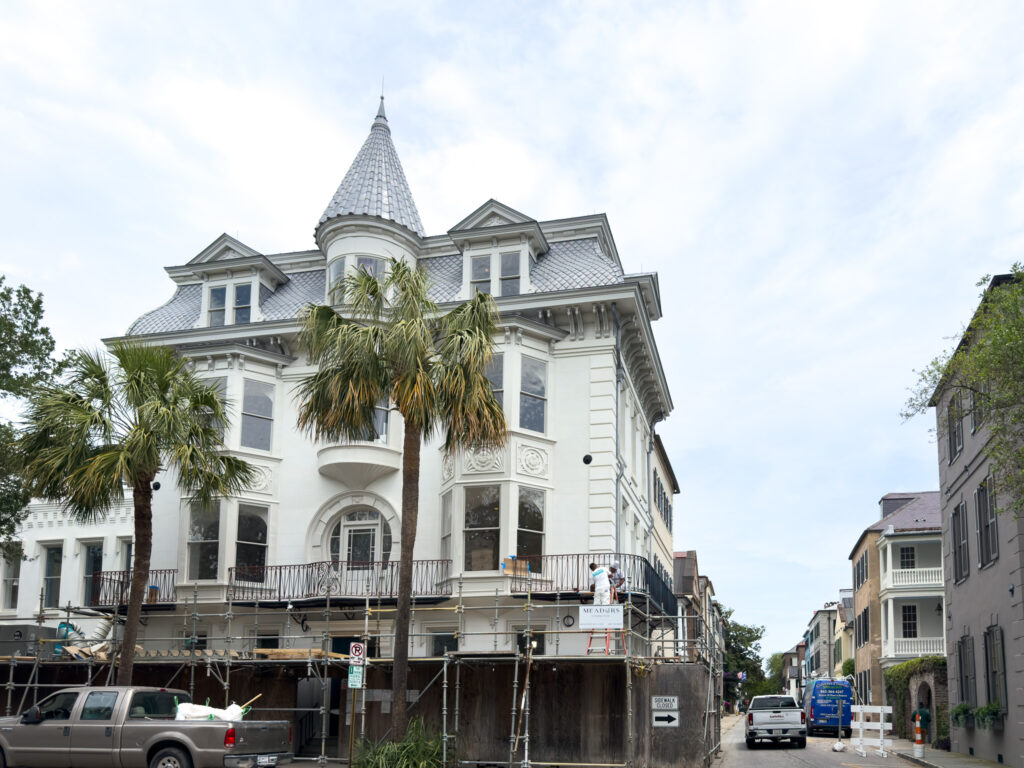
George C. Birlant & Co. Antiques is a distinguished family-owned antique business located at 191 King Street in Charleston’s historic French Quarter. 

Founded in 1922 by George C. Birlant, it has been serving collectors and enthusiasts for over 100 years, making it one of the oldest and most respected antique shops in the Southeast.

George Birlant’s passion for antiques originated from his early career as a realtor, where he gained extensive exposure to the fine contents of Lowcountry homes. Known for his extraordinary personality and expertise, he became a renowned estate auctioneer, conducting hundreds of estate auctions throughout the Southeast. His specialty was in English Georgian furniture and silver, which laid the foundation for the shop’s focus on 18th- and 19th-century antiques.

The business initially started in a warehouse on East Bay Street but soon moved to upper King Street and then to a small storefront on the corner of King and Clifford streets. In 1932, Birlant purchased the four-story historic Enston Building at 187-191 King Street, where the company still operates today.

After George Birlant passed away in 1971, his son-in-law, Phil Slotin, and daughter, Marian, continued the legacy. Their son, Andrew Birlant Slotin, joined the company in 1985, and together they maintain the tradition of quality and value that the founder established. 

The firm is known for its wide selection of antique furniture, silver, porcelain, crystal, brass items, longcase clocks, and exceptional reproductions, all curated with unparalleled service and integrity.

An iconic part of the business is the Charleston Battery Bench, a cast-iron and cypress bench with a historic Charleston design. George Birlant acquired the exclusive rights to produce this bench in the 1940s, and the company continues to manufacture and sell it nationwide, preserving a beloved piece of Charleston heritage.

In sum, George C. Birlant & Co. Antiques stands as a historic anchor of Charleston’s King Street Antique District, offering exquisite antiques steeped in Lowcountry charm and history for over a century.

Stay connected and subscribe to Charleston Daily.
Some of the most searched #Charleston hashtags on Instagram

Read More

Instagram has become a foundation for how we live our lives.  It assists us in search, research and ultimately affects the decisions we make.  It is a tool that is evolving, encompassing elements of pop culture, dining, entertainment, photography, travel, family, lifestyle and so much more.

With Charleston being named one of the most Instgrammable cities in the United States, it is quickly becoming an extension of ourselves.  Whether you are in college, new to town, visiting or a lifetime resident, Instagram is an important part of how we view Charleston and the Lowcountry.

We want to do our part to assist by providing a list of some of the most searched hashtags relevant to the Lowcountry.

Charleston and Lowcountry Area Instagram Hashtags

  • #charleston
  • #charlestonsc
  • #charlestonstyle
  • #charlestonhappyhour
  • #charlestonlife
  • #chsforlife
  • #lowcountry
  • #lowcountryliving
  • #southernliving
  • #folly
  • #follybeach
  • #charlestonphotographer
  • #chseats
  • #chswx
  • #charlestonbride
  • #charletonweddings
  • #charlestondaily
  • #charlestonliving
  • #charlestonblogger
  • #cofc
  • #chsevents
  • #lowcountrylife
  • #lowcountrywedding
  • #charlestonharbor
  • #charlestonstylist
  • #charlestonpictures
  • #charlestonevents
  • #charlestonfoodie
  • #iop
  • #sullivansisland
  • #historiccharleston

Happy Instagram searching


The Other Side of Charleston: What Locals Complain About Most Online

Read More

By Mark A. Leon

We utilized social sentiment and social analysis software to learn more about the biggests challenges and concerns people are expressing about Charleston, South Carolina.   

Here is what we uncovered:

Criticism of Charleston, SC on social media tends to focus on a recurring set of negative themes. Foremost are complaints about the city’s high cost of living and skyrocketing prices. Users frequently point out that everything from housing to basic services is more expensive in Charleston than in many comparable southern cities, making it increasingly unaffordable for residents and deterring some from moving there.

Traffic and infrastructure issues are also among the most cited grievances. Locals and visitors alike lament traffic congestion, poor road conditions, and a lack of viable public transportation options. The influx of tourists only worsens these challenges, with many residents describing the city as chronically overcrowded—especially in downtown and on popular beaches—leading to frustration and a sense that the charm of Charleston is being eroded by relentless tourism.

Social media often highlights problems related to tourism itself: some users complain about disrespectful visitors, noise, and the negative impact of short-term rentals on neighborhood character. This tension is particularly acute in historic areas, where long-time locals feel pushed out or ignored.

There is significant discourse online about issues of race and social justice in Charleston. Viral posts have criticized segregation—both historic and ongoing—and exposed instances of discrimination in local establishments. For example, social platforms recently saw backlash against bars accused of racially discriminatory dress codes and against the College of Charleston after videos of racist remarks circulated widely, sparking demands for accountability. Many comment that the city’s reputation is marred by its very public struggle with its troubled racial legacy and incidents of exclusion.

Another recurring topic is education and youth mental health. The Charleston County School District has publicly criticized the impact of social media platforms, blaming them for increasing behavioral problems, violence, and distress in schools, as well as adding strain to district resources and highlighting emotional and safety concerns for children.

People also mention weather-related risks, since Charleston faces regular threats from hurricanes and flooding. 

Memories of destruction from past storms like Hurricane Hugo continue to fuel anxiety about the city’s preparedness and its ability to recover from natural disasters, with power outages and massive property damage leaving a lingering sense of vulnerability.

Though Charleston has much to offer, the city’s digital reputation is shaped by persistent social media conversations about rising costs, racial tension, overcrowding, infrastructure strain, education concerns, and natural hazards. These criticisms reveal an undercurrent of frustration that tempers even the most glowing reviews.

Stay connected and subscribe to Charleston Daily.
HUD Approves South Carolina CDBG-DR Action Plan for $150M Disaster Recovery Program

Read More

Columbia, South Carolina – The U.S. Department of Housing and Urban Development (HUD) has approved the South Carolina Office of Resilience’s Action Plan for spending over $150 million in Community Development Block Grant – Disaster Recovery (CDBG-DR) funds allocated following Hurricane Helene.

“This approval is a key step in getting much needed disaster recovery assistance to South Carolinians,” said Chief Resilience Officer Ben Duncan, who leads the South Carolina Office of Resilience, the state agency responsible for managing this program for the State. 

The Plan, which was posted for public review before being submitted to HUD, includes an assessment of unmet needs, and outlines how the funds will be used to address disaster-caused unmet needs. The plan identified $2.1B in unmet needs, and $1.7B in housing needs alone. Based on this assessment, eligible activities under the approved plan include single-family home rehabilitation, replacement and reconstruction, affordable rental housing rehabilitation, voluntary buyouts, and mitigation projects to lessen the impact of future disasters. A one pager about the program and eligible activities can be found here.

The following counties are included in the CDBG-DR housing program: Aiken, Anderson, Greenville, Greenwood, Laurens, Spartanburg, Abbeville, Cherokee, Edgefield, McCormick, Oconee, Orangeburg, Pickens, Saluda and Union. Eligible applicants include: (1) low to moderate income homeowners whose primary residence were impacted by Helene and (2) rental property owners whose homes were impacted. The program focuses on low to moderate income citizens, with those who earn 30% or lower of the Area Median Income for their county prioritized higher. 

The plan also outlines how the $19.6M set aside for mitigation programs will be distributed across four eligible activities: infrastructure projects, voluntary buyouts, plans and studies, and matching funds. Mitigation activities are defined as those activities that increase resilience and reduce or eliminate the long-term risk of loss of life, injury, damage to and loss of property, and suffering and hardship, by lessening the impact of future disasters. Eligible applicants are state agencies, towns, cities, counties, and councils of governments in the following HUD defined counties: Aiken, Anderson, Greenville, Greenwood, Laurens, and Spartanburg. SCOR will be conducting meetings with local governments in those counties eligible for mitigation funding, in anticipation of applications opening for the mitigation program in the fall. A one pager about the mitigation program can be found here.

Following this approval, SCOR is finalizing procurement of an implementing contractor, and plans to open the housing recovery program to applications no later than the end of September. SCOR’s Disaster Case Management (DCM) team continues to provide services at mobile intake events across the Helene-impacted counties, connecting survivors to recovery resources, and referring those with eligible unmet housing needs to the CDBG-DR program. 

The approved Action Plan can be found at scor.sc.gov/Helene

###

About SCOR: The South Carolina Office of Resilience (SCOR) is committed to enhancing the state’s ability to anticipate, absorb, recover, and thrive when presented with environmental changes and natural hazards by planning and coordinating statewide resilience, long-term disaster recovery, and hazard mitigation. In addition to serving 3,459 homes in our previous Disaster Recovery Programs, SCOR has 81 active flood mitigation projects, including voluntary buyouts, stormwater infrastructure, and plans and studies, across the State. SCOR continues to implement and maintain the Strategic Statewide Resilience and Risk Reduction Plan, which provides a framework to guide investment in projects, programs, and policies to protect the people and property of South Carolina from the damage and destruction of extreme weather events.

Source: SCOR

Barrier Island Eco Tours: A Family Legacy and Gateway to Capers Island, SC

Read More

By Mark A Leon

Tucked just 15 miles north of Charleston, South Carolina, Barrier Island EcoTours is much more than a tour company—it’s a local, family-run business dedicated to connecting visitors with the wild beauty of Capers Island and the Lowcountry’s pristine barrier islands. From hands-on wildlife encounters to hearty southern cookouts, every experience offered bears the mark of deep local roots and a genuine passion for the region’s unique ecosystem.

Family Origins

Barrier Island EcoTours was founded in 1997 by Shane Ziegler and his high school friend, Jose Hernandez. The inspiration for the business came to them while roasting oysters on Capers Island, where they envisioned sharing their love of the outdoors with others. 

Shane, a Clemson University graduate in resource management, then worked as an educator at Hunting Island State Park. Jose, a College of Charleston marine biology alum, was working with blue crabs in Mexico. Together, they pooled their expertise and bought a boat, paving the way for what would become a beloved ecotourism company. 

Today, Shane manages the business with his wife, Morgan, and their children are often seen enjoying life on the water—a reflection of the family’s commitment to both sustainability and outdoor adventure. Their small but dedicated staff of naturalists and captains, some with over 20 years of tenure, further contributes to the welcoming, knowledgeable atmosphere that has become the company’s hallmark.

Tour Services and Experiences

Barrier Island EcoTours offers a diverse menu of excursions, designed for families, nature lovers, and adventure seekers of all ages. Every trip departs from the Isle of Palms Marina, transporting guests through winding salt marshes and tidal creeks before arriving at Capers Island Heritage Preserve—a rare, undeveloped destination on South Carolina’s coast.

Popular offerings include:

• Wildlife Exploration Tours: Led by expert naturalists, these boat excursions provide up-close encounters with bottlenose dolphins, loggerhead sea turtles, and a variety of shore and wading birds. Guides use crab traps and cast nets to bring marine life aboard, allowing guests to examine creatures in the onboard touch tank for a hands-on learning experience.

• Dolphin Discovery Sunset Cruises: These 2.5-hour journeys highlight the region’s spectacular sunsets and unique wildlife, with plenty of opportunities for shelling and birdwatching. Guests are welcome to bring their own refreshments to enjoy during the trip.

• Traditional Blue Crabbing Trips: Families can try their hand at classic Lowcountry crabbing using hand lines and nets, followed by a celebratory crab boil with the morning’s catch. It’s an immersive introduction to the region’s heritage and culinary traditions.

• Beachside Cookouts: Barrier Island EcoTours is famed for its authentic southern shrimp boils held on the beach, featuring fresh local shrimp, smoked sausage, corn, potatoes, and onions. These cookouts are offered for both group and private bookings, accompanied by sunset views and beach games.

• Private Charters and Fishing Excursions: For those seeking a customized adventure, private eco tours and fishing charters are available on boats accommodating different group sizes.

Educational Philosophy

A cornerstone of Barrier Island EcoTours is its commitment to environmental stewardship. The guides seamlessly blend education and entertainment, teaching guests of all ages about the complex barrier island ecosystems. Whether on a school field trip, family outing, or corporate team-building day, visitors leave with a deeper appreciation for the Lowcountry’s fragile environment.

Why Choose Barrier Island EcoTours?

With a 25-year legacy and a deep-rooted sense of place, Barrier Island EcoTours stands out for its family atmosphere, knowledgeable staff, and diverse, immersive experiences. Whether you’re searching for dolphins, crabbing the old-fashioned way, or savoring a shrimp boil on the shore, the company offers a perfect blend of adventure, discovery, and Southern hospitality—making it a must-do for anyone exploring the Charleston area.

Stay connected and subscribe to Charleston Daily.
Photo Credit: Barrier Island Ecotours

After 36 Years, the beloved Charleston Grill is closing…yet a new chapter awaits

Read More

The Charleston Grill, located at 224 King Street inside Charleston Place Hotel announced that they will be closing after 36 wonderful years in downtown Charleston, South Carolina. Their final seatings will be on Sunday, August 17, 2025

On an emotional Instagram post, the team at Charleston Grill paid their gratitude:

After 36 remarkable years, Charleston Grill will serve its final dinner on Sunday, August 17.

What began as a fine dining destination became something far more meaningful—a place where moments were celebrated, traditions were built, and guests returned year after year. From the first note of nightly jazz to the final course of the evening, every detail was crafted with care, hospitality, and heart.

As we begin this new chapter, The Charleston Place will continue its transformation with a fresh dining concept planned for the future. In the interim, guests can look forward to a special pop-up culinary experience debuting soon.

Over the next two weeks, we invite you to join us in honoring the legacy of Charleston Grill. We’ll be sharing reflections, memories, and meaningful moments as we say goodbye to this beloved space.

With deep gratitude, we thank every guest who’s ever pulled up a chair, raised a glass, or shared a meal with us. We hope you’ll join us once more before we say farewell. Reservations are strongly encouraged at Resy.com.

Click HERE to make reservations before the final seating.

Photo Credit: Charleston Place

Stay connected and subscribe to Charleston Daily.