 by
by 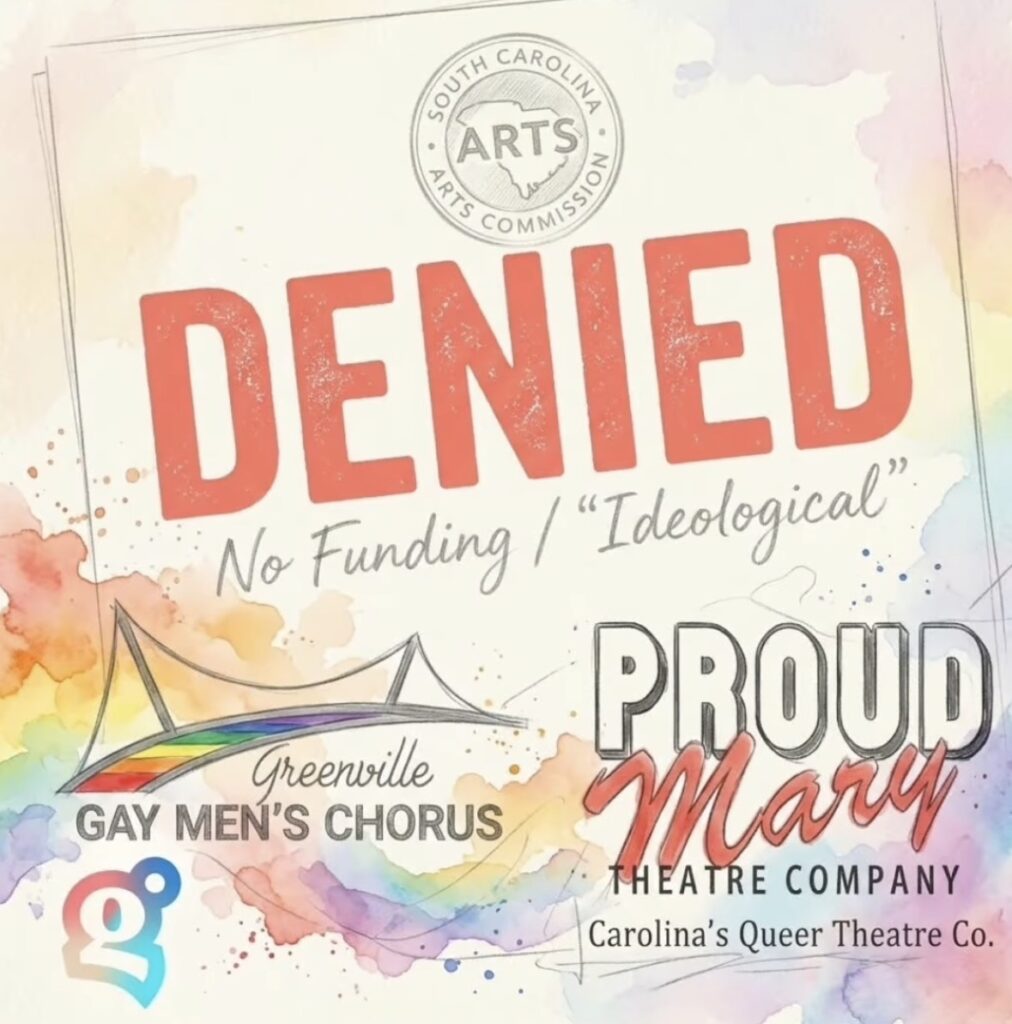
By Mark A Leon
The South Carolina Arts Commission has denied state grant funding to two Upstate arts organizations after months of additional review, prompting accusations of discrimination, questions about the state’s arts-funding process and renewed debate over the role of government in supporting artistic expression.
On October 1, the commission’s board voted 5–3 against funding the Greenville Gay Men’s Chorus and Proud Mary Theatre Company of Spartanburg. Both organizations had previously been recommended for funding through the commission’s grant-review process.
The decision came after the commission approved approximately $3.7 million in grants for more than 170 other arts organizations across South Carolina.
What the Organizations Were Seeking
requested approximately $13,050 for general operating expenses, including security, bookkeeping and storage. The organization received a 91 out of 100 score for artistic merit from the commission’s independent review panel and had received state funding previously.
Proud Mary Theatre Company sought approximately $3,866 for upcoming productions. The Spartanburg nonprofit, founded in 2017, focuses on LGBTQIA+ stories and theatrical performances and has also received Arts Commission funding in previous years.
Combined, the two grants represented less than $17,000 in state funding.
For the organizations, however, the significance extends well beyond the dollar amount.
Mary Adam, executive director of the Greenville Gay Men’s Chorus, said the $13,000 represented approximately 13% of the organization’s overall budget. The organization has said private donations have helped replace some of the lost funding, but losing the grant still creates pressure on its ability to cover administrative expenses, staff, artists and performances.
Why Were the Grants Reconsidered?
The controversy began months before the final vote.
In August, commissioners voted to approve the overwhelming majority of grant requests while holding the Greenville Gay Men’s Chorus and Proud Mary Theatre applications for additional consideration.
Commissioner Russell “Rip” Parks said the organizations needed to further defend the artistic merit of their programs.
The organizations subsequently provided additional information requested by the commission, including budget details, employees and vendors who would receive grant-supported funds, and whether state money would support programming in K–12 schools.
Both organizations said the requested grants would not fund K–12 programming.
Public-record emails obtained by the ACLU of South Carolina, however, show that some commissioners had raised concerns about the organizations before the artistic-merit explanation became the stated focus.
In a June email, Parks wrote that he was concerned about defending the grants to legislators who might oppose funding for the Arts Commission. Another commissioner, Jessica Rourke, wrote that she opposed funding organizations structured around specific sexual orientations and said public funds should not support drag performances.
The Arts Commission has maintained that questions about the organizations’ artistic merit had been raised by members of the General Assembly and that the commission was obligated to address those concerns.
A Vote Without an Explanation
The October 1 meeting was held virtually and included an executive session. The board then returned to vote separately on the two grants.
Both votes were 5–3, with the same commissioners voting against each organization.
No board member publicly explained their individual vote, and no public comment was taken during the meeting.
That lack of explanation has become one of the most contentious aspects of the decision.
The ACLU of South Carolina has characterized the decision as viewpoint discrimination and warned that using a vague standard such as “ideology” to determine which art receives public support could have broader First Amendment implications.
The organizations have likewise said they believe the decision was discriminatory and have indicated they are considering possible legal action.
The commission, however, has not publicly said that the organizations were denied funding because they are LGBTQ+.
That distinction is important. The vote is documented; the individual motivations behind the votes are not fully documented.
What is documented is that two LGBTQ+-focused organizations were singled out for additional scrutiny, were previously recommended for funding, and were ultimately denied grants while more than 170 other organizations received funding.
The Impact Goes Beyond $17,000
The immediate financial impact is relatively modest when compared with the Arts Commission’s overall grantmaking. The approximately $17,000 denied to the two organizations represents a tiny fraction of the $3.7 million approved for other organizations.
But the dispute has raised a much larger question for South Carolina’s arts community:
Should government arts funding be determined primarily by artistic merit and established grant criteria, or can the identity, mission or subject matter of an organization become a factor in determining whether it receives public money?
For artists and arts organizations, the answer could influence how they approach future grant applications — particularly organizations whose work centers on LGBTQ+ experiences, race, religion, politics, gender or other subjects that can become politically controversial.
The controversy also arrives amid longstanding political debate over the Arts Commission itself. The agency has faced criticism from conservative lawmakers who have questioned whether taxpayer money should support certain forms of contemporary or politically charged art.
For the broader arts community, the issue is therefore not simply about two organizations losing two relatively small grants. It is about the standards used to determine who receives public support and whether those standards will be applied consistently across South Carolina.
The Community Response
Following the vote, both organizations reported an outpouring of private support.
The Greenville Gay Men’s Chorus launched a fundraising effort and said the issue is about more than replacing $13,000. The organization argues that the process itself matters and that arts funding should be awarded based on the quality and impact of the work rather than the identity of the artists or communities represented.
Proud Mary Theatre has likewise encouraged supporters to contribute directly to its 2026–27 season. The organization continues producing LGBTQIA+ stories and providing a dedicated space for those audiences in the Upstate.
Proud Mary’s next production, “Stage Frights,” is scheduled for October 9 and 10 in Spartanburg, meaning the theater’s regular programming continues despite the loss of state funding.
The controversy has also brought increased attention to the South Carolina Arts Commission itself. Board chair Cindy Harton announced that she will resign effective October 16, citing personal time constraints. Harton did not vote on the October 1 grants because the chair votes only to break a tie.
How We Can Help
For Charleston Daily, this story is also a reminder of the role local media can play in supporting South Carolina’s arts community.
We’ve helped bring attention to both organizations and their circumstances because we believe that stories about the arts are ultimately stories about the people and communities that make South Carolina unique.
But attention is only one part of the equation.
When organizations face unexpected financial challenges, one of the most immediate ways a community can respond is by showing up — attending performances, purchasing tickets, sharing their work and making a direct contribution when possible.
We encourage our readers to learn more about both organizations and consider supporting them directly.
Proud Mary Theatre Company continues to produce theater centered on LGBTQIA+ stories and experiences in Spartanburg. Donations help support its productions, artists and ongoing programming.
Greenville Gay Men’s Chorus continues its mission of bringing choral music and performance to audiences throughout the Upstate. Contributions can help offset the loss of state funding and support the organization’s operating expenses and future performances.
Supporting South Carolina’s arts community doesn’t require everyone to share the same opinions, politics or perspectives.
It can simply mean recognizing the value of having a diverse creative community where artists can perform, audiences can gather and organizations can contribute to the cultural life of their communities.
The decision by the Arts Commission may ultimately be debated in boardrooms, courtrooms or the Statehouse.
But the most immediate response can happen in the community itself — by buying a ticket, attending a performance, sharing an artist’s work or choosing to support an organization that matters to you.
Because arts organizations don’t exist solely because of grants.
They survive because communities show up for them.
Stay connected and subscribe to Charleston Daily.
