 by
by 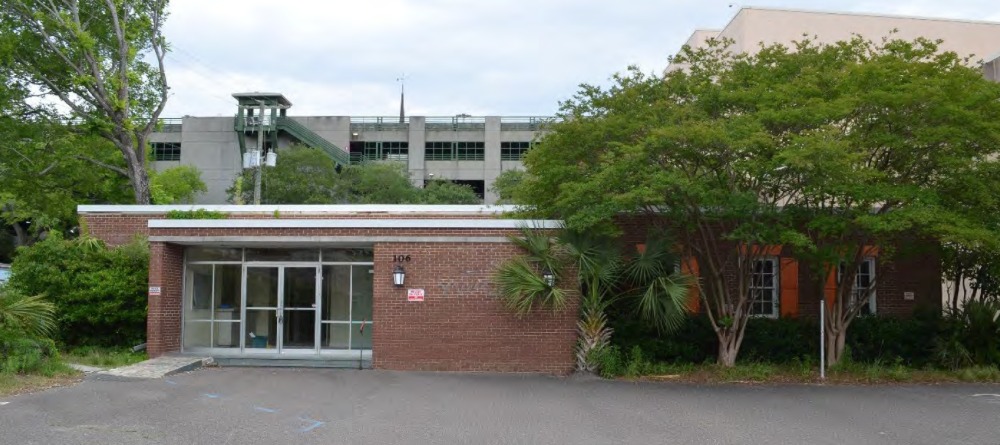
By Mark A Leon
Three development sites are forcing the Holy City to confront what lies beneath its streets
Charleston likes to call itself a living museum.
But beneath some of its newest construction projects are people who were buried here long before anyone imagined cranes, parking garages, student dormitories or luxury apartments.
In the past few years, human remains and historic burial grounds have emerged as an increasingly uncomfortable part of Charleston’s development story. At one construction site, workers unexpectedly uncovered dozens of graves. At another, more than 50 graves were found beneath a stadium. And at a third, the city is debating what should happen to a proposed student residence hall on land that was once a municipal cemetery believed to contain thousands of graves.
These aren’t murder mysteries. They are something more complicated: Charleston’s forgotten dead coming back into the conversation.
1. Courier Square: 74 graves beneath King Street
In May 2025, construction at 635 King Street, part of the Courier Square development, uncovered 74 unmarked graves.
The discovery occurred on land that was once associated with St. James Methodist Church, founded in the late 18th century. Historical evidence suggested there had been a cemetery there, but the graves were not visibly marked when modern development began.
The discovery was a reminder of how easily Charleston’s historic burial grounds can disappear from the visible landscape.
The remains were ultimately slated for reinterment at Bethany Cemetery after Charleston City Council approved a plan developed with the church, cemetery officials and preservation organizations.
But the bigger question remains: How many other graves are beneath Charleston properties where no one knows they are there?
2. Johnson Hagood Stadium: More than 50 graves beneath The Citadel
Then came another startling discovery.
During construction associated with renovations at Johnson Hagood Stadium, crews uncovered more than 50 unmarked graves containing human remains. The affected area was beneath the eastern side of the stadium, where construction was underway.
Subsequent reporting identified approximately 54 possible 19th-century gravesites. Archaeologists have been painstakingly removing and documenting the remains.
The discovery is particularly significant because this was not an unknown cemetery in the broadest historical sense. Charleston has known for years that the area was associated with historic burial grounds.
And yet, more than a century later, people were still building over it.
The episode illustrates a fundamental problem with Charleston’s historic landscape: the absence of a headstone does not mean the absence of a grave.
3. 106 Coming Street: The cemetery that may contain thousands
Perhaps the most consequential case is also the one where construction has not yet produced a new discovery of human remains.
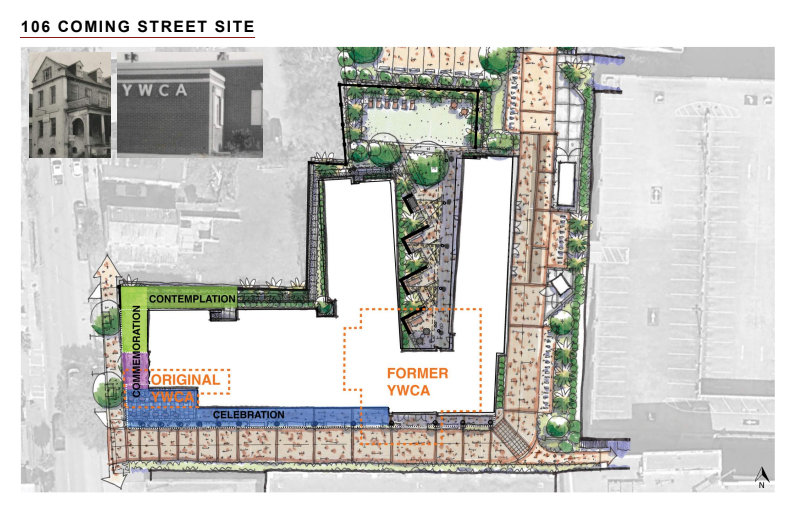
At 106 Coming Street, the College of Charleston is pursuing plans for a major student housing complex. But the property sits on land that was once an 18th-century municipal cemetery. Historic Charleston Foundation describes the site as a former municipal burial ground and has raised concerns about preservation, memory and development.
The project has become controversial precisely because archaeologists and historians believe the ground could contain the remains of thousands of people.
The College has said the final design will depend in part on archaeological findings, public input and state preservation requirements.
And the debate is no longer theoretical.
In July 2026, the College began demolishing the long-vacant building currently on the property as it moves forward with redevelopment efforts.
That means Charleston is approaching a potentially extraordinary archaeological moment: what happens when construction begins digging into a cemetery that may contain thousands of forgotten Charlestonians?
Charleston’s buried history is much larger than three sites
These three locations aren’t isolated curiosities.
In 2013, construction associated with the expansion of the Gaillard Center uncovered the remains of 36 people of African descent dating to the 18th century. The discovery ultimately led to the creation of the Anson Street African Burial Memorial, which now serves as a place of remembrance.
The story of the Anson Street burial ground is particularly important because it demonstrates what can happen when archaeology, descendants and the community are given the opportunity to transform a construction discovery into something more meaningful.
The people whose graves were uncovered weren’t simply archaeological specimens.
They were someone’s ancestors.
They were mothers and fathers, children and neighbors. They lived in Charleston, worked in Charleston and died in Charleston.
And then, over generations, their cemetery disappeared from the city’s collective memory.
The uncomfortable question
Charleston is experiencing extraordinary growth.
Historic buildings are being restored. Old industrial properties are becoming residential developments. New hotels, apartments and student housing are appearing on land that has passed through centuries of different uses.
But Charleston’s history isn’t confined to its buildings.
It is in the ground.
And the more the city digs, the more it is discovering that the past isn’t always safely contained behind museum glass.
Sometimes it’s underneath a foundation.
Sometimes it’s beneath a parking lot.
Sometimes it’s underneath a football stadium.
And sometimes it may be directly beneath the next place Charleston wants to build.
That creates an uncomfortable challenge for a city that markets its history as one of its greatest treasures:
How do you develop the future without disturbing the people who made the past possible?
The recent discoveries at Courier Square and Johnson Hagood Stadium — and the controversy surrounding 106 Coming Street — suggest that Charleston may have to answer that question much more often in the years ahead.
Because in the Holy City, the most important historical landmark may not always be the building standing above the ground.
Sometimes, it is the ground itself.
Stay connected and subscribe to Charleston Daily.
Photo Credit: Historic Preservation Society of Charleston
