by
by 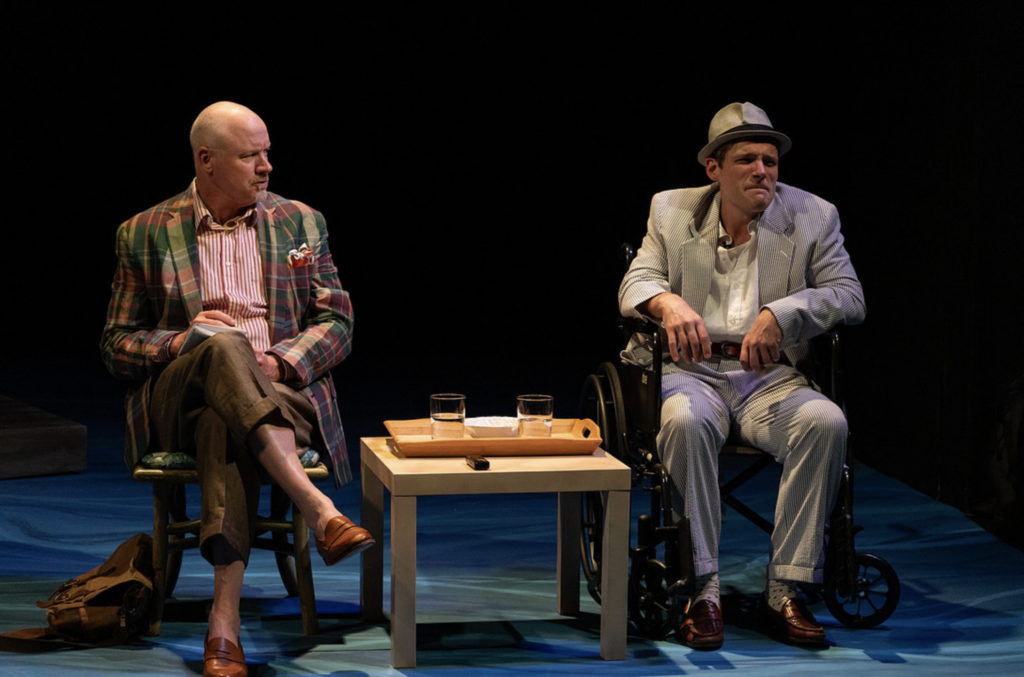
By Mark A. Leon
There are many vantage points from which to understand life along the Southeast coast. But in the South Carolina Lowcountry—from Pawley’s Island to Hilton Head—those perspectives feel guided by something deeper: the lingering spirits of the past, quietly guarding generations of secrets. Secrets that, if revealed, could unravel more than 350 years of cultural tradition and deeply rooted conservatism.
“The Ocean We Swim In,” a world premiere by Brad Erickson, steps directly into that tension. With thoughtfulness and restraint, Erickson explores threads of historical folklore, walking a delicate tightrope between taboo and cultural elegance.
As a longtime resident of the South, I’ve come to embrace its cadence—its courtesy, its ease, its unspoken codes. Erickson’s script captures that world with remarkable authenticity, seamlessly weaving together the 1940s and the present day. Each character feels lived-in, every mannerism precise, creating a portrait of Southern life that is both elevated and deeply human. When a production begins with a script this strong, it establishes a powerful foundation for everything that follows.
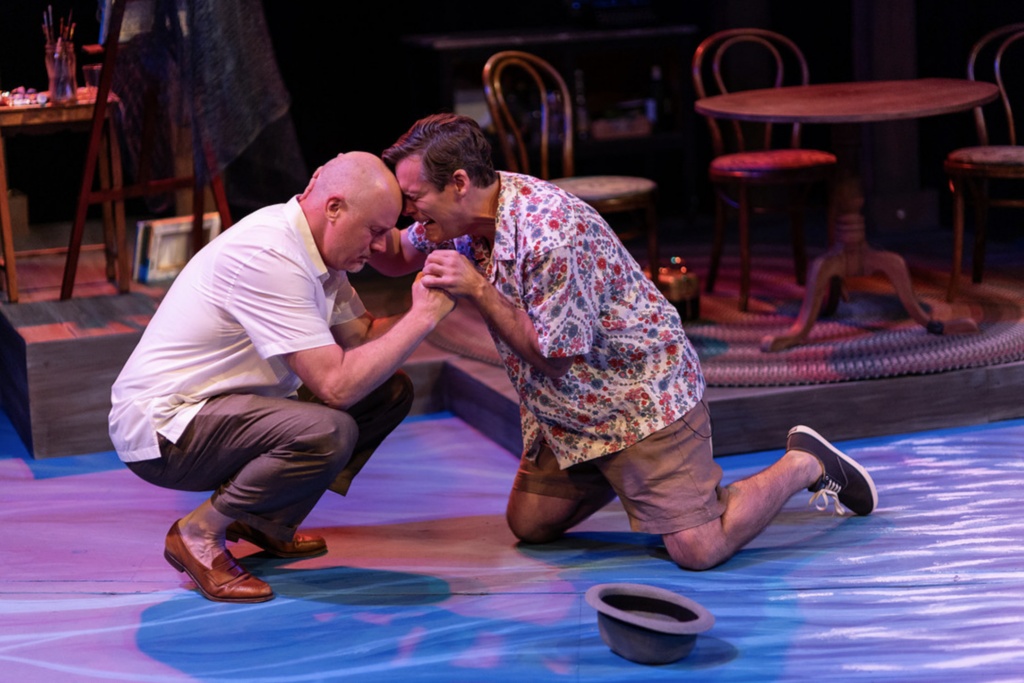
At the heart of this production is Andrew Puckett as Tommy Maybank Legare. His performance is nothing short of transformative. With the simplest shift in posture or tone, Puckett moves effortlessly between a wise yet haunted centenarian and a vibrant 20-year-old artist whose dreams stretch as wide as the ocean itself. His portrayal of a celebrated artist burdened by an 80-year-old secret is riveting—a study in restraint, vulnerability, and quiet revelation.
Opposite him, R. W. Smith brings depth and nuance to the role of Jack, a journalist whose confidence is tempered by moments of uncertainty. As Jack peels back the layers of Legare’s past, the two form a bond that is both unexpected and deeply affecting—one that recalls the emotional intimacy of Tuesdays with Morrie.
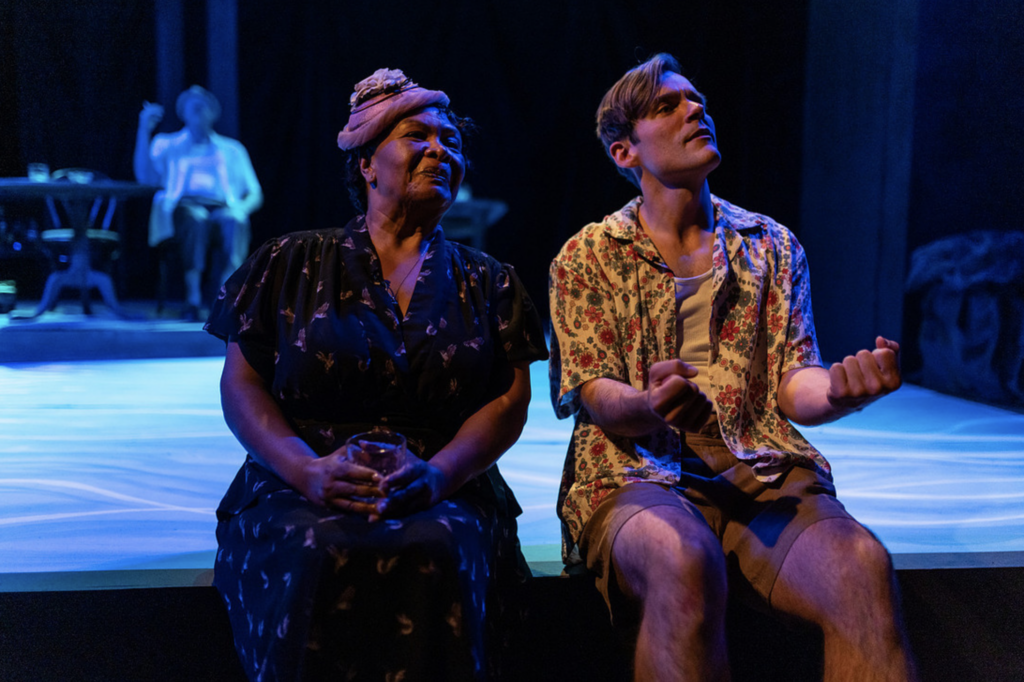
Joy Vandervort-Cobb and Michael Smallwood provide a vital sense of balance across both timelines, grounding the central performances while deepening and expanding the play’s emotional and narrative scope.
The production’s excellence extends beyond performance. Its use of scenic transformation is particularly striking. In Act I, we are introduced to Jack and Dylan, a married couple settling into Legare’s former Charleston home—initially cluttered, unsettled, yet brimming with possibility. By act’s end, the space becomes refined and orderly, mirroring their emotional grounding. That evolution gives way, almost seamlessly, to a 1946 beach house on Pawley’s Island as Act II begins—a shift where past and present collide in a powerful search for understanding, forgiveness, and retribution.
Here, the play’s central tensions come into focus: truth and illusion, ambition and trust. As the narrative unfolds, it challenges us with questions that linger well beyond the final scene:
- What inspires art?
- Can art serve as a path to forgiveness?
- Is it a means of preserving the past—or escaping it?
Set against a time when identity and access were scrutinized through the narrow lenses of race and lifestyle, “The Ocean We Swim In” becomes more than a story—it is a meditation on reputation, intimacy, and the cost of hidden truths.
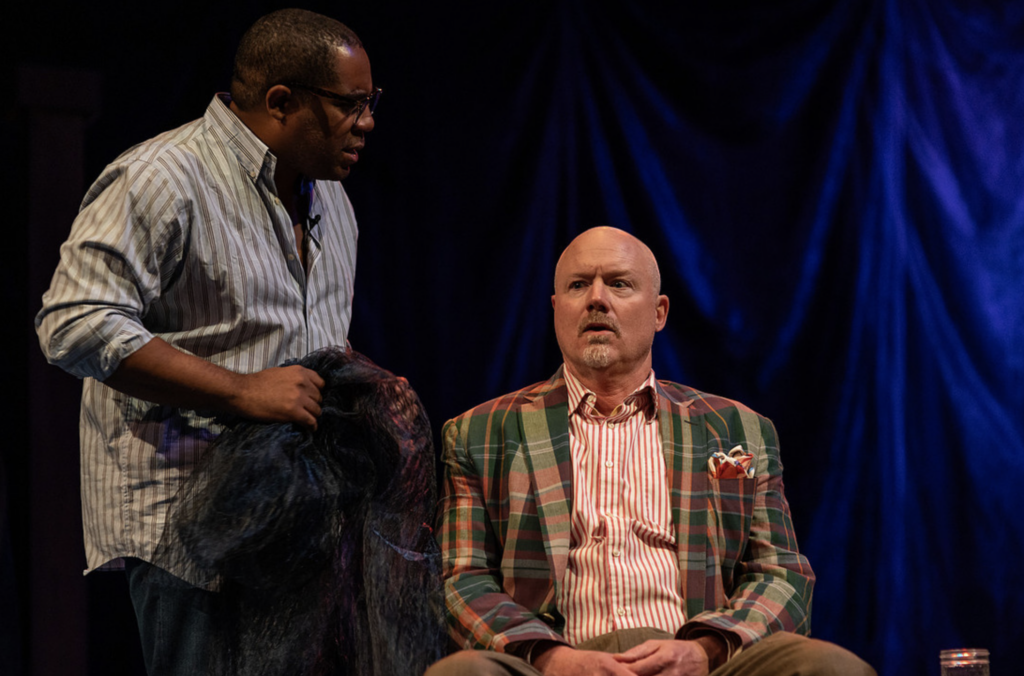
Like much of the South itself, the play is layered with complexity—where elegance often coexists with silence, and beauty can shadow darker histories. In the end, this world premiere emerges as a storytelling gem: a poignant exploration of two strangers who, against all odds, find a sense of completeness in one another.
This is a production worth experiencing.
Click HERE for tickets.
Stay connected and subscribe to Charleston Daily.