by
by 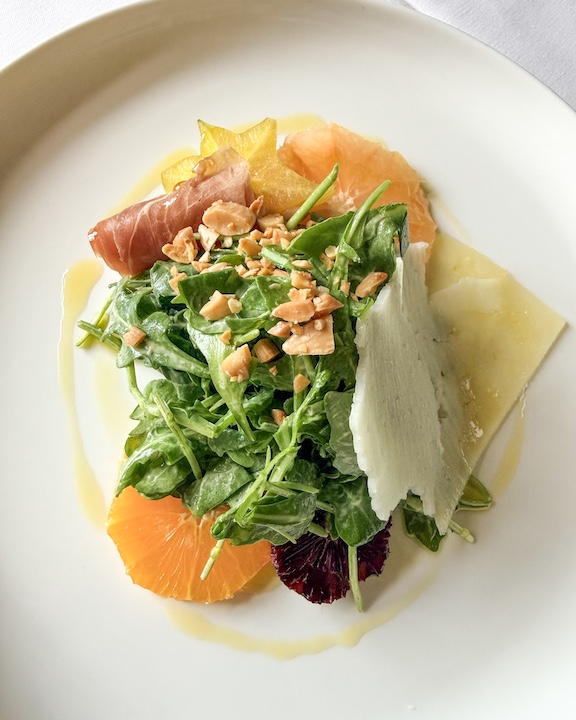
By Mark A Leon
“Enjoy life one bite at a time.” – Executive Chef Marc Collins
For a quarter-century, Chef Marc Collins has quietly helmed one of Charleston, South Carolina’s most storied dining rooms, turning Circa 1886 into a repository of memory as much as a place for dining. His tenure — now 25 years strong — reads like a study in adaptation: a chef continually interrogating tradition, reweaving it into thoughtful service, and nudging Charleston’s palate forward without discarding the past.
Collins arrived in Charleston after a decade in Texas and a career turn that took him through luxury hotels and culinary tests. From the beginning, he resisted easy labels. “I was never pigeonholed here,” he said, describing the freedom that let him explore the region’s culinary lineage. That exploration turned into a deliberate program: research old cookbooks, consult historians and millers, and map South Carolina’s flavors into a menu that reads like a local history lesson.
The result is neither museum nor gimmick. At the beginning of his tenure at Circa 1886, Collins engineered a four‑quadrant approach that traces the state’s major influences — Native American, European, African and the evolving contemporary South — then translated those threads into seasonal tasting menus and a la carte offerings that invite sharing and curiosity. “We need to tell the story of South Carolina in the food,” he told guests, a phrase that has guided both ingredient choices and presentation.
That storytelling found its most practical expression in a menu format that responds to modern diners’ habits. Rather than a rigid tasting menu or a traditional entrée structure, Circa 1886 now offers two tasting menus named for peninsula rivers alongside a smaller a la carte selection. Collins’ innovation: encourage couples or small parties to each order a tasting so they can share a broader range of dishes without committing to a single, long tasting service. The approach has proven popular: roughly 40–50 percent of diners are opting into the tasting experience, Collins noted, giving the kitchen license to experiment without alienating guests.
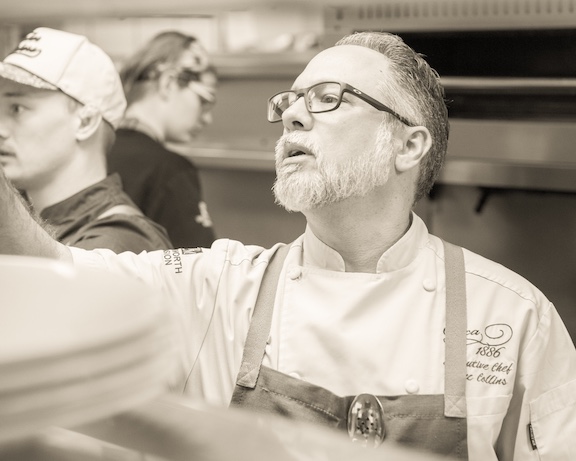
Collins’ process is methodical and collaborative. He draws on local experts — historians, millers like those at Anson Mills, and cooks steeped in Lowcountry practice — and he adapts to supply realities. “Because we try to use locally-sourced ingredients, we have to constantly evolve the menu,” he said, describing the logistical tightrope of sourcing seasonal produce in a climate increasingly governed by unpredictable weather. That reality has pushed Circa 1886 toward agility: small, frequent menu changes instead of the old model of wholesale overhauls.
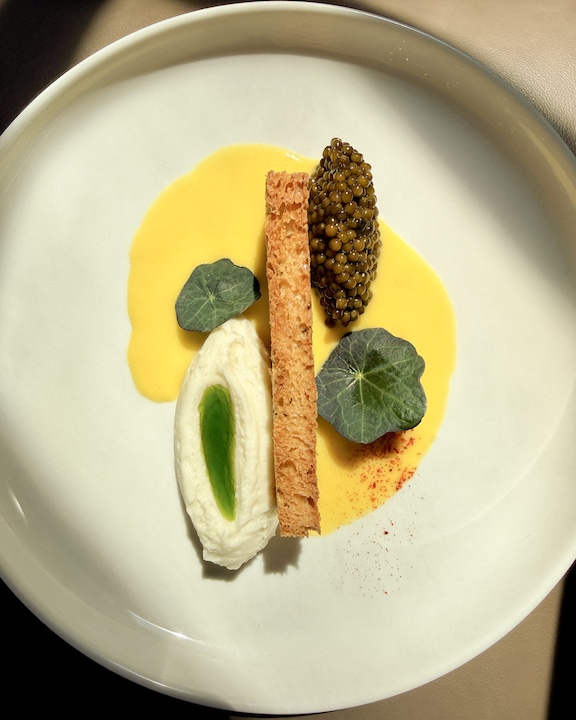
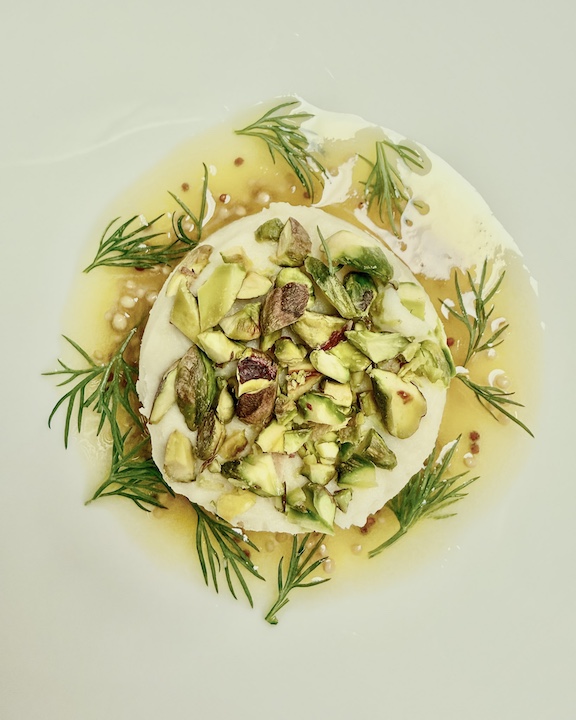
Aesthetic matters to Collins as much as provenance. Influenced early on by his father’s work as a painter, he treats plating as composition. “Putting those together, the flavor compositions and the color compositions, and where you put things on a plate — I attribute a lot of that to what my dad taught me,” he said. His food aims to speak both to the eye and to a diner’s sense of regional belonging.
The last decade in Charleston has been a study in growth and fragmentation. Collins observed that the city shifted from “a historic destination that happens to have great food into a world-class culinary capital.” New neighborhoods and new chefs have multiplied dining options; the peninsula’s historic core now competes with expansion in Mount Pleasant, Summerville and other suburbs. “There’s so much opening up at such a lightning speed now that the newest thing out there is where everybody’s gravitating,” Collins said, noting that the arrival of diverse cuisines has been both a boon to diners and a pressure point for legacy institutions.
Labor and location complicate that spread. Rising housing costs have pushed kitchen staff ever farther from downtown, while new suburban concepts benefit from easier parking and staffing pools. Still, Charleston’s tourist economy continues to prop up its downtown table scene, even as local patronage disperses.
Through the churn, the constant is Collins’ insistence on craft and relevance. He has learned to read the city’s appetite — its desire, in his words, for “decadent comfort food” even amid broader trends toward lighter cuisine — and to bend his menus without breaking their core identity. The balance between experimentation and stewardship has become his signature: a kitchen willing to change one dish a week, and a philosophy that honors history without fossilizing it.
As Circa 1886 looks ahead, Chef Marc Collins is less concerned with trophies than with the quiet business of keeping a restaurant alive and meaningful. “I never sit on my laurels and think that we’re indestructible,” he said. For diners seeking a sense of Charleston on a plate — past, present and in progress — Collins’ 25 years at Circa 1886 offer a rare continuity in a city that keeps reinventing itself.
Click HERE for reservations.
Photo Credit: Circa 1886
Stay connected and subscribe to Charleston Daily.